Matthew Commons (康明)

316 posts

Matthew Commons (康明) banner
Matthew Commons (康明)

Matthew Commons (康明)

@MrMatthewC

Web3 & Decentralized AI | Tech CFO

Katılım Şubat 2023
342 Takip Edilen1.2K Takipçiler
Matthew Commons (康明) retweetledi
Justin Drake
Justin Drake@drakefjustin·
Today is a monumentous day for quantum computing and cryptography. Two breakthrough papers just landed (links in next tweet). Both papers improve Shor's algorithm, infamous for cracking RSA and elliptic curve cryptography. The two results compound, optimising separate layers of the quantum stack. The results are shocking. I expect a narrative shift and a further R&D boost toward post-quantum cryptography. The first paper is by Google Quantum AI. They tackle the (logical) Shor algorithm, tailoring it to crack Bitcoin and Ethereum signatures. The algorithm runs on ~1K logical qubits for the 256-bit elliptic curve secp256k1. Due to the low circuit depth, a fast superconducting computer would recover private keys in minutes. I'm grateful to have joined as a late paper co-author, in large part for the chance to interact with experts and the alpha gleaned from internal discussions. The second paper is by a stealthy startup called Oratomic, with ex-Google and prominent Caltech faculty. Their starting point is Google's improvements to the logical quantum circuit. They then apply improvements at the physical layer, with tricks specific to neutral atom quantum computers. The result estimates that 26,000 atomic qubits are sufficient to break 256-bit elliptic curve signatures. This would be roughly a 40x improvement in physical qubit count over previous state-of-the-art. On the flip side, a single Shor run would take ~10 days due to the relatively slow speed of neutral atoms. Below are my key takeaways. As a disclaimer, I am not a quantum expert. Time is needed for the results to be properly vetted. Based on my interactions with the team, I have faith the Google Quantum AI results are conservative. The Oratomic paper is much harder for me to assess, especially because of the use of more exotic qLDPC codes. I will take it with a grain of salt until the dust settles. → q-day: My confidence in q-day by 2032 has shot up significantly. IMO there's at least a 10% chance that by 2032 a quantum computer recovers a secp256k1 ECDSA private key from an exposed public key. While a cryptographically-relevant quantum computer (CRQC) before 2030 still feels unlikely, now is undoubtedly the time to start preparing. → censorship: The Google paper uses a zero-knowledge (ZK) proof to demonstrate the algorithm's existence without leaking actual optimisations. From now on, assume state-of-the-art algorithms will be censored. There may be self-censorship for moral or commercial reasons, or because of government pressure. A blackout in academic publications would be a tell-tale sign. → cracking time: A superconducting quantum computer, the type Google is building, could crack keys in minutes. This is because the optimised quantum circuit is just 100M Toffoli gates, which is surprisingly shallow. (Toffoli gates are hard because they require production of so-called "magic states".) Toffoli gates would consume ~10 microseconds on a superconducting platform, totalling ~1,000 sec of Shor runtime. → latency optimisations: Two latency optimisations bring key cracking time to single-digit minutes. The first parallelises computation across quantum devices. The second involves feeding the pubkey to the quantum computer mid-flight, after a generic setup phase. → fast- and slow-clock: At first approximation there are two families of quantum computers. The fast-clock flavour, which includes superconducting and photonic architectures, runs at roughly 100 kHz. The slow-clock flavour, which includes trapped ion and neutral atom architectures, runs roughly 1,000x slower (~100 Hz, or ~1 week to crack a single key). → qubit count: The size-optimised variant of the algorithm runs on 1,200 logical qubits. On a superconducting computer with surface code error correction that's roughly 500K physical qubits, a 400:1 physical-to-logical ratio. The surface code is conservative, assuming only four-way nearest-neighbour grid connectivity. It was demonstrated last year by Google on a real quantum computer. → future gains: Low-hanging fruit is still being picked, with at least one of the Google optimisations resulting from a surprisingly simple observation. Interestingly, AI was not (yet!) tasked to find optimisations. This was also the first time authors such as Craig Gidney attacked elliptic curves (as opposed to RSA). Shor logical qubit count could plausibly go under 1K soonish. → error correction: The physical-to-logical ratio for superconducting computers could go under 100:1. For superconducting computers that would be mean ~100K physical qubits for a CRQC, two orders of magnitude away from state of the art. Neutral atoms quantum computers are amenable to error correcting codes other than the surface code. While much slower to run, they can bring down the physical to logical qubit ratio closer to 10:1. → Bitcoin PoW: Commercially-viable Bitcoin PoW via Grover's algorithm is not happening any time soon. We're talking decades, possibly centuries away. This observation should help focus the discussion on ECDSA and Schnorr. (Side note: as unofficial Bitcoin security researcher, I still believe Bitcoin PoW is cooked due to the dwindling security budget.) → team quality: The folks at Google Quantum AI are the real deal. Craig Gidney (@CraigGidney) is arguably the world's top quantum circuit optimisooor. Just last year he squeezed 10x out of Shor for RSA, bringing the physical qubit count down from 10M to 1M. Special thanks to the Google team for patiently answering all my newb questions with detailed, fact-based answers. I was expecting some hype, but found none.
English
346
1.2K
5.9K
1.5M
Matthew Commons (康明)
Matthew Commons (康明)@MrMatthewC·
Honored to speak at the @MITCFO Summit on the AI Do’s and Don’ts panel. It was an energizing and practical discussion about how CFOs can capture real value from AI while avoiding the most common pitfalls. A few themes that stood out: • Model quality is rapidly improving. Modern foundation models are far better at follow-up and clarification, which means you don’t need to be a “prompt wizard” to extract meaningful insights. • A skilled human-in-the-loop remains essential. CFOs need review frameworks to catch hallucinations, false assumptions, and subtle reasoning errors that can creep into AI agent workflows. • More automation isn’t always better. In many processes, humans hold contextual information that models can’t access — and removing them can reduce accuracy. A recent MIT study illustrates this clearly in clinical settings: 👉 economics.mit.edu/sites/default/… • Structure still matters. Clearly defining the problem and giving the model well-organized inputs continues to be one of the highest-leverage steps. Garbage in, garbage out. • Macro trends are shifting fast. AI’s power needs could meaningfully reshape the energy sector, as highlighted in Leopold Aschenbrenner’s Situational Awareness: 👉 situational-awareness.ai At the same time, concerns about circular financing and a potential shift from GPUs to more efficient TPUs may influence the trajectory of both costs and power usage in the coming years. Great questions and perspectives from finance leaders who are thinking deeply — and pragmatically — about building durable AI capabilities in their organizations. #AI #CFO #MITCFOSummit #FinanceLeadership #ArtificialIntelligence #GenAI #DigitalTransformation #FutureOfWork #CFOCommunity
Matthew Commons (康明) tweet mediaMatthew Commons (康明) tweet media
English
1
0
1
629
HypurrCollective.hl 🐱
HypurrCollective.hl 🐱@hypurr_co·
Any interest in a casual hype and chill voice hangout on our HypurrCo & Frens TG sometime next week? Let us know!
English
10
1
24
8.7K
Matthew Commons (康明)
Matthew Commons (康明)@MrMatthewC·
@GaryCardone HOWEVER, I might see much more potential for perpetual futures on real estate indices (perhaps a Hyperliquid HIP-3 on the Case-Shiller real estate indices, for example)
English
0
0
0
18
Matthew Commons (康明)
Matthew Commons (康明)@MrMatthewC·
@GaryCardone I agree, @GaryCardone . I've looked at a dozens of tokenized real estate projects over the past 10 years, and none of them effectively deal with the fungibility and liquidity issues.
English
2
0
0
192
Gary Cardone
Gary Cardone@GaryCardone·
Robinhood CEO seems way over his skis related to this topic; realestate is NOT fungible, tokening the future will first happen with the most fungible of products; equities, bonds, commodities. We are years away from tokenizing realestate for a host of reasons, fungibility being key, along with how fractured that industry is and the complex incentives structure is hostile to efficiencies.
Real World Asset Watchlist@RWAwatchlist_

🚨 BREAKING: ROBINHOOD CEO during Bloomberg interview — “Real estate tokenization is a freight train” "We figured out how to do it just waiting for regulations" @vladtenev Trillions incoming... 🚀

English
31
2
72
19.1K
Matthew Commons (康明) retweetledi
Yuli Kay
Yuli Kay@yulikay·
Wow 😮
Yuli Kay tweet media
5
1
8
757
Matthew Commons (康明)
Matthew Commons (康明)@MrMatthewC·
Great insight on how Hyperliquid’s HIP3 will unlock new perpetual futures markets. (As a former oil trader, I see a huge market for Brent/WTI perps - DM me for details)
Alvin Hsia@alvinhsia

A market, an oracle, and a dream One area where crypto has unmistakable PMF is in the creation and trading of new markets. Over the last few years, tokens, bonding curves, and AMMs have been the core primitives for this — great for minting net‑new, onchain native assets, and leading to an explosion of experimentation with memecoins, content coins, social tokens. However, we’ve only barely begun to scratch the surface of new markets enabled by another crypto primitive — perpetual futures. It makes sense why: the token deployment stack has matured over the past few years, with protocols like @dopplerprotocol continuing to push the envelope. But the permissionless perps stack is only now arriving. Enter @HyperliquidX's builder deployed perps (HIP3). Hyperliquid exposes its orderbook and matching engine so builders can launch perp markets without rebuilding an exchange from scratch. Deployers define the market (specs, oracle, leverage limits), run it (maintain the oracle), and can iterate on UX and fees. In other words, the technical challenges of creating new perp markets has been reduced to near zero, and new perp market creation is now primarily a coordination problem of flows, liquidity, and capital. If you can find a group of people who want to speculate on a number going up or down and connect it to the real world with a credible oracle, you can create a market. Market + oracle + demand. That’s the HIP3 recipe. What kinds of perps markets will we see? Zoom out and the HIP3 opportunity set looks like a distribution w/ a fat head, chunky middle, and long tail: Fat head: The obvious high-volume stuff – S&P/Nasdaq style indices (@unitxyz), major FX pairs, core commodities. These already have robust reference prices and deep market‑maker coverage. With HIP3, they can exist as perps without onchain spot inventory — all they need is a reliable index and counterparties willing to quote around it. And for many of these assets, perps are actually easier to list than spot because the oracle handles the tethering rather than needing to wrap the spot assets into tokens. Chunky middle: This is where HIP3 starts to really shine – think private companies (@ventuals), luxury goods baskets, GPU compute cost per hour, or a city’s median price per sqft for real estate. The common trait is that a significant number of people and/or pools of capital care about a number that updates in the world and can be indexed. They want to get exposure, hedge, or speculate. Long tail: The permissionless frontier – the price per oz of bluefin tuna in NYC, the resale price of a Tesla Model 3, the Google Trend score of an e-commerce brand, the average nightly rate of a 5 star hotel in London, or other more wacky ideas. This is the area of experimentation where few CEXs would be willing to venture out into. But it's where builders with a strong grasp of a niche may see latent demand where others don't. One standard, many markets Across this entire spectrum, HIP3 keeps the mental model simple. The oracle ties the perp to a reference number, funding nudges the perp towards that number over time, and margin tiers shape the risk that traders can take on. The deployer is accountable for the oracle definition + ongoing publication and puts up a meaningful HYPE stake, which gives traders a credible assurance that markets are being run with clear responsibilities. And because operators have levers for differentiation, we should expect many parallel subdexes to spring up on Hyperliquid’s rails – each competing on price, depth, and UX. This competition will be great for end users. Why is this bullish for Hyperliquid? While HIP3 is an amazing unlock for builders, it’s also very good for Hyperliquid. Successful HIP3 markets add flow, depth, and attention to the network. The standard ascribes a meaningful share of fees back to the protocol itself, reinforcing the HYPE value accrual flywheel. HIP3 commoditizes the exchange layer and shifts innovation to market design and demand origination. Instead of a single venue trying to list everything, Hyperliquid becomes the base infrastructure for many specialized venues. Expect an explosion of markets and rapid natural selection by users and market-makers for which venues and perps they want to trade. And there’s a cultural unlock here, too. Anyone with a market and demand thesis + the ability to index it can build an exchange for users to express directional views. The next billion users Hyperliquid’s HIP3 opens up a vast design space that didn’t exist before — markets that appeal more broadly to normies because they're tethered to *something* in the real world. Undoubtedly some markets will fail; that’s fine. But the winners across the fat head, chunky middle, and long tail will compound volume, liquidity, and attention back into the Hyperliquid ecosystem. As an industry, we started with tokens, bonding curves, and AMMs to create new internet native assets — some of these experiments have worked out spectacularly. For most others, the jury is still out. With the permissionless primitive of perps, we can create new internet native markets for virtually anything that can be measured. It'll be exciting to see what builders come up with. HIP3RLIQUID
English
1
0
4
426
Matthew Commons (康明) retweetledi
Boring_Business
Boring_Business@BoringBiz_·
This is easily my favorite clip of Bill Ackman > His fund was down 30%+ > Being sued by Valeant Pharma investors > Going through divorce with his wife > Elliot, an activist firm, trying to take over his fund Here is his advice on how to deal with the tough moments in life
English
129
1.3K
10.7K
1.4M
Matthew Commons (康明) retweetledi
orkun 🍊🍋
orkun 🍊🍋@0x_orkun·
We take security very seriously. Citrea’s codebase recently completed private audits with no critical findings. Now, we invite all security researchers to review our codebase, with a $100,000 reward pool. Show your security, Rust, and Solidity skills!
Citrea | Mainnet Live 🍊🍋@citrea_xyz

Citrea is entering its public audit competitions phase! Researchers will be reviewing Citrea's unique codebase, bringing us closer to mainnet. ZK meets Bitcoin.

English
9
6
54
2.8K
Matthew Commons (康明) retweetledi
Bitcoin News
Bitcoin News@BitcoinNewsCom·
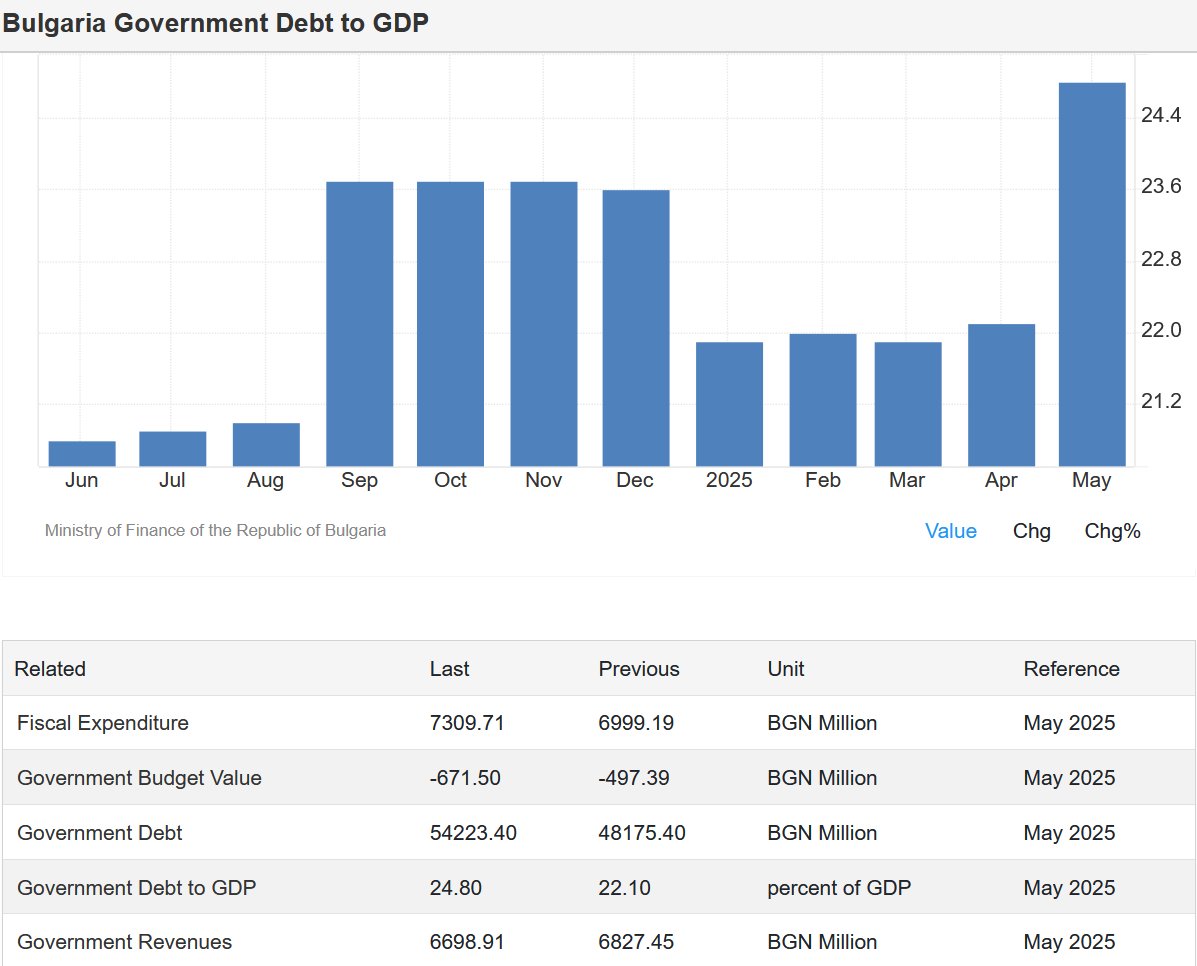
The 213,500 BTC 🇧🇬 Bulgaria sold in 2018 are now worth 79% of its public debt 👀
Bitcoin News tweet media
English
302
771
4.3K
1.5M
wsford
wsford@wsford·
Great night for an 8 second ride. I stayed in the saddle…
wsford tweet media
English
2
1
14
1.5K