Luis Sanchez

4K posts

Luis Sanchez banner
Luis Sanchez

Luis Sanchez

@MrSanders

I really want to be a software engineer, trying to.

Spain Katılım Şubat 2008
2.4K Takip Edilen283 Takipçiler
Luis Sanchez
Luis Sanchez@MrSanders·
@alnaggar_dev @AmpCode I tried Droid and I like it, but i was so stick to pi that i was kind of meh to make a change, what do you recomend me to test in Droid or what does it special for you?
English
1
0
1
10
Saleh
Saleh@alnaggar_dev·
@MrSanders @AmpCode Droid has been my champ, nothing else even gets a sniff. Amp might get a shot this weekend let's see if it can dethrone the king
English
1
0
1
26
Luis Sanchez
Luis Sanchez@MrSanders·
loved @AmpCode such a quality coding agent but is impossible for me to pay for it.. :(
English
3
0
12
1.4K
dax
dax@thdxr·
@GergelyOrosz guys gergely is a tall hungarian man
English
9
0
75
2.7K
Gergely Orosz
Gergely Orosz@GergelyOrosz·
Hope y’all ready for an hour+ of truth bombs from @thdxr Tomorrow!
Gergely Orosz tweet media
English
27
3
321
22.5K
Luis Sanchez
Luis Sanchez@MrSanders·
Thanks for your comments, i do like to talk here am learning a lot by this chats! Actually, something i noticed is that amp is forcing me to think more carefully in the prompt since i know is going to cost me money, which at the same time is being more effective. So i totally agree with you
English
0
0
0
10
Hank Yeomans
Hank Yeomans@HankYeomans·
I know people don't like rando comments but I consider Amp to be the best harness, but also if not used well gets expensive. I've seen some SWEs use it so efficiently. So because I know the buffet is going away eventually I use the buffets to get better so that I can use amp more, but efficiently. I'm not affiliated with Amp in any way. If you have systems design down and systems thinking you're half way there. So my advice is to use what you can to double down on learning for the next iteration which Amp is already there on.
English
1
0
2
35
Luis Sanchez
Luis Sanchez@MrSanders·
@sqs @AmpCode This are the magical Twitter moments, that somebody that you admire for their work write you directly, is crazy.
English
0
0
1
13
Quinn Slack
Quinn Slack@sqs·
@MrSanders @AmpCode Awesome, great to hear! Deep mode is better now IMO. We are nudging more people to it. Happy coding :)
English
1
0
2
101
Luis Sanchez
Luis Sanchez@MrSanders·
@sqs @AmpCode Thank you so much for you kind reply. Indeed i used the smart mode before, I tried now with deep and the usage cost was reduced a lot! Crazy you are taking care of your customers!! kudos for you!
English
1
0
1
112
Quinn Slack
Quinn Slack@sqs·
@MrSanders @AmpCode If you choose deep or rush modes, it will work. What are you seeing? Please share specifics so I can help.
English
1
0
0
150
Luis Sanchez retweetledi
Rameswar
Rameswar@rameswar08·
For non ai people: most ai models work like this, every word looks at every other word to understand context great for accuracy, terrible for speed at massive scale MiniMax's sparse attention changes that instead of processing an entire 1m token context deeply, the model first, quickly scans everything finds the most relevant sections focuses only on those parts kind of like how humans use an index before reading a huge textbook Result: - 10x faster context processing - 15x faster decoding - Much lower compute costs this is one of the key tricks enabling ultra long context ai models without needing absurd amounts of gpu power
English
9
7
96
6.5K
Luis Sanchez
Luis Sanchez@MrSanders·
I barely tested today but from UX perspective is solid, no glitches or problems at all. Some ux things this suprised me was the interaction with elements in the agent response. From code perspective i was able to one shot stuff with decent quality and low verbosity. Kinda similar to what you might have with Pi you have threads here, which you can mention as context. for sure is more than that but am just learning it.
English
1
0
2
48
Luis Sanchez
Luis Sanchez@MrSanders·
@sqs @AmpCode I added my gpt pro sub but seems that i choose the wrong model and anyways is bypassing the subs and using the budget.
English
1
0
0
172
John Lindquist
John Lindquist@johnlindquist·
What's your /goal for the week?
English
5
0
3
433
Luis Sanchez
Luis Sanchez@MrSanders·
@zeeg Am getting to the point of asking me if all the testing must be done, or just throw the thing to the wall and see if sticks..
English
0
0
0
201
David Cramer
David Cramer@zeeg·
This is only true in the most specific of scenarios. It is very hard to test many types of systems, and in those cases the LLMs are degrading the reliability of projects. There’s certainly a world where you dive in and do a bunch of work manually to get it into a good spot, but in my experience (and many of my peers) they are very very poor at managing software quality. You especially see this in things like agents themselves, or scenarios that require a lot of complex network interactions. It’s why I keep investing into evals-as-tests, but it’s still not been reliable enough. I’m sure it’ll get better but let’s be realistic about the challenges.
Uncle Bob Martin@unclebobmartin

I am absolutely more productive using agents. I don't know the factor but it's large. However much of that productivity is spent tuning the agents and hardening the product. I'm guessing 30%-40%. Some might consider that a waste; but I don't. The software I'm creating nowadays is vastly more robust than I'd ever been able to create manually. I don't mean that the code is better. I mean the surrounding tests are vastly better. I have a higher degree of confidence than I ever had manually -- even when I used very disciplined TDD and Acceptance testing. And then there's the ability to quickly reorganize the modules and the architecture while keeping those robust tests running. That is a tremendous boon.

English
10
2
86
22.6K
Luis Sanchez
Luis Sanchez@MrSanders·
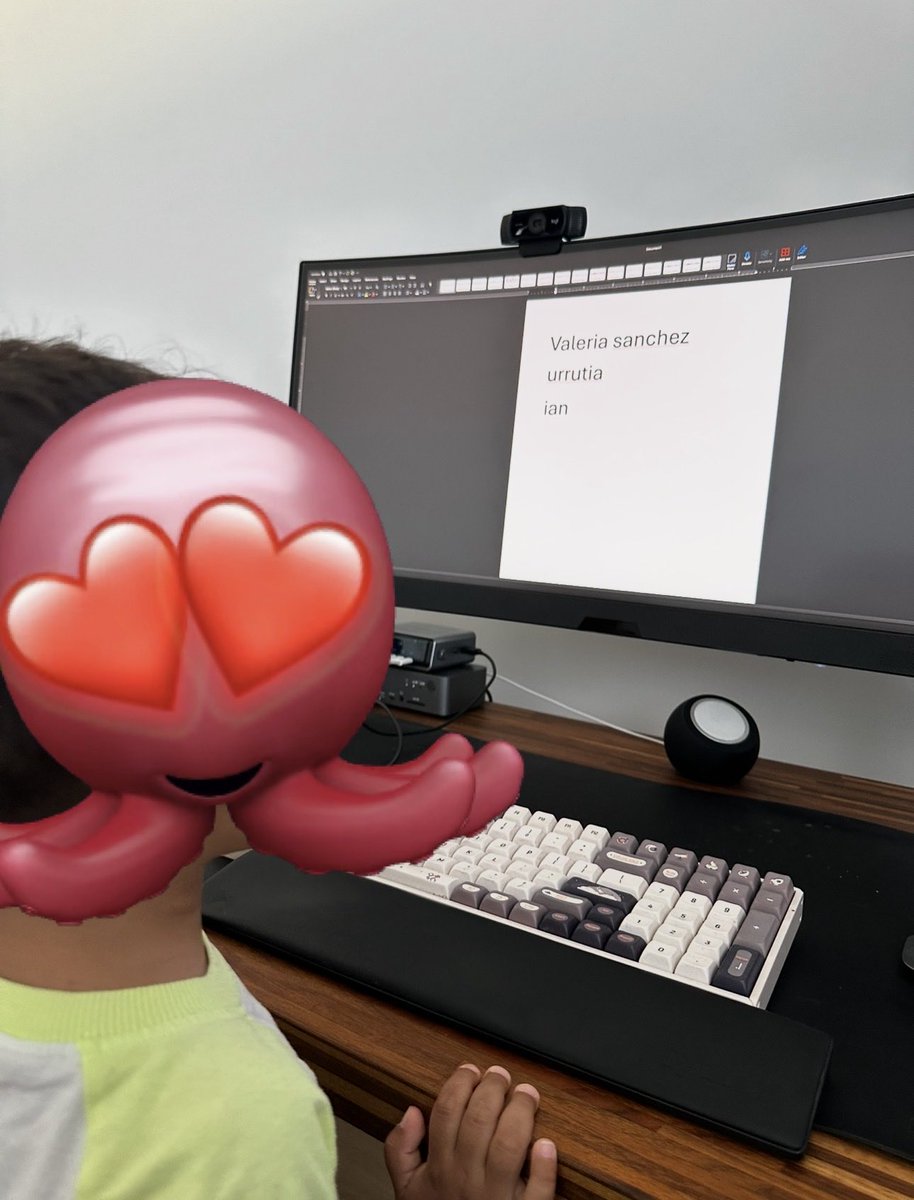
Am not as those that had those fancy computers, or that their father taught them. computers were mesmerizing, each time I had the opportunity to touch one was indescriptible. Since wasn’t mine it was turned off always, so I just typed my name thousands of times. That feeling was triggered today when I saw my little ones exited to write their names in the computer. Or make their own game today.
Luis Sanchez tweet mediaLuis Sanchez tweet media
English
0
0
0
45
Luis Sanchez
Luis Sanchez@MrSanders·
@dillon_mulroy I has been learning so much in this tweets, I have never heard about property testing!
English
0
0
2
647
Luis Sanchez retweetledi
Uncle Bob Martin
Uncle Bob Martin@unclebobmartin·
I got my first job as a paid programmer in 1968. At that time programming looked like writing code on coding forms with pencils and then handing those forms to key punch operators who punched the cards. Then we would take those cards to the Computer room and hand them to an operator who would run a compile. The cards were read into a card reader and more cards would be punched. Those cards were the binary that were subsequently placed back into the card reader. Then the operator would push some buttons on the front control panel and the program would execute. The first few years of my career were involved with either punched cards or paper tape. The editing terminal was always a piece of paper with a pencil. It was only after a few years that I was able to use a CRT display. Even then the main editing terminal was a piece of paper with a pencil. But we would then painstakingly type that code into the CRT display. The source code was stored on magnetic tape, which was slow and error prone, but better than punched cards. A few years later, the source code was finally stored on discs. The discs were slow and big and ponderous. But they were better than magnetic tape. We were finally able to edit on the CRT displays. That editing was slow and ponderous, and mostly line oriented, but it was better than previously. We stopped using paper and pencil as the primary editing tool. Compiles generally took many minutes — sometimes hours. A few years later, and now we’re in the 90s, memory got big enough, and the discs got small and fast enough that compiles that used to take an hour could be done in a few minutes. We were able to use editors like vi, or even eMacs. In the 2000s, we left the editor world for the IDE world. I chose InteliJ for my IDE and I used that right up until five months ago. I know it’s controversial to say this, but IDEs were generally better than editors; even than eMacs. (Well, maybe ;-) Now I don’t use now anything but a terminal window. And maybe sometimes I bring up some file in text mate. The changes in programmer experience over the last six decades have been enormous and radical. Every one of them was good. This one is no different.
English
14
34
279
13.8K
Matt Pocock
Matt Pocock@mattpocockuk·
Thinking about a series where I look at high quality skills and: - break down why they work - try them out - tell you what you should steal from them
English
57
17
1K
43.2K
Luis Sanchez
Luis Sanchez@MrSanders·
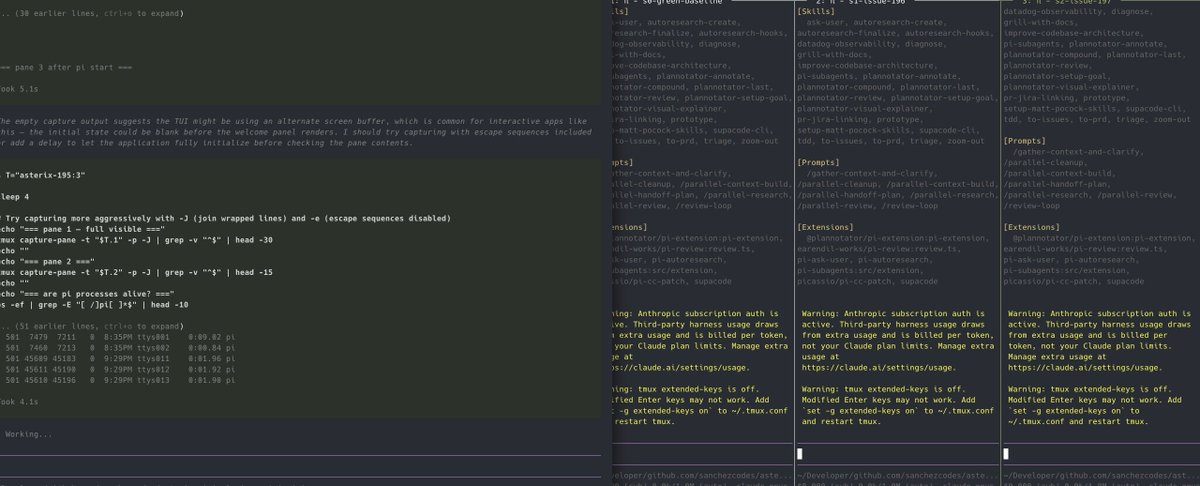
@bentlegen This is sick just unlocked a super power, the thing that the ai can orquestrate this stuff is crazy.
Luis Sanchez tweet media
English
0
0
0
33
Ben Vinegar
Ben Vinegar@bentlegen·
tmux's superpower is it lets your agents manipulate your terminal sessions: - read logs from any pane/window - answer prompts in interactive CLIs - send keys/clicks into TUIs and capture the screen - run subagents in separate windows and inspect their output
Scott Tolinski - Syntax.fm@stolinski

Ah shit. we interviewed @bentlegen and now i'm having to learn tmux
English
24
25
606
131.5K
Letta
Letta@Letta_AI·
An agent’s cognitive structure is how it structures its context In the latest Letta Code update, you can view your agent’s context structure in the “Memory” view to see: - Context type (core/external/skills) - Context links - Version history
English
2
3
42
8K