Muskan Gupta

21 posts

Muskan Gupta banner
Muskan Gupta

Muskan Gupta

@MuskanGupta_6

Doctoral Researcher at MPI-IE

Freiburg im Breisgau, Germany Katılım Mayıs 2019
587 Takip Edilen77 Takipçiler
Muskan Gupta retweetledi
Anshul Kundaje
Anshul Kundaje@anshulkundaje·
Great to the see the flurry of single gene knockdown Perturb-seq like atlases from cell-lines, mouse brain etc over the last few days. These are undoubtedly very valuable datasets. I just want to re-iterate a few other very important expt. design considerations 1/
English
2
66
276
27.8K
Muskan Gupta retweetledi
Niko McCarty.
Niko McCarty.@NikoMcCarty·
New Essay: Why Cell's Cannot Grow Faster Biologists are obsessed with records. We like to learn about the smallest and biggest cells, the animals that live longest, and the birds which migrate furthest. Perhaps this is an intrinsic part of Human Nature; but a part of me — deep down — wants to resist it. I'll not be a stamp collector, I think, or mere record keeper! And yet, records are often a starting point for a deeper curiosity. When we learn that elephants do not get cancer despite the abundance of cells in their bodies, it is only natural to think, "Wait, then why do humans get cancer?" Records are a starting point toward rich questions. But the record I think about most is cell division; specifically, why an obscure microbe — called Vibrio natriegens — is able to divide every 9.8 minutes and not a moment sooner. V. natriegens was first isolated from a glob of mud on Sapelo Island in 1958. A few years later, a man named R.G. Eagon incubated these cells at 37°C, shaking them vigorously in a liquid broth containing blended bits of brains and hearts. Eagon found that the cells divided every 9.8 minutes. This must have been startling, because the average microbe divides every three hours or so. Some, living deep in the Earth's crust, divide once every few years. It has been more than 60 years since Eagon made his discovery, and yet nobody has found a microbe which grows faster than V. natriegens. Is 9.8 minutes some kind of magical threshold; a speed limit to life’s replication? I don’t think so. And the reason I say so is because there is a simple math equation, with just four parameters, that *beautifully* predicts how quickly a cell will grow based on the size, abundance, and activity of its ribosomes. When we understand those four parameters, we can quickly imagine new ways to engineer cells to divide even faster. The equation is λ = (r_t · f_a · Φ_R) / L_R and you can learn all about it in my new essay :)
Niko McCarty. tweet media
English
9
27
175
11K
Muskan Gupta retweetledi
Niko McCarty.
Niko McCarty.@NikoMcCarty·
I recently learned that RNase A enzymes can survive autoclaving, or high-pressure heating, at 121°C. This is strange. But then I learned there are entire organisms that not only survive autoclaving, but actually grow and divide at 121°C??? There was a 2003 paper, for example, where these two scientists took a submarine down to a hydrothermal vent in the Pacific ocean, scooped up some dirt, and kept everything in an airtight tube. This tube had an organism in it. The organism had features "typical of Archaea." They put this organism into an autoclave (held at 121°C) for a full 24 hours. When they took it out of the autoclave, the cell population had doubled. Thus, the organism was called "Strain 121." The 2003 paper ends with an enticing statement: "The factors that permit strain 121 to grow at such high temperatures are unknown. It is generally assumed that the upper temperature limit for life is related to the instability of key molecules essential for life, but which molecules are most important in defining the upper temperature limit have not been defined. However, strain 121 offers the possibility to do this work." I read this and got excited. I began searching for follow-up studies on Strain 121. But I was quickly disappointed. This organism has its own Wikipedia page, but every single reference is from 2003 or 2004. Its name was later changed to Geogemma barossii, so I searched for that, too. But all I could find were random news stories about this "heat-loving microbe," all of which linked back to the original 2003 paper. I'm extremely confused by this. Why is nobody studying this microbe? It doesn't even have a published genome sequence. Where is the intellectual center for hyperthermophile research?
Niko McCarty. tweet media
English
24
49
349
22.9K
Muskan Gupta retweetledi
Niko McCarty.
Niko McCarty.@NikoMcCarty·
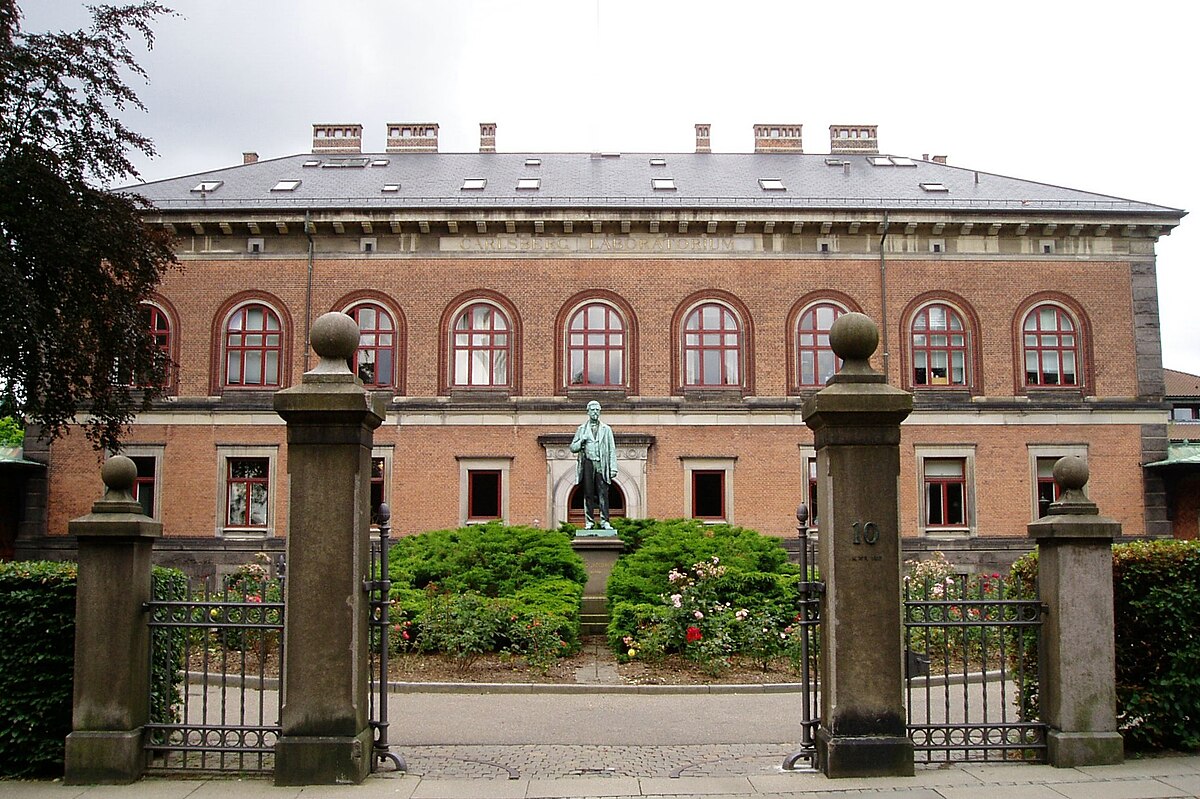
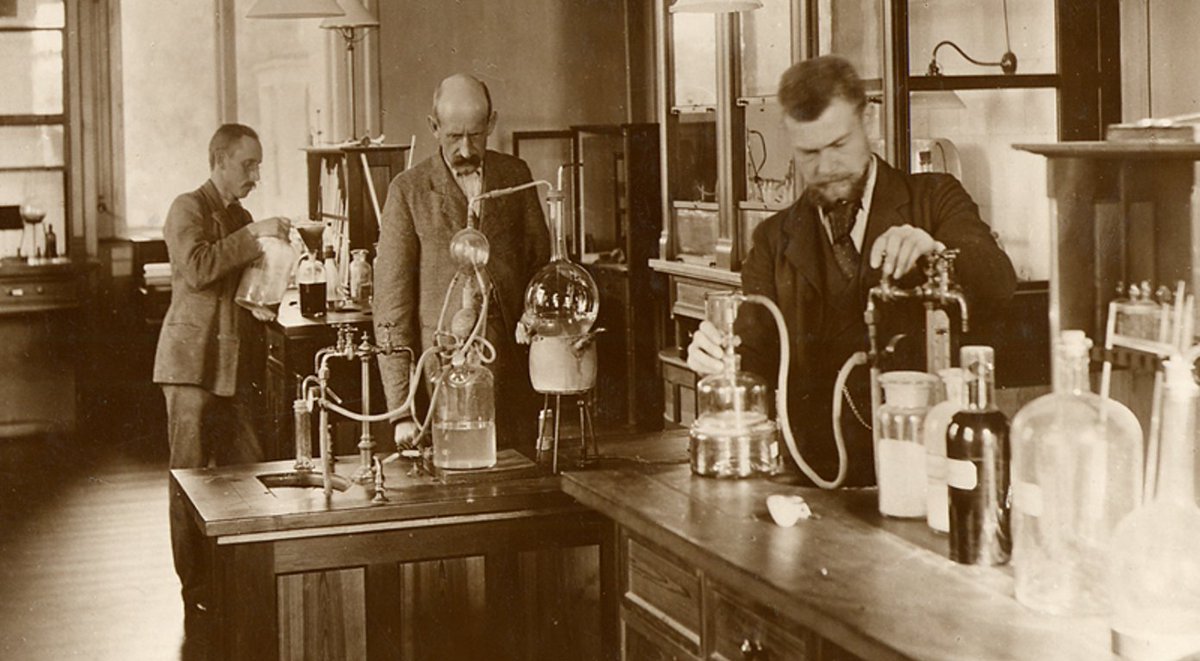
Carlsberg, the beer company, was founded in 1847. In 1875, they founded one of the first industrial research labs. Even today, the impact of this laboratory is highly underrated. Some quick notes on discoveries made by Carlsberg: 1. For most of the 19th century, beer often made people sick because it contained a mixture of yeasts (and, often, bacteria). In 1883, Emil Chr. Hansen (at Carlsberg) isolated “a single cell of good yeast,” according to the Carlsberg website, which he then grew up as a pure culture. This strain of yeast, named Saccharomyces Carlsbergensis, was given away for free to other brewers, who used it to brew much purer beers that didn't make people sick. This yeast is the ancestor to many modern Lager yeasts. 2. In 1909, S.P.L. Sørensen invented the pH scale at the Carlsberg laboratory. 3. Christian Anfinsen, who kickstarted the protein-folding problem (I wrote about him a few days ago), spent a year or two at the Carlsberg Laboratory developing “new methods for analyzing the chemical structure of complex proteins,” according to his Wikipedia page. He went on to win a Nobel Prize in Chemistry in 1972. 4. In 1935, Øjvind Winge discovered that microorganisms — including yeast — can reproduce sexually. This was a big deal for developing genetic engineering tools, and it happened at Carlsberg. 5. Subtilisin, the same enzyme used in many detergents to wash clothes, was discovered at Carlsberg. 6. Morten Meldal invented Click Chemistry (for which he shared the 2022 Nobel Prize in Chemistry) while leading the Chemistry group at Carlsberg. 7. More recently, Carlsberg has been doing a lot of research into accelerating crop breeding to develop better barley and hops. I'd be down to sponsor a long-form article about Carlsberg's research division, provided it includes in-person reporting (and, one imagines, beer tastings.) Please get in touch if you have reporting experience, live in Europe (ideally) and would be interested in doing this.
Niko McCarty. tweet mediaNiko McCarty. tweet media
English
31
291
1.5K
86.9K
Muskan Gupta retweetledi
Sabarinathan Radhakrishnan
Sabarinathan Radhakrishnan@r_sabarinathan·
Last week, we concluded our 2nd Statistical Genomics Workshop and symposium on Cancer Genomics @NCBS_Bangalore . It was a great learning experience and had interesting discussions!! Thank you Jakob, Simon, Mathilde, Mohit, Sarthak, Manju, Ishaan, Swetha and the participants!!
Sabarinathan Radhakrishnan tweet mediaSabarinathan Radhakrishnan tweet media
English
1
7
69
3.9K
Muskan Gupta retweetledi
Sabarinathan Radhakrishnan
Sabarinathan Radhakrishnan@r_sabarinathan·
Are you interesting in learning how genomics can help us understand cancer evolution? Join our one-day symposium on cancer genomics on the 7th Sep 2024 @NCBS_Bangalore. See Poster 👇 for more details and a list of exciting speakers!! Registration link: forms.gle/zQkkEb3Vj9weau…
Sabarinathan Radhakrishnan tweet media
English
0
21
43
7.1K
Muskan Gupta retweetledi
Sabarinathan Radhakrishnan
Sabarinathan Radhakrishnan@r_sabarinathan·
Excited to share the work of @faseelaee from the lab, jointly with @DimpleNotani, @NCBS_Bangalore uncovering the molecular mechanism underlying increased somatic mutations at CTCF/Cohesin-binding sites (CBSs) at chromatin-loop anchors and TAD boundaries in cancer. See thread 👇
bioRxiv@biorxivpreprint

Replication stress underlies genomic instability at CTCF/cohesin-binding sites in cancer biorxiv.org/cgi/content/sh… #bioRxiv

English
12
12
92
9.2K
Muskan Gupta retweetledi
National Centre for Biological Sciences
Sabrinathan Radhakrishnan's Lab at NCBS in collaboration with Aarhus University and Indian Institute of Science, has organized a Statisical Genomics workshop, with focus on basic statistics, cell transcriptomics and pathway and gene regulatory analysis.
National Centre for Biological Sciences tweet media
English
0
8
121
8.8K
Muskan Gupta
Muskan Gupta@MuskanGupta_6·
The emergence of antibiotic resistant bacteria is none less than a 'nightmare'. To combat this problem, we have a potential therapeutic weapon- Bacteriophages. Here's my first published article, co-authored by @RohitGokz, which talks about these versatile entities. @IndSciComm
IndSciComm@IndSciComm

Our latest article on bacteriophages (viruses that 'eat' bacteria) and what they can do for humanity was written by @MuskanGupta_6 and @RohitGokz as part of our scicomm training initiative indscicomm.blog/2020/04/19/the…

English
0
2
11
0
Muskan Gupta
Muskan Gupta@MuskanGupta_6·
An amalgamation of Science and Art- Science Art. Bacteriophage and Bacterial cells' representation from an artistic viewpoint. #SciArt #bacteriophage #virus
Muskan Gupta tweet mediaMuskan Gupta tweet media
English
4
5
12
0
Kumar Keshav
Kumar Keshav@KineticKeshav·
'जनता कर्फ्यू' की सफलता का जश्न मनाने सड़कों पर उतरे सैकड़ों लोग 👏👏 twitter.com/Winkerbell_/st…
हिन्दी
522
1.2K
2.8K
0
Muskan Gupta
Muskan Gupta@MuskanGupta_6·
@AnneAMadden I use toothpicks for scraping off the buccal cavity cheek cells and visualising them under a light microscope. (Slide Staining)
English
0
0
1
0
Dr. Anne A Madden
Dr. Anne A Madden@AnneAMadden·
Do you use toothpicks in your science? I’d love to know how! In microbiology, I’ve used them to help cultivate and isolate microbes, inclusing those that peoduce novel antibiotics. What about you? #sciencetoothpicks
Dr. Anne A Madden tweet media
English
10
4
16
0