অমাত্য অজাতশত্রু (Amātya Ajātashatru)

7.2K posts

অমাত্য অজাতশত্রু (Amātya Ajātashatru)

অমাত্য অজাতশত্রু (Amātya Ajātashatru)

@MyExcellencyAJ

I debunk false claims pertaining to history, religion, and politics. I set the narrative right, and turn the tables when needed. Did I mention my poetry?

ব্রহ্ম মধ্যে Katılım Nisan 2025
48 Takip Edilen267 Takipçiler
Sabitlenmiş Tweet
অমাত্য অজাতশত্রু (Amātya Ajātashatru)
Part 1 of 2 ----------- This profile has been spreading a lot of misinformation lately as history. Only yesterday, he claimed that Aurangzeb did not send money to the Sharifs of Mecca and rather distributed it to the poor in India, when in reality he had sent 600,000 rupees to Mecca just taking care not to allow the bounty to land with the Sharifs. Today, he lies about Akbar's so-called Islamic piety, and claims that Deen-i-Ilahi never even existed, both of which are false claims as I will prove. 1. That Akbar had doubts about his religion of birth is clear from his letter to King Philip II of Spain (SS1). He said: "every one continues, without investigating the arguments and reasons, to follow the religion in which he was born and educated, thus excluding himself from the possibility of ascertaining the truth, which is the noblest aim of the human intellect. Therefore we associate at convenient seasons with learned men of all religions, and thus derive profit from their exquisite discourses and exalted aspirations." 2. In order to disprove the Islamic doctrine of fitrah and the theory that Arabic is the language of God, Akbar carried out the infamous Gunga Mahal experiment, maiming 12 children in the process (SS2-3). This was documented both by Abul Fazl and Abdul Qadir Bada'uni, and the latter wrote of it critically due to its anti-Islamic intent (SS-4). Disbelievers can also sometimes go to great extremes. 3. As to his recitation of the Kalima at his deathbed - as his health failed, Hakim Ali Gilani and his Muslim nobles stopped allowing Jesuit missionaries, Hindu pandits, Jain munis, etc to attend his bedside. Akbar's finest years had been of religious dialogue with men of many faiths, but as his health declined, the Muslims of his court became overtly anxious about his "akhirah". A man weak and dying in the company of Muslims constantly reminding him to chant the Kalimah would hardly say "Jai Shri Krishna" or "Om Suryay Namah". Even if he did, that would never make the records. We will cover Din-i-Ilahi in Part 2 of 2.
Indian Muslim Archives@Rustum_0

Emperor-Caliph Akbar Bahadur was born a Muslim, lived as a Muslim, and died a Muslim. As for Din-i Ilahi, no such thing ever existed. It is a fabricated term, and he never founded any new religion. At his deathbed, he recited Kalimah, heard the Qur'an, & died affirming Tawheed of Allah Azzawajal. — Tuzuk-e Jahangiri.

English
1
1
4
471
অমাত্য অজাতশত্রু (Amātya Ajātashatru)
Good for you if you came across the research independently. But if that led you to conclude that "Surely, it must be because something else during that time may have proposed the skin-colour theory and sage Brghu here is trying to refute it." then I don't believe your research led you anywhere. Even in the question and "refutation" by Bharadwaja (not Bhrigu), he literally says "you say Brahmins are all one color, but I see the tones of desire, anger, fear, etc being among all varnas, including the Brahmins." This demonstrates that EVEN in his question and refutation, Bharadwaja DOES NOT understand the meaning of varna in Bhrigu's OP to be skin color. He merely objects that Brahmins are not all spiritually the same tone, for some of them have darker tones represented by desire, anger, fear, etc. This is all clear from simple comprehension of fairly simplistic language. No one should have need for additional time to understand this.
🔸️Diamond Needle🔸️卍 | 金刚针@Vajrasuci

Do you think I wouldn't come across this piece from Santi Parva in my research? You have to ask - why is this even a topic of discussion here? Why are they clarifying that it's not about skin colour? Surely, it must be because something else during that time may have proposed the "skin-colour" theory and sage Brghu here is trying to "refute" it. However, I know how to give a solid counter to this Sage Brghu who's trying to misrepresent the classical understanding here. All in due time.

English
0
0
0
23
অমাত্য অজাতশত্রু (Amātya Ajātashatru)
Good for you if you came across the research independently. But if that led you to conclude that "Surely, it must be because something else during that time may have proposed the skin-colour theory and sage Brghu here is trying to refute it." then I don't believe your research led you anywhere. Even in the question and "refutation" by Bharadwaja (not Bhrigu), he literally says "you say Brahmins are all one color, but I see the tones of desire, anger, fear, etc being among all varnas, including the Brahmins." This demonstrates that EVEN in his question and refutation, Bharadwaja DOES NOT understand the meaning of varna in Bhrigu's OP to be skin color. He merely objects that Brahmins are not all spiritually the same tone, for some of them have darker tones represented by desire, anger, fear, etc. This is all clear from simple comprehension of fairly simplistic language. No one should additional time to understand this.
English
0
0
2
16
অমাত্য অজাতশত্রু (Amātya Ajātashatru)
"whose ancestors have lived in what is now Pakistan before then" - whose ancestors lived in India. It was always India, that is, Bharat. "The land and people living there have not changed." Oh yes they have changed. How did an Arabic religion make any progress here? How many people from that region not following Arabic religions were forced to move away from there in 1947? Stop being in denial.
English
3
0
0
20
Garou
Garou@garou321123·
@MyExcellencyAJ @AliPK1947 They existed pre-1947 worn by the people of Pakistan whose ancestors have lived in what is now Pakistan before then. The land and people living there have not changed. Stop coping.
English
2
0
20
197
MUSAFIR.
MUSAFIR.@Peoplepower08·
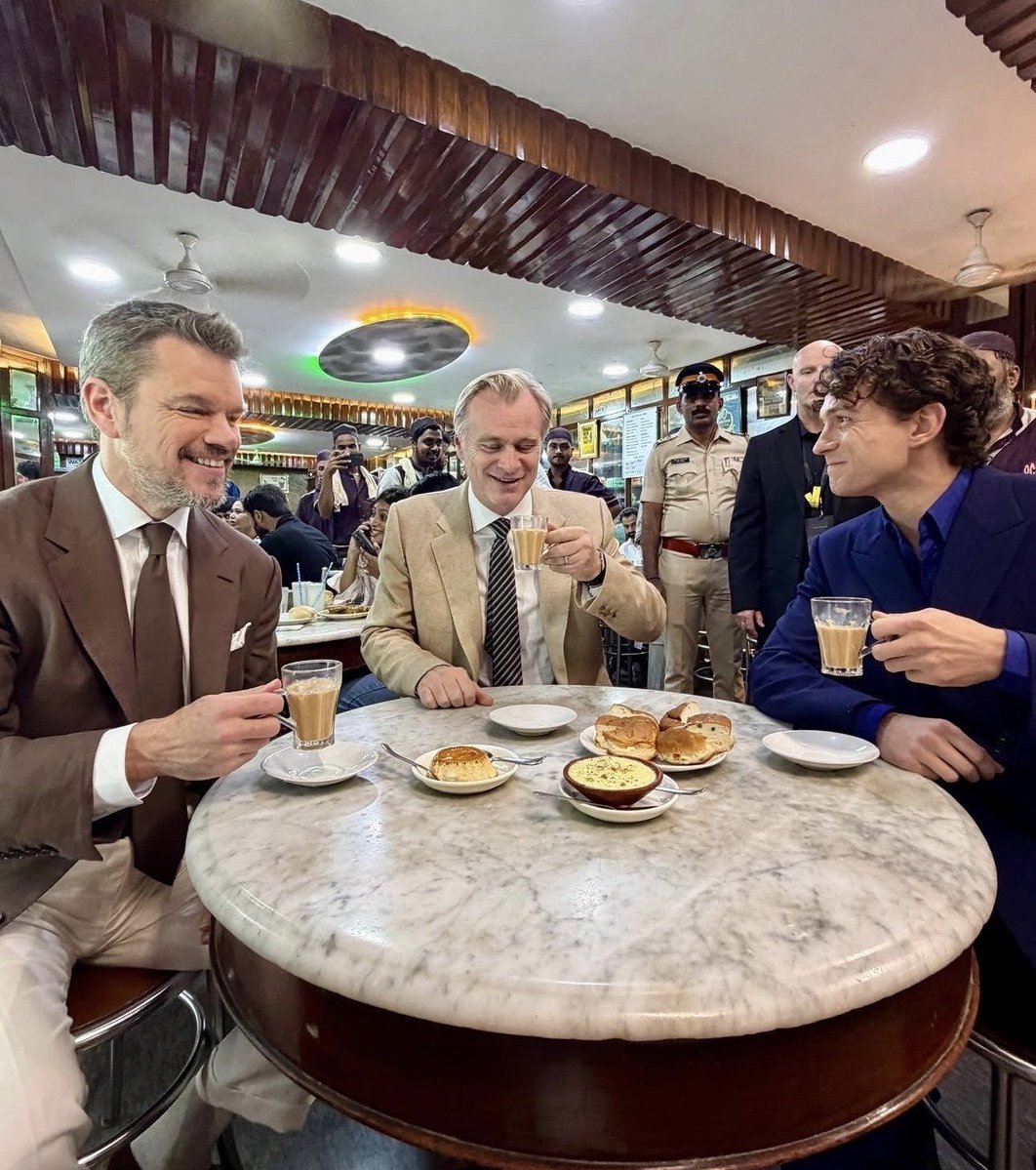
They chose a Muslim-managed café in India for a reason—hygiene comes first. ♥️
MUSAFIR. tweet mediaMUSAFIR. tweet media
English
55
150
1.8K
48.5K
Indusian 🇵🇰
Indusian 🇵🇰@AncientPak·
Indians today 👦🏿 : (we have centuries old relations with #Afghanistan 🇦🇫)* Their relations 👇🏼👇🏼👇🏼🥱
Indusian 🇵🇰 tweet media
English
18
12
66
1.3K
Shumail 🇵🇰🍁
Shumail 🇵🇰🍁@Pakforever9·
This small bronze Buddha is probably one of the earliest iconic representation of Shakyamuni from Gandhara, 1st - 2nd century , Pakistan 🇵🇰 Gandhara / Ancient Pakistan 🇵🇰
Shumail 🇵🇰🍁 tweet media
English
40
20
77
2.2K
অমাত্য অজাতশত্রু (Amātya Ajātashatru)
No, the name Sindhu also came around 1800 BCE with the advent of the Aryans. We can't be sure what the Harappans called themselves. We "guess" the Sumerians called them Meluhhans. Sindhu, while being the S in Pakistan, is the etymological root of the word India. Hence India = land beyond the Sindhu. Who retains the name retains the IP.
MD Umair Khan@MDUmairKh

Reminder: Mohenjo-Daro ruins are over 4500 years old. The word India was first used around 2500 years ago by the Greeks. Back then, the region around the Indus River (where Pakistan is built) was called Sindhu (symbolised by S in Pakistan).

English
0
0
0
31
অমাত্য অজাতশত্রু (Amātya Ajātashatru)
No, the name Sindhu also came around 1800 BCE with the advent of the Aryans. We can't be sure what the Harappans called themselves. We "guess" the Sumerians called them Meluhhans. Sindhu, while being the S in Pakistan, is the etymological root of the word India. Hence India = land beyond the Sindhu. Who retains the name retains the IP.
English
0
0
8
110
MD Umair Khan
MD Umair Khan@MDUmairKh·
Reminder: Mohenjo-Daro ruins are over 4500 years old. The word India was first used around 2500 years ago by the Greeks. Back then, the region around the Indus River (where Pakistan is built) was called Sindhu (symbolised by S in Pakistan).
English
14
1
10
2.1K
MD Umair Khan
MD Umair Khan@MDUmairKh·
World's first public stepped bath was created in Mohenjo-Daro, Ancient Pakistan.
English
170
72
432
77.5K
PunjabicWarrior
PunjabicWarrior@PunjabicWarrior·
Returning Greater Punjabi cities to their old native names is a must in a de-colonisation program. Islamabad —> Nawa Taxila Dera Ghazi Khan —> Nahar Rahim Yar Khan —> Pattan Mianwali —> Katchi Muzaffargarh —> Musan Patti Bannu —> Akra Hazara —> Arsa Peshawar —> Purushvār
Indonesia
37
19
96
37.3K
Powindah 💀
Powindah 💀@intel_view·
Life if there were no country called India on the map. 🇮🇳🙂
English
13
4
103
2.2K
Indus
Indus@_Indus_·
Indus tweet media
ZXX
12
1
22
734
A. Lukman
A. Lukman@Islam435·
Islam remains the fastest growing religion on earth. If it was truly violent why would millions keep choosing it?
English
289
16
97
8.5K
Shumail 🇵🇰🍁
Shumail 🇵🇰🍁@Pakforever9·
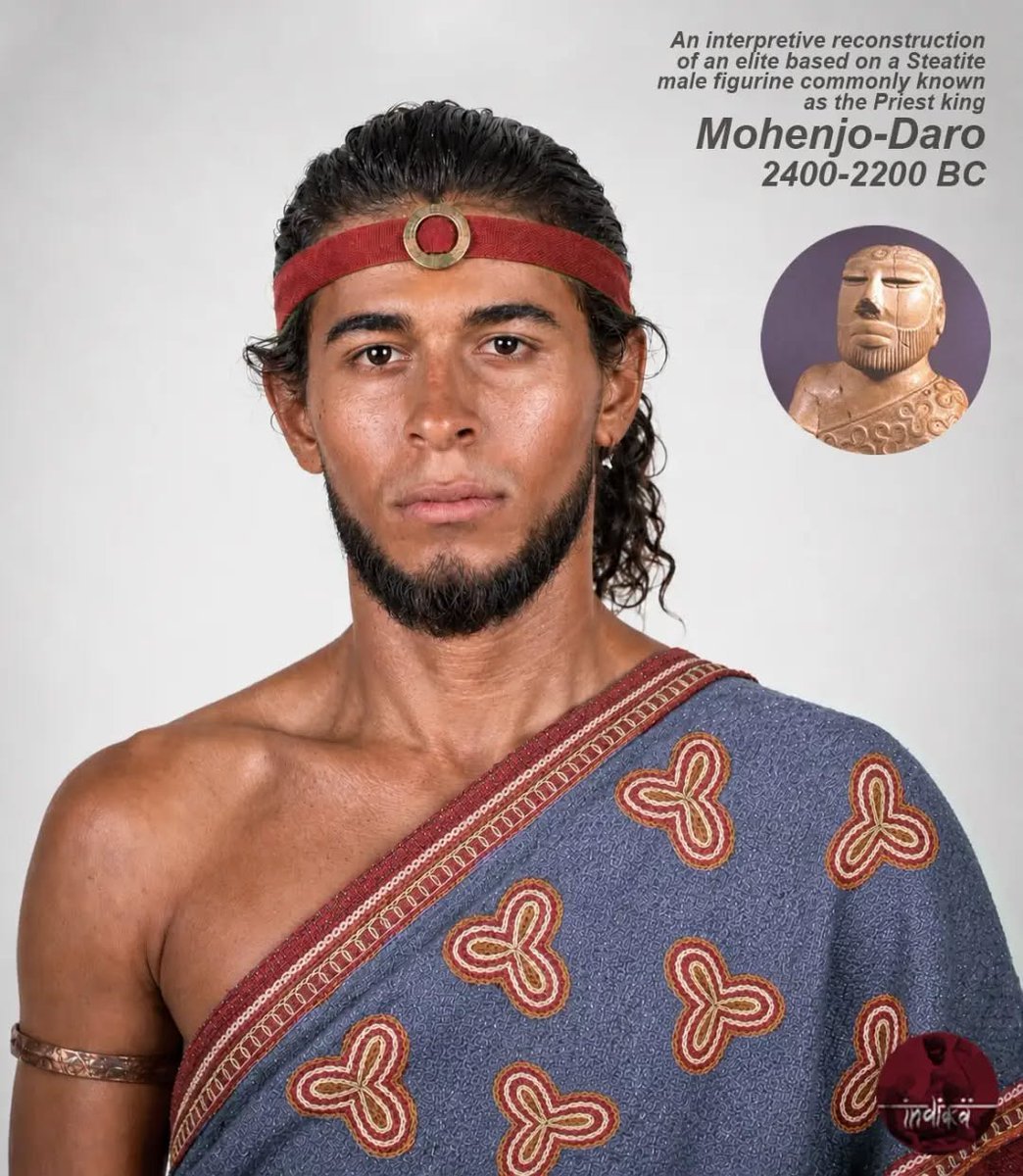
An interpretative reconstruction of a mature Harrapan elite based on the so called " priest king ", figurine from Mohenjodaro, Sindh, Pakistan 🇵🇰 . Despite its popular name, there is no archaeological evidence that this famous steatite figure represented either a priest or a king,it is simply the finest surviving sculpture of an elite from the indus Valley civilization, discovered at Mohenjodaro during the excavations of Ernest J.H Mackay (1927-1928). The reconstruction is based on the surviving features of the original sculpture,the distinctive fillet with its central ornament, the carefully groomed beard , the tre foil - patterned robe draped over one shoulder and the proportions of the face, elements not preserved in the artifact such as skin tone , eye colour, hair style and textile colours are informed by archaeological evidence and presented as reasoned artistic interpretation rather than established fact . The garment is depicted as indigo-dyed cotton with embroidered trefoil motifs and madder dyed border, reflecting textile technologies known from the mature Harrapan period . Date : c.2400-2200 BCE Indus Valley civilization / Ancient Pakistan 🇵🇰
Shumail 🇵🇰🍁 tweet media
English
35
8
56
2.4K