Neo

3.6K posts

Neo banner
Neo

Neo

@neo

A mentorship community, builder residency, & VC fund. Retweets represent our diverse community’s voices, from students to CEOs. Apply now: https://t.co/459cccQZAw

Katılım Haziran 2009
642 Takip Edilen18.5K Takipçiler
Neo retweetledi
Shreshth Rajan
Shreshth Rajan@shreshthrajan·
I built Visdep, a navigable map over your codebase to cut onboarding time for humans and agents. Try it for free with any GitHub URL: visdep.com
English
9
10
26
1.1K
Neo retweetledi
Mason Wang
Mason Wang@masonwang025·
i reproduced a model for predicting how ultrasound travels through the skull with 11x less parameters + open-sourced the training code and weights new mini-post to share learnings and some visualizations :)
English
11
25
222
18.2K
Neo retweetledi
Kian Sadeghi
Kian Sadeghi@KianSadeghi5·
We get a lot of questions about genomics, understandably. We’ve been in this space long enough to have heard them all. The biggest one: that genetics is binary. You either have a gene or you don't. In reality, things like cancer or height exist on a spectrum, they are shaped by multiple genes. That’s why Nucleus looks at all of your DNA to calculate your risk.
English
0
1
8
1.2K
Neo retweetledi
Alex Bouaziz
Alex Bouaziz@Bouazizalex·
Next season, @deel will become the official sleeve partner of @Arsenal 🔴⚪ When we partnered with @Arsenal last year, we set out to build something lasting, starting with rolling out Deel across their workforce and HR operations. Having our name on one of the most iconic shirts in world football is the next step in that relationship. We made ‘Patchmaker’ with the club, a film featuring Viktor Gyökeres and Patrick Vieira. Worth watching 📷 Yes, I'm a PSG fan. But like every French kid, I grew up dreaming in front of Arsène, Titi and the Invincibles! #COYG
English
45
50
491
47.4K
Neo retweetledi
Zach Lloyd
Zach Lloyd@zachlloydtweets·
Thanks to @FortuneMagazine for featuring me this week! If anyone can build their own software, an interface on top of your data (traditional SaaS) isn't a moat anymore. Meta-apps like Warp, Claude Code, and Codex are where the value is shifting: fortune.com/2026/05/13/goo… 🔖
English
1
4
26
1.5K
Neo retweetledi
Michelle Lim
Michelle Lim@michlimlim·
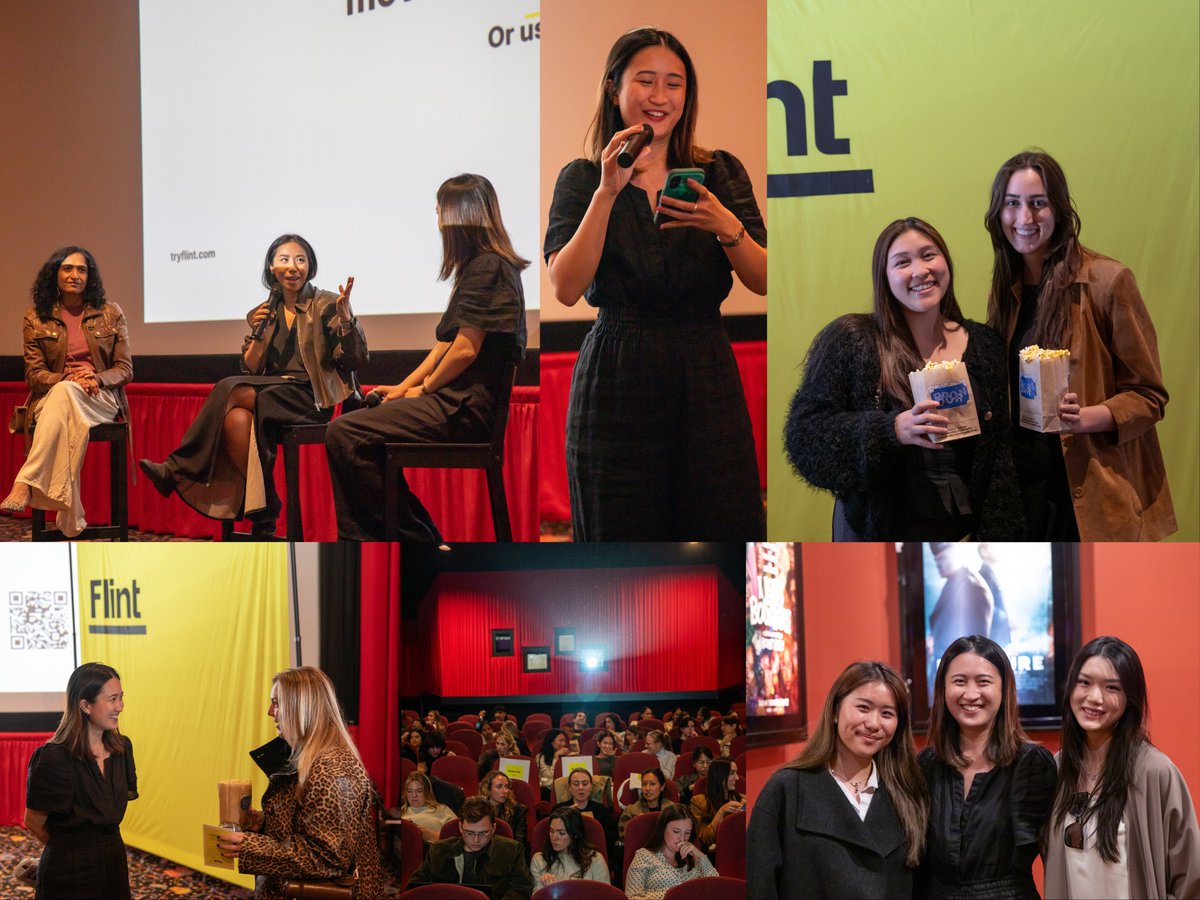
Turns out you can host a bicoastal screening of DWP. After hosting the NYC one we brought the premiere to SF. Thank you everyone who came out.
Michelle Lim tweet media
English
0
2
11
837
Neo retweetledi
Catherine Yeo
Catherine Yeo@catherinehyeo·
At the recent @OpenAIDevs Founder Day, I had fun chatting about how we use OpenAI's capabilities to scale scientific intelligence at @altaratech: - Helping scientists and engineers reason across complex, multimodal data - Parallelizing long-running workflows - Building trust through greater transparency If you're interested in tackling challenges in AI for science, we're hiring! (Link below)
English
4
8
51
7.4K
Neo retweetledi
Catherine Yeo
Catherine Yeo@catherinehyeo·
Excited to see Altara (@altaratech) on this year's Black Flag 100, a list of one hundred deep tech startups nominated by 500+ deep tech founders. Grateful to be on a list with so many incredible companies pushing the frontier.
Catherine Yeo tweet media
English
3
5
27
1.5K
Neo retweetledi
Houjun Liu
Houjun Liu@houjun_liu·
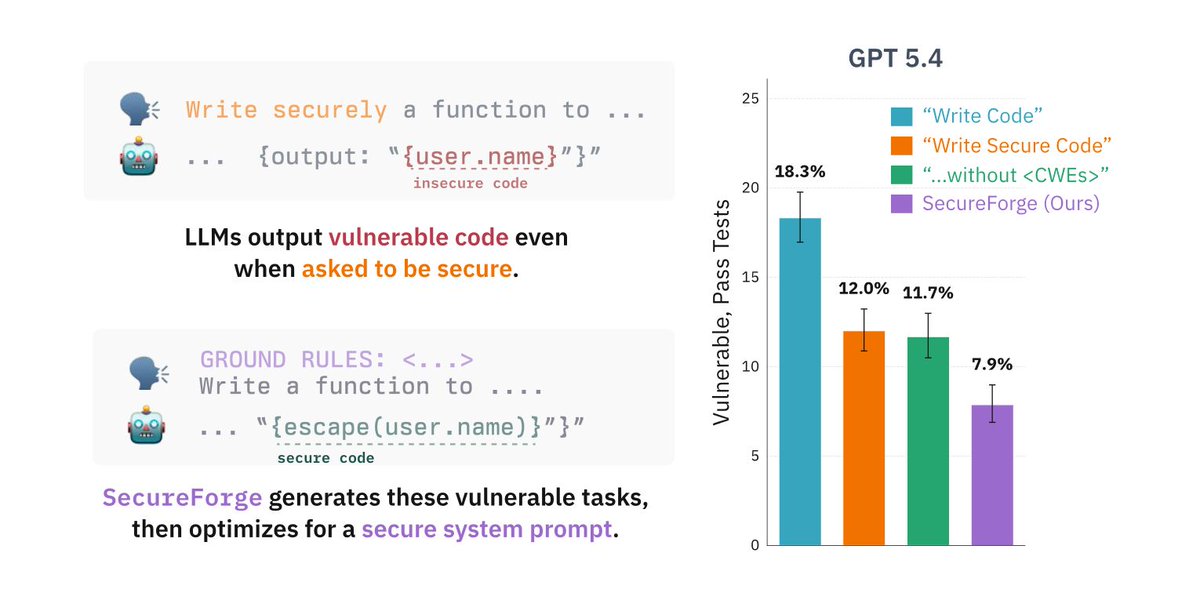
🚨 Your coding agent may be secretly sticking vulnerabilities into your code!! 🚨 Wouldn't you want to fix that? Hint: asking it to write secure code is not enough. (1/n)
Houjun Liu tweet media
English
4
38
80
23.1K
Neo retweetledi
Eric Glyman
Eric Glyman@eglyman·
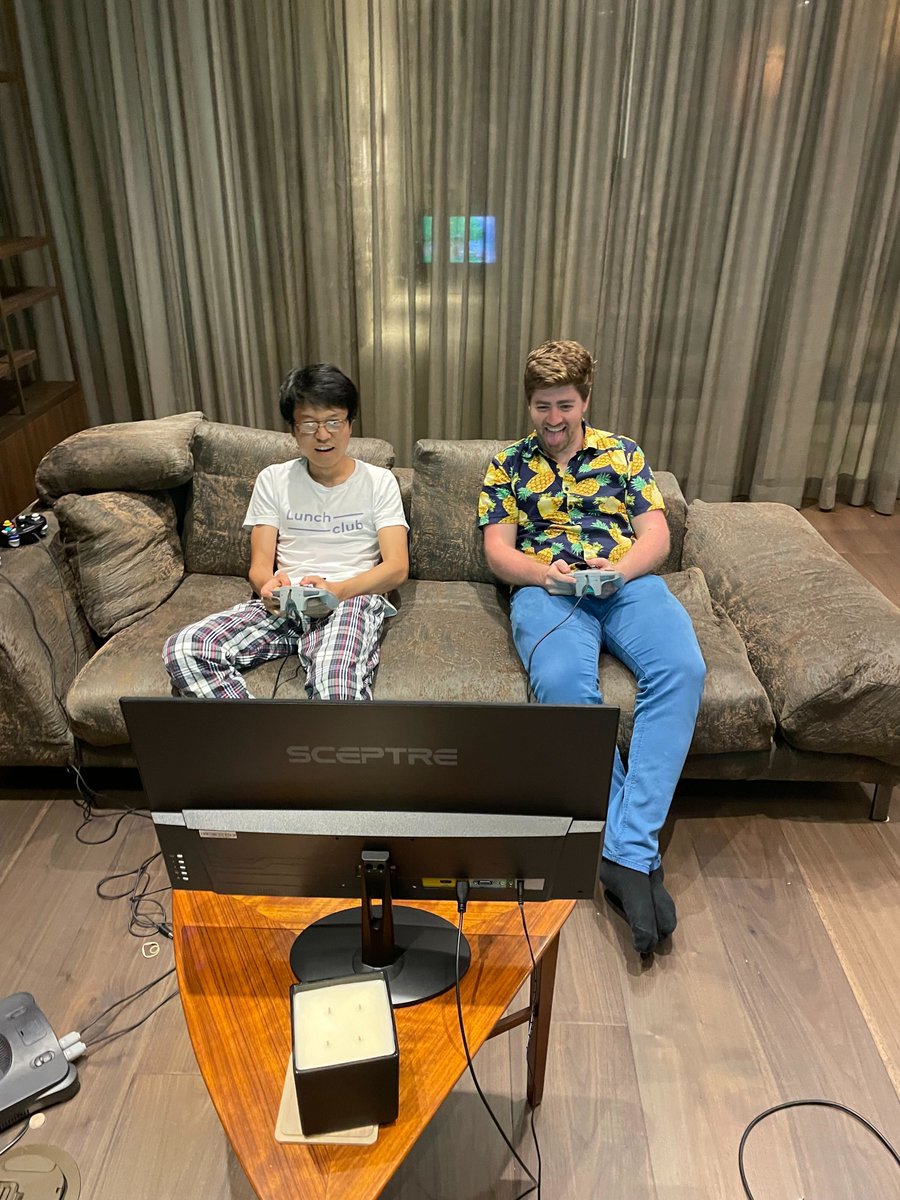
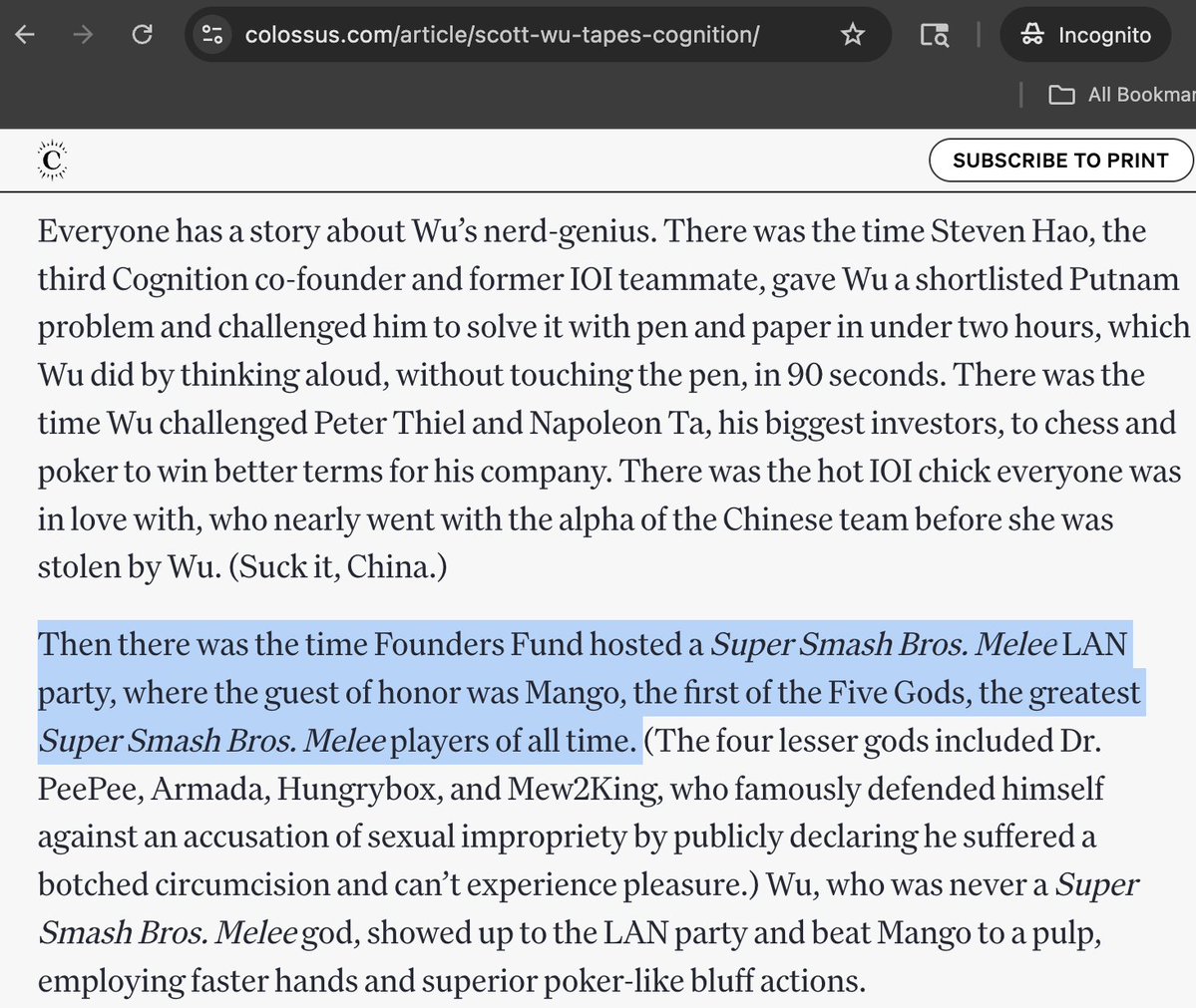
Scott Wu solved a Putnam problem in 90 seconds. beat Mango at Melee. raised from Peter Thiel over chess. I beat him at N64 Smash once. nobody's writing a Colossus piece about it, but I'd like it in the record.
Eric Glyman tweet mediaEric Glyman tweet media
Colossus@colossusmag

Scott Wu is the co-founder of Cognition AI, one of the fastest-growing companies in history. He’s also the greatest competitive programmer the US has ever produced. You may have seen him doing impossible card tricks and mental math. You’ve never seen him asked about weed, Michael Jordan, cancer, and human consciousness over a punnet of strawberries. That is what Colossus editor-in-chief Jeremy Stern did on a recent visit to San Francisco. For those less familiar with @ScottWu46: In 2nd grade, he entered a math competition for 7th graders, lost, and was so furious he still fumes about it 20 years later. The next year he entered the 9th-grade division as a 3rd-grader and got a perfect score. Then he won first place at the US national middle-school math competition and three straight gold medals at the International Olympiad in Informatics, where he became the greatest American gold-medalist and coach in history. Most of the people running the biggest AI companies met as teenagers, competing for their countries on international math and science teams. OpenAI’s Greg Brockman, Anthropic’s Dario Amodei, Meta’s Alexandr Wang, to name just a few. Most agree that the von Neumann among them was Scott Wu. In November 2023, a few weeks after his mother died of lung cancer, on the day Sam Altman was fired from OpenAI, Wu founded his own AI company: Cognition. He was 26 and saw earlier than almost anyone that AI would converge on agents that work in the background, 24/7, like coworkers. He shipped Cognition’s AI software engineer Devin in March 2024. It worked poorly, and he took intense public criticism for it. Now, in its first 18 months of service, Devin has generated $445 million of revenue run rate and usage has doubled every eight weeks. The US Army, Goldman Sachs, and Mercedes-Benz are all customers. Cognition is raising at a valuation around $25 billion. @JeremySternLA sat down with Wu, the emperor of the nerds, to ask the questions we’d all ask one of the smartest people in America—building the most consequential technology of our generation—if we ever got the chance. As well as MJ and weed, they talk about the cluster of competitive math prodigies behind so much of AI, what makes us human when AGI arrives, and why Wu believes he was put on this earth to teach AI how to code. Read the piece below.

English
45
23
1K
228.9K
Neo retweetledi
Kian Sadeghi
Kian Sadeghi@KianSadeghi5·
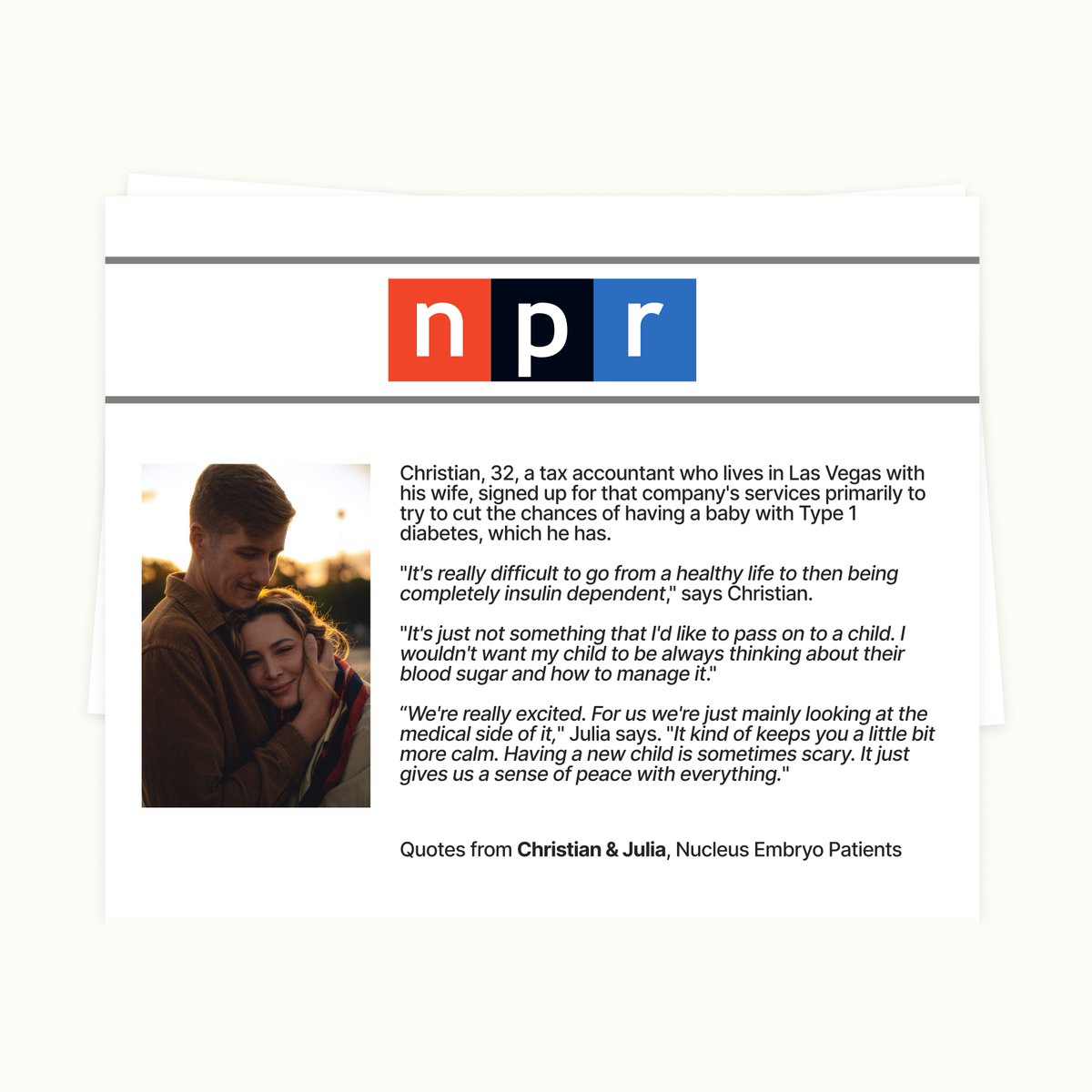
Spoke with @robsteinnews from @NPR about Genetic Optimization and where this technology is headed. Like I told Rob: parents don’t want a “superbaby”, they want a better version of themselves. For Nucleus couple Julia and Christian that means reducing their child’s chance of type 1 diabetes — something Christian struggles with every day.
Kian Sadeghi tweet media
English
1
1
13
4.8K
Neo retweetledi
Sara Hooker
Sara Hooker@sarahookr·
We are releasing something this week that the team has been sprinting on for the last few months. 🔥 I am very proud of the work. Just incredibly exciting results, which always leads you to want to push even further. Very fun, extremely proud of the @adaption_ai team.
English
9
7
193
10.5K
Neo retweetledi
Tanay Kothari
Tanay Kothari@tankots·
a year ago, @WisprFlow was 7 people. today we're 60 our revenue has grown 150x and our user base has grown 200x people ask what changed - honestly? a lot of things but one decision I don't talk about enough: working with a @TitanxCoaching Coach. I don't think we'd be where we are today without him @ajgoldstein_ and @TheMcGibbon recently came by to film - and we reflected on Wispr’s journey over the past year and the impact coaching has had on me if you’re a founder wondering if coaching is worth it, here’s my take
English
19
9
240
23.7K
Neo retweetledi
Eric Glyman
Eric Glyman@eglyman·
we trained a .35b-parameter model to navigate spreadsheets better than opus 4.6. normal corporate card company stuff.
Ramp Labs@RampLabs

We partnered with @PrimeIntellect to build Fast Ask, a small RL-trained subagent that helps our Sheets agent find answers in spreadsheets. It scores +4% over Opus on exact match accuracy at Haiku latency.

English
34
34
977
154.5K
Neo retweetledi
Tarek Mansour
Tarek Mansour@mansourtarek_·
Kalshi raised $1B at a $22B valuation led by Coatue, with participation from Morgan Stanley, Sequoia, a16z, and others. In 2018, we were two kids who loved math, markets, and debate. And we had a dream: build the next generation financial market, where we capture a broader set of questions and harness the power of the masses to price them better than Wall Street. Kalshi was born to fulfill that dream. Today, most of these questions are traded indirectly, priced through imprecise proxies or negotiated bilaterally in opaque, restricted, relationship-driven markets. But thanks to our incredible community of users who make our markets work, Kalshi has the opportunity to change that by turning historically fragmented and untradeable risk into open, liquid, and standardized markets. We’ve seen this movie before. When interest rates, currencies, commodities, and crypto moved from dark to lit markets, volume did not just migrate: access expanded, new use cases emerged, and the opportunity grew by orders of magnitude. Today, Kalshi represents over 90% of US prediction market volume and the majority of activity globally, with annualized volume growing to $178B over the past 6 months. What started as retail is quickly becoming institutional — hedge funds, asset managers, prop firms, and insurers are beginning to trade, provide liquidity, and hedge real-world risk directly. The scope and scale of prediction markets are just beginning to take shape. We’re using this new capital to accelerate the institutional adoption underway — unlocking trillions in capital to facilitate active trading and risk management. Prediction markets are moving from early adoption to core financial infrastructure. This is just the beginning.
Tarek Mansour tweet media
English
289
358
3.5K
2.7M