NZ_fund_MECFS 🦋
7.1K posts

NZ_fund_MECFS 🦋
@NZ_fund_MECFS
It’s the end of the world, yet you’re not gone — until you finally are. #MECFS #LongCovid #PostVac #NotRecovered #MillionsMissing https://t.co/VVu3MaZAnH


1/4 Die aktuelle Entwicklung bei #LongCovid und #MECFS folgt einem Muster: Psychosomatik, Neurologie & zuletzt Psychiatrie formulieren Versorgungsansprüche. Das neue Konsensuspapier rahmt Post-COVID als psychische Erkrankung, „psychiatrische Expertise sei zwingend erforderlich“.


Währed Deutschland feiert, dass man nun für #LongCovid zwei Antidepressiva auf Kasse verschreiben kann, fahre ich nach Polen, um ein Durchblutungsmedikament privat zu kaufen, das seit letztem Jahr ganz normal auf der österreichischen Off-Label-Liste steht. #EminenzStattEvidenz


what is it called when every day is the worst day of your life


So funktioniert das nicht! Es kann doch nicht sein, dass 2026 noch immer Studien umgesetzt und gefördert werden, die: - PEM falsch einordnen (nein, PEM ist keine übermäßige Erschöpfung nach Anstrengung!) - eine Gruppe rheumatische Erkrankungen mit PEM generalpractice.umg.eu/forschung/proj… 1/n

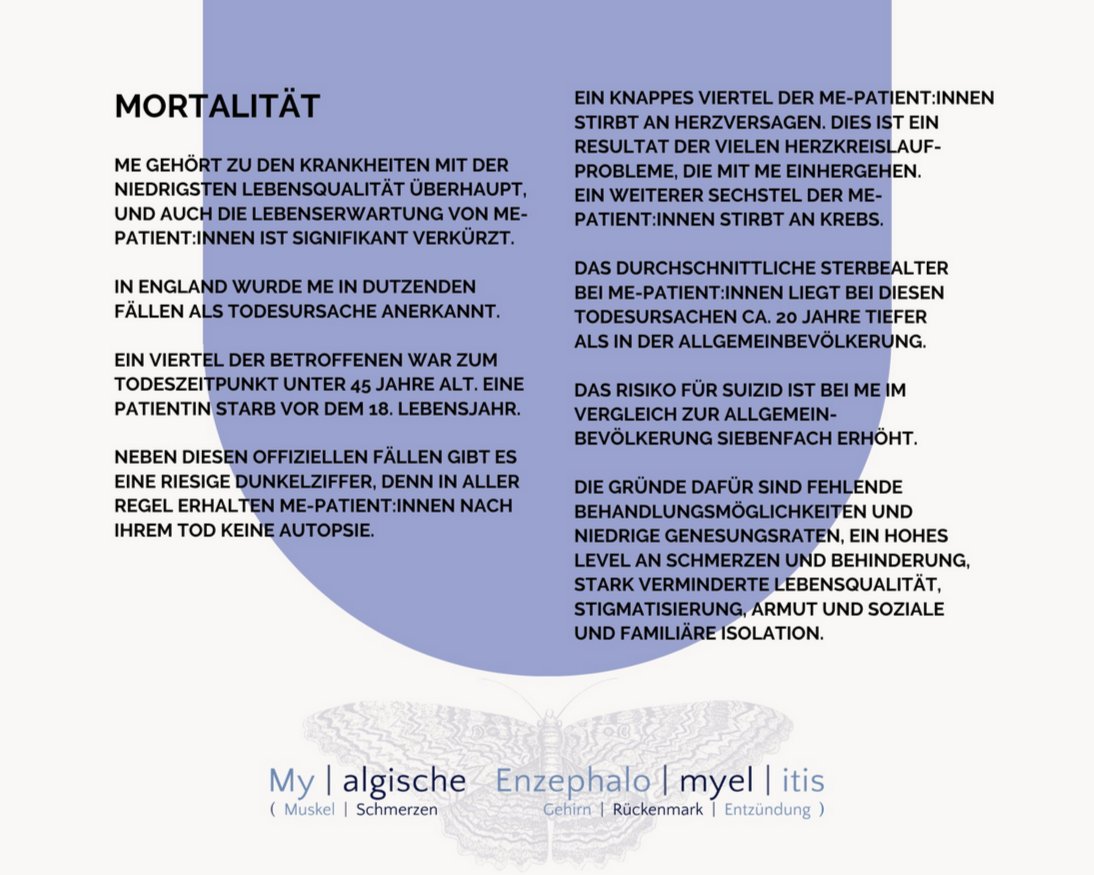
Incident Heart Failure Risk Following COVID-19 Recovery: A Systematic Review and Meta-Analysis 😡There we go AGAIN: COVID-19 recovery independently elevates the long-term risk of new-onset heart failure by 35%, underscoring a persistent cardiovascular burden that demands targeted post-infection monitoring. ➡️Study conclusions for all those backbenchers: 1. “The data synthesized from this cohort of over 400,000 survivors suggests that the cardiovascular impact of SARS-CoV-2 extends far beyond the acute phase of infection.” 2. “Our finding of a 35% increased risk for incident heart failure highlights an emerging chronic disease burden.” 3. “While the risk is notable across age groups, the heightened vulnerability observed in younger adults and the profound risk faced by immunocompromised patients, such as kidney transplant recipients, warrant particular clinical attention.” 4. “Rather than universal screening, our findings suggest that targeted, structured cardiovascular monitoring may be considered as part of post-viral care for at least one year, particularly for high-risk subgroups.” 5. "The monitoring could potentially incorporate clinical assessment alongside validated biomarker screening, notably N-terminal pro-B-type natriuretic peptide (NT-proBNP) for the detection of ventricular wall stress and high-sensitivity cardiac Troponin (hs-cTn) to monitor for ongoing subclinical myocardial injury.”( + ECG!) 6. “Implementing these gold-standard markers can facilitate the early identification of patients in the ‘pre-heart failure’ stage (Stage B), allowing for timely pharmacological intervention.” 7. “Addressing these potential sequelae through personalized follow-up is important for managing the long-term cardiovascular health of survivors in a post-pandemic landscape.” ➡️Two remarks: - Vaccination (specifically ≥4 doses, Singapore cohort study) is referenced only once as potentially eliminating the excess heart failure risk.🤔 - Reinfections are not discussed at all. ‼️Although the study advocates targeted surveillance, the persistent 35% heightened risk of incident heart failure supports, IMHO, implementing at least two universal cardiovascular check-ups for all COVID-19 survivors: one immediately post-recovery and another after three months. #AvoidSars2 #AvoidReinfections #YouOnlyHaveOneHeart mdpi.com/2077-0383/15/7…