@FranVezz @KynaKosling Yes, the resources are really well made and well put together.
Amazing place.
English
Jun
611 posts

@Neil_Jun
◙ Started day trader - Evolving Momentum Swing trader


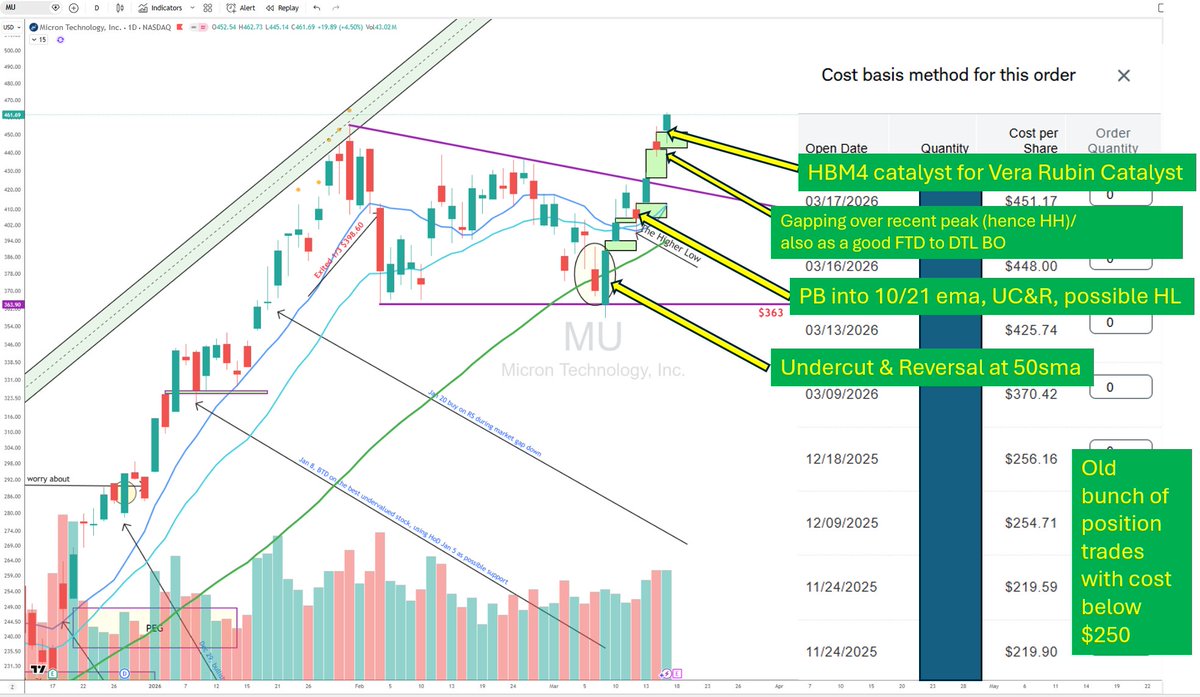
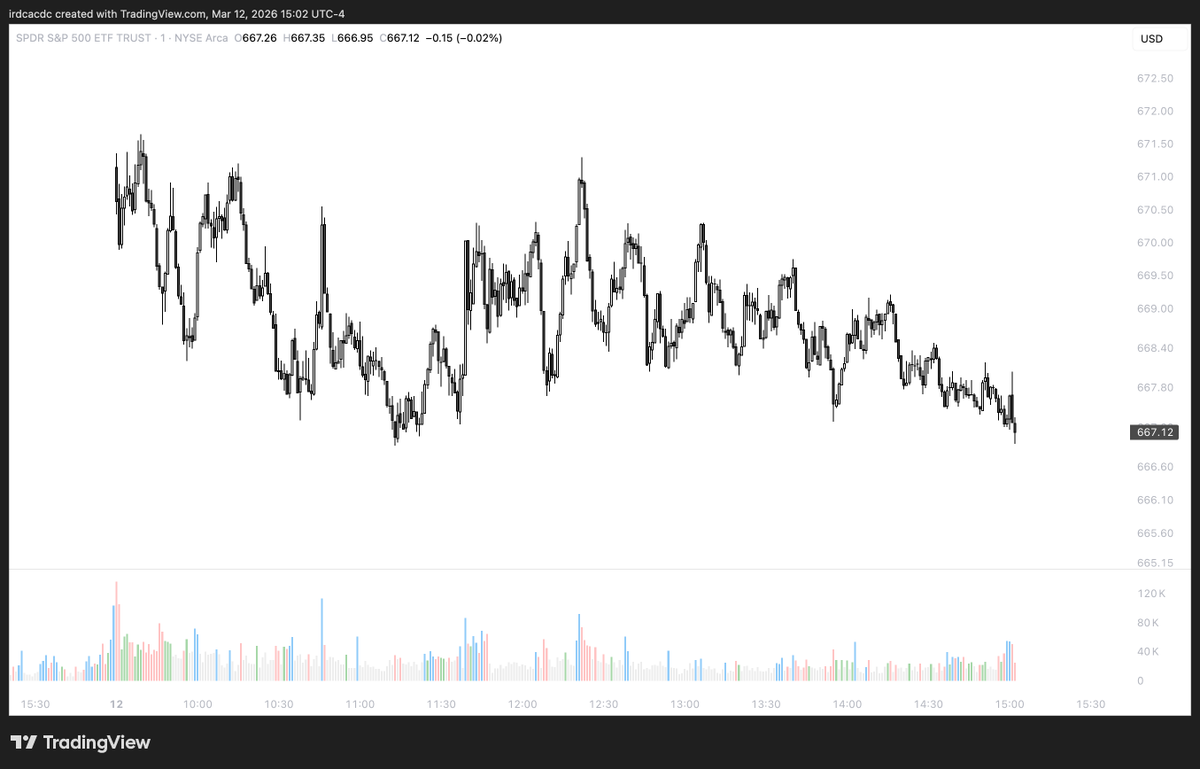
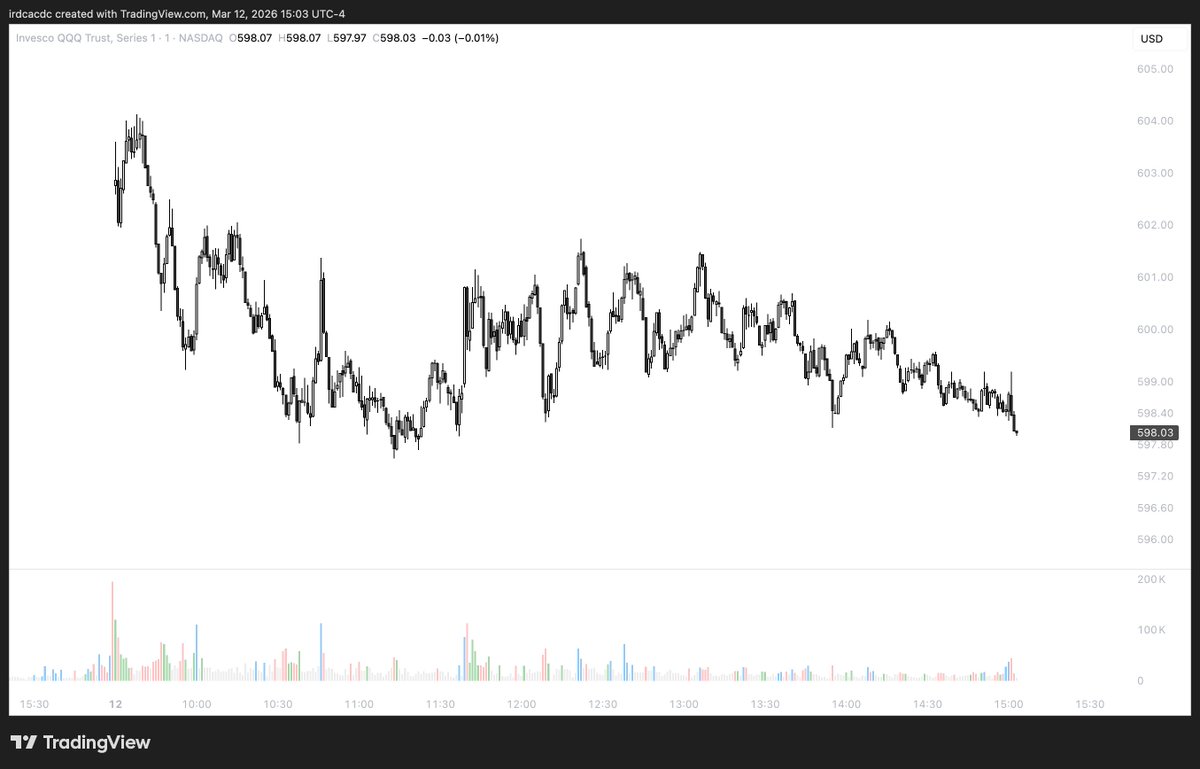
In this market, I’ve had to remind myself of the same thing almost every day: Buy weakness in Relative Strength names. When the indexes are choppy and directionless, chasing strength rarely works. Breakouts tend to stall, momentum fades quickly, and you often end up buying right as the move exhausts. I fear we've all learned that lesson the hard way more times than we'd like to admit. From what I've seen has been working, is letting strong names come back. When a stock is showing relative strength while the broader market chops around, that tells me institutions are quietly supporting it. It doesn’t mean the stock will go straight up, but it does mean there’s underlying demand. So instead of chasing the move, I’ve been focusing on buying constructive pullbacks into areas where risk is clearly defined. That might be a pullback into the 9/21 EMAs, a tight consolidation after a strong move, or a dip into a key pivot that previously acted as resistance. In this environment, those moments of weakness often turn into the best entries because they allow you to participate in the next leg without paying the emotional premium of chasing. Another thing I constantly remind myself of is that money in the market never sits still. It rotates. When one group cools off, capital quietly shifts into another. The strongest stocks tend to keep showing their hand through relative strength even when the indexes aren’t doing much. That’s why selectivity matters so much right now. You don’t need the entire market moving. You just need to be in the names where money is flowing. So my focus lately has been to: - identify the leaders - wait for weakness into support - define the invalidation level and be ready to execute when momentum comes back. I'm talking to myself here.

The Path to Trading Mastery: Research and Pattern Recognition By Qullamaggie 1. Step-by-Step Market Research The easiest way to start is to research the markets thoroughly. First, get a platform like TC2000 and set your charts to the monthly timeframe. Create a watchlist of all US stocks and filter them by dollar volume instead of just share volume. Aim for liquid names—those with at least $1 billion to $10 billion in monthly dollar volume—to avoid "super thin" or illiquid stocks. 2. Identifying the Big Movers Go through the entire database (roughly 5,000 stocks) and identify the outliers. Look for stocks that: At least doubled in price within six months. Increased 200–300% within a single year. Gained 400–500% over three to four years. Create a separate watchlist for every single stock that has made these massive moves. You will likely end up with a few hundred highly liquid, historical winners. 3. Studying Chart Patterns Go back as far as the 80s or 90s and study their chart patterns. Stocks move in very specific ways. These same patterns occur over and over again—there is nothing truly new in the markets. While there are variations, the patterns that worked in the 90s are the same ones you see today. Focus primarily on price action. You can add a few indicators if you wish—I recommend moving averages—but don't use too many. "Too many indicators is for suckers." Study how these big winners acted during pullbacks: Which moving averages did the best stocks respect or "obey"? How did they behave before the breakout? How did they act once the move was underway? 4. Building Your Mental Database (The 2,000-Hour Rule) Your goal is to build a database in your head. Spend 1,000 hours doing exactly this: printing out charts, studying them, and saving them. (I personally use Evernote to store tens of thousands of these charts). Once you understand the price action, spend another 1,000 hours researching the fundamentals and the news behind those moves. What was driving them? What made a stock go up 500% in a year? If you put in those 2,000 hours of deep research, I promise you: before you know it, you’re going to have ten million dollars in your account.


Exposing TJR once and for all. 42-minute YouTube video linked below. Teaser⬇️ He claims he began posting on TikTok in 2022 after about 2 years of profitable trading. Through the help of TJR's old friends and never-before-seen information, those lies will get exposed today.


The thing about these new traders who are now “masters” is that anyone is susceptible to a blow up at any time if they lose discipline. Livermore with perhaps the greatest boom periods in history still let busts creep in. There’s another trader I’ve covered in my newsletter that’s had huge booms and busts and he has over 20 years of experience. These new young trading “masters” are now even more susceptible to busting if they’ve tasted big success that’s how yje human ego works. Only through multiple failures is the discipline ingrained.