Sabitlenmiş Tweet

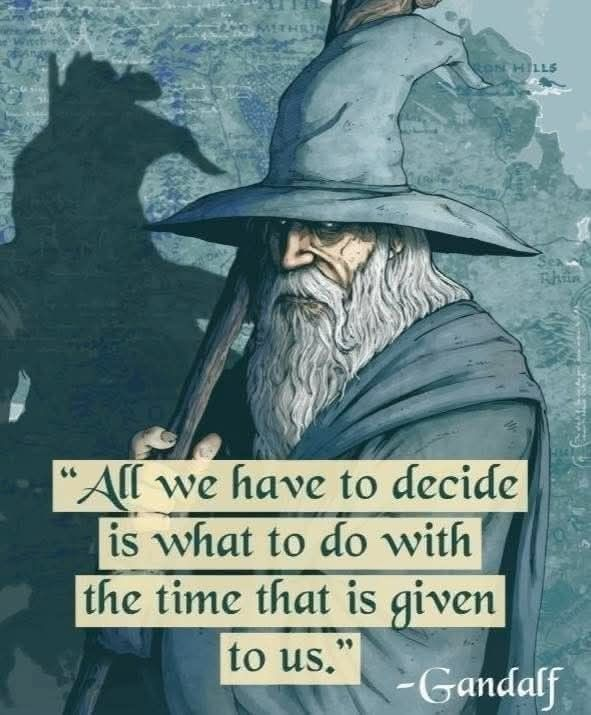
Never wish for less time
We’re all guilty of prematurely wishing for the next thing in life to come or go.
When singer-songwriter John Mayer was on his Solo Tour, he said something that stuck with me:
I wait for most things to be over. I wait for this to be over to do the next thing and the next thing and the next thing…Everything you love and hate leaves at the same speed.
---
I’m reminded of Ecclesiastes 3 written by King Solomon in the 10th century on the seasons of life, a text that The Byrds made popular in the song Turn! Turn! Turn!
There’s a time to weep and a time to be joyful.
There’s a time for funerals and a time of weddings.
There will be times of misery and times of euphoria.
Difficult and pleasant seasons come and go, regardless of our readiness for them.
---
Mayer’s realization aligns with recent neuroscientific findings explained by Dr. Anna Lembke in her book “Dopamine Nation”:
One of the most remarkable neuroscientific findings in the past century is that the brain processes pleasure and pain in the same place…pleasure and pain work like opposite sides of a balance.”
You know as kid, when you’d try and push together the opposite sides of a magnet — they repel each other, always seeking balance — that’s your brain finding homeostasis.
---
This balancing act is like the changing seasons in the natural world.
As someone who grew up in New England, the seasons have always been before me.
Just as summer turns to fall and winter gives way to new life in spring, so the cycles of life unfold themselves.
---
Whether you live in an area of vivid season changes or not — we intuitively understand the cycle.
Whether that’s getting married, finding a new job, starting a business, buying a house, or moving to a new place.
Pain and pleasure, good and bad days, the things you’re dreading and the things you’re looking forward are all coming and going like the seasons.
As a comfort in times of adversity, I remember the words made famous in Edward Fitzgerald’s “Solomon’s Seal”. In it, King Solomon aims to create a sentence that will always be true — whether times are good or bad:
---
This too, will pass away.
---
The problem is, we’re always ‘nexting’.
‘Nexting’ is the tendency to focus on future events, at the expense of the now.
Finished school, what’s next?
Got married, what’s next?
In my late 20s, I chased contentment through house flipping. I thought that achieving my goal would bring me happiness, but 15 flips later, I was still ‘nexting.’
It left me feeling exhausted, always looking to the future instead of appreciating the present.
---
Psychologist Daniel Gilbert notes that the average person spends about 12% of daily thought on what’s ahead — That’s 12 minutes of every hour of your day.
But what are the consequences of this constant ‘nexting’?
It neuters the now.
Not only does it neutralize the present moment, but it also creates an illusion that whatever is next will bring satisfaction.
---
Think about it, we’re always a bit disappointed with what comes next in life — it always seems to fall short of what we expected from it.
It’s like I want to put that thing on the witness stand and interrogate it, demanding to know why it didn’t live up to my expectations.
Expectation: a strong belief that something will happen or be the case in the future.
We expected something different, but it left us looking to the next thing.
To counter the tendency to constantly wait for things to be over, Mayer implemented a new rule in his life:
---
Never wish for less time
---
Because waiting for things to be over is actually wishing for less time.
Instead — fully engage in your experience.
Like Jim Elliot said:
---
Wherever you are, be all there! Live to the hilt every situation…
---
John Mayer’s realization is not new.
It’s deeply seated in our nature, recognized by philosophers throughout history.
Life is a flickering candle, burning brightly one moment and extinguished the next, with wisps of smoke that linger in the air.
As James, a Biblical author and brother of Jesus puts it:
---
What is your life?
You are a mist that appears for a little while and then vanishes.
---
Never wish for less time.



English