
Nikolaj Harmon

2.8K posts

Nikolaj Harmon banner
Nikolaj Harmon

Nikolaj Harmon

@NikHarmon

Associate Professor of Economics, University of Copenhagen, interested in Labor Economics, Political Economy and Econometrics

Copenhagen, Denmark Katılım Nisan 2014
538 Takip Edilen1.4K Takipçiler
Sabitlenmiş Tweet
Nikolaj Harmon
Nikolaj Harmon@NikHarmon·
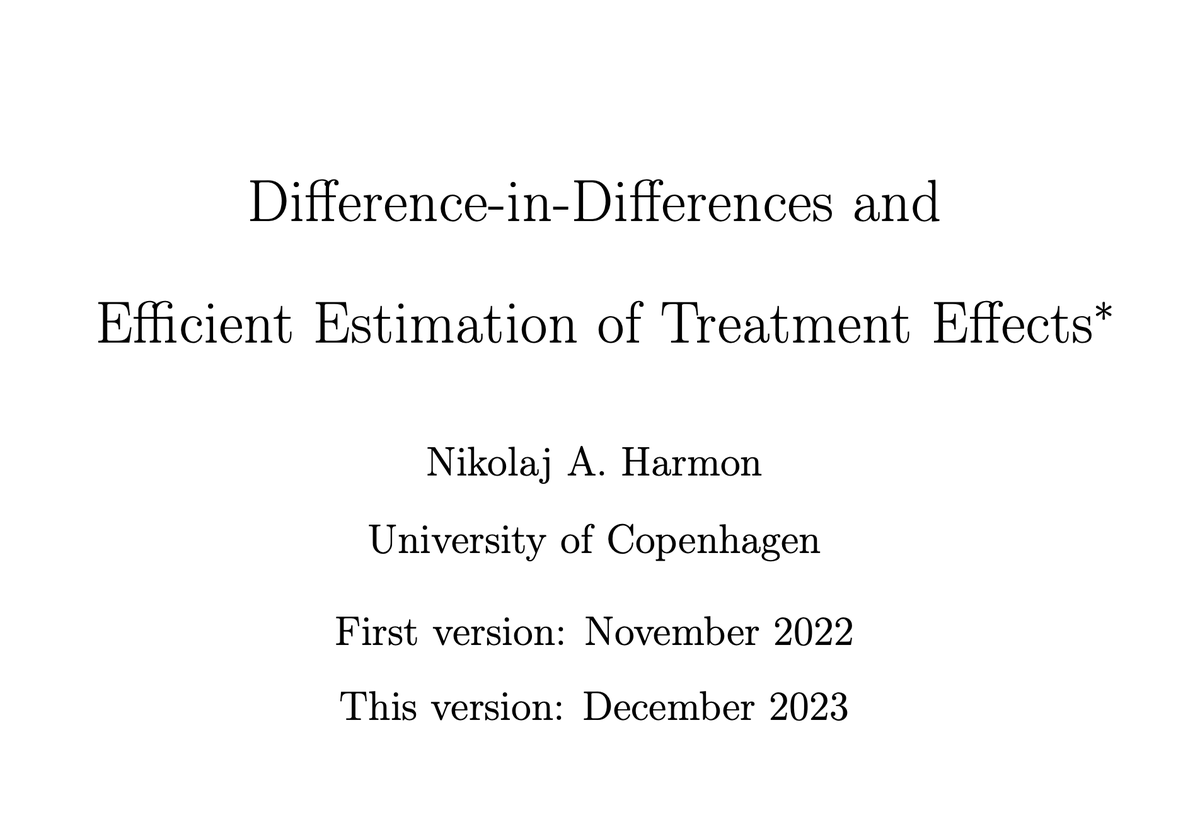
🚨 DID Paper Thread 🚨 Are you confused about which new DID estimator to use? A bit more than a year ago, I wrote a short paper that gives a simple answer. I just completed a revision of that paper so here’s a 🧵 to celebrate! 1/N #econtwitter #differenceindifferences
Nikolaj Harmon tweet media
English
9
182
780
142.2K
Solomon Kurz
Solomon Kurz@SolomonKurz·
@jfiksel1 If I chose the model that gave me the highest estimate of the ATE, would that procedure be biased?
English
2
0
1
402
Solomon Kurz
Solomon Kurz@SolomonKurz·
If ANOVA (unadjusted) and ANCOVA (baseline-covariate adjusted) both return unbiased estimates for the ATE in an RCT, why would it matter how one chooses the covariates for the ANCOVA? You see recommendations for preregistration or theory, but is this unnecessary? #RStats
English
10
1
50
31K
Nikolaj Harmon
Nikolaj Harmon@NikHarmon·
@ybytata @kearney_melissa But note that the decisions you mention are all ex ante wrt. the specific child in questions: postponing a birth is done before having the child and so is deciding not to have the child altogether.
English
0
0
0
41
Nikolaj Harmon
Nikolaj Harmon@NikHarmon·
🇺🇸💔😢 Worst coin flip ever
English
0
0
5
480
Nikolaj Harmon retweetledi
SODAS, Copenhagen (Bluesky: @cphsodas.bsky.social)
Sebastian Barfort from consulting company Round chatted with us about using social data science in the business world. 🕴️We talked about grown-up toy lovers, whether models can replace anthropologists, and why Sebastian just loves the internet. Read more: sodas.ku.dk/research/i-jus…
SODAS, Copenhagen (Bluesky: @cphsodas.bsky.social) tweet media
English
0
2
5
751
Chelsea Parlett
Chelsea Parlett@ChelseaParlett·
is this a fair statement? "Many statistical properties are asymptotic, and we are never at the asymptote"
English
19
2
75
26K
Nikolaj Harmon retweetledi
Irena Buzarewicz
Irena Buzarewicz@IrenaBuzarewicz·
Good morning
Irena Buzarewicz tweet media
English
469
11.3K
111.8K
5.5M
Nikolaj Harmon retweetledi
Alicia Curth
Alicia Curth@AliciaCurth·
When Double Descent & Benign Overfitting became a thing, I was a masters student in statistics — and so confused. I couldn't reconcile what l had literally just learned about bias-variance&co with modern ML Here's what I wish someone had told me then: arxiv.org/abs/2409.18842 1/n
Alicia Curth tweet media
English
15
169
1.1K
169.5K
Nikolaj Harmon
Nikolaj Harmon@NikHarmon·
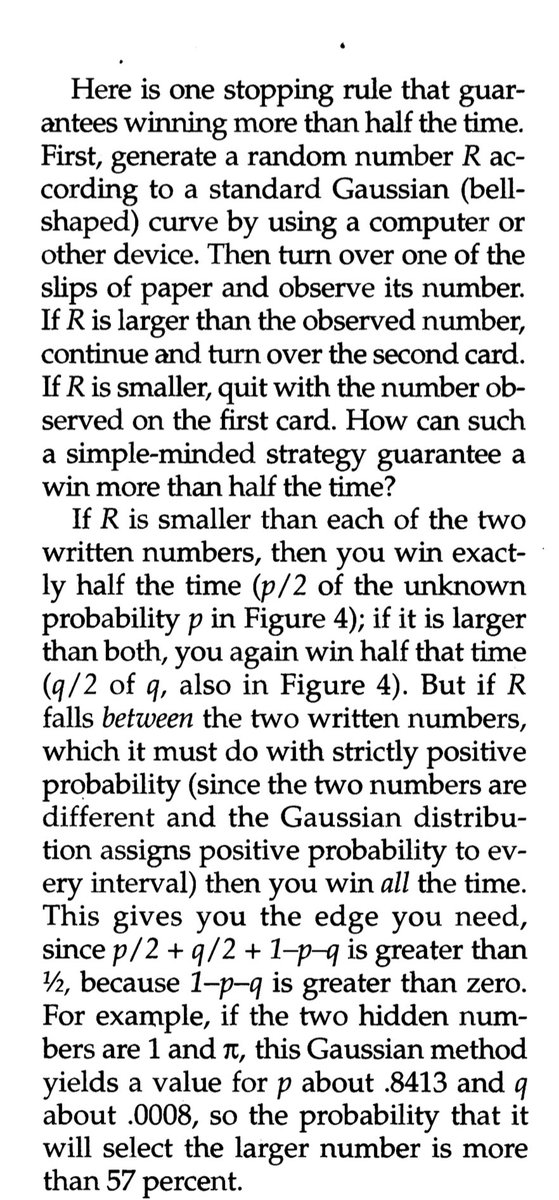
@_MattSavino @vsbuffalo Maybe a more illustrative example is if the two numbers are -1 and 2. If revealing 2 my chance of switching is now 1/6 so I win 5/6 of the time.
English
0
0
0
77
Nikolaj Harmon
Nikolaj Harmon@NikHarmon·
@_MattSavino @vsbuffalo Not sure what you are asking but say the numbers are -1 and 1. If revealing -1 there is a 3/4 chance I switch and win. If revealing 1 there is a 1/4 chance I switch so there is 3/4 chance I do not switch and win. In both cases my chance of winning is 3/4. Makes sense?
English
1
0
0
87
Vince Buffalo
Vince Buffalo@vsbuffalo·
Step aside Monty Hall, Blackwell’s N=2 case for the secretary problem is way weirder.
Vince Buffalo tweet mediaVince Buffalo tweet mediaVince Buffalo tweet media
English
50
266
2.4K
280.5K
Nikolaj Harmon
Nikolaj Harmon@NikHarmon·
@_MattSavino @vsbuffalo The version that I find most surprising and interesting involves not making any assumptions on the two hidden numbers.
English
1
0
0
19
Matt Savino 🇺🇦
Matt Savino 🇺🇦@_MattSavino·
@NikHarmon @vsbuffalo If the first number we see is negative, wouldn't we assume that the distribution is centered around zero? Or can we not make that assumption?
English
1
0
0
45
Nikolaj Harmon
Nikolaj Harmon@NikHarmon·
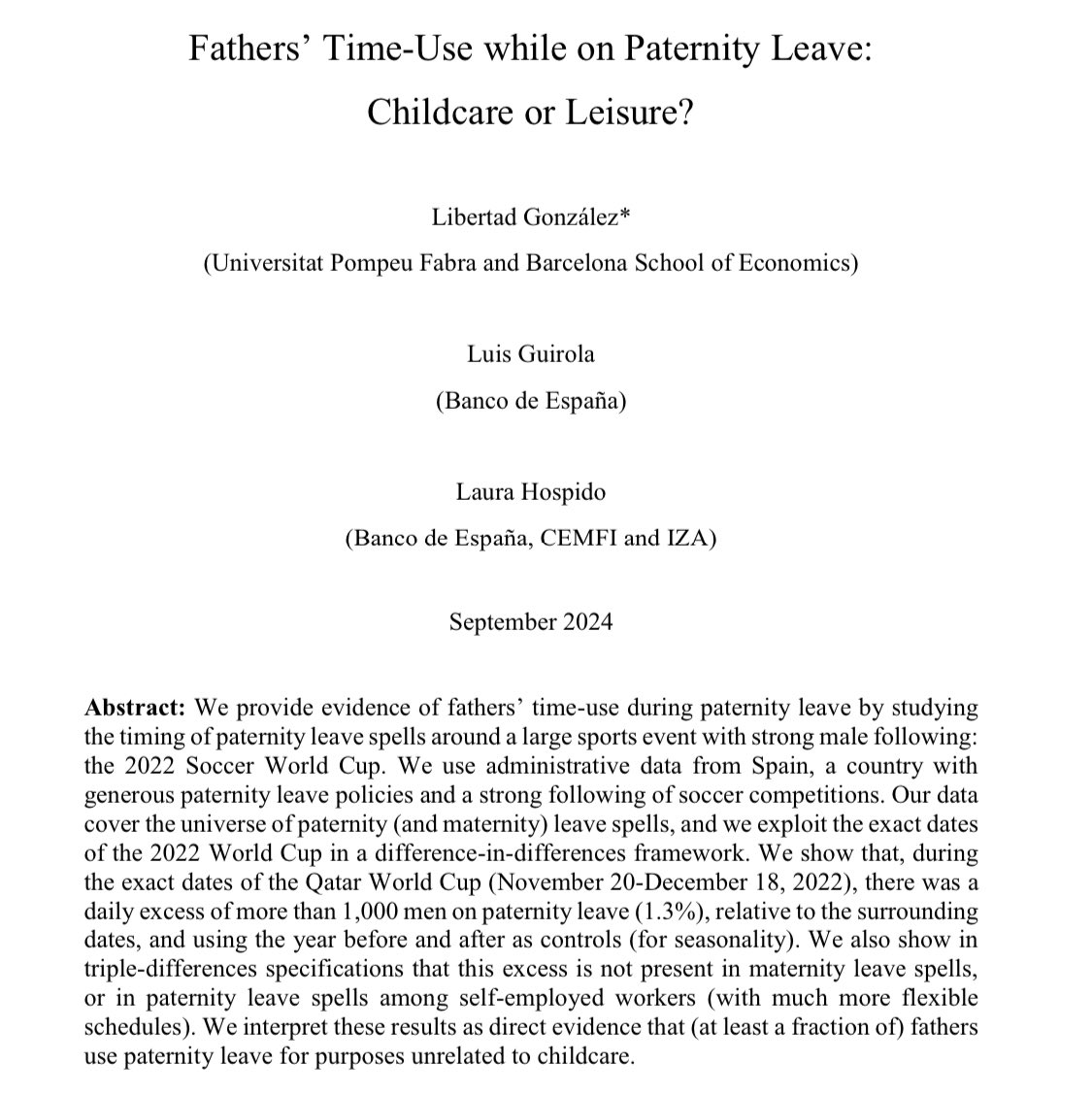
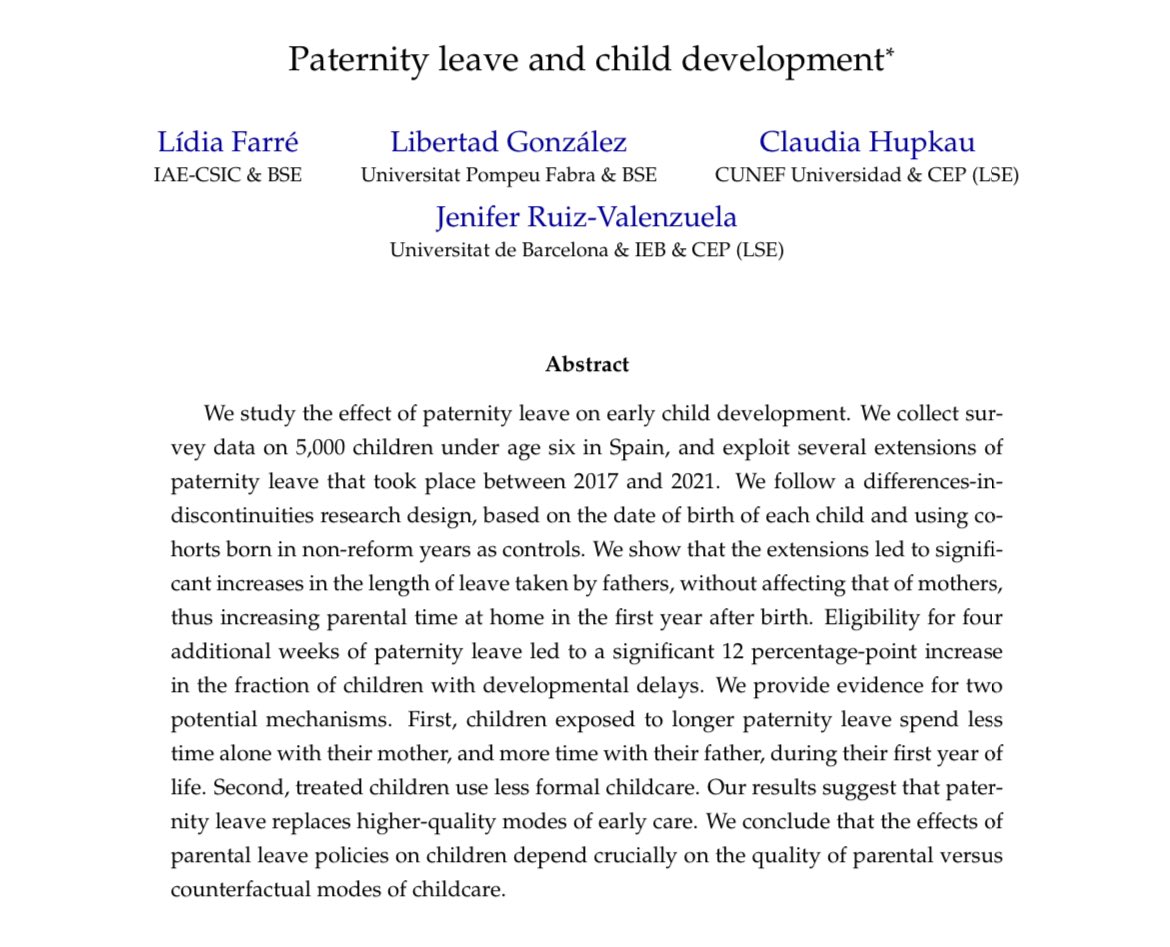
@JeppeDruedahl @RuneStahl Jeps, min reservation går også både på relevansen af spansk evidens og på nogle potentielle grundlæggende udfordringer med studiet. (Tror bare ikke du skal undervurdere potentiel impact af et tweet som dit ovenfor)
Dansk
0
0
4
481
Jeppe Druedahl
Jeppe Druedahl@JeppeDruedahl·
@NikHarmon @RuneStahl Jeg burde havde kvalificeret det mere end med nogle tøveprikker! Selv i spansk kontekst fandt jeg ikke resultatet videre overbevisende, da det blev præsenteret. Det var forfattersammenfaldet der slog mig.
Dansk
1
0
4
455
Rune Møller Stahl
Rune Møller Stahl@RuneStahl·
Jeg vil gerne slå fast, at det er fuldstændig tilfældigt, at begge mine barselsorlover overlappede perfekt med Tour de France.
Rune Møller Stahl tweet media
Dansk
7
1
130
11K
Nikolaj Harmon
Nikolaj Harmon@NikHarmon·
@JeppeDruedahl @RuneStahl Jeg synes sgu du er nødt til at kvalificere det udsagn lidt Jeppe. Jeg er oplagt forudindtaget her, men det er min klare vurdering at resultaterne i det working paper er helt irrelevante i en dansk kontekst.
Dansk
1
0
2
345
Nikolaj Harmon retweetledi
Guilherme Jardim Duarte
Guilherme Jardim Duarte@guilhermejd1·
No defiers is a required assumption for identification of LATE in IV analysis. If that is false, the best thing you can do is to calculate bounds for the LATE. But what happens if limit the maximum proportion of defiers. For instance, what if I don't believe is > 10%?
Dr Ellie Murray, ScD@EpiEllie

Niche nerdy tweet incoming: I’m not at all sure about this instrument. The “no defiers” assumption seems unlikely to hold — is there really no possible couple who would have divorced if the husband’s workplace stayed the same but not if it had hired more women?

English
2
12
31
8.4K
Alkalimeter
Alkalimeter@Alkalimeter·
@NikHarmon @vsbuffalo I think you can extend to the rationals with the same basic strategy. If p/q is the first number you see then put q white balls and p black balls in the urn.
English
1
0
1
17
Nikolaj Harmon
Nikolaj Harmon@NikHarmon·
@Alkalimeter @vsbuffalo No, for tails and n>=0 you always stick with the first number. This implies that for n>=0 the probability of switching is 1/2 * 1/n
English
0
0
1
8
Nikolaj Harmon
Nikolaj Harmon@NikHarmon·
@economoser Sure. But adding assumptions on the distribution of the numbers and/or guaranteeing only weakly better than 50% makes it much less impressive and surprising to me. The “strictly better” and “ for ANY two numbers” is what I found really counterintuitive.
English
0
0
1
45
Chris Moser
Chris Moser@economoser·
@NikHarmon Suppose the (unknown) probability distribution of the two random variables on paper overlaps with the RNG’s support with strictly positive probability. Then with strictly positive probability, the trick works, while with complementary probability it does not. Still good?
English
1
0
0
54
Nikolaj Harmon
Nikolaj Harmon@NikHarmon·
@vsbuffalo For any n this strategy completes in finite time and gives >50% win probability. It still pushes on the limits of feasibility since (ex ante) you risk of running out of balls unless infinite supply (or: prob. of spending arbitrarily long placing balls in the urn is >0) (3/3)
English
1
0
1
54