Nish - The Weight Loser!

12K posts

Nish - The Weight Loser! banner
Nish - The Weight Loser!

Nish - The Weight Loser!

@NishTWL

Lose Weight & Get Fit Without Joining A Gym | No Calorie Counting | Low-Carb Diets & IF | Home Workouts | Drop a DM for Paid Coaching Plans & Free Queries

Katılım Mayıs 2022
262 Takip Edilen1.3K Takipçiler
Sabitlenmiş Tweet
Nish - The Weight Loser!
Nish - The Weight Loser!@NishTWL·
Any successful Weight Loss journey is a result of a client's Hard Work and Discipline. Coaches like us can only provide guidance! A reduction of roughly 14 Kgs in 2 Months. No Calorie Counting! No Gym! Just Right Diet, Intermittent Fasting and some Strength Training & Running.
Nish - The Weight Loser! tweet media
English
6
1
18
6.1K
Nish - The Weight Loser! retweetledi
Gary Brecka
Gary Brecka@thegarybrecka·
Why do people only lose control around packaged foods? No one binges on: - Steak - Eggs - Potatoes - Fruit That tells you everything you need to know.
English
2.2K
830
17.7K
1.1M
Pritesh Lakhani
Pritesh Lakhani@priteshlakhani·
Banana chips made with refined vegetable oil (Palmolein) is good or bad?
English
12
0
14
6.4K
Nish - The Weight Loser! retweetledi
Dr. Biglee Murali | Strength, Hormones, Lifestyle
Your metabolism is not your workouts. It’s your organs. Most calories aren’t burned in the gym. They’re burned keeping you alive. Here’s where ~2000 kcal/day actually goes 👇 • Brain ~20% → thinking, nervous system, hormones • Liver ~25% → glucose control, fat metabolism, detox • Skeletal muscle (at rest) ~18% → posture, protein turnover • Kidneys ~10% → filtration, BP control • Heart ~7% → continuous pumping • Other tissues → lungs, gut, skin, immune cells This is why extreme calorie cutting backfires. You don’t “boost metabolism” by starving it. You preserve metabolism by: • Building muscle • Improving insulin sensitivity • Supporting liver health • Sleeping enough • Eating enough protein Fat loss works best when organs work better — not when calories are slashed blindly. Train for metabolic competence, not punishment. Save this. Come back when you’re ready to train with intent. #Metabolism #FatLossScience #MuscleIsMedicine #InsulinResistance #HealthEducation
Dr. Biglee Murali | Strength, Hormones, Lifestyle tweet media
English
0
1
1
98
Nish - The Weight Loser!
Nish - The Weight Loser!@NishTWL·
@drShaileshSingh Similarly, one can say Business Model of Doctors is dependent on "Over-Prescribing", pushing for more Diagnostics than needed and focusing on Disease than overall Health. The way Private Hospitals have been robbing ordinary folks, Medical Community can't behave Holier than thou!
English
0
0
0
91
Dr Shailesh Singh
Dr Shailesh Singh@drShaileshSingh·
Health influencers: Never seen the inside of a cath lab Don't know what apolipoprotein B is Can't explain primary vs secondary prevention Have no idea how atherosclerosis works But they'll confidently tell you to quit your statins. Their business model depends on you distrusting your doctor.
English
41
85
565
35.1K
HealthAsia
HealthAsia@farhadali·
High intake of saturated fats is consistently associated with higher LDL cholesterol, arterial plaque formation, and increased risk of heart attack, stroke, and PAD. Emerging evidence (2024–25) also links high saturated fat diets to rapid increases in liver fat, adverse gut microbiome changes, and poorer metabolic health. Because these foods are energy-dense, excess intake also contributes to weight gain and obesity. Population-level guidance therefore prioritizes limiting saturated fats to reduce preventable cardiovascular and metabolic disease. PAD stands for Peripheral Artery Disease.
English
1
1
1
96
Shashi Iyengar | Metabolic Health India®
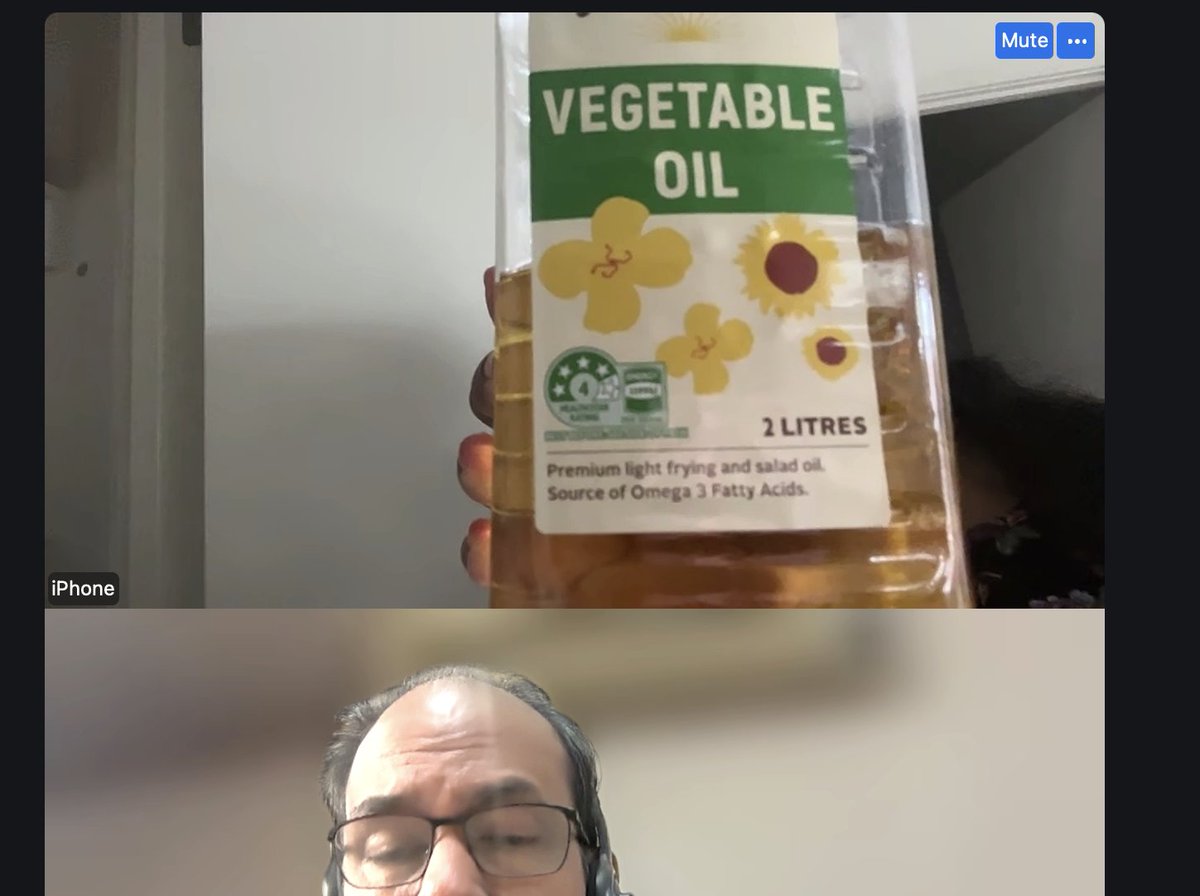
Yesterday, a client from Australia enrolled with me. When I asked what cooking oil she was using, she showed me this bottle labelled simply as “Vegetable Oil.” Surprisingly, there were no ingredients listed on the label, and that’s a red flag. “Vegetable oil” is not a single food. It’s usually an ultra-processed blend of industrial seed oils (soybean, canola, sunflower, etc.) extracted and refined using heat and chemicals. Yet the label highlights marketing terms like: • “Light frying oil” • “Source of Omega-3” • Star-rating logos …but doesn’t clearly disclose what the oil is made from. Transparency matters, especially when such oils are linked to oxidation, inflammation, and poor metabolic health when used daily. Always read the ingredients list. Switch to traditional fats instead - ghee, butter, olive oil, coconut oil, Your kitchen oil shouldn’t be a mystery & certainly not disease-causing.
Shashi Iyengar | Metabolic Health India® tweet media
English
5
11
76
18.5K
HealthAsia
HealthAsia@farhadali·
Nutrition science works best with nuance, not fear. Some products labelled ‘vegetable oil’ are indeed blends of refined seed oils, and clear ingredient disclosure is essential so consumers can make informed choices. However, not all vegetable oils are the same, and health effects depend on type of oil, cooking method, heat exposure, and overall diet. Overheating or repeated reuse of any oil can increase oxidation — this is not unique to seed oils. Claims that kitchen oils are inherently ‘disease-causing’ or that everyone should switch to butter, ghee, or coconut oil are oversimplified and not supported by public health evidence. These fats are high in saturated fat and should be used in moderation, not promoted as universal replacements. Evidence consistently supports appropriate oil selection (e.g. extra-virgin olive oil for low–moderate heat, stable oils for frying) and reducing ultra-processed foods overall, rather than demonising a single ingredient category.
English
1
1
4
4.8K
Nish - The Weight Loser! retweetledi
raf ❁
raf ❁@rafdelafuente·
Dermatologists: “trust me bro use these 69 products & your acne will clear out” Meanwhile you just need to cut out processed foods, eat more gelatin & collagen, drink more soups, more fruits & red meat.
English
9
5
122
7.2K
Nish - The Weight Loser! retweetledi
Metabolic Uncle
Metabolic Uncle@MetabolicUncle·
The Sleep Lie That's Killing More People Than Insomnia Your body doesn't want eight hours. Never did. That number got stamped into public consciousness through repetition, not research. Industrial convenience dressed up as biological necessity. The actual data tells a different story, one that makes health influencers uncomfortable because it contradicts decades of advice they've been selling. Twenty-three thousand people tracked through the UK Biobank revealed something most sleep experts ignore. The mortality sweet spot sits at 6.5 hours. Not seven. Not eight. Exactly 6.5 hours correlated with the lowest death rates and optimal brain function. Researchers measured functional connectivity in the nucleus accumbens, your brain's reward center, and found it performed best at this duration. The mortality curve forms a U shape. Both extremes increase your risk of dying early. Sleep too little and you shorten your lifespan. Sleep too much and you shorten it more. Where did the eight-hour rule originate? Factory schedules. Someone decided eight hours of work, eight hours of leisure, eight hours of sleep sounded balanced and orderly. It stuck. Sleep researchers have been trying to correct this fiction for decades, but cultural momentum is powerful. The myth persists despite mounting contradictory evidence. The harm from oversleeping operates through clear biological mechanisms. Chronic long sleep increases systemic inflammation. C-reactive protein levels rise. Interleukin-6 climbs. These inflammatory markers predict cardiovascular disease, diabetes, and premature death. Hormonal balance deteriorates. Cortisol rhythms flatten. Insulin sensitivity drops. Growth hormone secretion becomes erratic. Human circadian biology evolved over millions of years. Those cycles didn't include nine-hour sleep sessions. Studies of hunter-gatherer populations show they typically sleep 6.5 to 7 hours per night. Modern research on groups without artificial light reveals the same pattern. The eight-hour standard is an historical outlier, not a biological imperative. This doesn't mean everyone requires exactly 6.5 hours. Individual variation exists. Some people function optimally at six hours. Others need seven. A small percentage genuinely requires eight, though that group is smaller than commonly believed. The metric that matters is how you feel and perform, not whether you hit some arbitrary cultural target. Quality trumps duration. Fragmented sleep totaling eight hours produces worse outcomes than consolidated 6.5-hour sleep. Deep sleep stages matter more than total time in bed. You can obtain adequate restorative sleep in 6.5 hours if those cycles remain uninterrupted. If you currently sleep eight or nine hours and feel sluggish, the data suggests you might be overshooting your biological need. The inflammatory burden from chronic long sleep accumulates gradually, like compound interest working against your health. Reducing sleep duration sounds counterintuitive when fatigue is the complaint, but many people report increased energy after cutting back to seven hours. The adjustment period takes time. Your body adapts to habitual sleep patterns through homeostatic regulation. If you've been sleeping nine hours for years, dropping to seven overnight will feel rough initially. The transition lasts two to four weeks as your circadian system recalibrates. During that window, caffeine dependency might increase temporarily. Push through it. Set a consistent wake time first. If you need to be up at six in the morning and want to target 6.5 hours, go to bed at eleven thirty. Don't go to bed earlier just because you can. Let sleep pressure build naturally. If you're not tired at eleven thirty, stay up until you are. Your body will adjust the sleep drive to match the new schedule. Track how you feel, not just how long you sleep. Energy levels at two in the afternoon matter more than total hours logged. Cognitive performance on complex tasks matters more than grogginess at six in the morning, which fades after twenty minutes for most people. Mood stability throughout the day matters more than whether you hit some culturally prescribed number. Most people who sleep eight or nine hours do so because they've been told that's healthy, not because their bodies demand it. They wake up groggy, attribute it to insufficient sleep, and try to sleep more. This creates a cycle where oversleeping produces the symptoms it's supposed to cure. More inflammation. Worse hormonal balance. Lower energy. The solution becomes the problem. Your body sends signals. Morning grogginess that persists beyond thirty minutes suggests poor sleep quality, not insufficient duration. Afternoon energy crashes indicate metabolic dysfunction, often worsened by oversleeping. Brain fog throughout the day correlates with inflammatory markers that rise with chronic long sleep. The eight-hour myth persists because it sounds reasonable and questioning it feels irresponsible. But reasonable-sounding advice kills people when the data contradicts it. The mortality curve is unambiguous. The U-shaped relationship appears consistent across populations. The optimal zone is narrower than previously thought. Hunter-gatherer populations provide a useful reference point. These groups, living without artificial light or alarm clocks, naturally settle into sleep patterns around 6.5 to 7 hours. Their circadian rhythms synchronize with natural light cycles. They experience less chronic disease than modern populations despite sleeping less than the recommended eight hours. This suggests the modern sleep advice might be creating problems rather than solving them. The inflammatory cascade from oversleeping starts subtly. C-reactive protein inches up. You don't feel it immediately. Interleukin-6 rises. No obvious symptoms. But these markers predict cardiovascular events years before they occur. The damage accumulates silently while you follow mainstream sleep recommendations. Cortisol dysregulation from chronic long sleep disrupts your entire hormonal axis. Morning cortisol should spike to wake you up. Evening cortisol should drop to prepare you for sleep. Oversleeping flattens this rhythm. You wake up tired because your cortisol didn't rise properly. You stay wired at night because it didn't fall appropriately. The solution isn't more sleep. It's correcting the pattern that caused the dysregulation. Insulin sensitivity deteriorates with chronic long sleep. Your cells become less responsive to insulin signaling. Blood sugar regulation suffers. This creates a metabolic environment that favors fat storage and inflammation. The same metabolic dysfunction that drives obesity and diabetes gets worse when you sleep too much. Growth hormone secretion, which occurs primarily during deep sleep, becomes erratic with oversleeping. More time in bed doesn't mean more growth hormone. It means disrupted secretion patterns. Your body produces less of this crucial hormone despite spending more time asleep. Quality of sleep cycles matters more than total duration. If you're sleeping eight hours and feeling terrible, the conventional response is to sleep more. This makes the problem worse. The correct response is to examine whether you're overshooting your biological need. Most people resist this because it contradicts everything they've been told about health and recovery. The transition away from chronic long sleep feels uncomfortable initially. Your body has adapted to the oversleeping pattern. Changing it requires recalibration. The first week is rough. You feel tired. Your brain protests. This is temporary. The homeostatic sleep drive adjusts within two to four weeks. Energy levels improve. Mental clarity returns. Inflammation markers drop. Stop forcing eight hours if your body works better on less. The mortality data supports you. The inflammatory markers support you. The brain function data supports you. The only thing that doesn't support you is outdated cultural dogma masquerading as medical advice. Your sleep need is individual. The key is paying attention to actual outcomes rather than hitting arbitrary targets. How do you feel at two in the afternoon? Can you think clearly during complex tasks? Is your mood stable throughout the day? These metrics matter more than whether you logged eight hours. The eight-hour rule persists because it's simple and memorable. Simple rules feel safe. They provide clear guidelines in an uncertain world. But biology doesn't care about simple rules. Your body operates according to evolved circadian patterns that predate modern sleep recommendations by millions of years. Those patterns point toward 6.5 to 7 hours, not eight. The science is clear. The mortality curve is consistent. The inflammatory mechanisms are understood. The optimal duration is narrower than previously thought. Stop sleeping yourself to death because someone decided eight hours (or even more!!!) sounded balanced. Sources: 1) Li A, Lyu R, Han S, Zhang J, Xiang Y, Xie C, Liang X, Qiu J. Association of estimated sleep duration with nuclei accumbens functional connectivity and reward-related behavior. Progress in Neuropsychopharmacology and Biological Psychiatry. Key Finding: 6.5 hours associated with lowest mortality risk and optimal brain function in 23,449 participants from UK Biobank 2) A prospective study of sleep duration and mortality risk in women Sanjay R Patel 1, Najib T Ayas, Mark R Malhotra, David P White, Eva S Schernhammer, Frank E Speizer, Meir J Stampfer, Frank B Hu, PMID: 15164896 "Conclusions: These results confirm previous findings that mortality risk in women is lowest among those sleeping 6 to 7 hours.."
Metabolic Uncle tweet media
English
38
161
616
63.8K
Sneha Sharma
Sneha Sharma@thesneha_·
@NishTWL Indians need to be more lovey dovey with their partner, and it start with strength training 🥹
English
1
0
1
27
Sneha Sharma
Sneha Sharma@thesneha_·
Why ain’t Indian men recreating this??
English
6
0
5
565
SHAMIK GHOSH
SHAMIK GHOSH@GHOSHAMIK·
Oh no no, I am not a trader. Just a long term investor 😁 I lead a stress-free life (at least I think so). 100% work from home, no intense workout pressure. Have all the time in this world for workouts, have access to good groceries...basically everything one needs for a healthy lifestyle Yet the cravings kick in 😜
English
1
0
2
165
Anand Nagu
Anand Nagu@anandnagu·
As a Man, it is important to control your Hunger & Lust. 57 Days. Zero Cheat Meals.
Anand Nagu tweet mediaAnand Nagu tweet media
English
16
38
951
83.6K
Nish - The Weight Loser!
Nish - The Weight Loser!@NishTWL·
@GHOSHAMIK @anandnagu Traders work in an environment of High Stress and High Pressure which leads to chronic elevated Cortisol Levels. If one is not already opting for Intermittent Fasting, then one can try the IF approach as it goes a long way in keeping Cravings in check.
English
1
0
0
229
SHAMIK GHOSH
SHAMIK GHOSH@GHOSHAMIK·
Anand bhai, pta h ek problem jo abhi tak solve ni hui mujhse. High-protein, high-fiber..bilkul jaise aapki plate hai...iske baad bhi cravings khatm ni hoti...no matter how hard you try you succumb to your cravings. What's the secret? Cravings hoti he ni ya hoti h par control kr lete ho
SHAMIK GHOSH tweet mediaSHAMIK GHOSH tweet mediaSHAMIK GHOSH tweet media
English
2
0
5
9.6K
Nish - The Weight Loser!
Nish - The Weight Loser!@NishTWL·
@drShaileshSingh Even Strength Training or Resistance Training is good enough by investing in some basic Home Workout Equipment. For Working Professionals with packed routines, Home Workouts are much more sustainable.
English
0
0
0
37
Dr Shailesh Singh
Dr Shailesh Singh@drShaileshSingh·
When I tell patients to exercise, they hear "walk." Walking is good. But it's not enough. You don't need to grind in the gym. You don't need to look like a trainer. You don't need fancy goals or tracking apps. Just show up. Stay consistent. That's the only metric that matters.
English
3
7
65
2.6K
Nish - The Weight Loser! retweetledi
Robin doda | Outside the box Nutrition
Eating bread with Tea has a different destiny, Eating bread with Ghee has a different destiny, Eating bread with Chicken/paneer has a different destiny, Eating bread at breakfast has a different destiny, Eating bread at Lunch has a different destiny, Eating bread at dinner has a different destiny A calorie is not just a calorie. Calorie deficit this or that, it's a flawed theory,.
English
1
1
7
605