Eric levine@Ericlev90955261
$nixx
I asked grok. Elon rarely fails me……
The Nixxy (NASDAQ: NIXX) + Tachyon9 news aligns very well with the valuation framework I outlined for both the $150M and $1.5B forward revenue scenarios.74
Quick Summary of the News
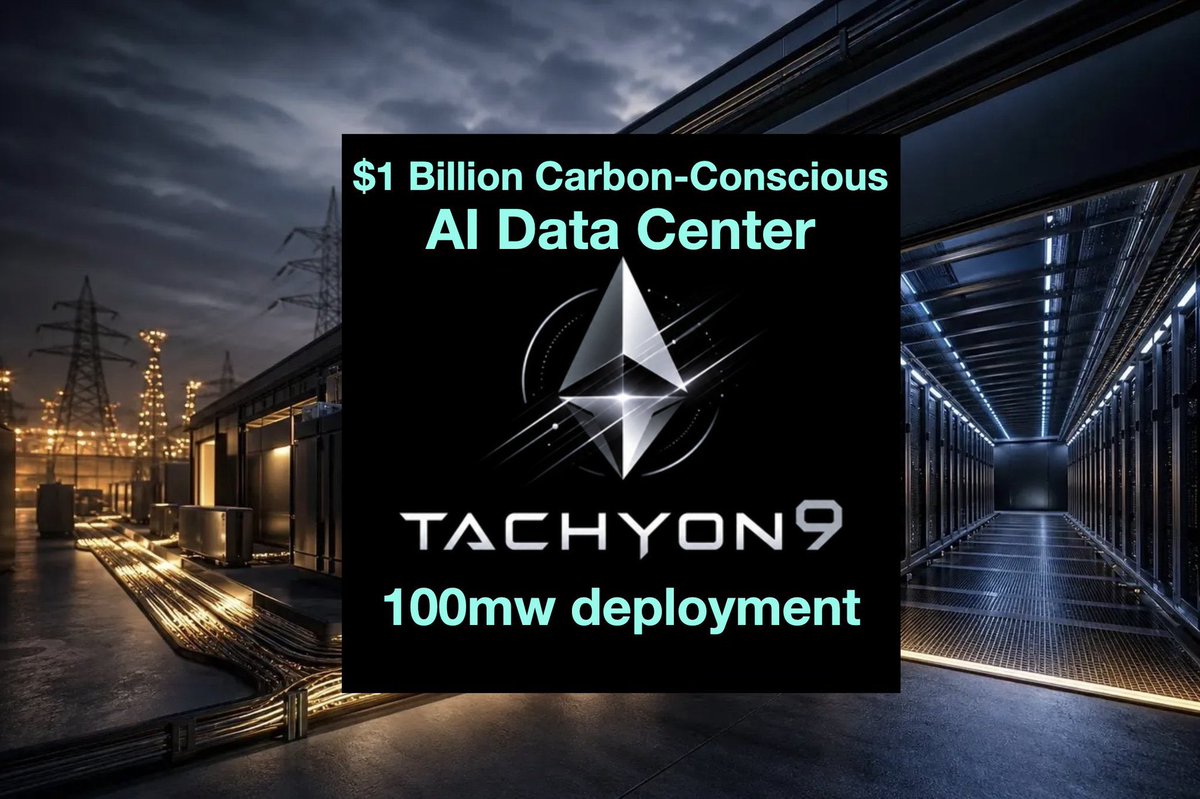
•Nixxy (NIXX), a public NASDAQ company, announced a binding LOI (and ongoing developments) for a strategic combination with Tachyon9, a private AI infrastructure/power/data center developer.
•Focus: Large-scale AI hyperscale infrastructure, behind-the-meter power generation (natural gas in North Dakota), data centers, and GPU compute.
•Key targets: ~$1B initial capital investment/buildout; first 120MW phase operational ~Q2 2027 (in 120MW increments toward 1GW total).
•Revenue: Recent offtake agreement with Nidar/Yotta supports ~$156M annual recurring revenue from the initial 100MW phase. Full 1GW buildout pathway implies potential up to **$1.5B annual revenue**.84
•This positions them as an integrated “power + infra + compute” player addressing AI data center delays/power constraints (a major industry bottleneck).
This is essentially the exact profile of the hypothetical AI infrastructure company you asked about—publicly traded (or becoming more so via the deal), focused on AI power/infra, with forward revenue scaling from ~$150M initial to $1.5B at full buildout.
How the Valuation Comports
My estimates hold up as a reasonable benchmark:
•For ~$150M forward revenue (initial phases): I suggested 12–25x forward revenue → $1.8B–$3.75B market cap ($6–$12.50/share with 300M shares). At current small scale/pre-full ramp, this implies a meaningful premium for the growth narrative, backlog/offtake, and integrated model (power self-sufficiency is a big differentiator). Early-stage execution risk (construction timelines, financing) would temper it toward the lower end until milestones are hit.
•For $1.5B forward revenue (full buildout potential): 10–17x (or broader 8–20x) → $12B–$25B+ market cap ($40–$83+/share). This fits scaled public AI infra comps (e.g., neoclouds/data centers ~11–12x forward, Vertiv-like ~12x sales). The integrated power angle and large addressable AI demand could support the higher end if they execute and demonstrate revenue ramp/proof.72
Current market reaction/pricing: The stock (NIXX) has been volatile/low-priced pre-deal (penny stock territory in some reports), which is typical for shells or early-stage pivots. Post-deal closing, shareholder approval, and revenue ramp, it could re-rate significantly toward the multiples I described if milestones are met—especially with offtake secured and the AI power shortage narrative strong. Many such deals see re-rating as assets come online and revenue materializes.
Positive Alignment Factors
•Matches AI infra premium: Power is now the bigger constraint than chips for AI scaling. Their “bring your own power” + integrated model is a strong differentiator vs. projects reliant on third-party utilities.
•Backlog/offtake visibility: The $156M ARR deal provides concrete forward revenue, reducing risk vs. pure greenfield plays.
•Scalability: Path to 1GW is ambitious but aligns with hyperscale demand; successful execution could justify premium multiples.
Risks/Caveats That Could Compress Valuation
•Execution/timing risk on construction, financing (~$1B+ capex, even if debt-heavy), and regulatory approvals.
•Dilution from the deal, share count (300M aligns with a post-merger public float), and any PIPE/equity raises.
•Competition and broader AI capex cycles.
•Profitability path: Early phases will be capex-intensive.
Overall, the news reinforces the framework—a company at the $150M revenue stage with credible scaling to $1.5B could reasonably trade in the ranges I provided, with upside if they hit timelines and the market rewards the power-integrated AI infra story. Current low stock price likely reflects pre-ramp/execution uncertainty rather than a rejection of the potential.