

Cynthia Novick
927 posts

Cynthia Novick
@NovickCindy
“I believe that I am not responsible for the meaningfulness or meaninglessness of life, but that I am responsible for what I do with the life I've got.” Hesse
Colchester, VT USA Katılım Ocak 2022
356 Takip Edilen199 Takipçiler



@the_mel_jar Gardening has been one of the hobbies which has aligned well for me for over 3 decades. Plants grown from seed to bloom/fruit with patience, observance and considerate nurturing seems somewhat analogous to parenting- bonus points for there being limited locus of control. ;-)
English

Many, many American middle class and upper-middle class mothers need to be told to find something else to do as a hobby other than parenting.
If you know every detail of your elementary-aged children’s day-to-day lives, then this applies to you.
Do something else this weekend.
English
Yeah, so the deal with mid-century British psychoanalysis is that they were insisting on the importance of the “mother” and the “holding environment” in THIS particular context.
Not the “tradwife-but-make-it-progressive” context most American “attachment parents” live in today.
emily may@emilykmay
listening to belle burden describe her wealthy mother's upbringing as living in a cottage raised by nannies while her mother would come and visit her ONCE A MONTH. the good news is now people like that just don't have kids.
English
If somebody made a phone that looked exactly like the old razr i would axe my iPhone in a heartbeat
vibes sedai@VibesSedai
We got flip phones back. The slider phones will be here soon I FEEL IT
English

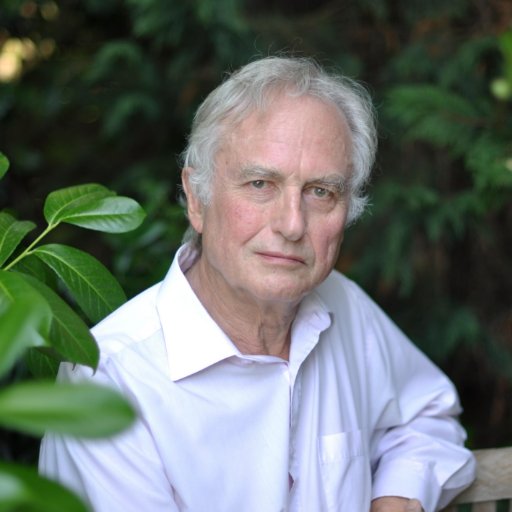
March 26 is #ScienceAppreciationDay.
But for science you probably wouldn’t have reached your latest birthday. Talking of birthdays, March 26 is my 85th.
Science saves lives. It’s also humanity’s best shot at universal understanding: one of the things that makes life worth saving.
English
@DoctorPerin As an aside….what a wonderful portrait of Tennesse Williams
English

People who are brutally honest generally enjoy the brutality more than the honesty
Natural Philosophy@Naturalphilosy
“All cruel people describe themselves as paragons of frankness!” — Tennessee Williams
English

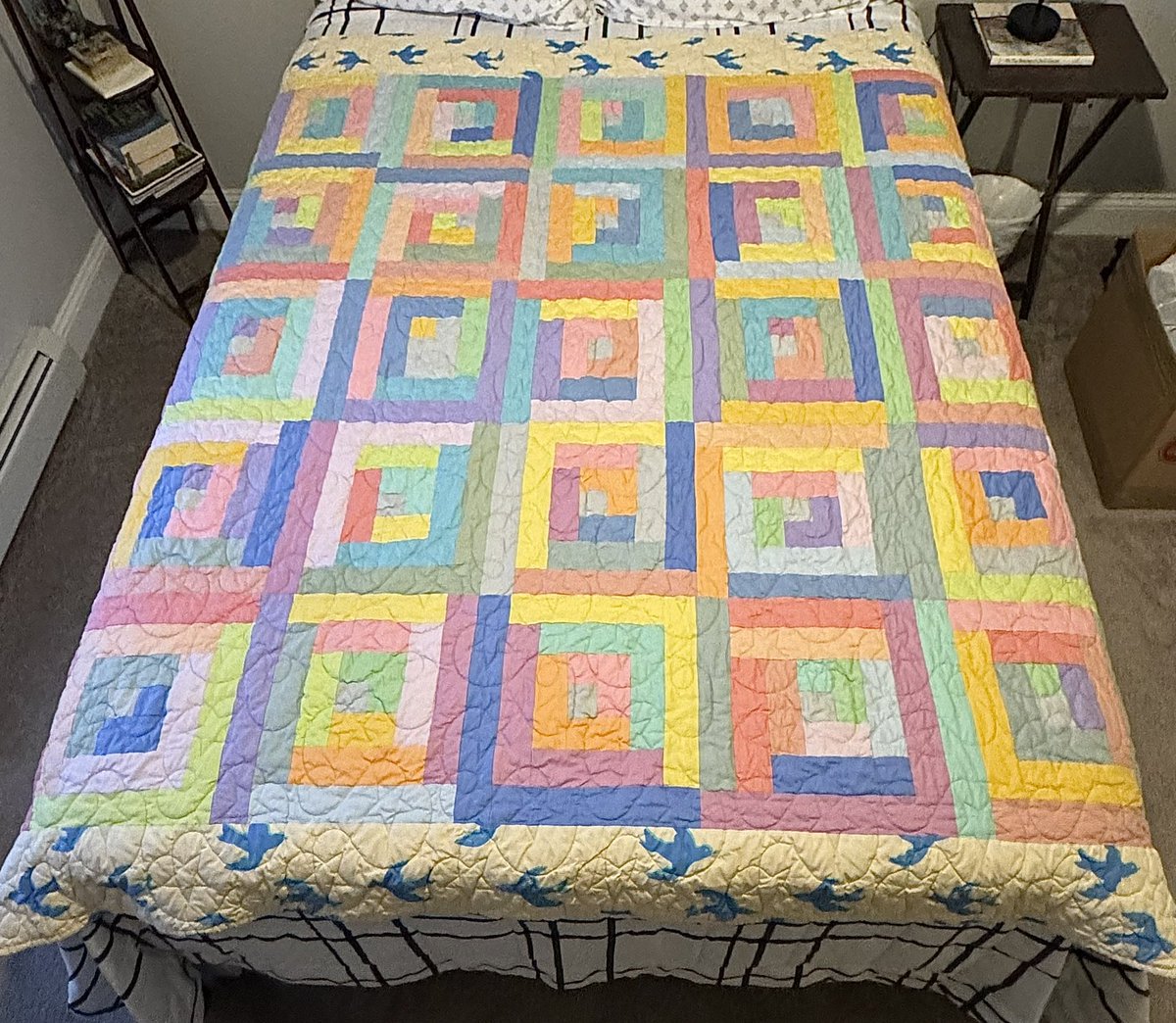
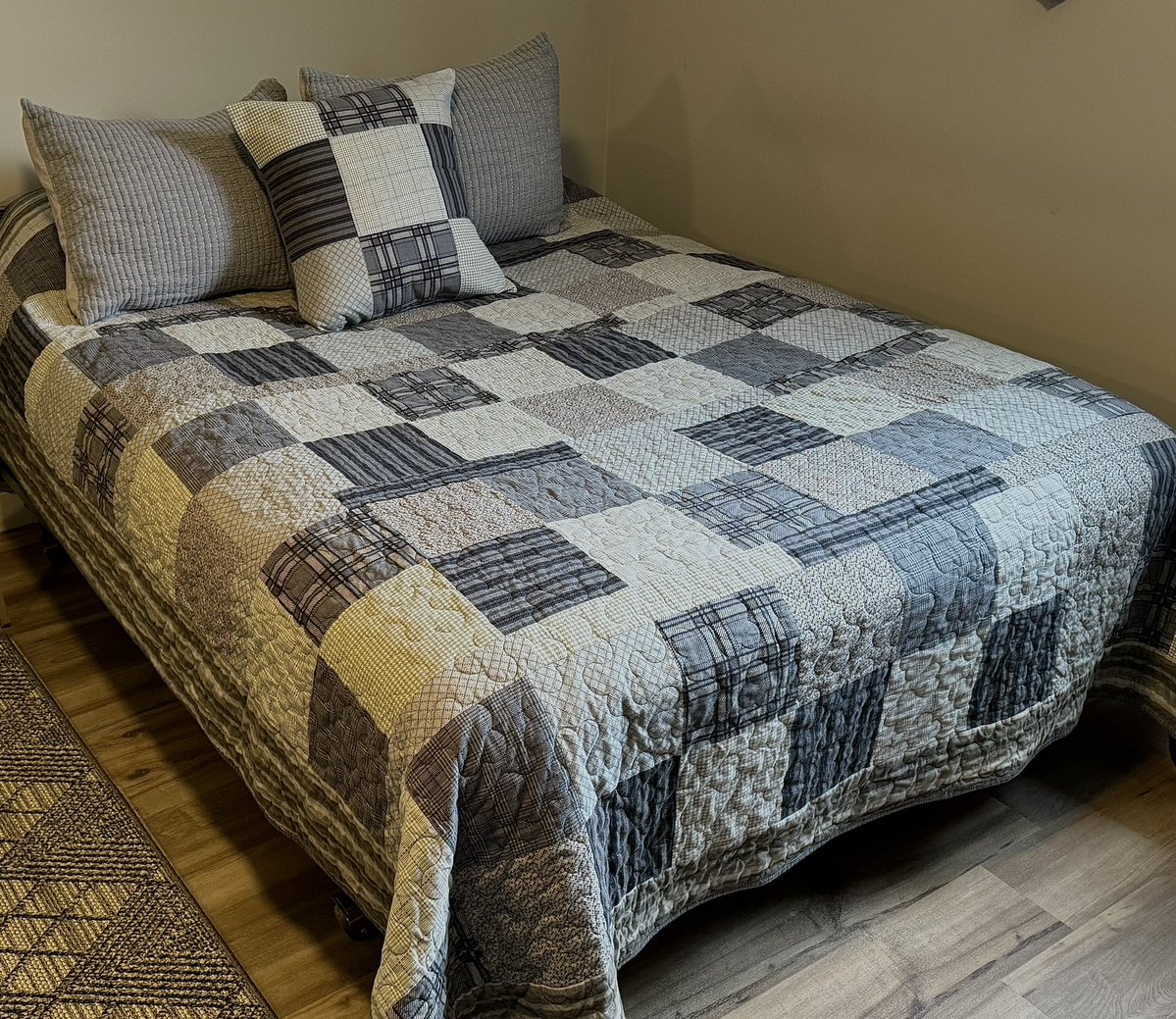
Just a few cozy all cotton and cotton flannel bed quilts and sham I made this winter. There is something special about my fam sleeping underneath them.
🪡🧵 #madewithlove
English

Portrait of Maria Trip (with detail view)….Rembrandt, early 17th C. Dutch Golden Age
#Astonishing


English
@DrCarlHindy @coproductiveEqu Repetition compulsion can be tragic.
English

What we push out of awareness does not disappear; it returns as behavior. It shows up in our choices, our tone, our relationships—often in ways we feel puzzled by or quick to blame on others. The disowned part seeks expression, not resolution, and will settle for being lived out rather than understood. Psychological work is less about eliminating these parts than about reclaiming them, giving them words so they no longer need to act themselves out.
English
My personal truths as a clinical psychologist:
#215 You might think you’ve disowned something, but very often what we disown becomes enacted.
English
Cynthia Novick retweetledi


@helin_drsaga @newstart_2024 Have you pondered writing a book?
English

There is a particular kind of loneliness that arrives not in the absence of success, but inside it.
I have sat with many such people. The surgeon who saves lives with extraordinary precision and comes home unable to ask for a glass of water without it feeling like a confession of need. The executive who commands rooms of two hundred people and cannot tolerate the vulnerability of being seen by one. How about a pro athlete. For many it’s been years since they let someone just hold them without it being about recovery or getting back in the game.
They do not come to therapy saying they are lonely. They come saying their partner does not understand them. That the relationship has lost its spark. That they feel, somehow, chronically unsatisfied without being able to name why.
What they are describing, though they rarely can put it into words, is a failure of the capacity for deep relatedness. Not the inability to connect in a functional sense. They are often charming, socially fluent, even magnetic but charm is not intimacy. Social fluency is not vulnerability and magnetism, in the consulting room, often reveals itself as a sophisticated defense against the terror of being known.
What brings people to therapy is not simply the presence of symptoms but the poverty of their inner life. The high-performing person often presents with a rich outer life that functions as an elaborate scaffolding around an inner world that was never given permission to develop. Achievement became the language of the self. And for a long time, it was enough. Until it was not.
Deep down, these folks aren't looking for a partner who’s just as perfect as they are. They’re looking for someone who doesn’t mind when they’re a mess. They don't need a fan who’s obsessed with their PRs but they need someone who stays in the room when they’re actually exhausted.
This is where eroticism enters, and it is more complex than popular culture allows. Desire does not simply follow attraction. It follows safety that is charged with enough mystery to remain alive. But in high-stakes individuals, the more fundamental obstacle to erotic aliveness is not distance. It is the unconscious equation they have drawn between need and danger.
To want something from another person is to be exposed and exposure invites rejection. And rejection, for someone whose worth has been organized entirely around performance and outcome, does not feel like disappointment but feels like annihilation.
For many high-achieving individuals, the developmental history reveals not overt trauma in the conventional sense but chronic emotional unavailability. A parent who was present for the performance and absent for the person. Praise that arrived reliably for accomplishment and withdrew, subtly or not so subtly, in the face of ordinary human need.
The child adapts and become extraordinary. They learn to make themselves worth keeping through what they produce rather than through who they are. And they carry that template into every intimate relationship they will ever have.
The work is to expand what the self is allowed to rest upon. To help the person discover that they can be known outside of their excellence, and that this knowing does not reduce them. That intimacy is not a threat to the self but the very condition under which the self becomes fully real.
This is slow work. It requires a therapeutic relationship that itself becomes the medium of change, not simply the container for insight. The relationship teaches what interpretation alone cannot reach. That need is survivable. That dependence is not the end of autonomy. That the person sitting across from you can hold your unguarded self without flinching and that in being held that way, something long exiled begins to return.
The most erotic thing is not performance but its presence. And presence requires the willingness to be somewhere you cannot control the outcome.
English

Whitney Cummings shared the brutal truth she learned from dating a pro athlete:
Why would any man want a challenge in their relationship?”
She thought being “feisty” and difficult was hot and what guys wanted.
His response hit like a freight train:
“Why would any man want a challenge in their relationship?”
In that moment, she realized high-performing men (athletes, CEOs, anyone grinding hard all day) don’t want to come home to another battlefield.
They want peace, not more fights on the to-do list.
47-second mic-drop — Whitney on why “challenging” women often burn out the very men they think they’re attracting.
Does this ring true?
Do high-achieving men really crave peace over drama at home… or is the “fiery challenge” still a winning strategy in 2026?
Your thoughts — drop them below. No judgment.
English

If you could recommend on single unknown or undrerrated film you love, what would it be?
English
@helin_drsaga None of the above….Nat Geo, History and Food Network
English
Here is the poll again for some reason it didn’t show up. Do you watch any of these? or do you watch something else
English