Engr. Nuhu Inusa 🇵🇰
5.7K posts

Engr. Nuhu Inusa 🇵🇰
@NuhuInusa
EXBOY/CIVIL/STRUCTURAL ENGINEER/ CHELSEA FC💙💙💙/BADMINTON ❤️/ STRIVING MUMEEN/Jannah insha Allah
Qatar Katılım Ocak 2013
1.7K Takip Edilen537 Takipçiler

@oil_shaeikh 😂😂😂 they clearly met d easiest teams through out d competition. Either Bayern or PSG any one will finish them
English

@musa_kiliya 4 to 5m de for anybody wey get better job link.
English

@ABUJAPLUG Dm me I make 350k from my block business monthly
English

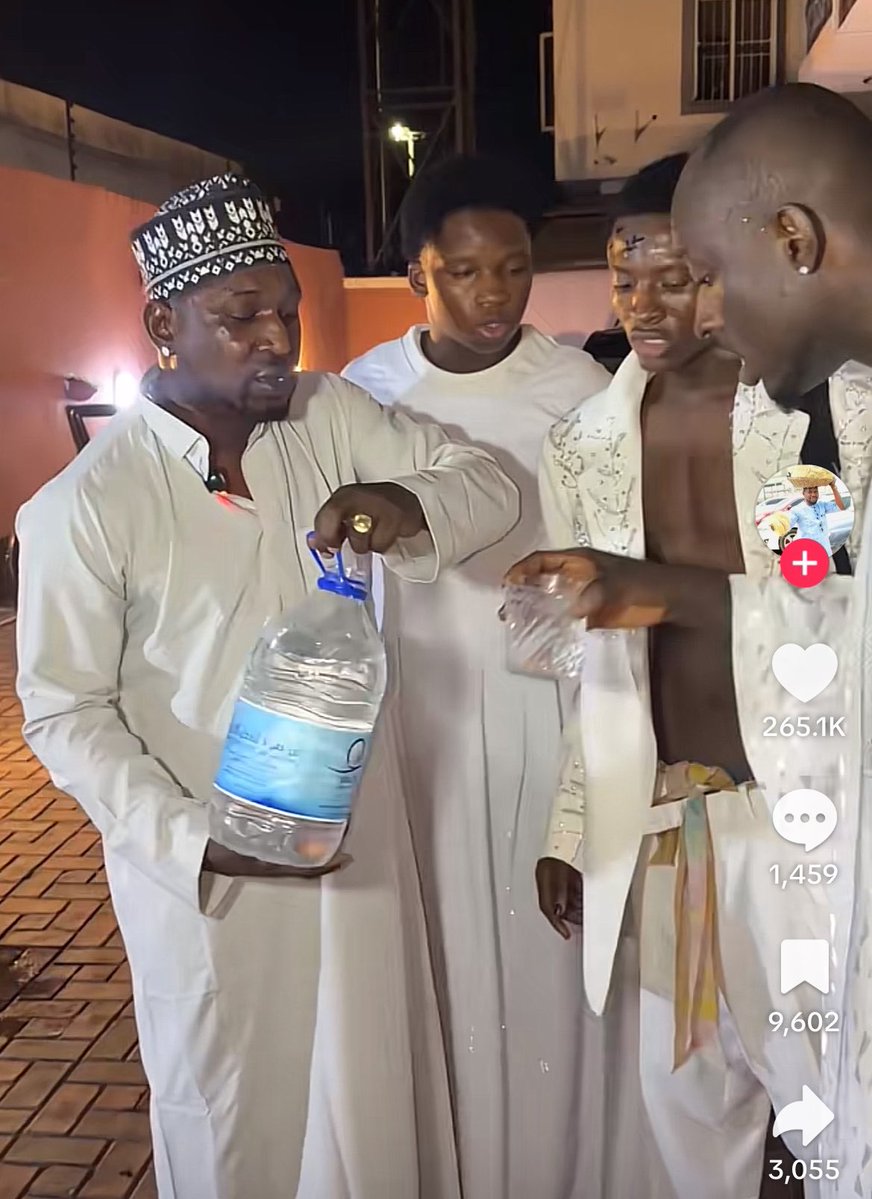
@ABUJAPLUG Una no know wetin to use do prank na sickness
English

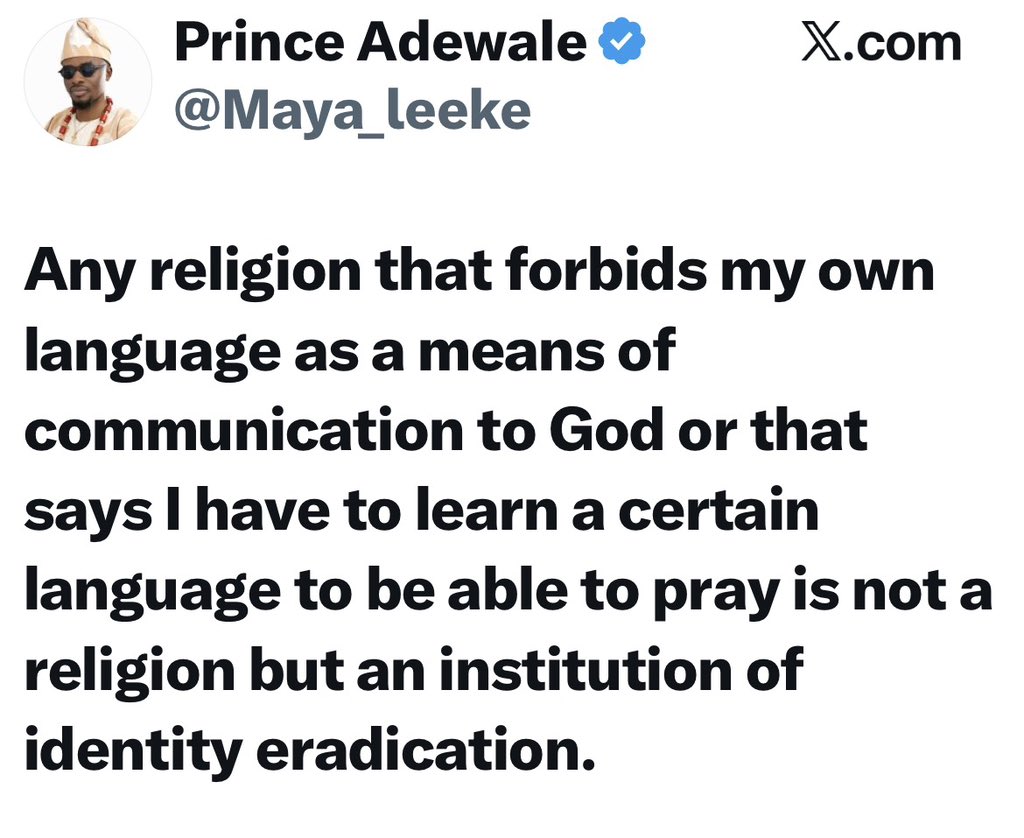
We all know he’s referring to Islam so I’ll answer him in kind.
First of all, this argument is built on a false premise. Islam does NOT forbid you from communicating with God in your own language. You can make du’a (supplication) in any language you want, anytime. There is zero restriction on that. So the claim that Islam “forbids your language” is already wrong from the start.
What Islam distinguishes between is personal supplication and formal ritual prayer (Salah). Salah has a fixed structure, just like every serious religious tradition has structured forms of worship. And yes, it’s performed in classical Arabic(which differs from Modern Standard Arabic spoken by everyday Arabs) and that’s not about “identity eradication,” rather it’s about preservation and unity.
The Qur’an was revealed in classical Arabic, and preserving it in that exact language ensures the meaning and wording remain intact. The moment you turn a liturgical act into multiple languages, you open the door to variation, reinterpretation, and eventually contradiction.
And we don’t even have to speak hypothetically, just look at what happened to other scriptures.
The Bible exists in:
-hundreds of translations
-different versions (KJV, NIV, ESV, NASB, etc.) with verses missing, added, or bracketed depending on the manuscript
On top of that, you ended up with:
Catholics, Orthodox, Protestant and hundreds of denominations with their own bibles or biblical canons. All with theological differences, sometimes major differences and often built on how texts were translated or interpreted. So preserving the Qur’an and Salah in one language for formal worship isn’t oppression rather it’s exactly what prevented that kind of fragmentation.
Ironically, this is not unique to Islam. In Judaism, Hebrew is used as the liturgical language for prayer and scripture. A Jew in Europe, Africa, or Asia still recites core prayers in Hebrew, even if it’s not their native language.
Learning a few phrases and verses in Arabic for prayer does not erase your identity. Muslims speak thousands of different languages, come from completely different cultures and maintain their own traditions and identities so long as it’s not polytheistic in nature yet we are united in one form of worship. This is unity without losing diversity.
Historically, Islam didn’t erase cultures either. Persians stayed Persian, Turks stayed Turkish, Africans kept their identities, South Asians kept theirs, white Muslims in the Balkans and Central Asia kept theirs. Islam spread globally without forcing people to abandon their languages or cultures so long as it doesn’t include paganism/polytheism.
His argument confuses structure with oppression. Every preserved system has standards. One of the reasons the Qur’an remains unchanged, memorised, and recited identically worldwide is precisely because of this preservation in its original language. Same reason I as a Nigerian Yoruba Muslim led a group of foreign Muslims across multiple ethnicities in salah(ritual prayer) and we prayed the exact same way and recited the exact same words side by side, at an airport despite us having not met each other ever and probably would never meet again.
If anything, this is one of Islam’s strongest points, not a weakness.
English

@Delta_Fairy @ABUJAPLUG Mumu don’t know what God did to him
English

@bigfash_ @ABUJAPLUG Please DM for more details if your interested
English