Yuwei An

40 posts

Yuwei An

Yuwei An

@Oasis_a19

ML and System, Research and Engineering Ph.D @Princeton | MS @CarnegieMellon | BS @Tsinghua_Uni ガチ声豚

Foster City, CA Katılım Haziran 2025
81 Takip Edilen54 Takipçiler
Yuwei An retweetledi
Huaizheng Zhang
Huaizheng Zhang@zhzHNN·
Unbelievable! Our teammates win the best paper in OSDI 2026.
Huaizheng Zhang tweet media
English
0
4
32
9.3K
Yuwei An retweetledi
LMSYS Org
LMSYS Org@lmsysorg·
SGLang now supports DSpark, enabling confidence-driven, variable-length verification for speculative decoding 🎉 DSpark addresses a key bottleneck under load: instead of verifying every draft token, it verifies only where the draft model is confident, so the gains hold even as batch size scales. We heavily optimized variable-length verification in SGLang. Across batch sizes 1 to 256, DSpark gives the best throughput/latency tradeoff on DeepSeek-V4-Flash, ahead of both MTP and non-spec. At high concurrency, dynamic scheduling provides up to ~20% higher throughput compared to a fixed budget, while maintaining high verification quality across workloads. With fused kernels and zero-overhead scheduling, DeepSeek-V4-Pro reaches 383.7 tok/s at B=1 on B300. DSpark is now available in SGLang with support for Qwen3 and DeepSeek-V4. Thanks @deepseek_ai for open-sourcing! Blog with full technical details and commands to run below 👇
English
9
39
191
166.8K
Yuwei An retweetledi
Tianqi Chen
Tianqi Chen@tqchenml·
We taught a brand-new mini-series this year at @SCSatCMU on Modern GPU Programming for ML Systems, as part of the ML Systems course, touching on fun questions like what data layout swizzling is, how to use 3D TMA, and state-of-the-art Blackwell programming. We released a curated online book based on the materials: mlc.ai/modern-gpu-pro… check it out
Tianqi Chen tweet mediaTianqi Chen tweet media
English
23
291
1.8K
198.7K
Yuwei An retweetledi
Zhijian Liu
Zhijian Liu@zhijianliu_·
🚀 DFlash now runs on SGLang's new default speculative-decoding engine, Spec V2. ⚡️ Hitting >4.3× baseline throughput (1.5× over native MTP) on Qwen 3.5 397B-A17B. Same quality, more speed! ⭐ github.com/z-lab/dflash
Zhijian Liu tweet media
English
9
28
231
17.1K
Yuwei An retweetledi
LMSYS Org
LMSYS Org@lmsysorg·
🚀 New blog: The next generation of speculative decoding: DFlash and Spec V2 DFlash + Spec V2 hit >4.3X baseline throughput for LLM inference, now the default speculative decoding engine in SGLang! Together with @modal and z-lab.ai, our jointly-released DFlash drafter for Qwen 3.5 397B-A17B beats both baseline and native MTP in every setting we benchmarked: 1️⃣ >4.3X baseline & 1.5X native MTP throughput (concurrency 1, HumanEval, 8xB200) 2️⃣ Block diffusion drafter: a full token block in one forward pass 3️⃣ KV injection: target-model features fed into every draft layer’s KV cache for higher acceptance 4️⃣ Spec V2 overlap scheduler: +33% end-to-end Read the code, deploy a DFlash server, and start experimenting!
LMSYS Org tweet media
English
14
77
444
124.8K
Yuwei An retweetledi
Yuandong Tian
Yuandong Tian@tydsh·
Early results from Recursive 🚀🚀 SotA results from our open-ended knowledge discovery system: 1️⃣NanoChat 5min pre-training (0.9372 bpb -> 0.9109 bpb, 2.8% lower Bits-Per-Byte than long-standing community SoTA) 2️⃣NanoGPT SpeedRun (79.7s -> 77.5s, 2.8% faster than long-standing community SoTA) 3️⃣GPU kernel optimization (Overall 7.8% better than SoTA performance in SOL- ExecBench, hosted by NVIDIA) To achieve that, our system automatically finds and combines innovations together to create better solutions than current ones carefully designed by expert humans in various domains. We have open-sourced resulting artifacts found by our system so you can check the output yourself. See a full breakdown and technical writeup: recursive.com/articles/first…
Recursive@Recursive_SI

x.com/i/article/2064…

English
6
35
357
58.2K
Yuwei An retweetledi
Haocheng Xi
Haocheng Xi@HaochengXiUCB·
New blog post: The Forgetting Wall in Video and World Models Long-horizon video generation is not just limited by compute. It is limited by how much of its own past the model can afford to remember. I wrote about why long videos drift, why KV cache becomes the memory bottleneck, and why compression is a key direction for future video/world models. haochengxi.github.io/posts/forgetti…
Haocheng Xi tweet media
English
7
28
167
129.8K
Yuwei An retweetledi
UW SyFi
UW SyFi@UWSyFi·
New distributed training strategies should not require new distributed runtimes. Introducing Piper: a programmable PyTorch training system for deploying complex training strategies by separating model placement and GPU scheduling from model code. 📄 arxiv.org/abs/2606.11169
UW SyFi tweet media
English
1
15
51
4.4K
Yuwei An retweetledi
Yiping Wang
Yiping Wang@ypwang61·
Automatic research from mathematics to AI research: We transfer the ScaleAutoResearch pipeline, which improves a 32-year-old Ramsey number bound, to the NanoGPT Speedrun optimizer track, using Claude Code and Codex with only 1–2 A40 nodes. We run ~300 experiments in ~5k A40 hours, and then: ⭕ Results: improve (non-interpolation) SOTA from 2875 to 2755 steps. Changes: +: non-gain aux β₂ = 0.997; SOAP for all hidden with freq=1; LR-horizon + momentum tuning -: remove Circuit-/Contra-/Soft-Muon, Aurora, NorMuon 2nd-moment, V-SOAP-blend, attn denom-floor... Clearly, the experiments are compute-bounded, and it is possible that more results could come with more resources! [1/n]
Yiping Wang tweet mediaYiping Wang tweet media
English
10
28
161
53.2K
Yuwei An retweetledi
Infini-AI-Lab
Infini-AI-Lab@InfiniAILab·
🌀 Introducing Vortex — sparse attention designed by AI agents, efficient at scale. 📈 Same accuracy, way more throughput — across every model we tried 👇 🔹 GLM-4.7-Flash (MLA) → 4.7× faster 🔹 MiniMax-M2.7 (229B) → 1.37× faster 🔹 Qwen3-1.7B (agent-discovered!) → 3.46× faster 🤖 How? An agent writes a flow in a few lines of Python; Vortex compiles it into fused kernels in a real serving stack (SGLang) and benchmarks it end-to-end. 🏗️ The design: a Python frontend (vFlow) over a page-centric tensor abstraction (vTensor) + a serving-integrated backend. 📄 arxiv.org/abs/2606.06453 💻 github.com/Infini-AI-Lab/… 🌐 infini-ai-lab.github.io/vortex_torch/ 📚 infini-ai-lab.github.io/vortex_torch/d…
Infini-AI-Lab tweet media
English
2
27
77
61.8K
Yuwei An retweetledi
Zhuoyang Zhang
Zhuoyang Zhang@zhuoyang_zhang·
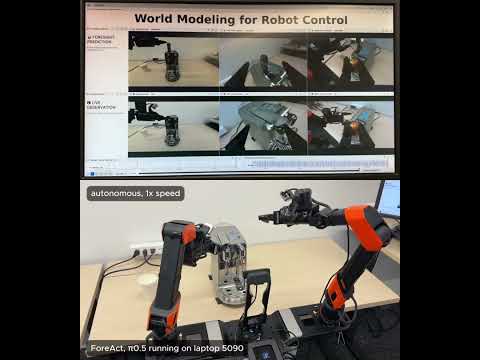
We‘ll be presenting ForeAct (🌟Highlight) at CVPR 2026: 📍 Poster: Sunday, 3:30PM, ExHall A #95 📍 NVIDIA Tech Talk: Friday, 12:40PM, Booth #211 @NVIDIAAI Feel free to stop by and chat! Also find our coffee making demo empowered by ForeAct! (youtube.com/watch?v=kBKJxW…) I’ll be at #CVPR2026 from Jun 4-7. Open to chat about VLA, world models and efficient visual generation!
YouTube video
YouTube
Zhuoyang Zhang@zhuoyang_zhang

We release ForeAct (accepted to CVPR’26🎉), a world model planner powered by visual foresight for VLAs - efficiently, modularly, and at scale. ✨ Seamlessly integrates with VLAs by visual augmentation — no architectural changes required ⚡ Generates high-fidelity 640×480 subgoal images in just 0.33s 🧠 Significantly boosts generalization capability and data efficiency 📄Paper: arxiv.org/abs/2602.12322… 🔗Code: github.com/mit-han-lab/fo… 🧵👇

English
1
7
27
8.3K
Yuwei An retweetledi
Ruihang Lai
Ruihang Lai@ruihanglai·
Two moments every ML researcher knows. You get onto a new cluster, and week one goes to fitting the framework to your setup, not training. A new architecture lands, and trying it means hacking through a gigantic codebase to stay compatible with the pipeline. What you want to change is small. The code you wade through to change isn't. This experience is likely not alone, and many researchers we’ve talked to run into similar issues. A year of this on CMU's FLAME cluster left us with one question: what if a framework were built for an agent to adapt and evolve, not just for humans to maintain? So we introduce PithTrain: a compact, agent-native MoE training system, now ~11K lines of Python, on four principles: - Compact: fits in one context window - Python-native: readable tracebacks, no compiled-extension rebuilds - No implicit indirection: direct calls, each model in its own file - Agent skills: in-repo playbooks for recurring tasks Then we measured the thing nobody measures. Same agent, same tasks, only the framework underneath changes: on PithTrain it finishes with up to 62% fewer turns and 64% less GPU time than production frameworks, while training just as fast. We call this second axis agent-task efficiency, and we believe it deserves to sit alongside training throughput as a metric worth optimizing. Excited to see what people build with it. Built with amazing collaborators @haok1402, Haozhan Tang, Akaash Parthasarathy, @Zichun_Yu, @junrushao, Todd Mowry, @XiongChenyan and @tqchenml. Blog: blog.mlc.ai/2026/06/01/pit… Code: github.com/mlc-ai/pith-tr… Paper: arxiv.org/abs/2605.31463
Ruihang Lai tweet media
English
3
38
173
23.9K
Yuwei An retweetledi
Han Guo
Han Guo@HanGuo97·
LLM training is built on fast MatMuls. But many surrounding ops still run as memory-bound kernels. CODA reparameterizes them to hide in the matmul’s shadow, fused into its epilogue before results leave the chip. Bonus: LLMs can write fast CODA kernels too (approaching SoLs).
Han Guo tweet media
English
16
103
688
201.2K
Yuwei An retweetledi
Beidi Chen
Beidi Chen@BeidiChen·
Align with how @cursor_ai has done its RL stage — Astraflow is a new RL engine that enables asynchronous, heterogeneous, and geo-distributed RL in a native way through dataflow abstraction~ Like @FireworksAI_HQ’s sparse RL transfer design, it syncs only ≤1.1% of model weights — making remote rollout lightweight and efficient. Check it out!!!
Infini-AI-Lab@InfiniAILab

We’re excited to release 𝐀𝐬𝐭𝐫𝐚𝐅𝐥𝐨𝐰, an open-source, dataflow-oriented RL system for training multi-agentic and multi-policy LLMs. 🚀 Built for scalable, flexible, and efficient agent RL, AstraFlow natively enables: ⚡ 𝟐.𝟕× 𝐟𝐚𝐬𝐭𝐞𝐫 𝐦𝐮𝐥𝐭𝐢-𝐩𝐨𝐥𝐢𝐜𝐲 𝐚𝐠𝐞𝐧𝐭𝐬 𝐜𝐨𝐥𝐥𝐚𝐛𝐨𝐫𝐚𝐭𝐢𝐯𝐞 𝐑𝐋 𝐭𝐫𝐚𝐢𝐧𝐢𝐧𝐠 Achieves comparable or better accuracy than verl-based baseline. 🌍 𝐙𝐞𝐫𝐨-𝐜𝐨𝐝𝐞 𝐬𝐲𝐬𝐭𝐞𝐦 𝐟𝐥𝐞𝐱𝐢𝐛𝐢𝐥𝐢𝐭𝐲 Supports elastic multi-policy training and cross-region rollout across heterogeneous GPUs. 📦 ≤𝟏.𝟏% 𝐬𝐩𝐚𝐫𝐬𝐞 𝐭𝐫𝐚𝐧𝐬𝐟𝐞𝐫 𝐟𝐨𝐫 𝐫𝐞𝐦𝐨𝐭𝐞 𝐫𝐨𝐥𝐥𝐨𝐮𝐭 Same to @FireworksAI_HQ’s sparse RL transfer design, AstraFlow cuts sync from ~28 GB to ~1.5 GB, with deltas ≤1.1% of weights, making remote rollout lightweight and efficient: fireworks.ai/blog/frontier-… 🔁 𝐒𝐮𝐛𝐬𝐭𝐢𝐭𝐮𝐭𝐚𝐛𝐥𝐞 𝐫𝐨𝐥𝐥𝐨𝐮𝐭 𝐚𝐧𝐝 𝐭𝐫𝐚𝐢𝐧𝐞𝐫 𝐬𝐞𝐫𝐯𝐢𝐜𝐞𝐬 Provides modular rollout and training components for flexible deployment. 🧵(1/5)

English
2
29
209
34.1K
Yuwei An retweetledi
Infini-AI-Lab
Infini-AI-Lab@InfiniAILab·
We’re excited to release 𝐀𝐬𝐭𝐫𝐚𝐅𝐥𝐨𝐰, an open-source, dataflow-oriented RL system for training multi-agentic and multi-policy LLMs. 🚀 Built for scalable, flexible, and efficient agent RL, AstraFlow natively enables: ⚡ 𝟐.𝟕× 𝐟𝐚𝐬𝐭𝐞𝐫 𝐦𝐮𝐥𝐭𝐢-𝐩𝐨𝐥𝐢𝐜𝐲 𝐚𝐠𝐞𝐧𝐭𝐬 𝐜𝐨𝐥𝐥𝐚𝐛𝐨𝐫𝐚𝐭𝐢𝐯𝐞 𝐑𝐋 𝐭𝐫𝐚𝐢𝐧𝐢𝐧𝐠 Achieves comparable or better accuracy than verl-based baseline. 🌍 𝐙𝐞𝐫𝐨-𝐜𝐨𝐝𝐞 𝐬𝐲𝐬𝐭𝐞𝐦 𝐟𝐥𝐞𝐱𝐢𝐛𝐢𝐥𝐢𝐭𝐲 Supports elastic multi-policy training and cross-region rollout across heterogeneous GPUs. 📦 ≤𝟏.𝟏% 𝐬𝐩𝐚𝐫𝐬𝐞 𝐭𝐫𝐚𝐧𝐬𝐟𝐞𝐫 𝐟𝐨𝐫 𝐫𝐞𝐦𝐨𝐭𝐞 𝐫𝐨𝐥𝐥𝐨𝐮𝐭 Same to @FireworksAI_HQ’s sparse RL transfer design, AstraFlow cuts sync from ~28 GB to ~1.5 GB, with deltas ≤1.1% of weights, making remote rollout lightweight and efficient: fireworks.ai/blog/frontier-… 🔁 𝐒𝐮𝐛𝐬𝐭𝐢𝐭𝐮𝐭𝐚𝐛𝐥𝐞 𝐫𝐨𝐥𝐥𝐨𝐮𝐭 𝐚𝐧𝐝 𝐭𝐫𝐚𝐢𝐧𝐞𝐫 𝐬𝐞𝐫𝐯𝐢𝐜𝐞𝐬 Provides modular rollout and training components for flexible deployment. 🧵(1/5)
GIF
English
1
13
73
42.7K
Yuwei An retweetledi
SemiAnalysis
SemiAnalysis@SemiAnalysis_·
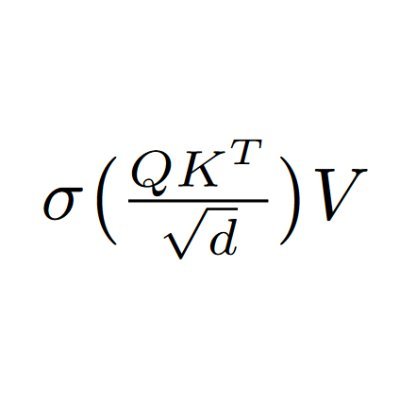
Sparse attention mechanisms are finally moving beyond academic benchmarks into production systems, including DeepSeek Sparse Attention, and recently @NousResearch 's Lighthouse Attention. BLASST by NVIDIA, from paper Dynamic Blocked Attention Sparsity via Softmax Thresholding, attempts to sparsify attention in a different way, leveraging a similar rescale factor threshold idea from Flash Attention 4. We expect to see more interesting sparse attention techniques in the future. arxiv.org/abs/2512.12087 (2/4)
SemiAnalysis tweet media
English
4
10
88
68.8K