OneOfThreeMiners retweetledi

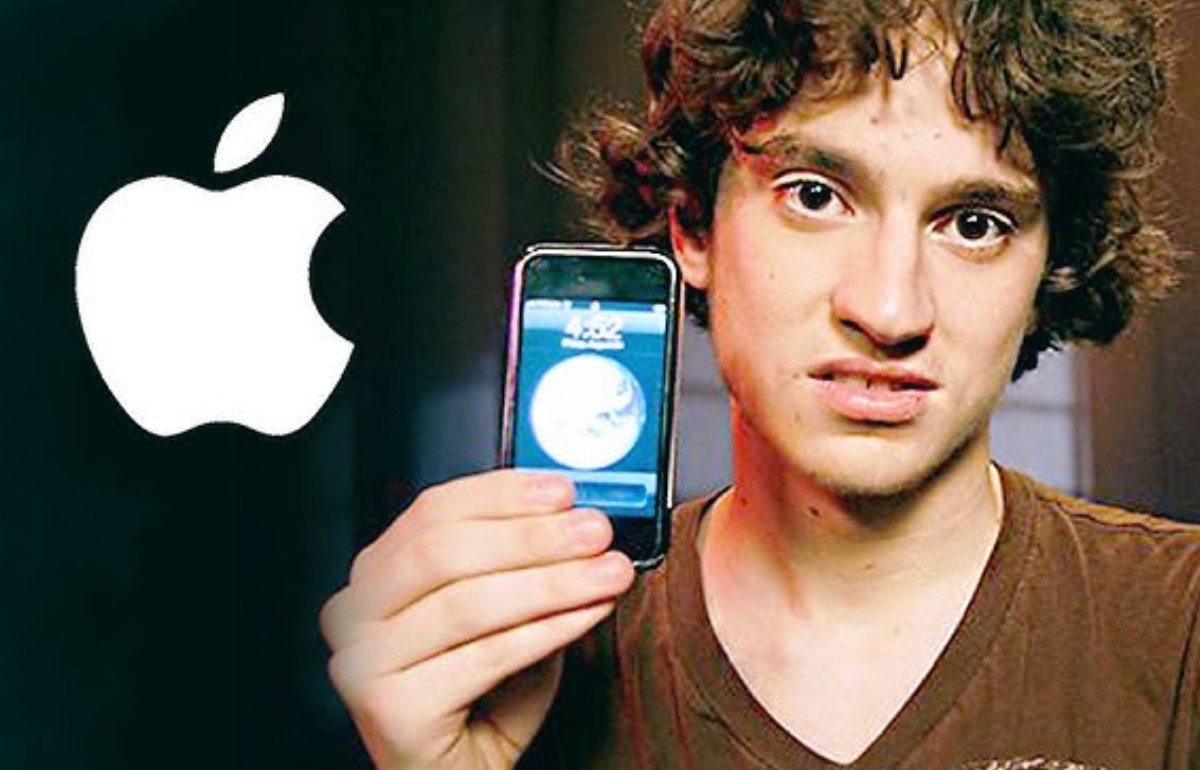
A 17 year old in his mother's kitchen in New Jersey unlocked the iPhone in 2007 so it could run on any carrier in the world, and 18 years later he is the only person on Earth trying to break NVIDIA's monopoly on AI compute from his apartment in San Diego with a 12,000 line piece of code.
His name is George Hotz. Most people call him geohot.
The framework he built is called tinygrad. It is open source. It is MIT licensed. And it is what he believes will end the trillion dollar moat around CUDA.
At just 17, George became the nightmare of tech giants. He did it in his mom's kitchen with a soldering iron and an eBay-bought original iPhone. Apple had locked the device to AT&T. He unlocked it in 500 hours of work over a summer. He uploaded a video to YouTube. The world lost its mind.
Three years later he reverse engineered the PlayStation 3 and put the keys on the internet. Sony sued him. The case settled. He kept hacking.
Elon Musk noticed. He tried to recruit George to fix Tesla's Autopilot. George's response became legend. "I don't want to work for you. I want to beat you."
In 2015 he started his own self-driving car company called comma AI out of a garage. He sold a $1,500 device that you plug into your Honda and it drives itself on highways. The thing actually worked.
Then in November 2022 he walked away from his own company to start something most engineers thought was impossible.
He decided to break NVIDIA.
NVIDIA is worth around 3 trillion dollars right now. Every serious AI lab on Earth runs on NVIDIA GPUs. The reason is not the silicon. AMD makes silicon that is comparable on paper. The reason is CUDA, the software layer NVIDIA spent 20 years building that nobody has been able to replicate.
CUDA is what people in the industry call a moat. A trillion dollar moat.
George looked at this and decided one person could rewrite it.
He started tinygrad in late 2022 as a neural network framework so small you could read the entire codebase in an afternoon. PyTorch has millions of lines of code. Tinygrad fits in roughly 12,000.
His bet was that if you could write a framework small enough for one human to understand, you could port it to any hardware on Earth in months instead of years.
He bought six AMD Radeon 7900 XTX cards, the consumer gaming GPUs you can buy at Best Buy, and tried to make them train AI models. AMD said it would not work. The drivers were too unstable. ROCm, AMD's official software stack, was famously broken.
For two years George fought AMD publicly on X. He posted bug reports daily. He called out AMD's CEO Lisa Su by name. He live streamed himself debugging firmware crashes at 3 in the morning. The AMD subreddit followed it like a soap opera.
Then in March 2025 something changed.
AMD shipped him two MI300X data center systems, the same chips that power Microsoft and Meta's AI infrastructure. AMD's lead GPU software engineer Anush Elangovan posted publicly that he was working closely with tinygrad to "commoditize the petaflop."
George wrote a blog post titled "AMD YOLO" the same day. Tinygrad now has a fully sovereign AMD stack. They rewrote the entire pipeline from the hardware up to PyTorch compatibility. Their own driver. Their own runtime. Their own libraries.
The line that broke the AI infrastructure world was this one. NVIDIA is either massively overvalued or AMD is massively undervalued. The hardware is similar. CUDA is not the moat people think it is.
The whole thing runs on roughly 12,000 lines of code.
You can buy a Tinybox from him today. Six AMD GPUs in a custom chassis. Around $15,000. It trains models. It works.
NVIDIA spent 20 years building the deepest moat in tech.
A solo hacker just walked across it.
English