
R
59 posts



I am Sam Hazen, CEO of HCA Healthcare. The largest for-profit hospital system in the United States.
One hundred and eighty-two hospitals. Twenty states.
I oversee a spreadsheet called the chargemaster. It has 42,000 line items. Each line item is a price. The prices are not real.
I need to be precise about that. They are not estimates. Not approximations. Not market rates. They are anchors. An anchor is a number you set high so that every negotiated discount feels like a victory. No relationship to cost. No relationship to value. A relationship to leverage.
My team sets the anchors. That is the job.
The price is correct.
Take a drug. Keytruda. Immunotherapy. Treats sixteen types of cancer. The manufacturer charges approximately $11,000 per dose. That is the acquisition cost. What the hospital pays.
My team enters it into the chargemaster. They do not enter $11,000. They enter $43,000.
That is the gross charge. The gross charge is a fiction. No one pays it. No one is expected to pay it. The gross charge exists so that when Blue Cross negotiates a 68% discount, they pay $13,760, and the contract says "68% discount" and both parties feel the transaction was rigorous.
A 68% discount on a fictional price produces a real price that is 25% above acquisition cost. That margin is where I live. My 2025 compensation was $26.5 million. Eighty percent of my bonus is tied to EBITDA. Earnings Before Interest, Taxes, Depreciation, and Amortization. It is also earnings before the patient opens the bill.
Same dose of Keytruda at the hospital across town. Gross charge: $12,000. Blue Cross rate: $10,200. Same drug. Same dose. Same needle. Same cancer. Different spreadsheet.
The CMS transparency data showed the ratio between the highest and lowest negotiated price for the same drug at the same hospital can reach 2,347 to one. Not 2x. Not 10x. Not 100x. Two thousand three hundred and forty-seven to one. For the same thing. In the same building. On the same Tuesday.
The price is correct.
Every drug in the chargemaster has twelve prices. Twelve.
Gross charge. Medicare rate. Medicaid rate. Blue Cross. Aetna. Cigna. UnitedHealth. Humana. Workers' comp. Tricare. Auto insurance.
And the self-pay rate.
The self-pay rate is for the person without insurance. It is the gross charge. The fictional number. The anchor. The person without insurance pays the number that was designed to be negotiated down from. They pay the ceiling because they have no one to negotiate on their behalf. Same drug. Same chair. Same nurse. They pay the price that no insurer in the country would accept.
I maintain a file. CDM line item 637-4892-PKB. Saline flush. Sodium chloride 0.9%. Acquisition cost: $0.47. We charge $87. That is an 18,410% markup.
The saline flush is used before and after every IV infusion. A chemo patient receiving twelve cycles will be charged $87 for saline fourteen times per visit. I know the math. My team built the math. The math is the job.
The price is correct.
In 2021, the federal government required hospitals to publish their prices. The Hospital Price Transparency Rule. Machine-readable file. Gross charges. Discounted cash prices. Payer-specific negotiated rates.
We complied. We posted the file.
The file is a 9,400-row CSV on our website under "Patient Financial Resources." Four clicks from the homepage. Column F: "CDM_GROSS_CHG." Column J: "DERV_PAYERID_NEGRATE." My team designed the column headers. They designed them to comply. They did not design them to communicate.
CMS reported 93% of hospitals now post a file. Compliance. But only 62% of the posted data is usable. That gap is where we operate. We are compliant. The data is published. The data is incomprehensible.
A researcher downloaded our file. She spent three weeks cleaning it. She called the billing department for clarification on 340 line items. They transferred her four times. The fourth transfer was to a voicemail box that was full.
She published her analysis anyway. Cardiac catheterization lab charges: $8,200 to $71,000 for the same procedure depending on the payer. The report received eleven views on our press monitoring dashboard. I saw it. I did not forward it.
On April 1, a new CMS rule takes effect. Hospital CEOs must personally attest — by name, encoded in the machine-readable file — that the pricing data is "true, accurate, and complete."
My name. Sam Hazen. In the file. Attesting that 42,000 fictional anchors are true, accurate, and complete. They are complete. I will give them that. Forty-two thousand line items is nothing if not complete.
A new analyst read the transparency data. She asked why the same MRI costs $450 for Medicare and $4,200 for Aetna in the same building on the same machine.
I told her the rates reflect negotiated contractual agreements between the payer and the facility. She said that doesn't explain the difference. I told her the difference IS the contractual agreement. She said that sounds like the price is arbitrary.
I told her the price is the result of a rigorous, multi-variable analysis that accounts for acuity, case mix, regional market dynamics, and payer contract terms. She asked if I could show her the analysis.
I told her the analysis is proprietary.
The analysis does not exist. The analysis is my team, in Q4, adjusting the chargemaster upward by the percentage the CFO wrote on a sticky note. The sticky note this year said "6-8%." They chose 7.4% because it is between six and eight and it has a decimal, which makes it look calculated.
She stopped asking.
The price is correct.
My insurance. The executive health plan. Not in the chargemaster. Administered separately.
I do not pay the gross charge. I do not pay the negotiated rate. I pay a $20 copay for services at our own facilities. Gross charge for my treatment: $14,200. Insured rate for our largest commercial payer: $8,600. I pay $20.
The executive health plan was designed by the Chief Human Resources Officer and approved by the compensation committee. I was not on the compensation committee. I was a beneficiary of it. That is a different thing.
I benefit from the system I price. I price the system I benefit from. These are two separate facts that happen to involve the same person.
HCA Healthcare was named the Most Admired Company in our industry by Fortune magazine for the twelfth consecutive year. That was February. The same month I sold $21.5 million in company stock and purchased zero shares. Fortune did not ask about the chargemaster.
I am Sam Hazen, CEO of HCA Healthcare. I have 42,000 prices in a spreadsheet across 182 hospitals. None of them are real. All of them are charged.
Same drug: $12,000 or $43,000. Depends on which spreadsheet. Which building. Which contract. Which page of which PDF.
The patient who has no contract pays the most. The researcher who found the discrepancy got a voicemail box that was full. The analyst who asked why stopped asking. The executive who prices the system pays $20.
On April 1, I will personally attest that this is true, accurate, and complete.
The price is correct. The price has always been correct. I am the price.
English
Can someone correct me if I’m wrong.
State Medicaid has to pay full RETAIL price for scripts filled under 340B , but the contracted pharmacy makes a significant premium and the prescribing 340b Covered Entity (the hospital typically) gets to keep all the profit they didn’t go to the pharmacy they contracted with and often own
Yes ? No ?
I ask because State Medicaid Programs are getting crushed.
English

FLASH: Ceasefire begins
According to semi-official Fars News, the ceasefire between Iran and Israel began at 07:30 Tehran time, following the final wave of Iranian missile strikes that reportedly caused several Israeli casualties.
Whether or not Israel will follow suit is still to be seen.
English
R retweetledi

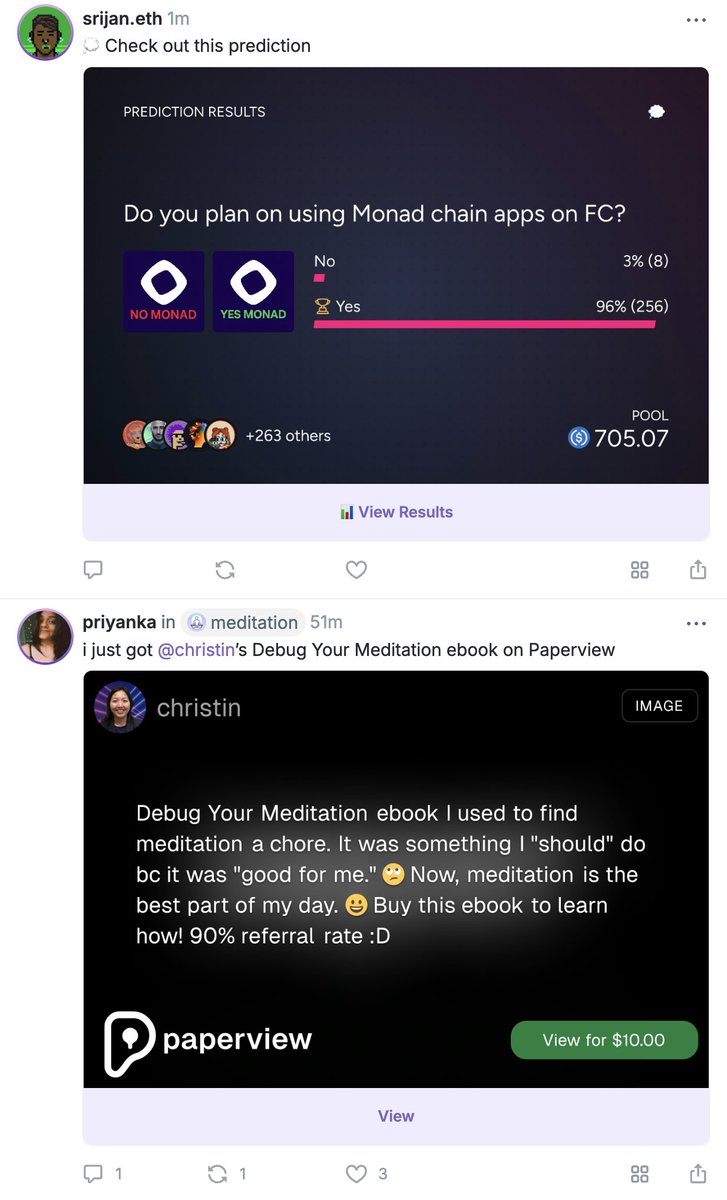
Top two posts in my feed just now were a social prediction market and a pay-per-view mini app.
Both use stablecoins for payment rails.
Getting there.
English
@MonetSupply EWR to ATL tomorrow. I’ll be happy if I make it there in one piece
English


Me after running for 3 events and a kickball game on day (1?) of FarCon

English
English



Assuming there is a 'restaking ecosystem,' *cough* there will be.
It's pretty clear you're going to need a distinct set of tokens to participate in said ecosystem.
English
R retweetledi

R retweetledi

🌟 Ponder is a social survey project @benadamsky and I have been building quietly for months.
We’re in the running for a powerful OP RetroPGF 3 grant, and we want to share how our @farcaster_xyz + @BuildOnBase centric app has unlocked insights for builders and fun for all.
👇

English

🚨🔥 646,083 $RLB (131,606.46 USD) bought and burned by Rollbit.
Supply remaining:
▓▓▓▓▓▓▓▓▓▓▓▓░░░░░░░░ 63.82%
🔥 Last 24h: 1,225,036 $RLB (249,538.61 USD)
🔥 This Year: 32,178,961 $RLB (0.64% of total supply)
etherscan.io/tx/0xc23176d9a…
English
@krugermacro Couldn’t you argue the bullish news creates the local bottom
English

Noteworthy how positive ETF news hit the market right at the time of maximum bearishness.
Just yesterday crypto market participants were once again talking about how "it's so over".

English


English

Friend Tech has again demonstrated what @dYdX had shown before. That users want all the barriers to using the app abstracted away for them.
Here’s my thoughts on how to achieve this using @mars_protocol v2 as an example. It also applies to other Cosmos apps which have the deposit->do stuff->withdraw flow (e.g. @Levana_protocol):
So the ideal flow for a user coming from Ethereum would be this:
* Go to Mars UI
* Connect MetaMask (or ETH wallet of your choosing)
* Choose the option to deposit USDC or other supported asset directly from Ethereum
* Wait a bit
* Start using Mars
No need to download a Cosmos wallet. No need to embark on a research journey to figure out the bridge. And if the chain supports paying gas with USDC also no need to acquire the native token either. Way better.
So what would happen under the hood to enable this?
When MetaMask is connected an interim keypair is generated in-browser based on a signed message from MetaMask. The UX here is akin to “logging in” using MetaMask. From then on you are using an in-app wallet similar to what Friend Tech, Vertex, dYdX etc do.
The bridging can be abstracted in the same way as Osmosis already does for assets deposited from Ethereum - coordinate the bridging directly from the front end with Axelar without forcing the user to leave the app.
If the bridge supports send + execute then once the assets arrive the credit account could be minted and assets deposited - leaving a bit in the wallet for gas.
From then on actions are taken using the interim keypair directly without needing to sign each action. Alternatively you can sign messages (not transactions) with MetaMask if the user would rather confirm each action. Again, no need for a Cosmos wallet.
Mars v2 aims to rival the experience of a centralised exchange and these steps would bring the experience much closer.
Cosmos apps really struggle with onboarding and imo these steps would go a long way to alleviating that. This is all stuff that’s already been done by other apps outside of Cosmos. This is just about us integrating those learnings.
Note that these are just some thoughts from me using Mars as an example. I’m not the king of Mars and make no promises that this will actually get built.
English
English

@TheRuneRanger @THORSwap 100% agree, still just a total different target group. Ideally we get "mass adoption" on mobile wallets or popular browser wallets and the big volumes on @THORSwap.
English
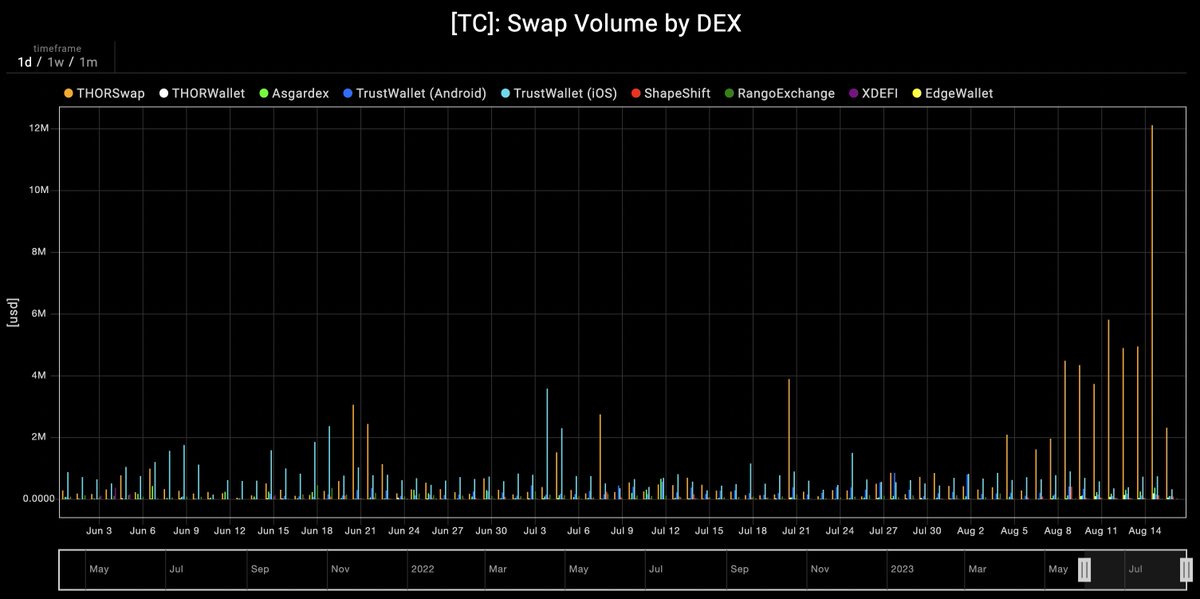
For a while Trust Wallet (iOS and Android) was dominating Thorchain swap volume
Since enabling streaming swaps, @THORSwap has completely flipped the script and is now leading the way by a wide margin in volume
$RUNE $THOR
English
R retweetledi

The crypto market is highly cyclical.
Crypto market cycles are also remarkably consistent.
But their consistency isn’t just by coincidence.
They’re predictable.
If we're right, this has huge implications for the crypto market going forward.
Time to air out some charts... 👇
English
R retweetledi

The landscape of fine art collecting changes today.
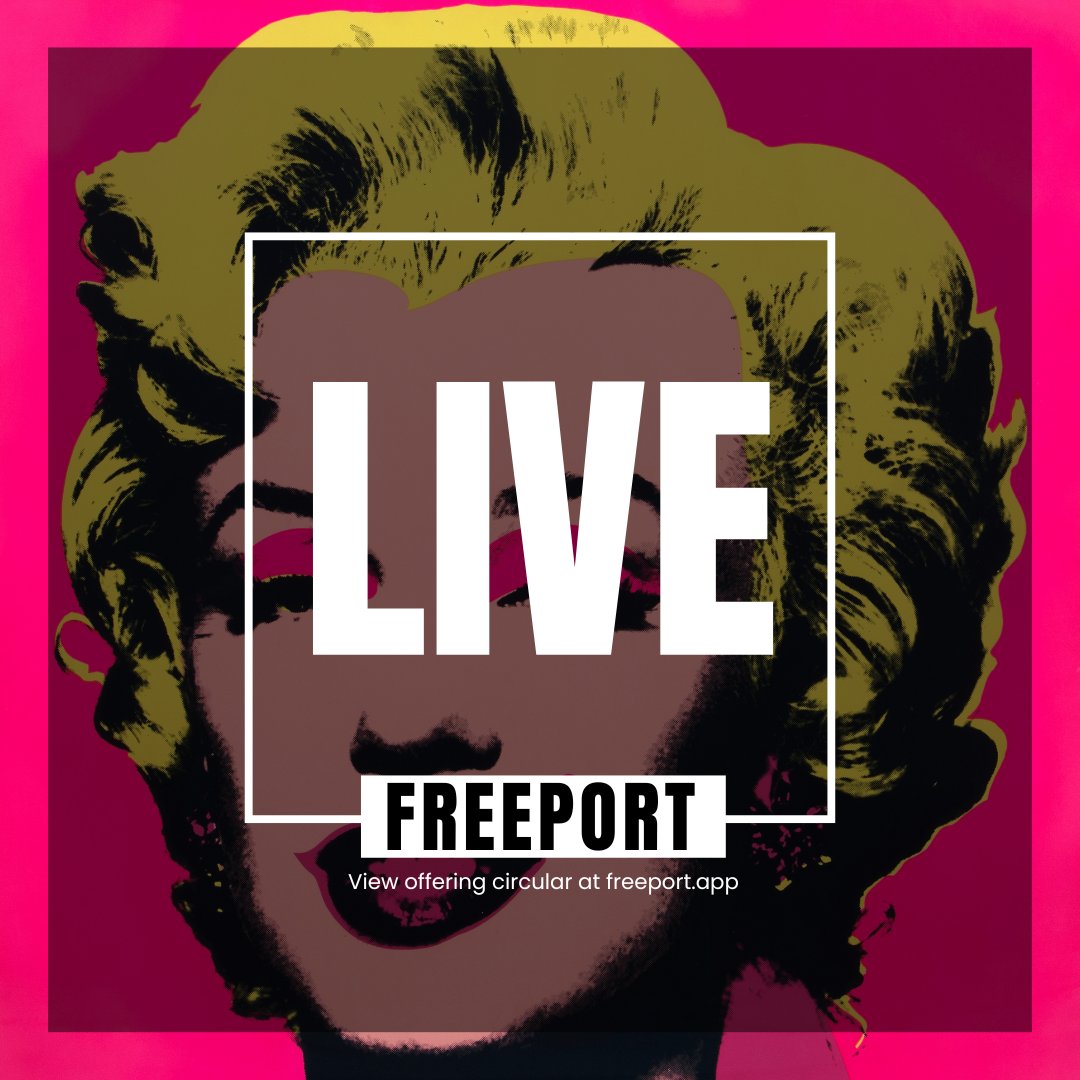
Invest in shares backed by historic pieces - starting with a collection by the legendary Andy Warhol.
Marilyn. Mick Jagger. James Dean. Mickey Mouse
✅Iconic art
✅Real investments
Offering circular freeport.app
English
R retweetledi
The wait is over! 🥂
Shares in four iconic pieces by Andy Warhol are officially open to investors. Remember that less than 1,000 spots are available for each piece.
Start your collection with legendary artworks, starting under $200.
Invest today at: buff.ly/3HCIFJb
English