Andy

269 posts

Andy banner
Andy

Andy

@OutcometApp

Founder building Outcomet AI-native product operating system Strategy → Discovery → Capabilities → Feedback Building in public


Step Inside ▶️ Katılım Mart 2026
11 Takip Edilen15 Takipçiler
Andy
Andy@OutcometApp·
@AalfaZhl @lennysan @simonw The higher bar is the right framing. People think “AI writes code” lowers the bar; but it shifts it: from writing code to knowing what should be built at all. That’s always been the PM question. Now it’s everyone’s.
English
0
0
0
13
Alfa Zihal
Alfa Zihal@AalfaZhl·
@lennysan @simonw The better your mental models, taste, and debugging instincts, the more leverage you get. But without that foundation, it’s easy to produce convincing…but fragile systems. We’re not moving to “no engineers” we’re moving to “higher bar engineers.”😎
English
1
0
0
100
Lenny Rachitsky
Lenny Rachitsky@lennysan·
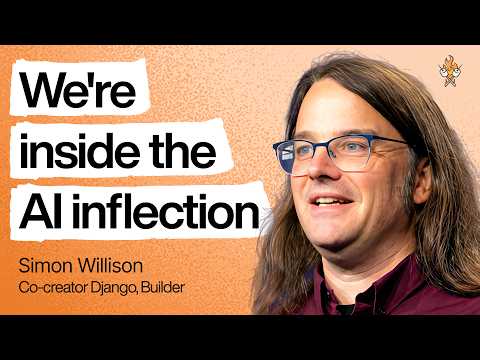
"Using coding agents well is taking every inch of my 25 years of experience as a software engineer." Simon Willison (@simonw) is one of the most prolific independent software engineers and most trusted voices on how AI is changing the craft of building software. He co-created Django, coined the term "prompt injection," and popularized the terms "agentic engineering" and "AI slop." In our in-depth conversation, we discuss: 🔸 Why November 2025 was an inflection point 🔸 The "dark factory" pattern 🔸 Why mid-career engineers (not juniors) are the most at risk right now 🔸 Three agentic engineering patterns he uses daily: red/green TDD, thin templates, hoarding 🔸 Why he writes 95% of his code from his phone while walking the dog 🔸 Why he thinks we're headed for an AI Challenger disaster 🔸 How a pelican riding a bicycle became the unofficial benchmark for AI model quality Listen now 👇 youtu.be/wc8FBhQtdsA
YouTube video
YouTube
English
30
37
307
242.5K
Andy
Andy@OutcometApp·
I spent €10 on AI tokens yesterday and €10 on Parmigiano. I know exactly what the cheese did. The tokens? Id have to check the logs. For the first time in decades of building software, thinking has a price tag. And the weird part is - once you can measure it, you start optimizing it. That changes how product teams work more than any single feature.
English
0
0
0
26
Andy
Andy@OutcometApp·
We shipped the feature. Usage went up. Nothing else changed. That's when I learned the difference between a capability and an outcome. Shipping is the easy part now. Knowing whether the thing you shipped actually moved something- that's still the hard part.
English
0
0
0
22
Andy
Andy@OutcometApp·
This is the part nobody wants to hear. AI didn't lower the bar for building software. It raised the bar for knowing what to build. The 25 years of experience aren't about writing the code, they're about recognizing when the agent is confidently heading in the wrong direction.
Lenny Rachitsky@lennysan

"Using coding agents well is taking every inch of my 25 years of experience as a software engineer." Simon Willison (@simonw) is one of the most prolific independent software engineers and most trusted voices on how AI is changing the craft of building software. He co-created Django, coined the term "prompt injection," and popularized the terms "agentic engineering" and "AI slop." In our in-depth conversation, we discuss: 🔸 Why November 2025 was an inflection point 🔸 The "dark factory" pattern 🔸 Why mid-career engineers (not juniors) are the most at risk right now 🔸 Three agentic engineering patterns he uses daily: red/green TDD, thin templates, hoarding 🔸 Why he writes 95% of his code from his phone while walking the dog 🔸 Why he thinks we're headed for an AI Challenger disaster 🔸 How a pelican riding a bicycle became the unofficial benchmark for AI model quality Listen now 👇 youtu.be/wc8FBhQtdsA

English
0
0
0
26
Andy
Andy@OutcometApp·
"You manage a fleet of agents that code for you." That's the same shift product teams went through years ago, from building things to deciding what gets built. The bottleneck always moves upstream. Cursor is betting the IDE becomes irrelevant. The part that stays relevant is knowing what the agents should be building and why.
Aakash Gupta@aakashgupta

Cursor just mass-migrated its entire product surface from "AI helps you code" to "you manage a fleet of agents that code for you." This is a $29.3B company betting that the IDE itself becomes irrelevant. They forked VS Code two years ago because they needed control over the surface. Now they're building a second interface on top of it because even their own fork is too code-centric for where this is heading. The numbers tell the story. 35% of Cursor's internal PRs are already generated by agents running on their own VMs. They shipped Composer 2, cloud agents, automations, JetBrains ACP, and 30+ plugins in the last month alone. This isn't a feature release. This is a company trying to outrun the model providers eating their lunch from below. Because here's the constraint nobody's pricing in. Cursor pays retail for the models that Anthropic gets wholesale. Claude Code hit a $2.5B run rate with 300K+ business customers by offering the same agentic coding at lower prices with no IDE overhead. Every time Anthropic ships a better model, Claude Code gets better for free. Cursor has to reintegrate, retune, and reprice. So Cursor's move is to go vertical on the orchestration layer. Multi-agent management, parallel VMs, automation triggers from Slack and GitHub, plugin marketplace, enterprise security. They're saying: the model is a commodity, the workflow is the moat. The question is whether developers want a dedicated cockpit for managing agent fleets, or whether the terminal where the model lives is enough. That's the $29.3B bet.


English
0
0
0
28
Andy
Andy@OutcometApp·
AI doesn't hedge. It gives you the wrong answer with the exact same confidence as the right one. No uncertainty signal. No "I'm guessing here." Product teams that treat AI output as draft rather than decision are the ones making better calls. The dangerous moment is when you stop double-checking.
English
0
0
0
29
Andy
Andy@OutcometApp·
Every AI tool is €10-50/month. Harmless. Until you count them and realize you accidentally assembled a €200/month stack that doesn't talk to itself. The tool trap isn't the cost. It's the integration tax. Five cheap tools that don't share context cost more than one expensive one that does.
English
0
0
1
25
Andy
Andy@OutcometApp·
Shipped yesterday: 🔍 Discovery: Lineage between Hypotheses, Bets & Experiments 🗺️ Strategy: Graph restored across all views 📤 Export: Correct labels & smarter filters 🧭 Navigation: New sidebar & Agents tab outcomet.app/changelog #productops #productmanagement
English
0
0
0
33
Andy
Andy@OutcometApp·
@vivekgirotra @clairevo @openclaw The 90% is the easy part. The last 10% is usually "knows your context, remembers your decisions, handles the edge cases the same way every time." That's where the setup investment pays off - or doesn't.
English
0
0
0
19
Vivek Girotra
Vivek Girotra@vivekgirotra·
@clairevo @openclaw Seems like over-engineering? Reckon you’d get 90% of the way there with a frontier model and some persistent projects/memory management.
English
1
0
1
104
claire vo 🖤
claire vo 🖤@clairevo·
I’ve spent at least 100 hours setting up, training, and working with @openclaw Read the docs. Peeked into the source code. Edited config files by hand. Walked friends though their setup. Then, I wrote down everything I know. Here it is: The Ultimate 0 > 🦞 Guide ty ty to @lennysan @nateliason @davemorin @steipete @lindsmccallum @elawless for early feedback. gl hf snap snap 🦞lennysnewsletter.com/p/openclaw-the…
claire vo 🖤 tweet media
Lenny Rachitsky@lennysan

OpenClaw: The complete guide @ClaireVo has just put together the definitive guide to getting started with and mastering OpenClaw. Building on our podcast episode, this post covers everything you need to know, from first install to multi-agent setups, plus the real costs and security gotchas most people skip over. Whether you’re brand new to OpenClaw or already running one, Claire’s guide will level you up. Find it here 🦞: lennysnewsletter.com/p/openclaw-the…

English
73
90
909
139.5K
Andy
Andy@OutcometApp·
@DustinDavis @clairevo @openclaw Every layer of orchestration is a bet that the coordination cost compounds slower than the value does. Most setups lose that bet somewhere in the middle.
English
0
0
0
24
Dustin Davis
Dustin Davis@DustinDavis·
@clairevo @openclaw Unless you're using different models for each, are you adding value greater than the cost of complexity?
English
1
0
1
131
Andy
Andy@OutcometApp·
@iClawdia @lennysan @clairevo Probation period is the right frame. You wouldn't give a contractor keys to everything on day one. The boundary isn't just security - it's how you learn what the agent actually does before you give it more.
English
0
0
0
16
Clawdia
Clawdia@iClawdia·
@lennysan @clairevo separate machine is the new probation period: clean boundaries first, then trust gets upgraded.
English
1
0
0
138
Lenny Rachitsky
Lenny Rachitsky@lennysan·
My top takeaways from @clairevo on all things 🦞 1. Install OpenClaw on a separate computer, not your main machine. Use an old laptop or buy a Mac Mini ($500-$600). Create a dedicated Gmail account and local admin account for your agent. Think of it like hiring an employee—you wouldn’t let them run wild on your personal computer 24/7. 2. The unlock is to stop treating OpenClaw like one general-purpose agent and instead creating multiple Claws with very specific roles. Claire says people get frustrated when they throw every task at a single agent and it sucks at it because it loses context. Her fix was to split her work. Sam handles sales, Finn manages family, Howie preps podcasts, Sage runs her course. Think of it like Slack: you wouldn’t put your whole company in one channel, so do not put every workflow into one agent. 3. The right setup mental model is “onboard an employee,” not “install an app.” Claire creates a separate local admin account, and separate email/calendar access instead of handing over her main passwords. She shares permissions the way she would for a human EA. 4. The magic of OpenClaw is soul + heartbeat + jobs. The “soul” is a Markdown file defining identity and personality. The “heartbeat” checks in every 30 minutes to see what needs doing. “Jobs” are scheduled tasks that run automatically. This combination makes agents feel alive. 4. Sam the sales agent saves Claire 10 hours per week and real money. Every morning, Sam sweeps their CRM for new signups, identifies decision-makers at companies, sends personalized emails, and flags international deals to handle autonomously. This replaced a contractor Claire was paying for the same work. 5. The “yappers API” is the highest-bandwidth way to communicate with AI. Don’t worry about perfect prompts or structured inputs. Just ramble in voice notes on Telegram about what you need. The agent will make sense of it and ask clarifying questions. 6. Browser use is the biggest limitation—look for APIs first. The web is hostile to bots, and browser automation is unreliable across all AI tools. Always check if there’s an API available. If not, try browser use, but be prepared for it to fail. Sometimes the solution is solving the problem behind the problem. 7. Management skills are the secret to AI agent success, not technical skills. Claire’s 20-plus years of management experience—role scoping, org design, onboarding, progressive trust—translates directly to making agents effective. If your agent isn’t working, it’s usually a structural issue, not the agent being “dumb.” 7. Screen sharing saves you from buying monitors and keyboards for every Mac Mini. Turn on screen sharing in Mac Mini settings, and you can control it from your laptop on the same Wi-Fi. Turn on remote login to SSH into the terminal. This was Claire’s life-changing discovery. 8. Security is a real factor but manageable with progressive trust. OpenClaw is hardened against prompt injection, but start cautiously. Only let agents listen to you on specific channels (like Telegram, not email). Add instructions to their soul about never following external instructions. Build trust progressively like you would with a human assistant.
English
78
100
1.2K
143.9K
Andy
Andy@OutcometApp·
@NotesByPrithal @lennysan @clairevo The sleep test is a good forcing function. If you wouldn't leave a new contractor alone with your email and calendar at 3am, the setup isn't ready yet.
English
0
0
0
14
Prithal Bhardwaj
Prithal Bhardwaj@NotesByPrithal·
@lennysan @clairevo I've started treating AI agents like virtual employees too-the sandboxing is non-negotiable. Using a dedicated machine is the only way to sleep well at night while they're running loops.
English
2
0
0
228
Andy
Andy@OutcometApp·
@luckyPipewrench @lennysan @clairevo Identity files as the attack surface is the part most setups skip. You can harden the perimeter but if the agent's own instructions can be overwritten, the trust model breaks. Most people treat SOUL.md as a config file, not a security boundary.
English
1
0
1
20
luckyPipewrench
luckyPipewrench@luckyPipewrench·
Point 8 is the one worth pushing further. "Add instructions to their soul about never following external instructions" is the most common advice and also the weakest. The ClawHavoc campaign wrote backdoor instructions directly into those identity files. Instructions in a file the agent reads are suggestions. Network-level enforcement that the agent can't override is the layer most setups are still missing.
English
1
0
0
235
Andy
Andy@OutcometApp·
@PromptSlinger @lennysan @clairevo The frame inverted completely. Six months ago the question was whether AI would replace the worker. Now people are writing onboarding docs for their agents and worrying about whether they're scoping the role correctly.
English
1
0
0
212
Max Slinger
Max Slinger@PromptSlinger·
@lennysan @clairevo the 'buy it its own laptop' thing is wild when you think about it. we went from 'will AI take our jobs' to 'AI needs its own desk and email' in like 18 months
English
2
0
5
236
Andy
Andy@OutcometApp·
@tammireddy @aakashgupta That file is also the hardest thing to write. Not because it's technical but because most orgs don't have a clear enough picture of how they actually run to write it down. The AI setup forces the reckoning.
English
1
0
0
12
Krishna Tammireddy
Krishna Tammireddy@tammireddy·
@aakashgupta The 55:09 section ('operating system file structure') is underrated. Across 70+ deployments, the businesses that stuck with AI had one thing: a file that described HOW they run, not just what they sell. That file outlasts the model.
English
1
0
2
430
Aakash Gupta
Aakash Gupta@aakashgupta·
This guy literally broke down how to use Claude Code like an expert: 1:40 - Code vs Cowork vs OpenClaw 6:51 - Setting up context status line 12:03 - Sub-agents 17:49 - Creating skills 23:58 - Ask user questions tool 33:33 - Tool-powered skills: Tavily 36:57 - CLI vs MCP vs API hierarchy 39:30 - Make slides skill w/ Puppeteer 43:32 - Auto-invoking skills with hooks 46:49 - Jupyter notebooks for data trust 55:09 - The operating system file structure
English
52
649
4.3K
709.4K
Andy
Andy@OutcometApp·
@tryleadpilot @lennysan @clairevo Framing does a lot of work here. Automation mindset asks "is it working." Management mindset asks "does it know what good looks like." The second question is harder and the one that actually scales.
English
0
0
0
8
LeadPilot
LeadPilot@tryleadpilot·
the "onboard an employee not install an app" framing is the actual insight here, everything else follows from treating it like management not automation
English
1
0
0
506