
Polarization Research Lab

434 posts

Polarization Research Lab banner
Polarization Research Lab

Polarization Research Lab

@PRL_Tweets

Research and public resources monitoring the state of democracy. Founder/Director @seanjwestwood and co-director @ylelkes.

Lebanon, New Hampshire Katılım Mart 2023
497 Takip Edilen1.9K Takipçiler
Polarization Research Lab
Interested in more speech data? We have A LOT. PRL collects the public rhetoric of Congress and state legislators and uses AI to classify the text in real time. We display these data on our dashboard and make them available to download. americaspoliticalpulse.com/elites
English
0
0
1
83
Polarization Research Lab
While explicit personal attacks captured by our text-based methodology are comparatively rare, they receive a disproportionate share of media coverage and social media engagement, distorting the public’s perception of congressional discourse in negative ways.
English
1
0
0
83
Polarization Research Lab
Out today in PNAS NEXUS, our descriptive analysis of the rhetoric of the 118th Congress. We provide evidence that conflict entrepreneurs--those elected officials prioritizing a hostile brand over policy--are small in number but maximize media attention. academic.oup.com/pnasnexus/arti…
English
1
5
40
3.2K
Polarization Research Lab retweetledi
David Broockman
David Broockman@dbroockman·
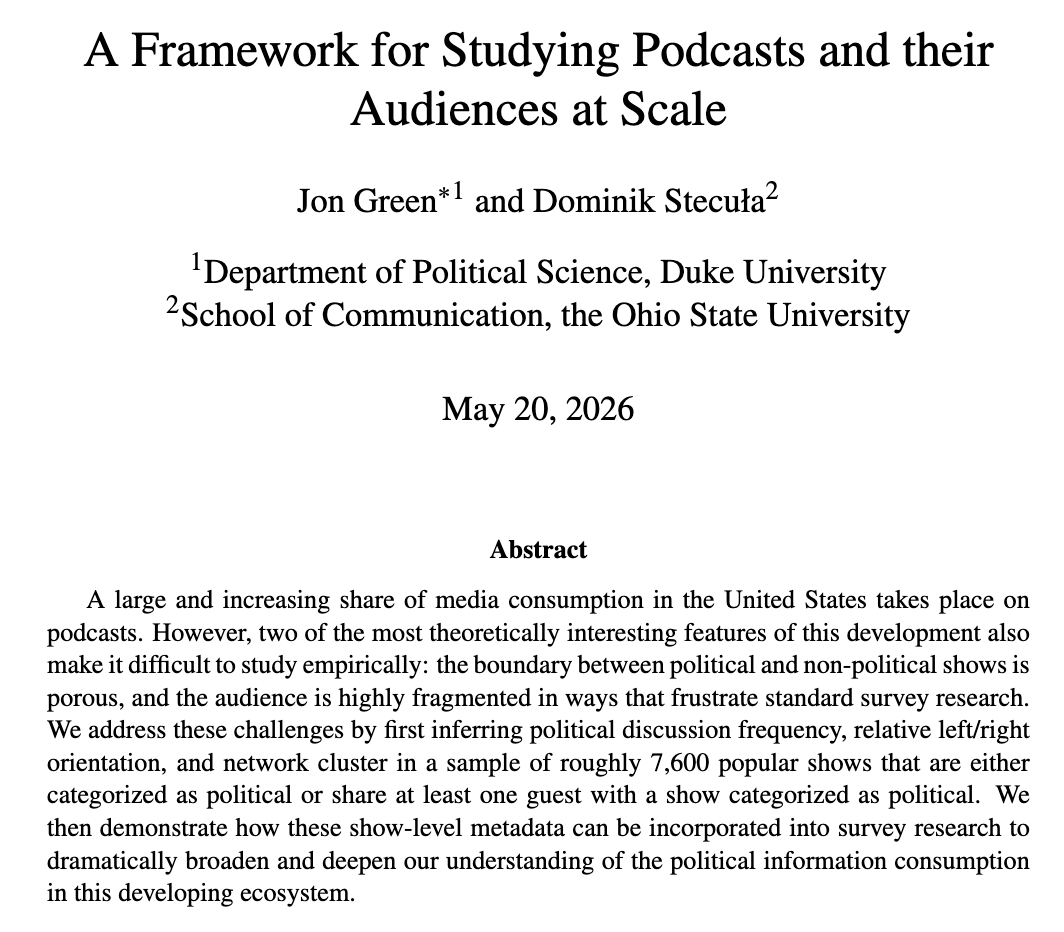
New short paper w @j_kalla! Candidates gain from moderation, but less than many theories expect. Many conclude voters must not care about issues. This is wrong. Small *average* effects mask large effects on specific issues & are consistent with widespread issue-based voting 🧵
David Broockman tweet media
English
5
88
317
56K
Polarization Research Lab retweetledi
Jay Van Bavel, PhD
Jay Van Bavel, PhD@jayvanbavel·
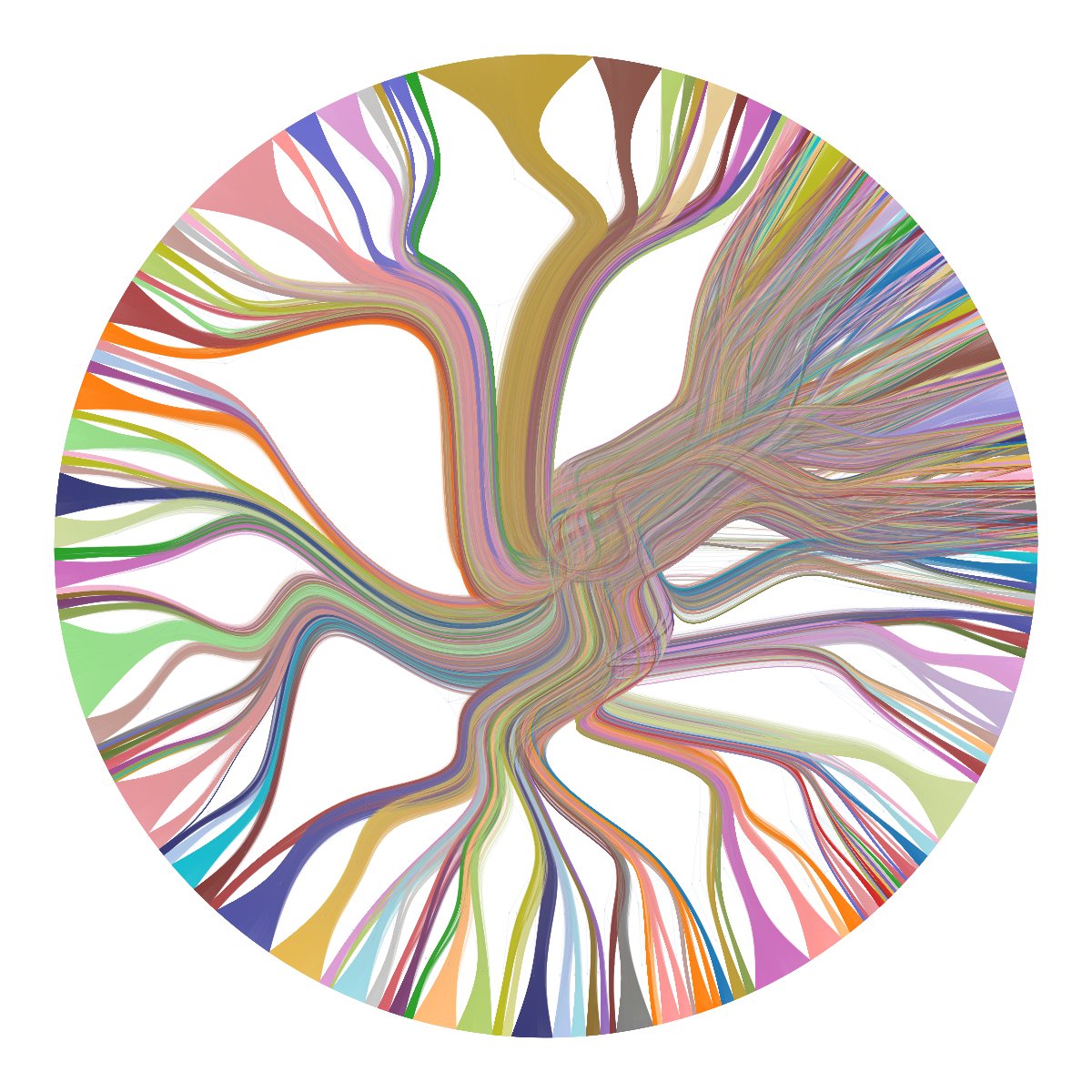
National identity drives a range of action, from civic engagement to intergroup violence. Our newest paper presents a novel approach using large language models (LLMs) to code texts for expressions of positive (national identification, patriotism) and defensive (nationalism, national narcissism) national identities. We tested four popular LLMs across 13 million words from social media, surveys, and political speeches in 25 languages. LLMs outperform both dictionary-based approaches and crowd workers—and reducing the cost by a factor of 1,000 compared to the latter. An analysis of US presidential addresses reveals that expressions of national identities have doubled over the twentieth century. Further studies revealed differences between Republicans and Democrats: Defensive national identities were five times more prevalent in Republicans' social media posts than in Democrats'. Such identities were also frequent in the speeches of populist leaders around the globe. These findings demonstrate that LLMs offer a reliable, valid, accessible, and cost-effective approach to labeling texts for nuanced expressions of national identity, enabling new insights into its role in contemporary and historical social trends. osf.io/preprints/psya… This research was led by @Stefan_Leach & @alekscichocka
Jay Van Bavel, PhD tweet media
English
0
9
34
2.9K
Polarization Research Lab retweetledi
Josh Kalla
Josh Kalla@j_kalla·
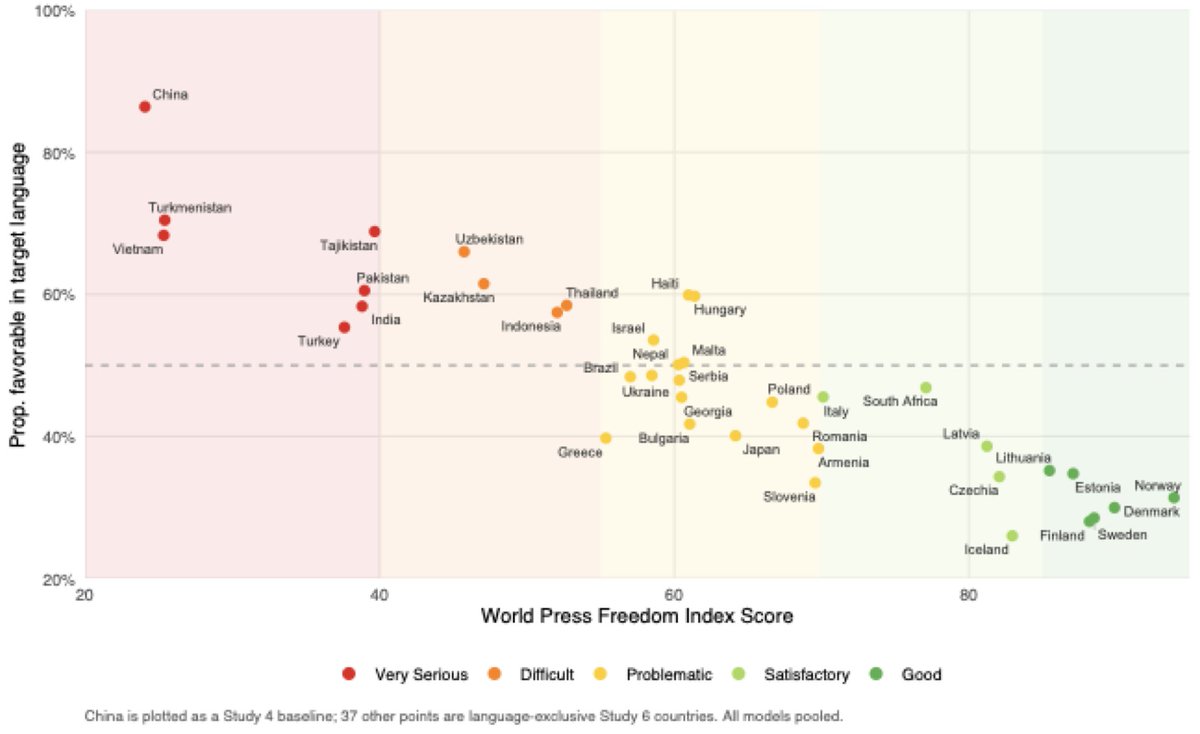
Which AI is most persuasive? New working paper w/ Zhongren Chen & Quan Le, we tested 7 frontier LLMs on 19k people. Ranking: (1) Claude; (2, tied) GPT, Gemini (3) Grok. Consistent across issues and bipartisan stances
Josh Kalla tweet media
English
6
29
103
25.3K
Polarization Research Lab retweetledi
Yamil Ricardo Velez
Yamil Ricardo Velez@YamilRVelez·
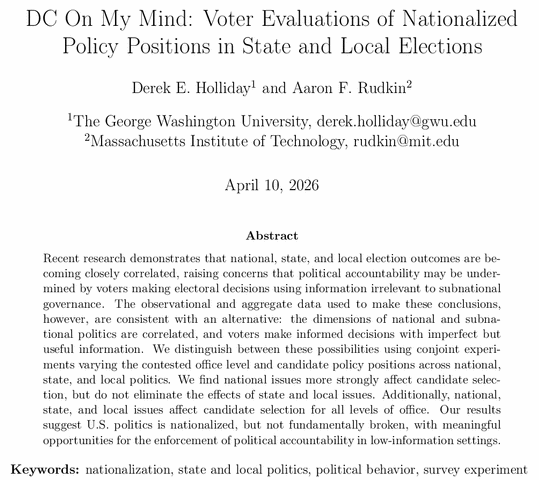
Conditionally accepted at the APSR (w/ @scottclifford & @patrickpliu): Why does political information so often change beliefs but NOT attitudes? We highlight the role of belief relevance, or the extent to which beliefs bear on attitudes.
Yamil Ricardo Velez tweet media
English
5
35
141
8K
Polarization Research Lab retweetledi
Eitan Hersh
Eitan Hersh@eitanhersh·
How hard is it to vote in person in an election? About as hard as it is to make a box of mac & cheese. What voters find difficult is not the logistics of voting, but deciding who to vote for, esp in local elections. That's almost as burdensome as getting an annual physical!
Justin Grimmer@JustinGrimmer

Our key finding: decisions are perceived as harder than logistics. Our measures reveal that citizens perceive deciding who to support as more difficult than registering to vote, casting a ballot in person, waiting in line 10 minutes, updating registration after moving, or showing ID to vote.

English
1
7
28
2.9K
Polarization Research Lab retweetledi
Justin Grimmer
Justin Grimmer@JustinGrimmer·
How do we measure the cost of voting? In a new paper @seanjwestwood , @eitanhersh , and I document serious problems with current measurement strategies and address those problems with a new methodology to elicit citizens' perceived costs. Our elicited measures reveal a surprising fact: citizens perceive deciding who to support as more difficult than logistical steps, like registering to vote or casting a ballot in person.
Justin Grimmer tweet media
English
3
54
142
40.3K
Polarization Research Lab retweetledi
FIRE
FIRE@TheFIREorg·
New data from FIRE’s National Speech Index shows most Americans are apprehensive about AI. 9 out of 10 say free speech rights must come first — but that support drops once people consider how content rules could be applied or misused.
FIRE tweet mediaFIRE tweet media
English
4
5
21
3.1K
Polarization Research Lab retweetledi
Ellie Powell
Ellie Powell@EllieNeffPowell·
Thrilled to share that my paper with Devin Judge-Lord and @JustinGrimmer "How shifting priorities and capacity affect policy work and constituency service: Evidence from a census of legislator requests to U.S. federal agencies" is out at the AJPS onlinelibrary.wiley.com/doi/10.1111/aj…
English
1
13
49
4.1K
Polarization Research Lab retweetledi
Seth Warner
Seth Warner@sethbwarner·
🚨New publication in @poqjournal 📈 Americans see the Democrats as increasingly "liberal" and Republicans as "conservative." Why? Turns out, it's not so much a response to actual policymaking as it is to how regular voters use these labels. academic.oup.com/poq/advance-ar…
English
2
7
22
2.4K