Paleoncologist

6.7K posts

Paleoncologist banner
Paleoncologist

Paleoncologist

@PaleoOnc

Got lost on the way to dinosaur school. Now an MD Would rather learn than “be right”. Questions are in good faith.

Katılım Ekim 2022
910 Takip Edilen765 Takipçiler
Matthew Zirwas, MD
Matthew Zirwas, MD@MattZirwas·
@PaleoOnc Sneaking suspicion??? That's the whole game. Can't trust anybody. Actually, there's one guy in dermatology I trust. One. But I had him on my podcast and even he admits that perfectly done meta-analyses mostly aren't that informative because the trials are too different.
English
1
0
1
15
Matthew Zirwas, MD
Matthew Zirwas, MD@MattZirwas·
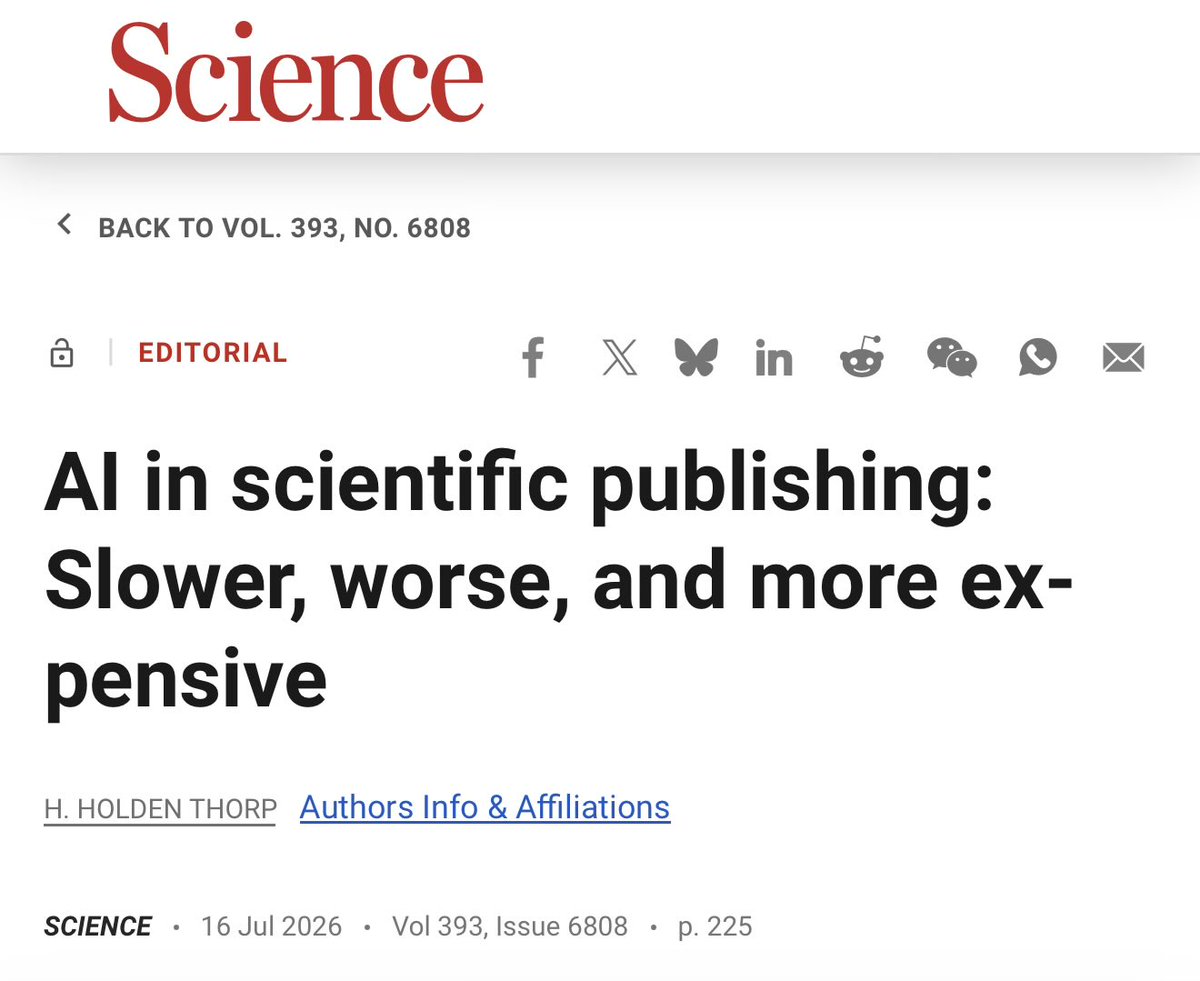
The journal Science just indicted itself. The most interesting papers of the next decade will involve AI. And the editor-in-chief just stated, plainly, that he will not be able to assess them objectively. To summarize his position: AI in science is great when it wins Nobels, dangerous when it lands on my desk. He endorsed the conclusion that LLM-based research will always produce errors. Structurally, forever. Maybe true, but true of all research methods, so why write an editorial to state it? Also in the piece: AI is making his job harder. Making scientific publishing ‘slower, worse, and more expensive.’ We can reasonably conclude that papers leaning on AI methods, or positive about AI, now face a headwind at Science that papers critical of AI don’t. The most basic tenet of science (but apparently not Science) is to assume the null and demand evidence against it. The null here: AI is a tool, neither net positive nor negative, and its utility depends on how it’s used. The editor of the world’s leading journal just abandoned the null and declared the question settled. Maybe it’s just me, but that seems a little premature.
Matthew Zirwas, MD tweet media
Jason Locasale@LocasaleLab

This is a podcast from Holden Thorp, the editor in chief of Science and a former career university administrator, where the format begins with innocent sounding questions before predictably pivoting into political framing, all while being funded by taxpayers who do not trust these institutions. One telling part is when he asks the scientist whether she is worried about losing “her” grants because of actions by the administration, but nowhere does he mention that these grants are university property controlled by university administrators. He frames them as personal grants because he wants the audience to interpret this as a personal attack on science itself rather than scrutiny of how universities steward taxpayer money. To the scientist’s credit, she does not take the bait. Holden Thorp helped transform AAAS and Science from scientific institutions into political machines. Just read his editorials and the storylines he oversees and allows, or perhaps even directs, his reporters to run. The same ecosystem includes figures like Jeremy Berg, a former Science editor in chief, who spends substantial time on social media smearing and trolling me as well as other scientists and those with interest in reform. AAAS and Science embraced activism, selective outrage, endless cancel culture and reputational attack campaigns, sometimes running multiple hit pieces targeting specific individuals with the clear goal of damaging careers and intimidating dissenters into silence. All of this unfolded while public trust in scientific institutions collapsed around them. Meanwhile this organization extracted billions of dollars from taxpayers through the publishing and membership system while supporting administrators collecting salaries approaching seven figures. Now the same people who politicized science want to lecture the public about credibility and reform while ignoring the corruption, bureaucratic bloat, ideological capture, and other failures they themselves created. AAAS has little credibility left unless its administration and organizational structure are fundamentally overhauled. It is remarkable that taxpayers continue funding organizations that function as political operations against scientists and critics they dislike.

English
3
0
8
451
Paleoncologist
Paleoncologist@PaleoOnc·
Besides. I have a sneaking suspicion that many “Meta analyses” are neatly packaged confirmation bias of the authors. Too much fancy statistics And publication bias? If you do a meta analysis and it fails to confirm your priors? Discard it or keep digging for more papers until you get what you want I suspect more the former .. IE clean meta-analyses published with confirmation bias or thrown out. Maybe a touch of the latter thrown in
English
1
0
1
10
Matthew Zirwas, MD
Matthew Zirwas, MD@MattZirwas·
@PaleoOnc All brilliant points. I have stopped reading meta-analyses and reviews. I ask Claude for a topic review when I want one - sometimes based on the PDFs I have in my library, sometimes I have him go out on pubmed. He doesn't have the biases that human authors have.
English
1
0
1
28
Padideh Goodspeed
Padideh Goodspeed@padigoodspeed·
I gave up my Mercedes for a Tesla. I feel like I’m officially subscribed to the future.
English
25
1
64
4.7K
Paleoncologist
Paleoncologist@PaleoOnc·
I love root beer. But I sympathize Smells and tastes are stored deep in our brain when we are young and it’s hard to overcome But if you’ll give it one more chance … go to Andy’s ice cream and get a root beer *freeze* (not a float). The coke and ice cream are evenly mixed. Yum But if you can’t do it … get the cola freeze instead. Still pretty good (Of course Coca Cola started as a sort of medicine too)
English
0
0
0
21
NOBUNAGA🇯🇵🏯_夏樹蒼依
A four-year-old handed me a cold drink called root beer and watched my face like a judge waiting to pass sentence. I trusted the child. This was my first mistake. I drank. It was medicine. It was, precisely, the taste of the salve my grandmother rubbed on my chest when I was a boy and could not breathe. A cough. A liniment. A poultice, chilled and carbonated and served with great pride. I did not spit it out. A samurai does not insult a gift in front of the one who gave it, especially when the giver is four years old and holding the bottle with both hands. I swallowed. I made the face you make at a funeral. I said, "it is very... refreshing." "Want another?" said the child. This is the moment my own manners destroyed me. I said yes. I do not know why I said yes. I have replayed it many times since. I said yes. He brought another. Then he brought his friends. Word spread among the small people that the foreign man loved root beer, and the small people are generous, and the small people do not stop. I drank six medicines that afternoon, smiling, at a child's birthday party, trapped entirely by my own courtesy and the enthusiasm of people whose feet did not reach the floor when they sat. The father found me on the couch, defeated, holding a seventh. He said, "you really like that stuff, huh." I said I had never in my life tasted anything like it, which was the single most honest sentence I spoke all day. A nation tasted the exact flavor of being sick, poured it over ice, handed it to its children, and taught them to love it so completely that they will make a grown man drink it until he prays. I ask you sincerely. Is it supposed to taste like that? Or is this a test, and have I been passing it, again and again, six bottles at a time?
English
201
42
1.1K
27.3K
Anthony DiGiorgio, DO, MHA
It takes an especially magical kind of thinking to believe that government rationing of any good or service will both be cheaper and better quality than a free market. It doesn’t work with any good or service, so why healthcare? Sowell says it best: “It is amazing that people who think we cannot afford to pay for doctors, hospitals, and medication somehow think that we can afford to pay for doctors, hospitals, medication and a government bureaucracy to administer it.”
Dan Munro@DanMunro

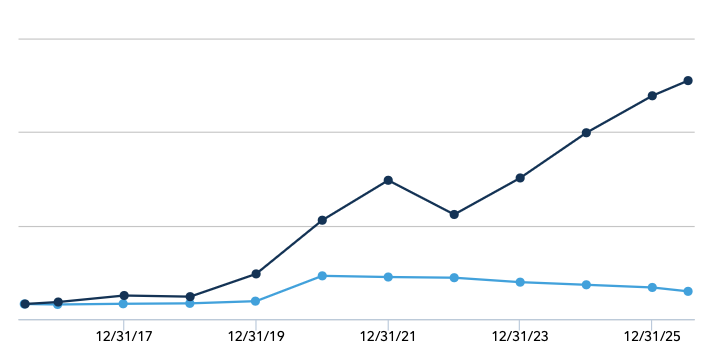
@mfcannon @KlingBlog As evidenced by this chart - we can easily afford any system we choose - except one. The one we have. Hint - they all start with universal coverage. How they're financed is the only variable - and it doesn't have to be single payer.

English
8
9
51
4.4K
Paleoncologist
Paleoncologist@PaleoOnc·
@mhp_guy The bag is the basket … Please put your bag in the basket sir … There’s NO NEED to put your bag in a basket sir. Just place it there. 🤦‍♂️
English
0
0
1
68
Chris Koerner
Chris Koerner@mhp_guy·
Me: “Do I need to take off my shoes?” TSA: “Did you get sniffed by a dog?” “Huh?” “DID👏YOU 👏GET 👏SNIFFED 👏BY 👏A 👏DOG!?” “Uhh I think I saw a dog but I don’t remember if it sniffed me or not?” “IF A DOG SNIFFS YOU YOU DONT NEED TO TAKE YOUT SHOES OFF!!” 100% true story
Chris Koerner tweet media
English
24
10
349
21.9K
Paleoncologist
Paleoncologist@PaleoOnc·
@QC_Capitals I *love* panic selling Oh. Not for me. For everyone else That’s when I’m buying.
English
1
0
1
39
QC Capital
QC Capital@QC_Capitals·
What's the biggest investing mistake? Panic Selling Timing the Market Lack of Diversification
English
11
0
13
1.2K
K9Cognoscente
K9Cognoscente@K9Cognoscente·
Odyssey stuff is fun because most of the people complaining about Nolan’s interpretation couldn’t find Greece on a map, name who wrote the poem or name 3 characters in it. MF’ers, you wouldn’t read the Iliad or the Odyssey at gunpoint in high school or college, what do you care who plays Helen of Troy?
English
18
0
19
816
Paleoncologist
Paleoncologist@PaleoOnc·
As if on cue … the day they rolled out this policy … Admin is was going around with a cart handing out bags of chips 🙄 Got to counteract breaking our will with salty snacks.
English
0
0
0
18
Paleoncologist
Paleoncologist@PaleoOnc·
And this is how they control physicians practice using EMRs Preventing automatic ordering of daily labs sounds innocent enough. But they are trying to save money at the expense of increasing “provider” … busy work They figure if it’s too much hassle we won’t order daily labs And if we really need it we have pay a “toll” - which is to remember to order the labs Every Single Day I have leukemia patients who unequivocally will need daily labs. Now I have to make sure not to forget their labs. Or they get missed. 😡😡😡
Paleoncologist tweet media
English
28
11
83
20.3K
Harris Ahmed
Harris Ahmed@drharrislakers·
I would rather make half the $$$ but have full control of patient care and do what’s best for patients at all times without admin or insurance dictating The only way physicians can do what is best for the patient is by spending countless hours + dollars fighting via scut work
The Doctor’s Lounge Podcast@DRsLoungePod

A colleague four years out of fellowship, highly trained, in demand — and ready to quit. Not because of the pay. Because of the autonomy he doesn't have.

English
4
3
12
7.9K
Paleoncologist
Paleoncologist@PaleoOnc·
Wearable AI is coming soon and will be normal You might or might not remember that when our phones first got camera's, for a while it was weird and some pundits said that phone's should always make a "sound" when someone took a pic so that people would know ... Now ... its just ... normal Today a few people wear a device with a red light that lets you know. Tomorrow ... everyone will just assume they are being recorded I don't like it ... but I can't see a way to stop it
English
1
0
1
5
Paleoncologist
Paleoncologist@PaleoOnc·
@TimothySawyerMD @IndexAndForget Short answer is yes Long answer is here: x.com/PaleoOnc/statu…
Paleoncologist@PaleoOnc

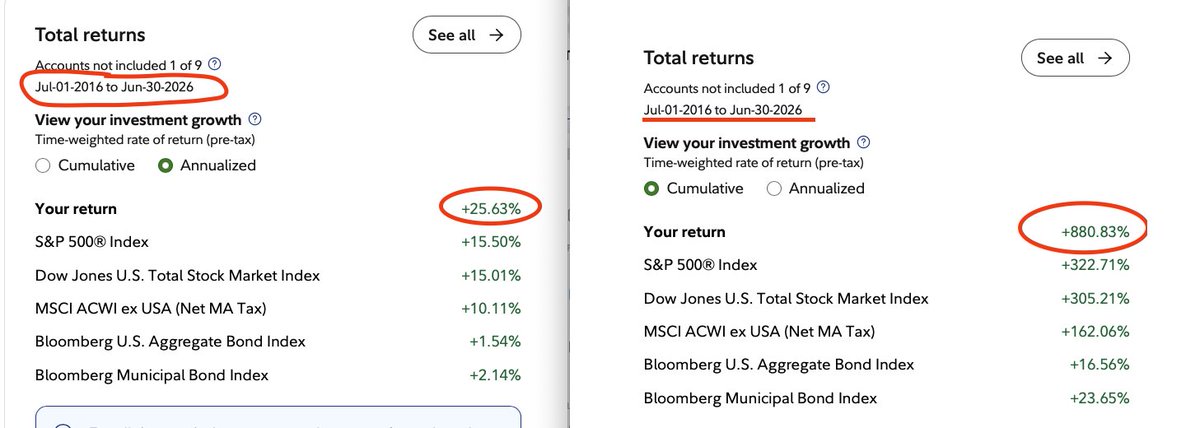
I wanted to give you a longer answer and explain my investing story. My journey began shortly after graduating med school. During residency, a "friend" (a very bright guy) quit his job as an engineer to become a financial advisor, and enlisted several of his doctor friends as first clients. He was playing the long game, and I credit him for it. But a few years in, some things he was saying stopped adding up. It culminated in the early 2000's with me reading Bogle's Common Sense on Mutual Funds, which I'd still recommend to anyone. I could not keep investing with him. This ignited a strong desire to teach myself personal finance, and as I tend to do, I dove in deep: The Intelligent Investor, all of William Bernstein’s books (also a doctor), like The Intelligent Asset Allocator and all Buffett's letters. I came away with two conclusions. One, it IS possible to beat the market with stock picking if you're smart enough and have the right temperament. Two, that's a fool's errand for the vast majority to try this, and most people are better off in index funds, minimizing cost and focusing on asset allocation. As someone smarter than average (I graduated medical school, after all) with a temperament suited to market volatility, I figured I had every right to be in group one, though I knew it wouldn't be easy and I could be wrong. You can't just be smart to win at investing. I read about more exotic investments and discovered options trading. I dabbled in short-dated options and did terrible. For me it was little more than gambling, and worse, when I lost, I lost it all. I'd say I was breakeven or worse for the more crazy options strategies most people use. I was ready to abandon options altogether when I learned about LEAPS, and that the Black-Scholes model doesn't really work for them the way it does for shorter-dated options. "Deep in the money" (DITM) call options, 25-40% or more below strike, behave in a very stock-like manner. This isn't a free lunch; you give up return for safety. But since the model broke down, there was a chance to "win". DITM calls 30-40% below par tend to do well 1.5 to 2.5 years out. And when a stock recovers 20%, a DITM call may return 40% or more, occasionally 2-4X. And because they're deep in the money, when the stock drops, they may lose less than 100%. I also know a bit of blackjack, mainly that doubling down evens the odds in the player's favor. You don't have to win more often than the dealer, as long as you can double your bet occasionally when you win. Being a bit scientific, I knew I needed to be objective about whether I was actually in group one, and I needed enough time to rule out luck masquerading as skill. I put what I'd learned together into a strategy I haven't quite seen articulated elsewhere, though I read so much I may have forgotten the source: buy ~2-year DITM LEAPS when the market or a specific high-quality stock drops for no good reason. Two years is long enough for most problems to sort themselves out. Even a typical bear market runs a year to 18 months. I stuck to blue chips with a penchant for tech, because when tech does well, it does REALLY well. Since I'm a buy-and-hold investor, I rarely cashed out the options. I exercised them instead, buying the stock at strike. When it worked well, I'd exercise half, sell half, and use the proceeds to buy another batch of options two years out. I set up a 10-year experiment: half my portfolio went to Vanguard for a "couch potato" 70/30 stock-bond mix, the other half to Fidelity for active trading, and I tracked overall performance across both. If the Fidelity account wasn't significantly ahead of Vanguard, enough to compensate for the extra risk, I'd abandon it all and become a full-on Boglehead. I played this out mostly with AAPL from about 2008 to 2018, amassing a large holding at a cost basis today of about 30, along with a few other positions. By 2018, my Fidelity account was well ahead of Vanguard, the S&P, and most other reasonable benchmarks suggesting I might have a skill at this particular trade. The strategy was mature just in time for Covid, when I applied one more lesson from Buffett: I was brave when others were fearful. I researched the virus thoroughly, and became a bit of an amateur epidemiologist, concluding it wasn't nearly as deadly as advertised and that the epidemic wouldn't last more than a couple of years. In mid-2020 I began buying many long calls on individual stocks I'd always wanted, a batch of dividend aristocrats, and, once I ran out of ideas, S&P and NASDAQ index ETFs. Almost all of them did very well, securing gains of 40% or more. Most were exercised, a few sold to finance stock purchases. A few did lose. In the end, I was totally wrong about why the market recovered. It wasn't organic, it was cheap money flooding in. But you can be right for the wrong reasons sometimes. I made most of my money post-Covid, though I also took a hit around 2022. My big loss was in cruise line stocks, which never really recovered. This was more speculative than my usual investment, but I took a chance. Had they even recovered to par, I would have 10-20X'd my money. Instead, every one of those LEAPS went to zero. Ripping that bandaid off hurt. I still dip a toe in when it makes sense. This summer I purchased 100 shares of Tesla for $100 each, thanks to a single option I bought in 2024 when it dipped to $174. The premium was $100 a share, but hey, now I've got 100 shares of TSLA at a $200 cost basis. You can see from the attached screenshot that my 10-yr cumulative return for my entire portfolio (the missing acct is closed) is actually 25%. And this includes a big chunk of my portfolio at work in some crummy mutual funds. So my “active” portion is doing better than it seems. Now if you don't think 18 years is "the very long term" ... I'll update this in a few years ... 😉

English
0
0
0
50
TimSawyerMD
TimSawyerMD@TimothySawyerMD·
@PaleoOnc @IndexAndForget Okay, Paleo, I'm asking constructively: Do you really, truly think that over the very long term, you can win at the options game (with "win" defined as outperforming the S&P 500)?
English
1
0
1
1.4K
Index & Forget
Index & Forget@IndexAndForget·
Have you been investing during major market crashes? For me 2020 and 2022 was brutal, what about you?
English
14
1
11
2.5K
Paleoncologist
Paleoncologist@PaleoOnc·
I wanted to give you a longer answer and explain my investing story. My journey began shortly after graduating med school. During residency, a "friend" (a very bright guy) quit his job as an engineer to become a financial advisor, and enlisted several of his doctor friends as first clients. He was playing the long game, and I credit him for it. But a few years in, some things he was saying stopped adding up. It culminated in the early 2000's with me reading Bogle's Common Sense on Mutual Funds, which I'd still recommend to anyone. I could not keep investing with him. This ignited a strong desire to teach myself personal finance, and as I tend to do, I dove in deep: The Intelligent Investor, all of William Bernstein’s books (also a doctor), like The Intelligent Asset Allocator and all Buffett's letters. I came away with two conclusions. One, it IS possible to beat the market with stock picking if you're smart enough and have the right temperament. Two, that's a fool's errand for the vast majority to try this, and most people are better off in index funds, minimizing cost and focusing on asset allocation. As someone smarter than average (I graduated medical school, after all) with a temperament suited to market volatility, I figured I had every right to be in group one, though I knew it wouldn't be easy and I could be wrong. You can't just be smart to win at investing. I read about more exotic investments and discovered options trading. I dabbled in short-dated options and did terrible. For me it was little more than gambling, and worse, when I lost, I lost it all. I'd say I was breakeven or worse for the more crazy options strategies most people use. I was ready to abandon options altogether when I learned about LEAPS, and that the Black-Scholes model doesn't really work for them the way it does for shorter-dated options. "Deep in the money" (DITM) call options, 25-40% or more below strike, behave in a very stock-like manner. This isn't a free lunch; you give up return for safety. But since the model broke down, there was a chance to "win". DITM calls 30-40% below par tend to do well 1.5 to 2.5 years out. And when a stock recovers 20%, a DITM call may return 40% or more, occasionally 2-4X. And because they're deep in the money, when the stock drops, they may lose less than 100%. I also know a bit of blackjack, mainly that doubling down evens the odds in the player's favor. You don't have to win more often than the dealer, as long as you can double your bet occasionally when you win. Being a bit scientific, I knew I needed to be objective about whether I was actually in group one, and I needed enough time to rule out luck masquerading as skill. I put what I'd learned together into a strategy I haven't quite seen articulated elsewhere, though I read so much I may have forgotten the source: buy ~2-year DITM LEAPS when the market or a specific high-quality stock drops for no good reason. Two years is long enough for most problems to sort themselves out. Even a typical bear market runs a year to 18 months. I stuck to blue chips with a penchant for tech, because when tech does well, it does REALLY well. Since I'm a buy-and-hold investor, I rarely cashed out the options. I exercised them instead, buying the stock at strike. When it worked well, I'd exercise half, sell half, and use the proceeds to buy another batch of options two years out. I set up a 10-year experiment: half my portfolio went to Vanguard for a "couch potato" 70/30 stock-bond mix, the other half to Fidelity for active trading, and I tracked overall performance across both. If the Fidelity account wasn't significantly ahead of Vanguard, enough to compensate for the extra risk, I'd abandon it all and become a full-on Boglehead. I played this out mostly with AAPL from about 2008 to 2018, amassing a large holding at a cost basis today of about 30, along with a few other positions. By 2018, my Fidelity account was well ahead of Vanguard, the S&P, and most other reasonable benchmarks suggesting I might have a skill at this particular trade. The strategy was mature just in time for Covid, when I applied one more lesson from Buffett: I was brave when others were fearful. I researched the virus thoroughly, and became a bit of an amateur epidemiologist, concluding it wasn't nearly as deadly as advertised and that the epidemic wouldn't last more than a couple of years. In mid-2020 I began buying many long calls on individual stocks I'd always wanted, a batch of dividend aristocrats, and, once I ran out of ideas, S&P and NASDAQ index ETFs. Almost all of them did very well, securing gains of 40% or more. Most were exercised, a few sold to finance stock purchases. A few did lose. In the end, I was totally wrong about why the market recovered. It wasn't organic, it was cheap money flooding in. But you can be right for the wrong reasons sometimes. I made most of my money post-Covid, though I also took a hit around 2022. My big loss was in cruise line stocks, which never really recovered. This was more speculative than my usual investment, but I took a chance. Had they even recovered to par, I would have 10-20X'd my money. Instead, every one of those LEAPS went to zero. Ripping that bandaid off hurt. I still dip a toe in when it makes sense. This summer I purchased 100 shares of Tesla for $100 each, thanks to a single option I bought in 2024 when it dipped to $174. The premium was $100 a share, but hey, now I've got 100 shares of TSLA at a $200 cost basis. You can see from the attached screenshot that my 10-yr cumulative return for my entire portfolio (the missing acct is closed) is actually 25%. And this includes a big chunk of my portfolio at work in some crummy mutual funds. So my “active” portion is doing better than it seems. Now if you don't think 18 years is "the very long term" ... I'll update this in a few years ... 😉
Paleoncologist tweet mediaPaleoncologist tweet media
TimSawyerMD@TimothySawyerMD

@PaleoOnc @IndexAndForget Okay, Paleo, I'm asking constructively: Do you really, truly think that over the very long term, you can win at the options game (with "win" defined as outperforming the S&P 500)?

English
0
1
6
1.2K