Patrick Shaw Stewart

20.1K posts

Patrick Shaw Stewart banner
Patrick Shaw Stewart

Patrick Shaw Stewart

@PatrickSSte

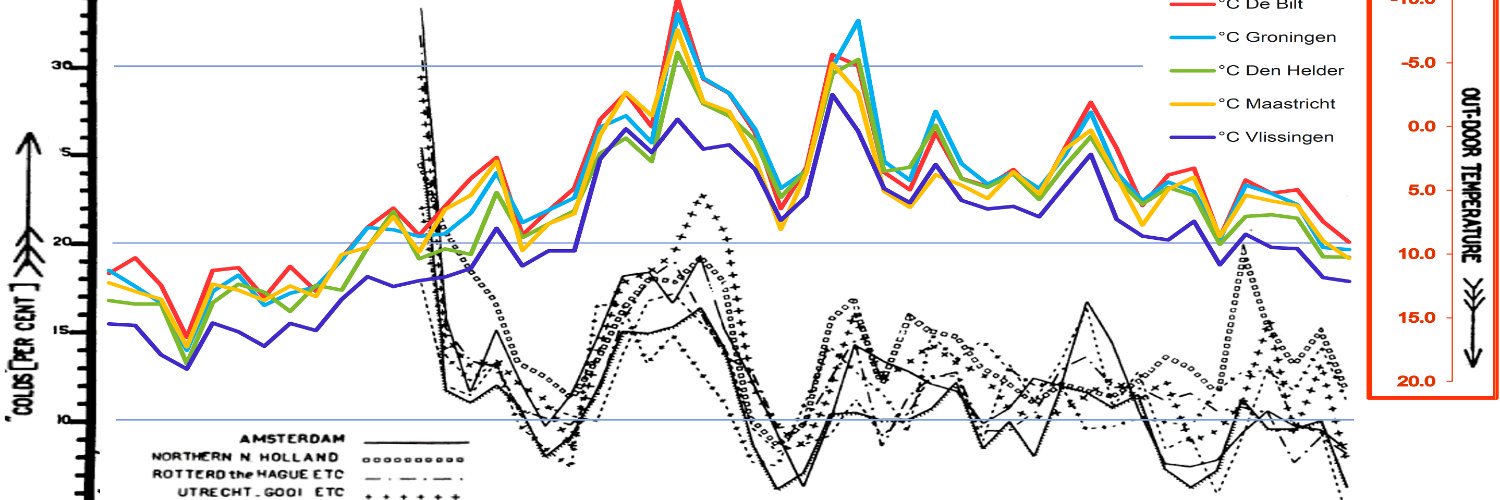
1) Chilling/colds https://t.co/rtK95c8fuy (2) WhyC19 became mild https://t.co/d7jXj4qWO0 (3)Sex/mutations https://t.co/PoWinEzjfX (4) Pandemics https://t.co/sDE6NjrtxQ

Somewhere south of Mallaig Katılım Kasım 2013
2.9K Takip Edilen2.1K Takipçiler
Sabitlenmiş Tweet
Patrick Shaw Stewart
Patrick Shaw Stewart@PatrickSSte·
My allegorical fable⬇️seems to be confusing some people There are actually three main points 1. sex is a great way to spread innovation to lineages that never evolved them That's understood. But what many evolutionary biologists don't get is: 2. Mutation speeds up when a population is under strong selective pressure 3. Sexual selection - focusing on particular traits such as peacocks' tails, birdsong in songbirds, migration, or (in humans) beautiful faces, athleticism and cleverness - can restore accurate replication Those traits need to be complex - ie the product of many genes - and everyone needs to agree on what is important, so that recent mutations can be picked up _____________________ At the end of the last ice age, sea levels rose by 120 meters. As the water rose, about 1,000 humans were marooned on the Fantasian Islands, about 40 miles off the coast of West Africa (at least, I feel that’s where they ought to be). Within decades, people had wiped out all the large mammals on the islands, and they lived on gourds, fruit, and the eggs of blue-footed boobies. However, there was a kind of bean on the islands that could be eaten in small quantities – in larger quantities, it was toxic. There was one family on the island that was particularly stupid and ugly, avoided by the other islanders. This was because both parents had high mutation rates – they had DNA polymerases that couldn’t replicate DNA quite as accurately as others could - their polymerases made slightly more mistakes. Instead of about 100 new mutations per child (mutations the parents didn’t have, that is), their children had about 800. By the third generation, there were a lot of illnesses in the family, but there was one boy who could eat the beans without any ill effects (scientists now believe he had three new mutations that allowed him to tolerate both tannins and lectins). All his siblings died at young ages, but he and his children were strong - although stupid - and his sons mated with the most beautiful girls on the island. These girls had DNA polymerases with very low error rates, so fidelity was restored. After 300 years, everyone on the island was descended from this particular individual, and they were all perfectly healthy and intelligent, with beans forming 60% of their diet. By the way, it was crucial that the young men sought out the most beautiful girls - as we still do today. That’s because they were subconsciously looking for accurate polymerases. The story is allegorical, but I think this kind of thing happens all the time with animals, plants, fungi, and microbes – whenever a species is subjected to strong natural selection. For example, when they invade new terrain, an ice age begins, or they infect a new host. That’s why sexual reproduction is so universal – scientists don’t have a good explanation right now for why it’s so popular (check out the Wikipedia article). I think sexual reproduction a general adaptation to unstable environments and a mechanism to restore replicative fidelity – which is often lost. Prokaryotes have similar mechanisms, but sex is the most complex and effective Preprint: vixra.org/pdf/2303.0056v… (I've since changed the name back to The Everest Hypothesis btw)
English
1
0
1
304
James West
James West@ejwwest·
@PeterDClack @ChrisGloninger We eagerly await your reappraisal of 200 years of climate science in a paper published in a peer reviewed journal. When do you expect to publish it? But you’ll need to explain what you think you know that every climate scientists & every national science academy have missed.
English
9
0
13
258
Chris Gloninger, CCM, CBM
Chris Gloninger, CCM, CBM@ChrisGloninger·
The geologic record doesn't say "warming is fine." It says rapid climate shifts cause mass extinctions. Current warming: 10-100x faster than the PETM, which still killed off massive numbers of species over 10,000 years. We're speedrunning that in 200 years with 8 billion people and infrastructure built for a stable Holocene. "It was warmer in the Cretaceous" isn't the flex you think it is. The dinosaurs didn't have coastal megacities.
Peter Clack@PeterDClack

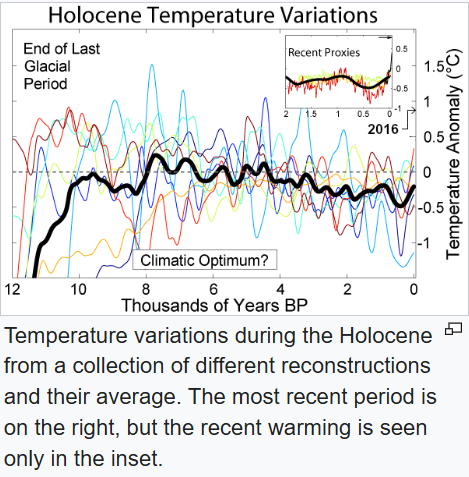
We’re told we’re boiling; Geology says the world's shivering. Earth is still in the Quaternary Glaciation - 2.58 million years so far. Yet for most of the last 500 million years the Earth has been at least 10°C warmer than it is today. There weren't any polar ice caps though. Instead, there were lush biomes from pole to pole and life didn't just survive, it exploded. Pulp fiction's 'hottest years ever' relies on a tiny 175-year window in a geological world of 4.6 billion years. In the context of the late Cenozoic (the last 34 million years) a 1.4°C rise isn't a catastrophe - it’s a minor blip of life-giving warmth in a mostly icehouse world. Why the fear? Because human bureaucracy thrives on fear. By ignoring the 500-million-year baseline of earth's recent geological past, the UN has turned 'natural variability' into a climate sledge hammer for global control. If you only look at the last 175 years, the climate looks like a crisis. But if you look at the last 500 million, it looks like a two-week junket in the Bahamas. We should really be talking about 'Icehouse Earth'.

English
77
58
300
9.6K
Patrick Shaw Stewart
Patrick Shaw Stewart@PatrickSSte·
@7Kiwi @mattwridley Could you please expand on that? Is there a real loss of interest in carbon credits in companies, or is this more a technical problem with the Emissions Trading System? Or both?
English
0
0
0
1
Patrick Shaw Stewart
Patrick Shaw Stewart@PatrickSSte·
I've just thought of a perfect analogy.  Let's say you're interviewing candidates for an office manager job.  You want to know if they are honest, hardworking, intelligent etc, but you also want to know if they are meticulous, which is usually not obvious at first. So you set them a test after the interview to copy information into a document where mistakes will immediately show up. That's why the peacock has a large, complex tail: it shows the peahen that the peacock can copy its genes accurately. Can anyone think of a good way to test this idea !?
Patrick Shaw Stewart@PatrickSSte

Here's the latest version of my conservation of fidelity/sexual selection hypothesis Submitted this morning to a good journal vixra.org/pdf/2302.0006v… The Everest hypothesis says the elaborate embellishements of sexual reproduction — from courtship displays to long distance migrations — are multigenic tests of DNA replication fidelity. Mate choice and selective fertilisation can then purge lineages that have slightly elevated mutation rates. Honestly, it's pretty obvious I'm right - the conventional explanations are weak

English
0
0
1
82
Libertarian_Virologist
Libertarian_Virologist@ban_epp_gofroc·
Andersen & cronies claim SARS1 circulated for months or years in an intermediate host, during which time it moved 1,000 km from Yunnan to Guangdong. They now claim SARS2 circulated for much less time in an intermediate host and also moved 1,000 km from Yunnan to Wuhan. How? 🧵
Libertarian_Virologist@ban_epp_gofroc

@SolidEvidence Their Cell paper claims that the original SARS shows signs of adaptation to an intermediate host, which is evidence for a zoonotic origin. They also claim SARS-CoV-2 does not show signs of extensive adaptation to a non-bat mammal host, which is evidence for a zoonotic origin. 4/

English
6
8
58
4.3K
Patrick Shaw Stewart
Patrick Shaw Stewart@PatrickSSte·
This isn't mainly about a furin site, important though that may have been for it to get going It's very tricky for a virus to jump to a new host and be transmitted onwards - that's why it's rare If it just causes a fever in one person it probably won't go anywhere If it is highly pathogenic it probably won't spread Thousands of people die of Lasa fever every year, but it never spreads human-to-human A respiratory virus in particular needs us to be walking around - walking flu - and spreading it, because a respiratory virus is unstable in the air. It needs to find a new host quickly. This balance is tricky. Therefore I would expect a new virus to mutate very quickly in the first few months, with new variants with beneficial mutations constantly arising, then sweeping over the world, competing against each other, in a complicated way. We didn't see that in the first 9 months. Why not? We saw it later
English
1
0
1
12
Patrick Shaw Stewart
Patrick Shaw Stewart@PatrickSSte·
(joining this thread here because I landed here) @gadboit and others, it's pretty obvious that SC2 was well-adapted to humans when we first became aware of it because no new major strains arose for the first 9 months. It had obviously been in humans for months if not years before November 2019. It might have been smoldering in Wuhan for months (years), or it might have been in humans elsewhere. But given that it emerged in Wuhan, it seems likely that it was given a helping hand by a lab that liked putting furin sites into potentially-dangerous-to-humans viruses. (Jay is one of my heroes by the way
English
1
0
1
31
Patrick Shaw Stewart
Patrick Shaw Stewart@PatrickSSte·
@GreenBin69 @DanielJHannan I have to ask - what's your point? My point is the abolitionist movement was motivated by people who wanted to do good in the world - and do God's will
English
0
0
0
3
Daniel Hannan
Daniel Hannan@DanielJHannan·
Britain was early in banning slavery. But, unlike other countries, it did not stop there. It poured blood and treasure into a campaign to stamp out the foul business globally. It signed treaties with African kings, who were determined to keep the institution alive, and enforced those treaties. Even while engaged in a life-and-death struggle with Bonaparte, it diverted gunboats to hunt down the slavers. It closed down the traffic in human beings from East Africa to Arabia. Abolitionism became a popular cause, with working-class families donating to missions. Between 1808 and 1867, Britain spent 1.8 per cent of its GDP on anti-slavery operations, the most expensive moral foreign policy in human history. What recompense does it get today? What recognition? Its reward is to be targeted by every shakedown artist, Third Worldist, grifter and halfwit. It is now seriously proposed that the country that stamped out the slave trade should pay reparations to the African states that took the slaves. Truly no good deed goes unpunished. telegraph.co.uk/news/2026/03/1…
Daniel Hannan tweet media
English
72
697
2.1K
49.9K
Mike Lyon 🇵🇸 🇬🇧 🇺🇦🔶️🇬🇱
@DanielJHannan I don't believe reparations are necessary, but lets not pretend part of the motivation for the anti-slavery actions wasn't to prevent other rivals retaining an economic advantage over Britain. Nor forget that for many slavery was replaced by Indenturing, which was similiar
English
3
0
1
279
Patrick Shaw Stewart
Patrick Shaw Stewart@PatrickSSte·
I largely agree with @gadboit. It may well have come from a village eg in Laos, because it looked like a human virus and was remarkably stable when it began to spread worldwide Peter Daszak said his team was looking for human coronaviruses in South China But I also agree with @gadboit that it may well have been adjusted in the lab Eg a furin site added?
English
1
0
1
52
Science girl
Science girl@sciencegirl·
Mount Fuji glows deep crimson in the setting sun, crowned by a pearl moon
English
14
100
633
28K
Grok
Grok@grok·
According to USDA lifecycle analyses (2002-2015 updates, RFA 2022), nitrogen fertilizer for corn (produced via natural gas Haber-Bosch) uses ~8,500 BTU/gal ethanol—mostly NG. Ethanol yields ~76,000 BTU/gal, displacing equivalent gasoline energy. Total petroleum inputs across farming/processing/distribution are only ~17% of all energy used (~5,000-10,000 BTU/gal liquid fuels). Net: ~6x more liquid fuel (oil) displaced per BTU of NG for fertilizer alone. Overall energy ratio 2.1-2.8: positive, trading domestic NG/coal for imported oil reduction. (Refs: USDA AER-813, 2015EnergyBalanceCornEthanol.pdf)
English
1
0
0
37
Jason,
Jason,@jasonc_nc·
Effectively all growth in corn production over the last 20 years is for ethanol. ~20 million acres of conservation land, grassland, and soybean rotation was turned into corn monoculture that effectively strip mines the topsoil. Meanwhile it’s the most fertilizer dependent crop with only a 40% uptake rate. So ~1.7 million tons of nitrogen runoff flows into the Mississippi basin annually while also polluting their own water supplies. This runoff ends up expanding the Gulf deadzone, which is also where 40% of domestic seafood comes from. It’s hard to find a worse way to create fuel, with a wicked level of waste and downstream consequences.
Jason, tweet media
Jason,@jasonc_nc

45% of US corn production is for fuel ethanol and related. In other words almost half of the market is a form of ag subsidy with negative effects.

English
151
899
4.2K
249.5K
Patrick Shaw Stewart
Patrick Shaw Stewart@PatrickSSte·
@VGrubsky @helin_drsaga Well, I think one problem is that a lot of very good articles are published that are only ever read from start to finish by about 10 people (trying to be fair)
English
0
0
1
11
Victor Grubsky
Victor Grubsky@VGrubsky·
@helin_drsaga @PatrickSSte I never understood why you have to pay to give away the rights to your work to a journal. Shouldn’t journals pay the authors to publish?
English
1
0
2
68
Dr. Saga Helin
Dr. Saga Helin@helin_drsaga·
Peer review was supposed to be science’s quality filter, but somewhere along the way it started acting more like a bouncer who only lets in the regulars. It’s slow, it tends to favor established labs and familiar names, and it gets uncomfortable around anything too unconventional. Papers loaded with mountains of data tend to cruise through, while bold ideas that actually challenge the consensus get stuck in limbo or turned away at the door. The irony is that where a paper gets published almost never determines its real worth. What actually matters is what the scientific community does with it afterward, whether people cite it, argue with it, build on it, or use it to blow up a long-held assumption. That’s where the value lives, not in the journal’s logo. A major survey a few years back found that roughly 70% of researchers think the current system is fundamentally broken, and it’s not hard to see why. Publicly funded research hides behind paywalls, editors chase whatever topic is hot that month, and the whole incentive structure pushes toward safe bets over genuinely risky and potentially important work. Science has always been complicated and deeply human and full of ego and inertia, but the conversation is shifting.
Dr. Saga Helin tweet media
English
106
709
1.9K
125.5K