

PaulC
35.4K posts

PaulC
@PaulConRO
IT engineer, love chess, hiking and shooting sports. 🇷🇴 NAFO proud member. I might not answer DMs.
Bucharest, Romania Katılım Nisan 2022
8.6K Takip Edilen24.5K Takipçiler

PaulC retweetledi

Putin
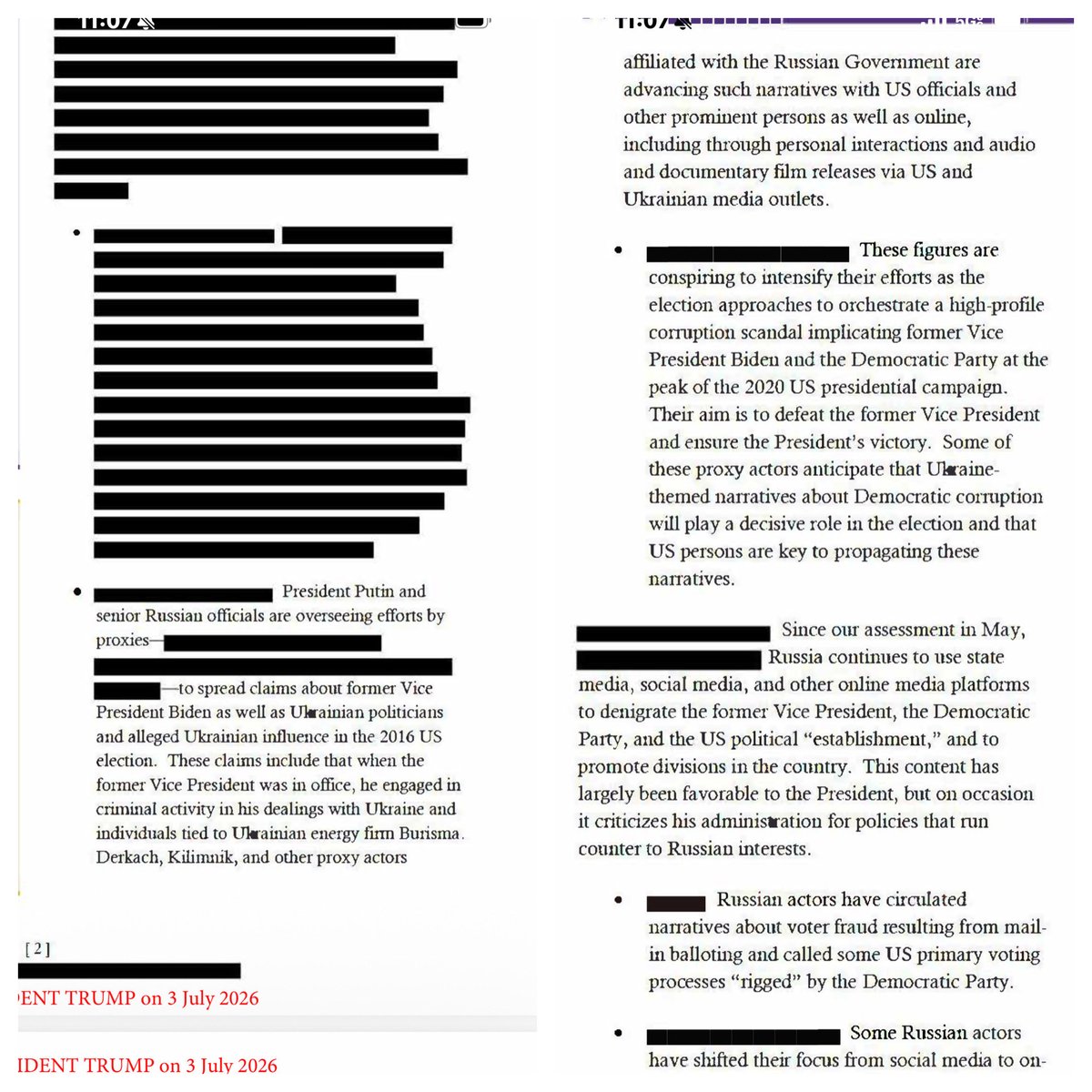
Last night Donald Trump released a declassified document that says his own intelligence community identified Putin as personally running an operation to defeat my father in 2020, built around a fake Burisma corruption scandal centered around me and executed through prominent Americans.
Trump tasked his personal lawyer, Rudy Giuliani, to fly to Kyiv and meet a known Russian agent.
The Americans who ran, laundered, and legitimized the operation:
Donald Trump. Rudy Giuliani. John Solomon. Joe DiGenova. Victoria Toensing. Lev Parnas. Igor Fruman. Chanel Rion. Sean Hannity. Steve Bannon. Miranda Devine. Ken Vogel. Ron Johnson. Chuck Grassley. James Comer. Jim Jordan.
To name a few.
An operation formally sanctioned by Trump's own Treasury Department on September 10, 2020, and expanded to include more named actors on January 11, 2021.
Oh, and don't forget the Russian-linked FBI informant Alexander Smirnov, who later pleaded guilty to making the entire Burisma bribery story up.
The record exists and we have all the receipts, and more.
English
@rolegiongetica @greucean I-ar prinde bine niste bani lu' Greuceanu, nu de alta, dar va avea de dat :)
Română

@PaulConRO Ce ne facem cu academia aia de estrogen? Isi ia @greucean banii inapoi cand se duc astia pe 15 ani, sau nu?
Română
@MacroJason Great observation. Not many foreigners are subtle enough to notice this, but yes, this is our politics. If you sit by the river long enough, you will see the body of your enemy float by.
English

Romania is surrounded by Slavs, Hungarians and Turks - yet only lost 19% of land vs historical peak.
There is ‘base effect’ - i.e. they didn’t conquer as much land as others to start with. But also impressive geopolitical manoeuvring for a medium size country.
As a medium power you don’t prosper by actively picking fights - but by picking the correct side at the right time. Many people don’t realise Romanians are quite good at this.
Crafting Maps@maps_crafting
Map idea: Map of European countries' land loss since their respective greatest extend.
English
@NATOnaomi Wishing you a beautiful birthday and a spectacular year ahead! 🍹🫶
English

🎂Pleased to announce that it’s my birthday- it’s definitely today and I am delighted to finally be 64 years old! 🥳
🍰Who wants cake? ☺️
✨To celebrate, there will be a NAFO summit held tonight on the sidelines of Garrison Petawawa, at the Canadian Legion’s 100th Birthday Party 🥳
I’m a little hard to spot because I’m elusive- always taking great care to never blow my cover. But I’ll be lurking in a corner somewhere, pretending like I want to join a motorcycle gang, and maybe nursing a whisky sour (or just *pretennnnding to* which is an oldie but goodie…..amirite Ivan Tertle?😊🐢)
Anyhoo, TGIF Y’all. Wherever you’re at, the main thing is-
🌏💫SLAVA UKRAINI !!! 💫🌏
🤍❤️🔥🤍 SLAVA BELARUS !!! 🤍❤️🔥🤍

English
@Gixxer1143 @arny_dm So no, you don't need carbs.
In a clinical setting, low T3 with high TSH indicates a sluggish thyroid (hypothyroidism). But on a low-carb diet, TSH stays normal. Why does T3 drop? Because your body becomes significantly more insulin-sensitive and efficient at using energy.
English
@Gixxer1143 @arny_dm When you stop eating carbohydrates, your body still needs a small, steady amount of glucose for a few specific cell types. To handle this, the liver uses a completely normal, built-in metabolic pathway called gluconeogenesis from non-carbohydrate sources.
English

Nobody ever got sick from not eating enough carbohydrates.
Let that sink in.
For decades they have been shoving the same lie down our throats: "You need complex carbs for energy and brain function."
It is complete bullshit.
Carbohydrates are not essential nutrients. They are non-essential sugar molecules. Your body literally does not need you to eat them.
There are two types, and both are destroying your energy.
Simple carbs (sugar, fruit). Spike your insulin. Lock body fat in storage. Create a massive crash two hours later.
Complex carbs (oatmeal, whole grains). Just chains of sugar disguised as "healthy." They break down into the exact same glucose, flood your bloodstream, and drive chronic inflammation.
I have eaten zero carbs for years. Only fatty ground beef, pork, egg yolks, salt, and water. I play intense professional beach volleyball tournaments for hours with zero energy crashes, endless stamina, and perfect focus.
Drop the carbs completely. Eat only fatty meat, eggs, salt, and water.
Your afternoon brain fog will disappear. Your blood sugar will stabilize. Your energy will become calm, continuous, and completely normal.
Run the experiment yourself. Most people are too scared to question the carbohydrate myth. The ones who actually do... never go back.
Be honest: could you perform at your job today with zero carbs, or would your brain shut down? 👇
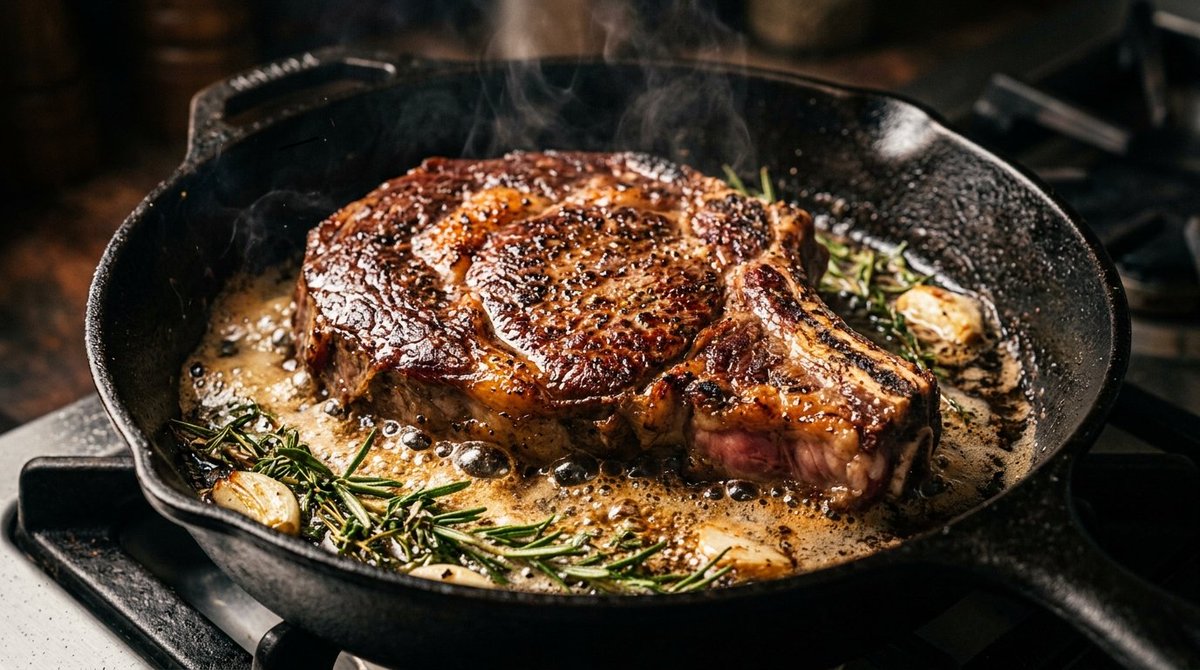
Beef. Eggs. Salt. Water. 🥩
English
"Drinking water with meat dilutes your stomach acid and makes it rot in your gut."
If this matrix propaganda were true, I would have decomposed 7 years ago.
Your stomach isn't a fragile test tube. It’s a biological furnace. It produces up to 3 liters of hydrochloric acid a day at a pH of 1.5.
A glass of water doesn’t "dilute" it. Your stomach instantly compensates and increases secretion.
The reality?
Human fuel (beef) is broken down by pepsin and absorbed almost completely in the small intestine. It never reaches your colon to "rot".
You know what actually ferments, produces gas, and rots in your large intestine?
Indigestible roughage. Plant fiber.
They convinced you to fear the only food that heals you, while telling you to eat the very thing that bloats you.
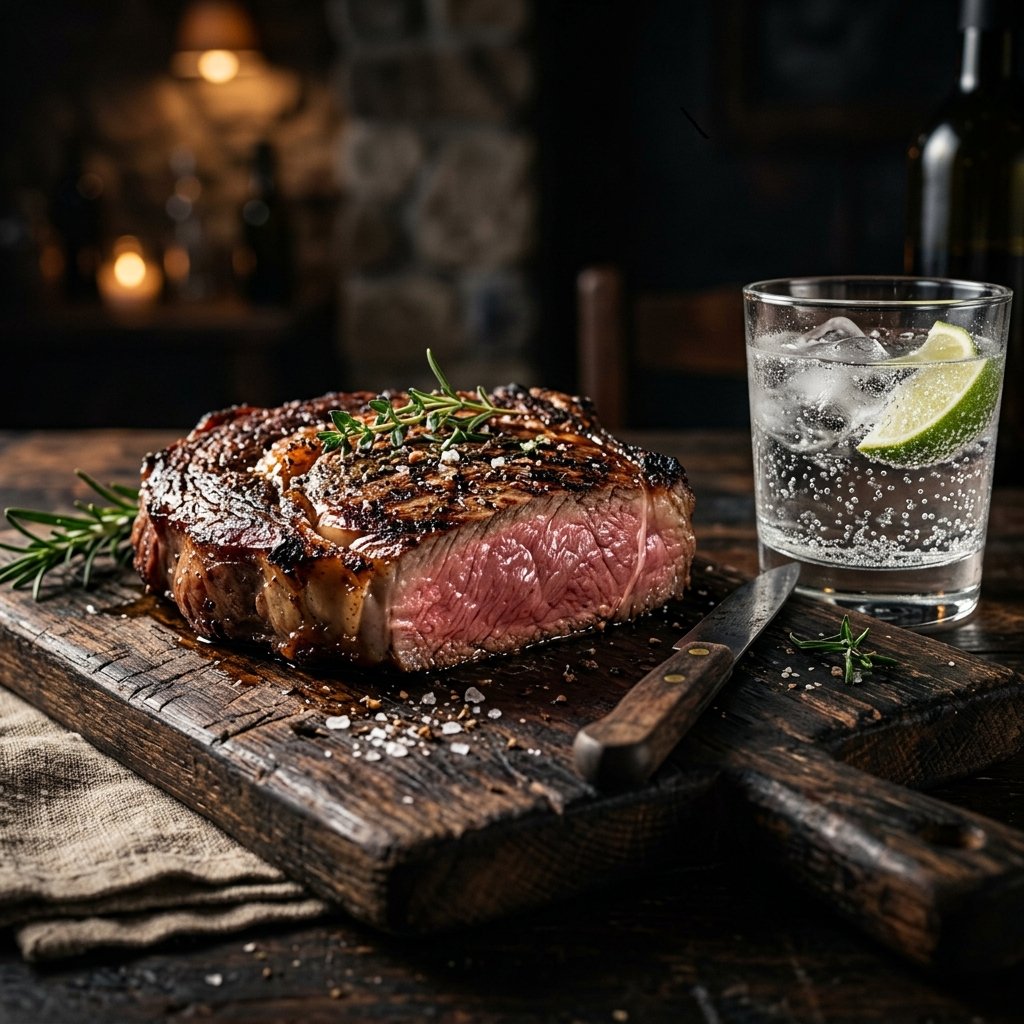
Eat the steak. Drink the water. Ignore the noise.
English
@petite_michelle Unfortunately, he upset some oligarchs who are profiting from the war while people are dying every day..
English

There are some things in Ukraine far beyond my understanding.
Firing Fedorov is one of them.
Illia Ponomarenko 🇺🇦@IAPonomarenko
Right — because who in the Ministry of Defense of the 21st century, in the age of the drone revolution, combat robots, and military AI, really needs a 35-year-old IT top executive who led the digital transformation of an entire nation and can pick up the phone to ask Elon Musk to shut off Starlink for Russians. No, what we need is a former high-ranking cop who boasts about making recruits tuck in their beds with perfect hospital corners and who happens to suit the generals and the major defense contractors just fine. 👏👏👏👏👏👏
English
@LiveAncestral 58?! I thought you were in your 30s, honestly. Keep doing what you're doing!
English

“I know ya can diet on eggs and steak ive done it....your young and stupid!!”
(Comment on one of my posts)
Apparently my diet will catch up with me when I am over 50.
I am 58.
So what now? 68, 78? Do we just keep moving the goalposts every time the prediction doesn’t land?
Not young. Not stupid. Still here. 🤣

English
@arny_dm @JuliusC23680344 True. However, one needs to fast for at least 16h to enter a mild state of autophagy, which is why intermittent fasting doesn't help much in this regard, though it does keep insulin levels low. For peak autophagy, I do a 48h water fast once a month.
English
@JuliusC23680344 because u are spiking insulin 6 times a day. your digestive system never gets a break, and u never enter autophagy. eat 2 massive meals and let your body actually recover.
English
Stop snacking on protein. You are completely wasting it.
Your muscles don't care how much protein you eat across the whole day. They only care about a specific biological switch called mTOR.
To flip that switch, you need exactly 3 grams of the amino acid Leucine.
That equals about 30 grams of high-quality animal protein in a single sitting.
If you eat 15 grams of protein... nothing happens. The switch stays off. You get zero muscle repair.
This is why eating 6 small meals a day destroys your progress. You are putting the key in the ignition, but never turning it.
And plant protein? It is completely deficient in Leucine. You would need to eat 500 grams of cooked beans just to turn the engine on.
Stop eating small, useless meals.
Eat massive portions of real animal fat and protein. Make every meal count.
Beef. Salt. Water. 🥩
English
PaulC retweetledi

Great to hear that nine countries Estonia, Netherlands, Lithuania, Latvia, Poland, Sweden, Romania, Finland and Denmark, proposed to cut off funding to International Olympic Committee !
English
PaulC retweetledi

China now preparing for the fall of Putin, locking in direct relations with Russia's most powerful people to prevent a chaotic transition.

English
"m-a lasat seful sa lucrez de acasa" ...
@greucean incearca sa ne prosteasca pe toti, in permanenta, pentru ca se considera un fel de rasa superioara, chiar daca rozatoarele nu au fost niciodata o rasa superioara, au fost doar o specie acceptata universal ca fiind paraziti.
Acum cateva luni, Seb Dracopol ne anunta mandru dar totusi, plin de regret, ca va trebui sa se mute la Haga pentru ca a gasit un job extraordinar de bun in AI si oricat ar regreta ca paraseste Romania, trebuie sa o faca pentru ca banii sunt prea frumosi.
Compania BREV
Dupa o luna si ceva de stat la Haga, anunta plin "de bucurie" ca se va intoarce in Romania, deoarece "seful s-a hotarat sa il lase sa lucreze de acasa"
Astazi am aflat opinia sefului!
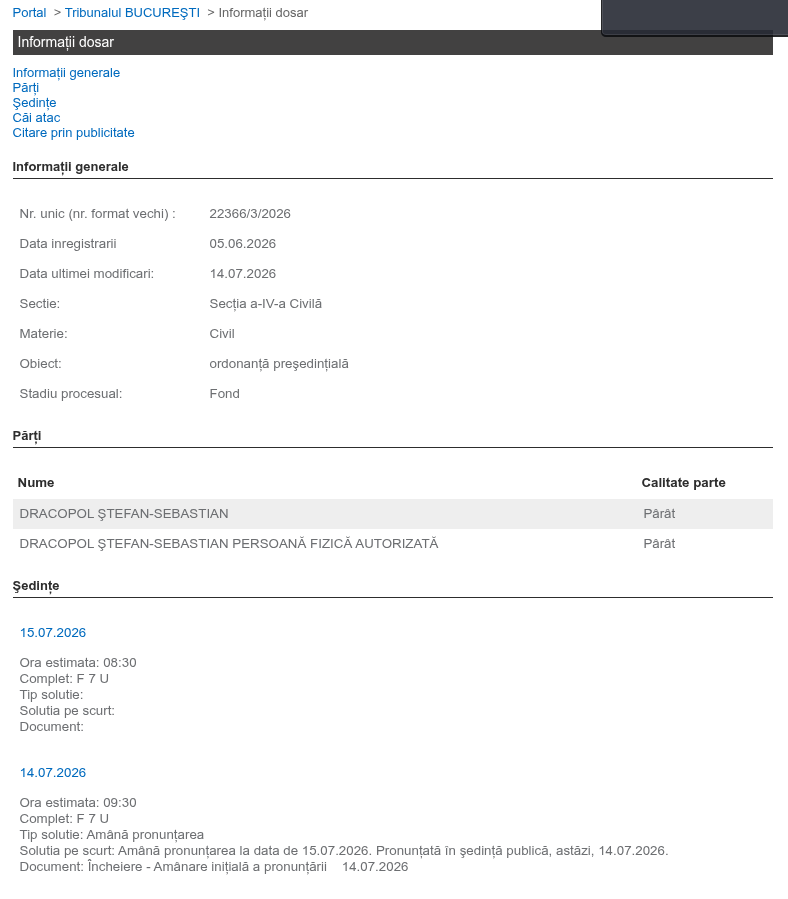
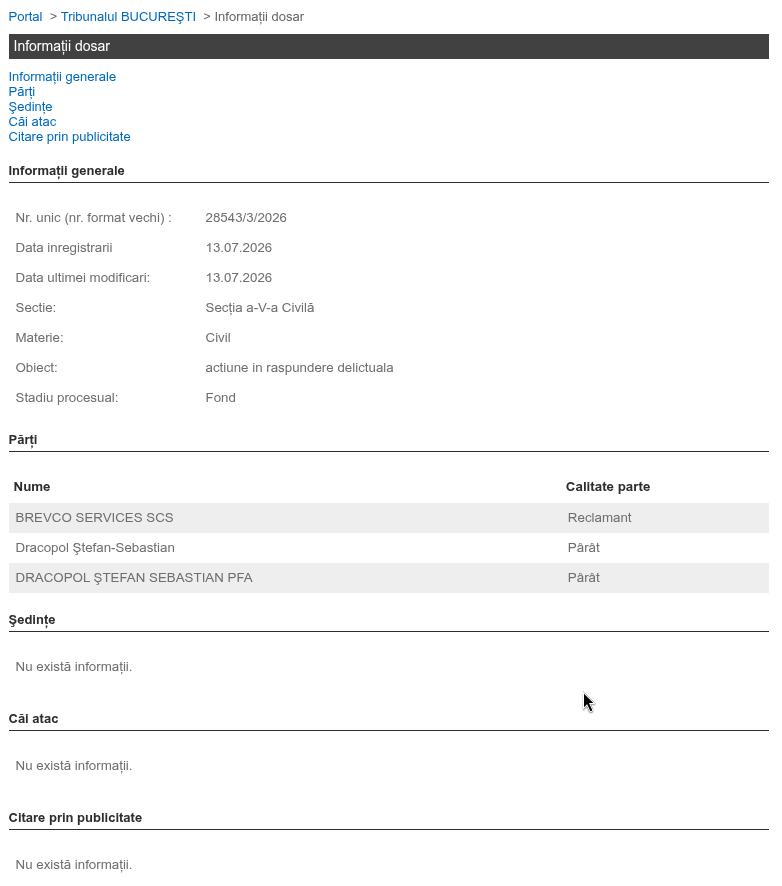
Compania BREVCO SERVICES SCS din Belgia, a actionat in judecata, atat pe fond cat si prin ordonanta presedentiala, la Tribunalul Bucuresti, individul Dracopol si PFA-ul lui, pentru recuperare de creante :))
Deci ce intelegem? Opinia noastra e ca Dracopol a mers la Haga, nu a lucrat nimic (ca era prea ocupat cu X-ul), aia l-au simtit pe sobolan ca e 0 dpdv profesional si l-au dat afara plus ca acum vor despagubiri si sunt atat de porniti incat l-au actionat in judecata in Bucuresti, cu avocati locali, efortul de rigoare, etc. Ceva ne spune ca suma e destul de insemnata :))
Bravo Seb, tot asa prietene! Ce poate sa mearga rau la tribunal cand ai inselat oamenii ca esti guru IT si AI? 🤣🤣🤣

Română

I was trying to say something witty about this weird looking russian witch but I got nothing
She does have some thoughts on air defense
Natalka@NatalkaKyiv
This Russian woman just came up with a brilliant strategy for her country's air defense to neutralize Ukrainian drones. Warning: Do NOT watch this right before going to bed.
English
@rudocvetkov @SamaHoole I'm on keto/carnivore. No sugar, wheat or anything related. Here's the explanation:

English
@PaulConRO @SamaHoole Reduce sugar and white wheat
Keep going with eggs
English

Been reading up on how normal people make omelettes and I need to lie down.
Two eggs. That's the standard. Two. A man will crack two eggs into a bowl, whisk them with the enthusiasm of a hostage, pour out something the size of a beer mat, fold it over a single mushroom, and call that his breakfast.
And they've got tiers. Three eggs is, and I promise I'm not making this up, considered "a big one." A treat. A weekend indulgence. Blokes are describing a three egg omelette the way I'd describe a christening.
"Ooh, I went for three today." Did you. Steady on. Call an ambulance and a priest.
One egg omelettes exist. I've seen the recipes. One egg, beaten thin, cooked till it's basically a crisp, slid onto a side plate. A side plate. There's real estate to spare. You could land a light aircraft next to it.
Meanwhile I'm standing over the big pan looking at my sixth egg going in with the mince and the butter, wondering if I should hold back so it doesn't come across as showing off.
Three eggs. Heavy. Lads, that's a rounding error.

English


@PaulConRO 10/10. eggs and salt are an elite foundation. zero processed junk. this is exactly how you start a morning to have stable energy all day.
but personally, I'd swap the avocado for a pile of crispy bacon =)
English
If your breakfast comes out of a cardboard box, you are eating literal bird food.
Spiking your insulin at 8 AM with oats and fake milk is exactly why you need 3 coffees just to survive until noon.
Drop a picture (or description) of your breakfast below.
I’m rating them out of 10. Let’s see what you’re made of. 👇🥩
English