
Sabitlenmiş Tweet
Pauly
4.1K posts

This frame is NOT available on the red button (on Virgin Media anyway), so that was wrong Hazel. #BBCSport #worldchampionshipsnooker
English

Not proper football.
Way too aggressive.
Leakier than sieves.
Arteta’s Attritional Arsenal will grind down either of them.

English

NEW: Mother who lost her son and husband in the Titan submarine disaster, says their remains were returned as "slush" in tiny shoeboxes.
Christine Dawood told the Guardian that there was a large pile of mixed slush that they couldn't separate.
She said it took nine months for her to receive her husband's & son's remains.
"We didn’t get the bodies for nine months. Well, when I say bodies, I mean the slush that was left. They came in two small boxes, like shoeboxes," she told the Guardian.
The "slush" was what was able to be recovered from the sea floor through DNA testing.
"They have a big pile they can’t separate, all mixed DNA, and they asked if I wanted some of that, too. But I said no, just what you know is Suleman and Shahzada."
English

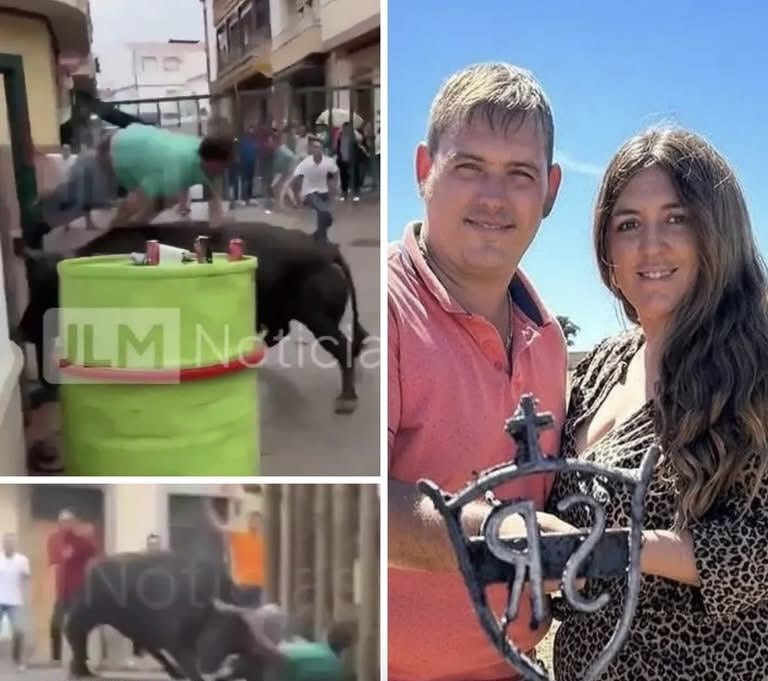
A Spanish dad whose wife was expecting their second child has been gored to death during a “street of hell” bull-running festival.🙁
I wish no death on people but thankfully the bull is unharmed.
English

@NeilLfc_5 They're young millionaire stars. Not everyone wants to spend their free time on a golf course in Southport.
English

Oh where's he then? Szaboslai is in Italy, Van Dijk is somewhere galavanting with a new haircut and that Baldy cunt of a lazy twat will be in Dubai or Ibiza. There's literally a month left in the season and they're all on holidays again
ً@salahive
omg virg with cornrows?
English

Estaba borracho y se metió a torear a un toro, el final estaba escrito 🫠
Español

The triple Wigan kebab, outside the Brick Community stadium, 3 steak pies in a hollow tiger loaf with gravy (optional chips) - 💷 £7.00

English


I still don’t get the concept behind life. What exactly are we here for??
English
@depressionlesss Why do they always use the shittest music possible for videos like this.
English

I had to go on a work trip for a few days, so my friend (she owns a farm) kindly offered to look after my cat. She just sent me this video...
English

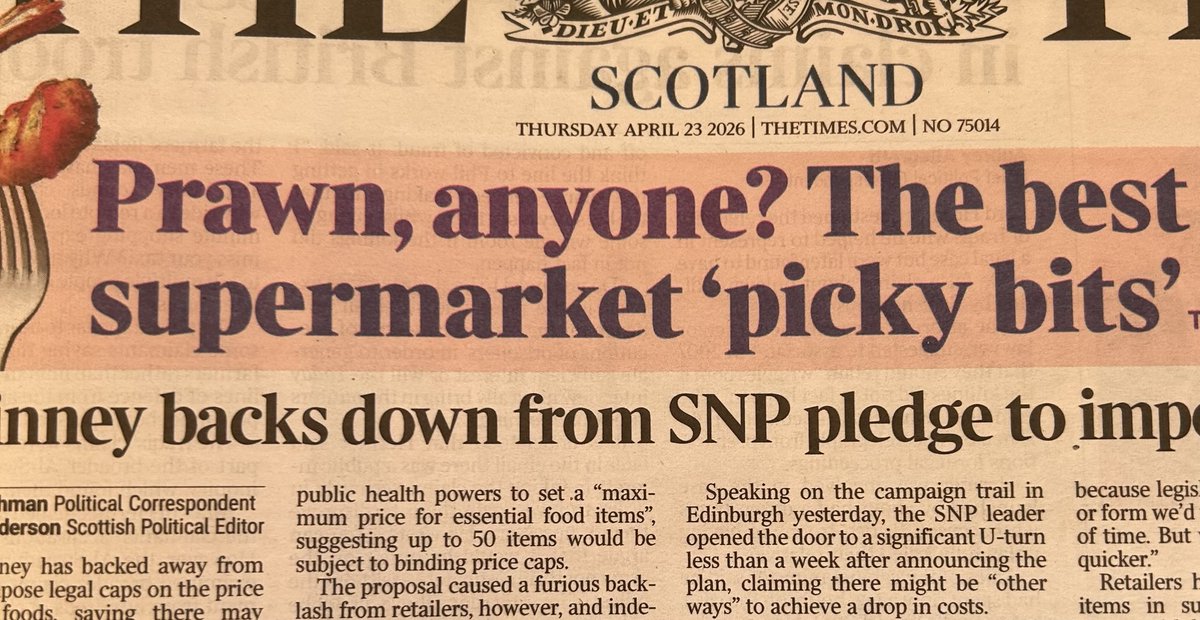
Anyone else find the phrase "picky bits" a bit repellent?
English
@Xagreat001 The Chinese would have slaughtered him and used the horn for 'traditional Chinese medicine'
English

In 2014, an Indian man named Shyam Lal Yadav bumped his head, after which a small lump began to grow on his scalp. For several years, his local barber regularly trimmed the growth. However, despite frequent cutting, it continued to enlarge and eventually developed into a 10-centimeter-long, horn-like protrusion.
The unusual growth, medically known as a sebaceous horn (also called "devil's horn"), is a rare tumor-like lesion made of keratin — the same protein found in fingernails and hair. These horns typically appear on areas such as the face, hands, ears, or scalp.
When the horn became too large and difficult to manage, Shyam Lal Yadav sought medical help at Bhagyoday Tirth Hospital in Sagar. Neurosurgeons, led by Dr. Vishal Gajbhiye, successfully removed the growth. The doctor explained that the lump had started growing after the head injury five years earlier.
Although sebaceous horns are often benign, doctors always check for any malignant potential. In this case, surgeons first trimmed the horn and then performed a deeper procedure to remove the root and prevent recurrence. Skin grafting was done immediately to cover the wound. Shyam spent 10 days in the hospital recovering, and a biopsy later confirmed that the growth was non-cancerous.
Due to the rarity of such a large sebaceous horn, the details of this case were submitted to the International Journal of Surgery

English
@visegrad24 Its like a scene from The League Of Gentleman TV show. Funny, but scary.
English

🇬🇧 A Romanian-born gypsy, Julien "Juliano" Nistor, candidate for the Workers Party in the upcoming Birmingham local elections scheduled for May 7th, has gone viral after releasing a campaign video.
He promises to “change a little bit this area” and says the city “needs cleaning, not rats in the roads.”
"Your support will be my good things in life," he said.
English
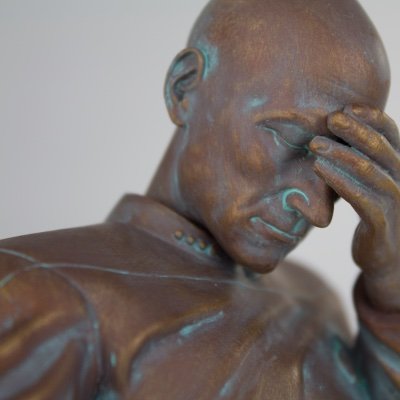
"I've just used the female toilets at Waterloo station and none of the women batted an eyelid."
Sure.
English

@Maks_NAFO_FELLA He runs over a guy, they both fall into the river and when they resurface, they start fighting. Yep. Russia 😂
English



If you are old enough to remember driving in Britain in the 1980s, you will remember the windscreen.
You could not see through it by July. A journey from Leeds to London in August ended with a front bumper that looked like it had been through a war and a windscreen that needed a proper scrubbing with a sponge at the services. Insects on the headlights. Insects in the wing mirrors. Insects packed into the radiator grille so densely that mechanics had to fish them out. This was simply the weather of the British summer, the cost of moving through a country that was still, in living memory, full of flying things.
Get in a car now. Drive the same route. Stop at the services.
The windscreen is clean.
The Bugs Matter survey, run by Kent Wildlife Trust and Buglife since 2004, has been measuring exactly this. Volunteers clean their numberplate, drive a journey, count the splats on a grid. Between 2004 and 2021, the UK average fell by roughly 59 per cent. England alone: 65. Kent: over 70. The 2024 update found a further 63 per cent drop on top of that.
The windscreen phenomenon has the data to back it up now.
And not just the insects. Between 1970 and 2024, the UK Farmland Bird Index fell by 62 per cent. Turtle doves down 99. Grey partridge down 94. Tree sparrow down 90. A generation of British children has grown up without ever hearing a turtle dove call, because there are, in functional terms, no turtle doves left to call.
Defra's own bulletin lists the causes without embarrassment. Loss of mixed farming. The switch from spring to autumn sowing, which took away the winter stubble the small birds had been feeding on since the Neolithic. The grubbing up of hedgerows to make fields bigger for bigger machines. Increased fertiliser. Increased pesticide.
Specifically, the pesticides. Neonicotinoids on oilseed rape. Glyphosate sprayed as a pre-harvest desiccant on wheat and barley. Chemicals applied in combinations and volumes that would have seemed psychotic to a farmer in 1950, applied to grow the crops that feed directly into the plant-based shakes marketed to people who believe they are helping the environment.
The insects died in the fields where the crops were grown. The birds that used to eat the insects, starved. The windscreen, accordingly, is clean.
None of this happened on the permanent pasture that cattle graze. A herb-rich meadow grazed by cattle has more pollinators, more ground-nesting birds, more beetles, more everything per hectare than the arable field next door. The South Downs and the Welsh uplands and the Cotswold commons where sheep and cattle have been grazing for a thousand years are the places British biodiversity is still, just, holding on.
The countryside did not empty because of the cow.
It emptied because we replaced the cow with the combine harvester, the meadow with the oilseed rape, and the hedgerow with another half-acre of monoculture that needed spraying fourteen times a season to keep it alive.
When someone tells you eating a steak is destroying British wildlife, ask them what was on the field before it became the soy farm, the rape farm, the wheat farm that produced the oat milk in their fridge.
It was grass.
And on the grass, there were cattle.
And when the cattle were there, the windscreen needed cleaning.

English
@DrWolf666666 @SamaHoole It's hardly a conspiracy as it's backed up by evidence.
English
@SamaHoole I grew up in the 80s and don't remember this. Sounds like a load of nonsense to take in gullible fools who lap up this kind of nonsense along with every other crackpot conspiracy. Probably the same thick bastards in the reply section that think the moon landings were fake etc
English