𝑃𝑒𝑛𝑔33

2.6K posts

𝑃𝑒𝑛𝑔33 banner
𝑃𝑒𝑛𝑔33

𝑃𝑒𝑛𝑔33

@Peng33G

Katılım Nisan 2022
632 Takip Edilen226 Takipçiler
𝑃𝑒𝑛𝑔33 retweetledi
CounterParty TV
CounterParty TV@counterpartytv·
goodalexander explains how the SpaceX IPO will perma top the US stock market “SpaceX is going to go out first, second is OpenAI, then Anthropic. After the SpaceX IPO, I think you start to get very bearish equities, that’s the Solana $300 moment. But right now we’re in this max bid moment, every investment bank is going to upgrade every AI stock because they’re going to get so much fees off of these IPOs”
English
17
29
442
120.1K
𝑃𝑒𝑛𝑔33 retweetledi
goodalexander
goodalexander@goodalexander·
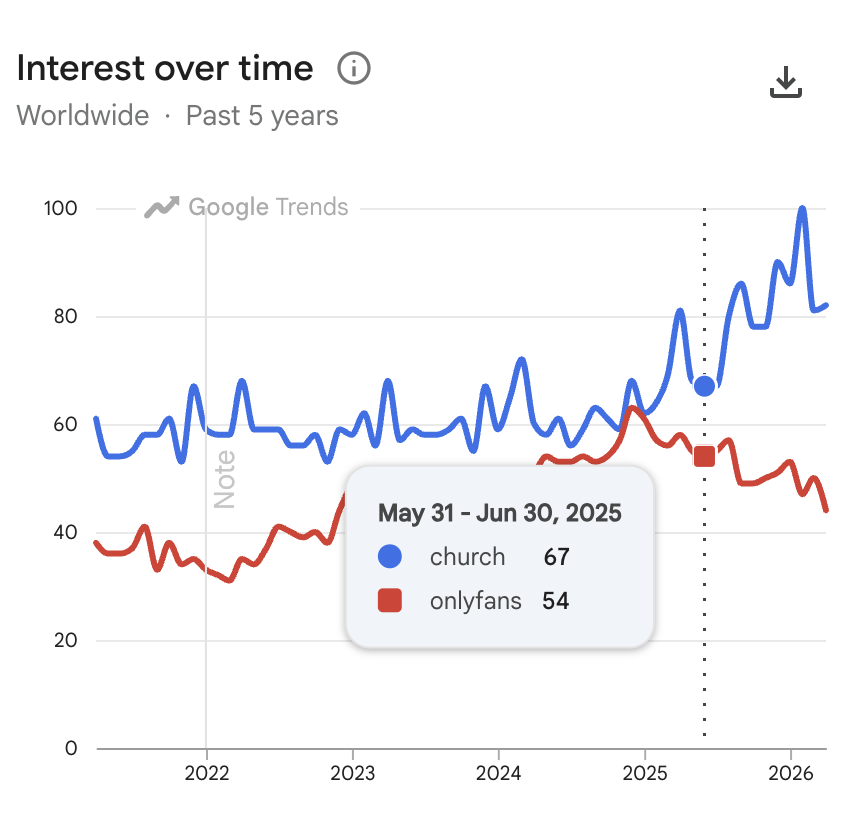
Onlyfans and church were tied on Google trends as of 2025 whereas now Church is almost 2x Onlyfans. Interesting cultural shift
goodalexander tweet media
English
71
58
890
572.7K
𝑃𝑒𝑛𝑔33 retweetledi
Aakash Gupta
Aakash Gupta@aakashgupta·
Andrew Huberman described the worst morning routine in five steps. Stay in bed, recline, skip sunlight, drink coffee too early, multitask. Every one of them targets the same 30-minute neural event. Between minute 0 and 60 after waking, your body runs the cortisol awakening response. A healthy pulse lifts cortisol by about 50%, sets a 14-to-16 hour timer for melatonin release, primes immune function, and anchors alertness for the whole day. Miss the window and your circadian clock drifts until you go back to sleep. The rest of the day runs at 70%. Sunlight is the trigger. Light has to hit melanopsin cells at the bottom of your retina to signal the suprachiasmatic nucleus to fire cortisol. Through a glass window you need 50 times longer. A phone screen is hundreds of times too dim to count. Curtains closed plus head down means the pathway never activates. The pulse either never fires or fires weakly, with effects rippling across the next 16 hours. Reclining kills the second lever. Studies recording directly from the locus coeruleus and the reticular activating system show alertness drops with reclining and rises with sitting forward. Those melanopsin cells sit in the bottom of your retina for a reason. They evolved to see the sun overhead. Chin down, eyes down, horizontal body: the brainstem reads this signal set as "still asleep" and keeps you in sleep-adjacent arousal for hours. Coffee at minute 10 kills the third. Adenosine is the sleep pressure molecule cleared by that cortisol pulse. Caffeine blocks adenosine receptors before cortisol gets the chance to clear them naturally. Two to three hours later the caffeine metabolizes, uncleared adenosine floods the receptors all at once, and you crash at 11am. Drink a second cup to patch the crash and you've shifted your cortisol peak four hours late. Which means your melatonin shifts too. Which means you can't sleep that night. Phone scrolling kills the fourth. Morning dopamine baseline is the lowest it will be all day. Ten minutes of feed delivers hundreds of micro-rewards before breakfast is ready. You've spent peak dopamine on algorithm-selected stimuli. Every real task in the workday that follows registers as a downgrade against that baseline. Multitasking kills the fifth. The prefrontal cortex boots last after waking. Task-switching between texts, emails, and random notifications during the boot window trains the attention network to run fragmented all day. Sophie Leroy's 2009 attention residue research showed each switch leaves cognitive spillover that degrades the next task. Start the morning with 20 switches and focus is a rented asset for the next 12 hours. Five random-looking habits, five targeted attacks on the same mechanism. Light triggers the pulse. Posture amplifies it. Caffeine cooperates with it. Dopamine protects what it builds. Focus compounds what it anchors. 20 minutes outside with your phone in the other room fixes all five at once.
English
38
235
1.7K
275.2K
𝑃𝑒𝑛𝑔33 retweetledi
goodalexander
goodalexander@goodalexander·
Stuff I wish I knew when I was younger: 1. Doing something poorly and consistently is better than doing it in a world class manner occasionally 2. Other people tell you to take risks bc they want to see what happens or have a free option if you win not bc they think it’s a good idea 3. Most people don’t think about you at all. But some people think about you a lot. If someone who is a baller takes an interest in you for no particular reason just run with it. One trick to vastly improve your relationship outcomes is spend time w people who like you (not ppl who ignore you or treat you poorly). 4. Everything in your life you can categorize as 1) addictive 2) enjoyable. And if you do a bunch of non addictive enjoyable things it’s quite likely you’ll be happier. If you stop doing that basket you’ll burn out, predictably 5. It’s a lot easier to deal directly with negative thoughts than it is to deal with the life circumstances generating them and most of the time you can actually deal w the circumstances more effectively if you’re not tilted 6. Most of the economy is a cartel defined by proximity to central banks, the government, and a small elite. The reason “contrarian” ideas work isn’t because they’re good. It’s bc they’re “king made”. It’s decided in advance who is going to win. You need to decide if you’re going to play or not. There is no halfway 7. Being mad about the system being rigged is a waste of time it’s a lot better to just bet on it, or invest with that as an edge bc most people aren’t blackpilled enough. 8. Most studies - especially social science studies have criminally low r sq or poor methodology. Such that most things you read online don’t actually work. At the same time - your own response to things is fairly predictable. So if you find something that works - you can just go back to that - a lot more easily than optimizing something new 9. Life getting worse after 30 is a scam. Actually - it might genuinely get worse for most people. But it doesn’t have to. The people who most loudly tell you what you need to be happy are the least happy people 10. Over time your outcomes are mostly determined by the quality of your network, your investment rate of return and your tax rate. But every once in a while you can do something non linear that can be a home run. It’s best to do non linear things during asset bubbles or when you have a hot hand. It’s not a good idea to do non linear things when there isn’t strong investor appetite for risk taking 11. Your behaviors will tell you stuff you’re not dealing with. If you’re overeating or sleeping poorly it’s probably bc there’s something you haven’t acknowledged or faced or are putting off 12. As you move towards a singularity , accelerating progress or a purported societal shift the predictability decreases - rather than increasing. People are the most certain at maximum acceleration when the very nature of acceleration or complexity suggests they should do the opposite. If AGI is coming start thinking 1 week out not 3 years out
English
49
178
1.8K
90.9K
𝑃𝑒𝑛𝑔33 retweetledi
Andy
Andy@andreas_nigbur·
The Oil Lie Oil isn’t rare, it’s also not made from dead dinosaurs. It’s the 2nd most common liquid after water and is the Earth’s lifeblood. The scarcity myth was a Rockefeller lie to dramatically increase the oil price. The system tells you that oil is liquefied dinosaurs (biotic theory) so you believe it's scarce and pay whatever they want. Lie. Oil is abiotic—a liquid mineral generated by the Earth's own engine through high-pressure and high-temperature processes in the mantle. It is the lubricant for tectonic plates. Depleted wells from the 70s have been found to be fuller today than before. Why? Because the Earth's system pumps it from the subsoil. It doesn't run out; it regenerates. By extracting it on a massive scale, we are drying out the Earth's gears. This is why there are more earthquakes and creaking faults: we are stripping the oil from the engine. The fossil theory (coined by the Rockefellers and the Smithsonian in the late 19th century) is the greatest economic hack in history. If oil came from organic matter, it would have a biological signature (nitrogen, phosphorus, etc.) that would degrade. Crude oil is pure polymeric hydrocarbon. The Thomas Gold Thesis This expert (whom the system tried to discredit) proved that methane and oil rise from the depths of the mantle. Hydrocarbons are primordial constituents of the Earth's formation. By calling it fossil, they tell you it's a resource that's running out. If Humanity knew that oil is like tap water for the Earth, the geopolitics of the parasites would go down the drain in a single day.
English
1.2K
11.3K
33.4K
2.9M
𝑃𝑒𝑛𝑔33 retweetledi
Movez
Movez@0xMovez·
This 1 hour Stanford lecture on "Sports betting math" by founder of $160M sports platform, reveal the math used by betting platforms to print millions on sports. Bookmark this & give it 1 hour today, no matter what. It’s the most productive start you can give your week. Then read post below.
Movez@0xMovez

Best Quant sport bot for copy-trading on Polymarket with $7,4M PnL turned a $1,186 deposit into $7.4M across 55,000 predictions in less than a year. while 90% are gambling on sports, he’s using math and market microstructure to consistently win 4 rules of his algo, decoded: 1) the anomaly: "Buy-Only" Engine The bot never sells. Sell_Count = 0. It buys the opposite outcome - a "Synthetic Sell" that dodges taker fees. formula: Delta = Qty(YES) - Qty(NO) / Global Delta ≈ 0 // 2) the setup: The "Dutching" Trap "Team A: NO" = "Draw" + "Team B Win." when prices diverge - buy the cheap side. • formula: Price(Home_No) < Price(Draw_Yes) + Price(Away_Yes) → 0.21 < 0.28 // 33% discount // 3) "volume Farm": Incentives > Friction Bot buys guaranteed losers at $0.01. $10 at $0.01 = $1,000 notional volume. Platform rebate > loss. • formula: Profit = Incentives - (Spread + Fees + Slippage) // 4) cross-market "Triangular" hedging o2.5 can't hit without o1.5. Retail panic breaks the ladder > buy the cheap rung. Too long on "Win"? Don't sell - buy "+1.5" in Spread, flatten delta, zero loss. • formula: Price(o1.5) > Price(o2.5) - always // violation = free edge bot profile: @rn1?via=following" target="_blank" rel="nofollow noopener">polymarket.com/@rn1?via=follo… start copy-trading with as little as $10 using Ares: ares.pro/wallets/0x2005… Learn from top sports algo bots - stop gambling, start winning with math.
English
62
662
8.8K
1.4M
𝑃𝑒𝑛𝑔33 retweetledi
Third
Third@thirdmetax·
Togi reveals he lost $900,000 in one night then turned his last $400,000 into millions while blacked out on drugs “I wake up and I have maybe 150 texts, people are asking if I’m alive everyone seemed to have thought that I ended my life because the night before went so horribly” “that $400,000 I had instead of paying back some of my debt I bought into a slot called Christmas Big Bass Bonanza I ended up hitting for $1,500,000 on a $1,000 spin” “instead of paying back my markers with that $1,500,000 I decided to take all of it and I put it into a meme coin called Pepe and then one day later it got listed on Robinhood and went up 100%“ “I was doing so many drugs at the time I like have no recollection of this but of course the camera had it, was all live streamed everything”
English
42
62
4.1K
631.7K
𝑃𝑒𝑛𝑔33 retweetledi
DaVinci
DaVinci@BiancoDavinci·
This is a healing grid by Japanese artist Ryota Kanai. If you stare at the center, the irregularities start to heal themselves because your brain strongly prefers to see regular patterns.
DaVinci tweet media
English
338
3.4K
26.3K
4.1M
𝑃𝑒𝑛𝑔33 retweetledi
Kris
Kris@KrisAbdelmessih·
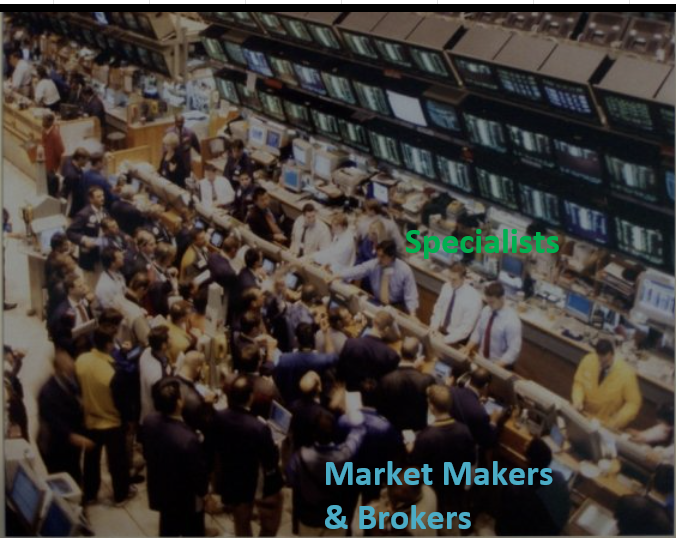
Long one today on "market maker privilege" Packed with story, opinion, and gritty details of the way things work. Including this very hard to find picture of the AMEX floor when it was open moontower.substack.com/p/market-maker… cc floor traders who are time-for-a-colonoscopy years old
Kris tweet media
English
7
11
128
41.5K
𝑃𝑒𝑛𝑔33 retweetledi
merp
merp@0xMerp·
how it feels when someone asks which professional source you used to find a dashboard that was vibecoded
merp tweet media
English
6
1
37
1.9K
𝑃𝑒𝑛𝑔33
𝑃𝑒𝑛𝑔33@Peng33G·
$BTC short here. If war is going to continue then risk has to sell off.
𝑃𝑒𝑛𝑔33 tweet media
English
1
0
0
38
David Hale
David Hale@CREAMtrader·
If you're a desperate, capital-hungry trader eyeing funding challenges — a few words of advice 1) Don't! Work on your craft. Grind, save, and open an account at a legitimate broker or prop firm. And if you develop a real edge — which you'll need to make money anyway — real funding opportunities follow. Legitimate ones. 2)If you're still set on a challenge — find a hard one. Not the easiest. Barely passing a low bar isn't a green light, it's a lottery ticket. You'll get the capital, blow up, and buy another challenge. The loop is real, expensive and will waste your time. A harder challenge means a real filter — and a more legitimate firm that's less likely to disappear before they pay you. Pass it, and there's a genuine chance you actually have an edge. Without a real edge, more capital doesn't fix anything. It just means a bigger hole to climb out of.
English
2
2
28
1.5K
Joyce Machau, MBA
Joyce Machau, MBA@joycemachau·
@YourPrimePath Men aren’t great at living alone in their 60s, while women are out here thriving and loving every minute of it 💃
English
28
0
30
7.2K
Your Best Version
Your Best Version@YourPrimePath·
Getting married sounds stupid as fuck until you see a single man in his 60s Go home alone, read a book, only one light on in the house, no goofy kids visiting for the holidays Suddenly a dumb argument with a pleasantly plump aging wife twice a week doesn't seem so bad
English
943
611
14.7K
1.4M
Shubhankan Tiwary
Shubhankan Tiwary@Shubhankan007·
Good old days when Propfirms used to pay with DEEL. I used to do direct bank withdrawal. You can check below, one of the transaction of USD -> Indian Bank Account. This payout was from My Forex Funds.
Shubhankan Tiwary tweet media
English
10
2
48
4.7K
Guy D.
Guy D.@guydroog·
This is an account of my experience with the Raen Trading (@raentrading) assessment process, written from the perspective of someone who completed Phase One and traded through Phase Two. It isn't written to discredit anyone or anything, only to describe how the process functioned in practice. Phase One takes place on a demo account under strict rules. The profit target is 20% and the maximum drawdown is 7%. It is widely regarded as difficult. Not impossible, but demanding. The phase costs roughly $350 per month and requires at least 30 active trading days. In practice this means a minimum of two billing cycles, or about $700, with no maximum time limit. The performance requirements are explicit: a fixed target and clear risk parameters. At the same time, Raen emphasizes qualitative factors beyond P&L, such as risk exposure, position sizing discipline, execution quality, and the sustainability of a trader's approach. From the trader's perspective, however, these metrics aren't visible. There is no dashboard, feedback, or indication of how they are being evaluated. During Phase One I encountered recurring technical issues with the execution infrastructure (CQG). These included login failures, unexpected disconnections, and behavior that interfered with normal trade management. I reported them as they occurred. Some were addressed, others persisted. The practical effect was missed trades and the need to adjust execution methods simply to remain operational. Trading was possible, but not in the way I normally trade. After passing Phase One, traders move to Phase Two. The monthly fee stops, and Phase One fees are refunded after the first live payout. Phase Two is framed around Strategic Mentorship, consistency, and readiness for live capital rather than a fixed profit target. However, the structural constraints remain similar, including a roughly 7% drawdown limit. The framing of mentorship implies feedback and dialogue. In reality, Phase Two was completely silent. Over the thirty-day period I received no direct communication, feedback, or evaluation updates. There was no automatic check-in at month end. The only visible information was my own trading and P&L. Over time it became clear that this silence appears intentional. The mentorship model seems reactive rather than continuous, with intervention only when risk or behavioral issues arise. When trading remains controlled, the absence of interaction itself appears to be part of the evaluation. These are all assumptions. While Phase Two has no formal profit target, the figure referenced in examples and discussions was roughly 20% over a 30-day period. It isn't presented as a requirement, and progression depends more on consistency and drawdown control than hitting a specific return. Still, the reference point matters. In Phase One, 20% is a total return target with no strict time pressure beyond minimum trading days. In Phase Two, the same figure is discussed in the context of a single month. This shifts the performance profile being selected for. Producing 20% within a 30-day window while staying inside a 7% drawdown band requires not only discipline, but unusually high return generation under tight constraints. From inside the process, Phase Two feels less like a move away from challenge-style trading and more like a higher-stakes version of it. Similar risk limits, similar pressure, but with a more meaningful potential outcome. During Phase Two I continued encountering recurring technical irregularities on Trading Technologies: - Continuous invalid password errors on login, sometimes lasting over five minutes and dozens of attempts before access was granted - Stop orders failing to trigger on small size in liquid markets without identifiable cause - Markets appearing unavailable despite being open - Orders that could not be modified and had to be cancelled and re-entered - GTC orders expiring unexpectedly on the same day they were placed - Fills occurring far from prevailing prices - On one occasion, an open position disappearing entirely from the platform None of these made trading impossible, but they did affect execution consistency and required ongoing adaptation. For context, I have taken over a thousand trades the past three years, spread across multiple platforms and multiple devices, without encountering a single technical issue. Trading on institutional-grade software sounds compelling on paper. In practice, it meant more technical problems than most traders will be used to, and basic features made unnecessarily complicated. Raen also encourages traders with an existing track record to submit it for review. I submitted a three-year record and followed up several times, but never received feedback. It may have been reviewed and deemed insufficient, which is fair. That simply wasn't communicated. I was also told that if a trader doesn't progress through Phase Two, the process restarts at Phase One. From inside the structure, this creates a loop: Phase One tests the ability to operate under strict constraints, while Phase Two is framed as preparation for live capital. Restarting at Phase One retests a hurdle already cleared rather than addressing whatever prevented progression in Phase Two, especially in the absence of targeted feedback. In practice, the structure functions as follows: Phase One filters for the ability to operate within tight constraints. Phase Two filters for whether that discipline holds as performance expectations rise and constraints loosen. The process seems to be less about developing traders forward and more about selecting those whose behavior remains stable under increasing pressure. That doesn't make the model wrong. It clarifies what it is designed to find. I didn't progress through Phase Two. The account reached a high watermark of nearly +13% within two weeks. I continued trading, but toward the end of February I noticed my commitment had faded. I couldn't engage with the process at the level it required. The account ended at the 7% drawdown limit, and I left it at that. That loss of conviction wasn't caused by any single factor, but by the cumulative effect of several: limited visibility into evaluation metrics, the absence of structured feedback during a phase framed as mentorship, ongoing ambiguity about evaluation status and recurring technical issues affecting execution reliability. Individually, none of these made trading impossible. Together, they created an environment where the professional expected value of continuing became unclear. For that reason, I would not personally recommend going through the assessment in its current form. This does not imply flawed intent or a fundamentally broken model. It reflects how the process functioned in practice from inside it, and the gap between its presentation and its operational experience. The potential outcome remains meaningful. But the path toward it, as I encountered it, involved a level of ambiguity, friction, and informational asymmetry that any trader should weigh carefully before committing time and focus.
English
7
1
52
9.5K
Barabazs.eth
Barabazs.eth@Barabazs_·
@gainzy222 Are they harvesting your chest hair for the other baldies?
English
1
0
3
526
gainzy
gainzy@gainzy222·
latest siren caught me at the hair clinic shelter full of bald dudes half in blue gowns mid hair transplant
English
46
6
429
80.5K