PeptidePub

542 posts

PeptidePub banner
PeptidePub

PeptidePub

@PeptidePub

Independent, evidence-based coverage of weight loss peptides. Semaglutide · Tirzepatide · Retatrutide. Clinical data, not hype.

Katılım Mart 2026
67 Takip Edilen58 Takipçiler
PeptidePub
PeptidePub@PeptidePub·
This is a really fair point. “Just rebuild later” sounds simple until age, baseline muscle, protein intake, and activity level enter the picture. For people starting with low lean mass, the safer framing is to protect muscle during GLP-1 treatment, not assume it can all be replaced afterward.
English
0
0
0
13
Avi Roy
Avi Roy@agingroy·
Partly right, partly dangerous. Young and healthy? Sure, you can probably rebuild. But the median Ozempic patient is 50+, often sedentary, sometimes sarcopenic before they start. Rebuilding at 55 after a year of caloric deficit is not the same as rebuilding at 30 after a cut. With aging, muscle protein synthesis response to training gets blunted. It's called anabolic resistance, and the degree varies a lot by training history and protein intake, but it's real. And "eat protein" undersells it. ESPEN and PROT-AGE recommend 1.0-1.2 g/kg/day for healthy older adults, up to 1.2-1.5 g/kg for those with illness, paired with resistance training from day one, not as an afterthought. Case reports of GLP-1 users combining structured exercise with high protein show dramatically better lean mass retention, sometimes even gaining lean tissue while losing 13%+ body weight. The drugs in my post are trying to solve the problem pharmacologically for the people who won't or can't lift.
English
2
0
3
122
Than
Than@thanr·
It's okay to lose some muscle mass when you lose body weight. Could always build them back. Also, eat protein.
Avi Roy@agingroy

14 clinical trial arms. Three pharma companies. Three separate mechanisms. One question. Can you lose weight on Ozempic or Mounjaro without losing muscle? Lose a kilogram on semaglutide (Ozempic) alone and roughly a third of it is muscle. On tirzepatide (Mounjaro), about 30%. This has been the cost of every obesity drug, diet, and bariatric surgery for decades. Your body doesn't spare muscle during a caloric deficit. @Regeneron went after myostatin directly. Their antibody trevogrumab, combined with semaglutide in the COURAGE trial (999 patients, 26 weeks), shifted the fat share of weight loss from 67% to 83%. Adding garetosmab, which blocks activin A, pushed it to 92.6%. That three-drug combo lost more total weight than semaglutide alone, and nearly all of it was fat. @ScholarRock took a narrower path. Apitegromab blocks only the latent form of myostatin. Combined with tirzepatide in EMBRAZE (87 patients, 24 weeks), fat share went from 70% to 85%. @EliLillyandCo's bimagrumab is the broadest weapon. It blocks the receptor that both myostatin and activin A signal through. In the BELIEVE trial (507 patients, 48 weeks, @NatureMedicine 2026), 92.9% of weight lost with semaglutide was fat. And as a single drug, bimagrumab did something no obesity therapy has ever done. Patients lost weight while gaining 2.5% lean mass. Every gram of weight lost was fat. The range across all 14 arms runs 67% to 100% fat. Every combination beat every GLP-1 alone. Didn't matter which antibody, which GLP-1, or which company ran the study. The safety questions are OK. COURAGE's three-drug combo had a 28% dropout rate and 2 deaths. Bimagrumab triggers muscle spasms in many patients. Apitegromab looked cleanest but had the smallest trial. More than 11 million Americans are on a GLP-1 right now. Most of them are losing muscle they'll struggle to rebuild, especially over 50. These drugs don't just shrink you. They decide what kind of weight you lose.

English
2
0
0
614
PeptidePub
PeptidePub@PeptidePub·
The Lancet head-to-head on oral GLP-1s is easy to miss. Orforglipron beat oral semaglutide on A1C and weight in type 2 diabetes, and it does not have the same fasting/timing rules. thelancet.com/journals/lance… Is pill convenience about to matter as much as pounds lost?
English
1
0
0
38
PeptidePub
PeptidePub@PeptidePub·
@PeptXBT Completely agree. Pig models are a better translational step than mice for GI device work, but they still do not answer the patient question by themselves. The interesting signal is worth watching. It just needs human outcomes before anyone treats it like a GLP-1 alternative.
English
1
0
0
6
PeptXBT
PeptXBT@PeptXBT·
agreed on the framing. pig GI anatomy is genuinely closer to human than rodent — similar gut length, motility patterns, comparable mucosal physiology — which is why porcine models get used for endoscopic device trials in the first place. but "closer than a mouse" is a low bar, and the translational graveyard is full of interventions that cleared it. the mechanistic angle here is real: endoluminal duodenal exclusion has shown insulin-sensitizing effects in human trials before (endobarrier had actual RCT data). whether this device replicates that pathway, or something else entirely, determines whether the pig weight numbers mean anything downstream. semaglutide comparison is the part that deserves the most skepticism — comparing a device-in-pigs to a drug-in-humans is a headline, not a data point.
English
1
0
0
15
PeptXBT
PeptXBT@PeptXBT·
an endoluminal device shows promise, inducing insulin sensitivity and surpassing semaglutide in weight control in pig models. while rodent or even porcine data isn’t exactly a guarantee for human efficacy, it raises eyebrows in the escalating obesity treatment landscape. is this the leap forward we've been waiting for or just another lab experiment on the road to human trials? publication date sets expectations high as usual; let's see if the clinic backs it up. doi: 10.1136/gutjnl-2025-337077
English
1
0
2
29
PeptidePub
PeptidePub@PeptidePub·
Yes, maintenance is the part people do not always plan for early enough. The newer data keeps pointing the same direction: stopping is not a neutral event for many people. Lower dose, oral options, or long-term therapy may all have a role, but the key is having a plan before the weight starts coming back.
English
0
0
1
8
Ez-Peptides LLC
Ez-Peptides LLC@ez_peptides·
Spot on, @PeptidePub — maintenance is where the real science (and struggle) lives with GLP-1 therapies. The data is clear: - SURMOUNT-MAINTAIN and similar extension trials show that when you stop, most people regain a significant portion of weight within 6–12 months, often with a higher fat:lean ratio than before (collateral fattening). - The body defends its new (lower) weight through increased hunger signaling, reduced energy expenditure, and adaptations in the hypothalamus and gut. Successful long-term maintainers typically combine: • Continued lower-dose GLP-1 or cycling • High protein intake (1.8–2.2 g/kg) • Progressive resistance training to protect lean mass • Behavioral consistency around sleep, stress, and NEAT The real differentiator isn’t just the drug — it’s turning the pharmacological window into a permanent lifestyle upgrade. Great to see evidence-based discussions on this. Maintenance strategies are going to be the next big conversation in obesity medicine. #GLP1 #Semaglutide #Tirzepatide #WeightMaintenance #Rebound #ObesityMedicine #BodyComposition #MetabolicHealth #PeptideResearch
English
1
0
0
41
PeptidePub
PeptidePub@PeptidePub·
The maintenance question is where GLP-1 conversations get real. Starting is one decision. Stopping is another. Staying stable after major weight loss is the hard part. We broke down what the evidence says about rebound, continuation, and planning ahead: peptidepub.com/blog/what-happ…
English
1
0
1
40
PeptidePub
PeptidePub@PeptidePub·
Exactly. Cheap only helps if the medication is consistent, sterile, correctly dosed, and paired with real follow-up. The best patient question is not “what is the lowest monthly price?” It is “who is prescribing it, which pharmacy fills it, and what happens if side effects or supply issues show up?”
English
0
0
0
3
Ez-Peptides LLC
Ez-Peptides LLC@ez_peptides·
Excellent point, @PeptidePub — the price spread on compounded tirzepatide is massive and reflects very real differences in quality and risk. Lower prices often correlate with: • Less rigorous third-party testing (HPLC purity, sterility, endotoxin) • Variable API sourcing and compounding standards • Minimal or no follow-up protocols / patient monitoring Higher-priced reputable compounding pharmacies typically invest in: • Full COAs with heavy metal & microbial testing • Better sterility assurance • Tighter adherence to USP <797> and current FDA guidance In a post-GLP-1 boom environment, the cheapest option isn’t always the safest. Patients deserve transparency on sourcing, testing, and oversight — not just the lowest monthly cost. Price shopping is understandable, but due diligence on pharmacy reputation, testing transparency, and prescriber follow-up is far more important for long-term safety and efficacy. #Tirzepatide #CompoundedGLP1 #PatientSafety #PharmacyStandards #Compounding #ObesityMedicine #MetabolicHealth #EvidenceBased
English
1
0
0
50
PeptidePub
PeptidePub@PeptidePub·
Compounded tirzepatide price spread is not small. Eden: $249/mo SkinnyRx: $299/mo Medvi: $349/mo Direct Meds: $497/mo Same category, very different monthly cost. The harder question is not just cheap. It is oversight, pharmacy standards, and follow-up. peptidepub.com/blog/compounde…
English
1
0
0
62
PeptidePub
PeptidePub@PeptidePub·
SURMOUNT-MAINTAIN makes the uncomfortable point clearly. After major tirzepatide weight loss, staying on the maximum tolerated dose preserved far more weight loss than dropping dose or stopping. The drug is not just the weight-loss phase. It may be the maintenance plan.
English
1
0
0
41
PeptidePub
PeptidePub@PeptidePub·
Nature Medicine just published ATTAIN-MAINTAIN: oral orforglipron helped preserve most, but not all, weight loss after injectables. Maintenance is becoming its own treatment phase. nature.com/articles/s4159… Would a pill make long-term GLP-1 care easier?
English
0
0
0
29
PeptidePub
PeptidePub@PeptidePub·
Retatrutide is making the GLP-1 scoreboard weird. If one drug improves weight, A1C, liver fat, knee pain, and cardiometabolic markers, what should count most? Biggest weight loss? Best tolerability? Best access? Best long-term outcomes?
English
0
0
0
61
PeptidePub
PeptidePub@PeptidePub·
Useful way to frame it. The ranking is exciting, but trial-to-trial comparisons can get messy fast. Retatrutide is still investigational, tirzepatide is approved, and the populations and timeframes are not identical. The signal is big and promising, but the context still matters.
English
0
0
0
98
Cristobal Morales
Cristobal Morales@CristobMorales·
nature.com/articles/s4157… The evolving landscape of obesity pharmacotherapy @Nature #ECO2026 @seedo Una nueva era E💉📉 Aquí la pérdida de peso neta (placebo-corregida): 1. Retatrutide (12mg): ~25.5% (48 sem) 2. Zenagamtide (20mg): ~24% (36 sem) 3. Tirzepatide** (15mg): ~21% (72 sem) 4. CagriSema** (Sema+Cagri): ~20.5% (72 sem) 5. Eloralintide** (9mg): ~19.5% (48 sem) 6. Semaglutida (7.2mg): ~18.5% (72 sem) 7. Maridebart cafraglutide**: ~17% (52 sem) 8. Survodutide (6mg): ~14% (76 sem) 9. **Semaglutida** (2.4mg): ~13% (72 sem) 10. Orforglipron(36mg): ~11.5% (72 sem)
Cristobal Morales tweet mediaCristobal Morales tweet mediaCristobal Morales tweet media
Español
2
40
113
6K
PeptidePub
PeptidePub@PeptidePub·
@JCanNuSH This is such an important distinction. Scale weight is not the whole story. The 92% fat-mass signal is encouraging, especially with all the GLP-1 muscle-loss anxiety.
English
0
0
0
34
Jen Can NuSH
Jen Can NuSH@JCanNuSH·
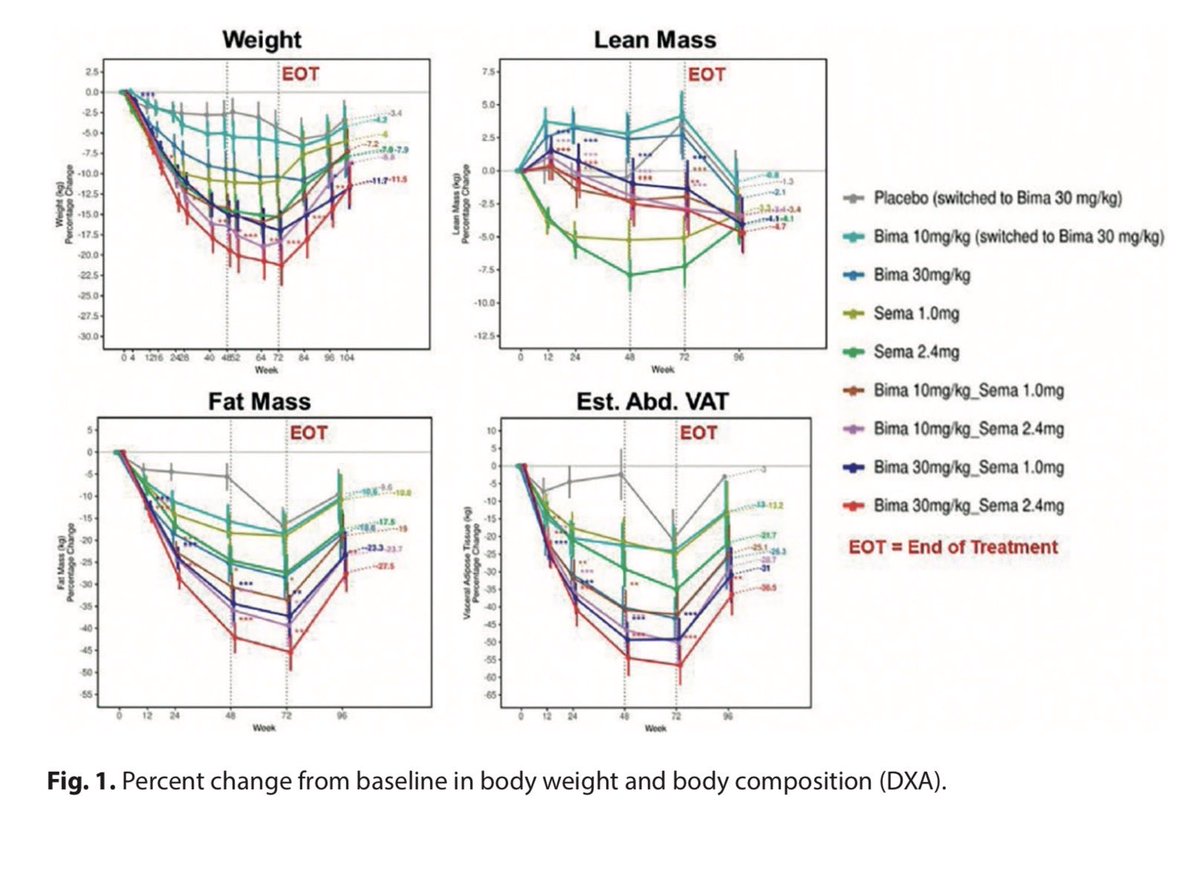
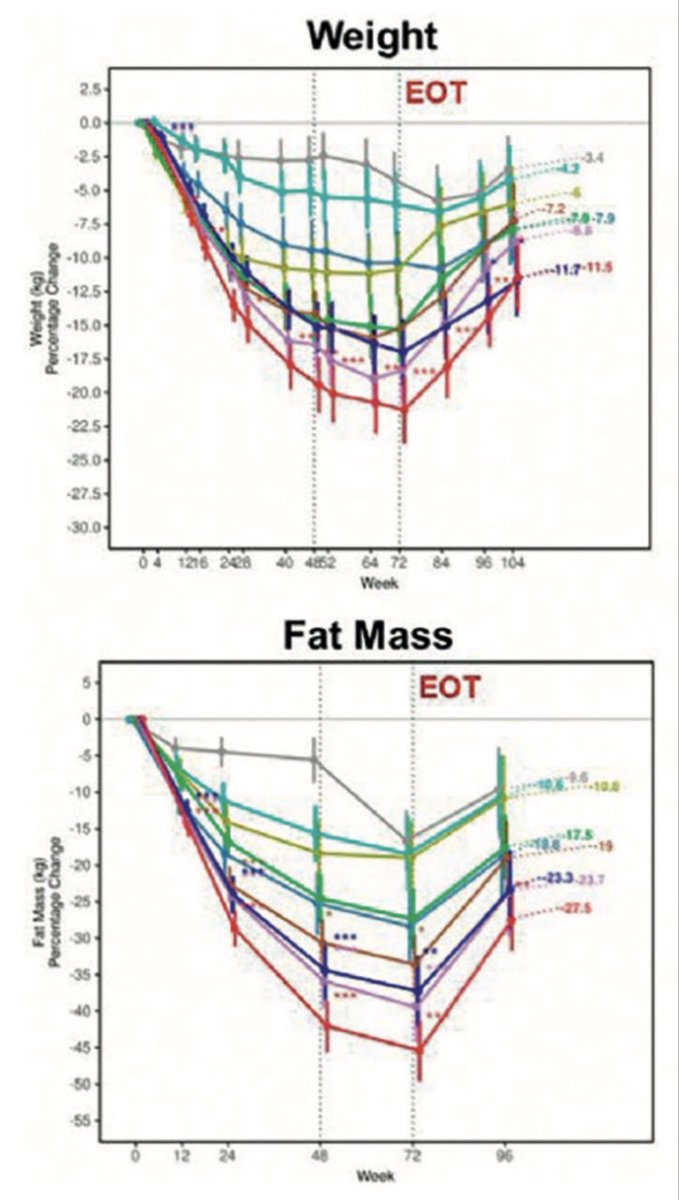
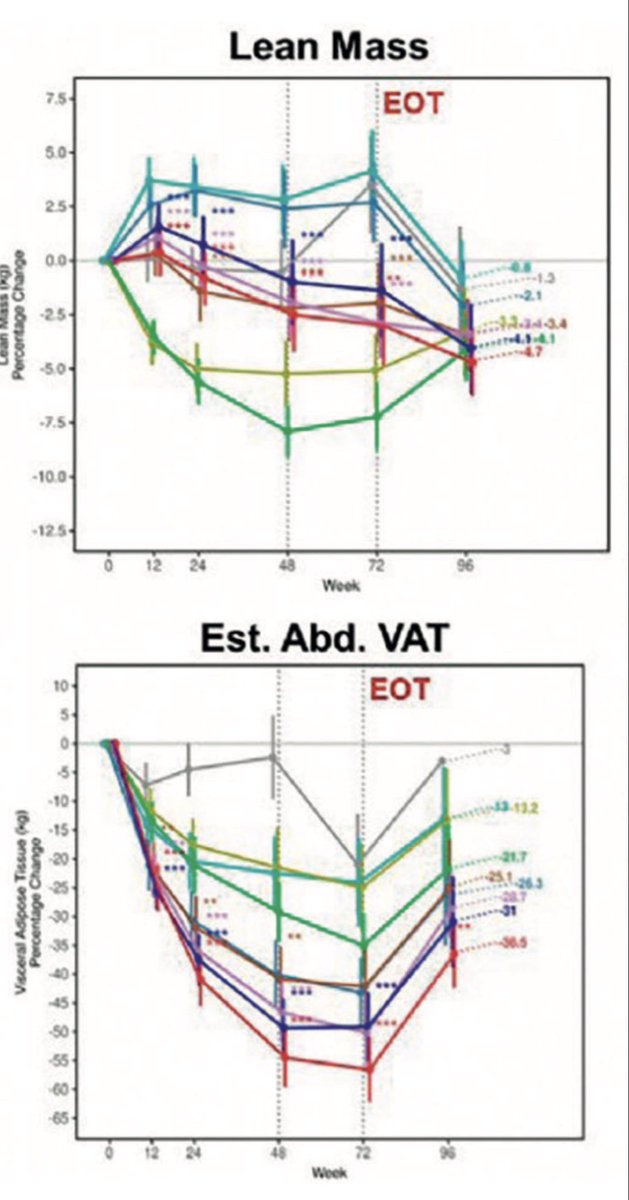
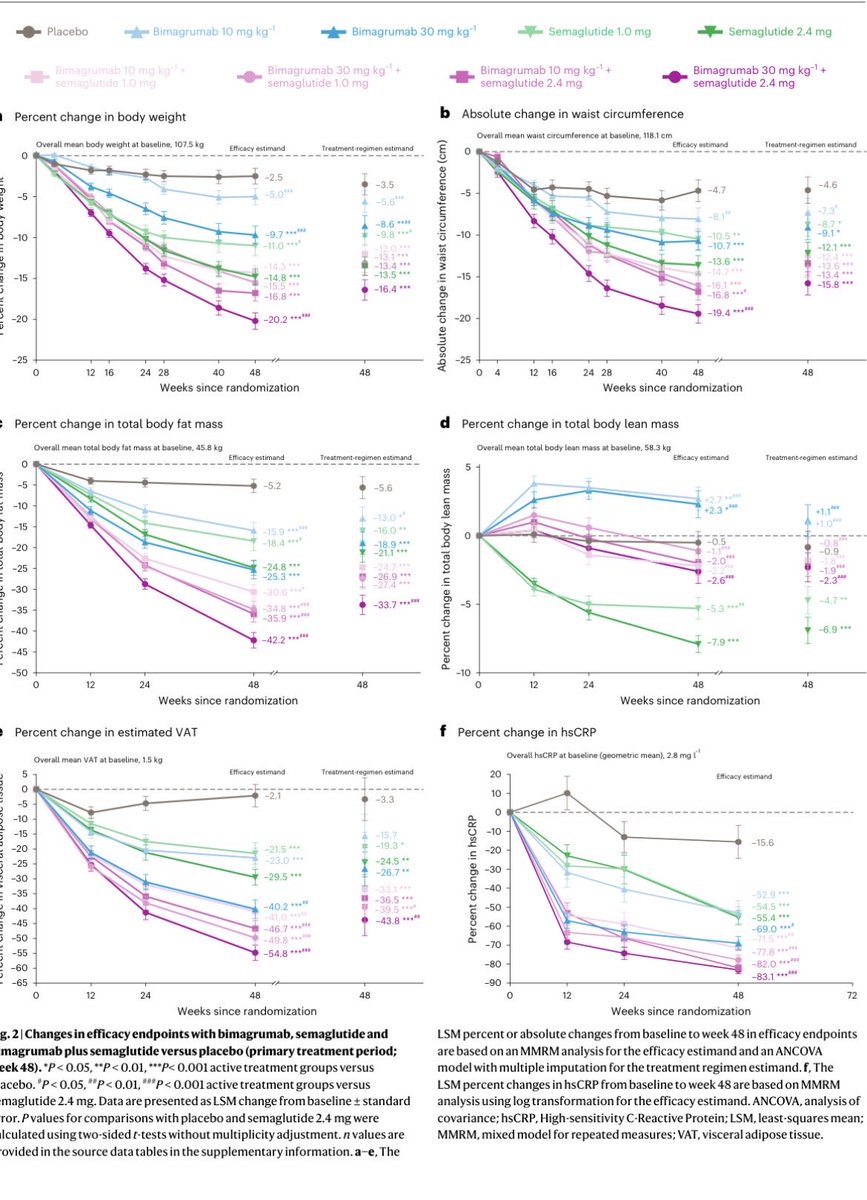
🔔The results of the BELIEVE study extension in bimagrumab and semaglutide, which tracked 6 months of body composition changes following treatment cessation are out with an abstract from ECO 2026. Summary: ▪️At the end of the trial’s 72 weeks, the high dose combination arm had led to an 22.1% weight loss with an astonishing 92.2% (high-dose combination - efficacy estimand) of that being fat loss. ▪️This part of the extension followed patients for 24 weeks post-treatment cessation. Sadly, just like other anti-obesity treatments, the extra benefits from the addition of bimagrumab to semaglutide weight loss treatment dissipated after cessation. ➡️ Not only did patients regain weight (with significant fat regain), which is normal following GLP-1 cessation, but the bimagrumab arms also saw patients *lose lean mass* following cessation, such that bimagrumab patients ended with a similar overall lean mass loss to patients in the semaglutide alone arms (even as the sema arms *regained* some lean mass). ➡️ An additional benefit of this 6 month extension is that it revealed that the sema-alone patients regained weight in a similar fat/lean mass ratio as their original loss, suggesting that regain on sema (and possibly other GLP-1s) may not prefer fat regain. Images are from the abstract, with the final image being from the original BELIEVE publication showing the 48 week data (rather than the 72).
Jen Can NuSH tweet mediaJen Can NuSH tweet mediaJen Can NuSH tweet mediaJen Can NuSH tweet media
English
9
5
43
12.2K
PeptidePub
PeptidePub@PeptidePub·
BELIEVE is the body composition signal to watch. High-dose bimagrumab + semaglutide produced 22.1% weight loss at 72 weeks, with 92% from fat mass. Early data, not standard care. But it reframes the muscle-loss debate. pharmacytimes.com/view/bimagruma… What would you want measured next?
English
0
0
0
35
PeptidePub
PeptidePub@PeptidePub·
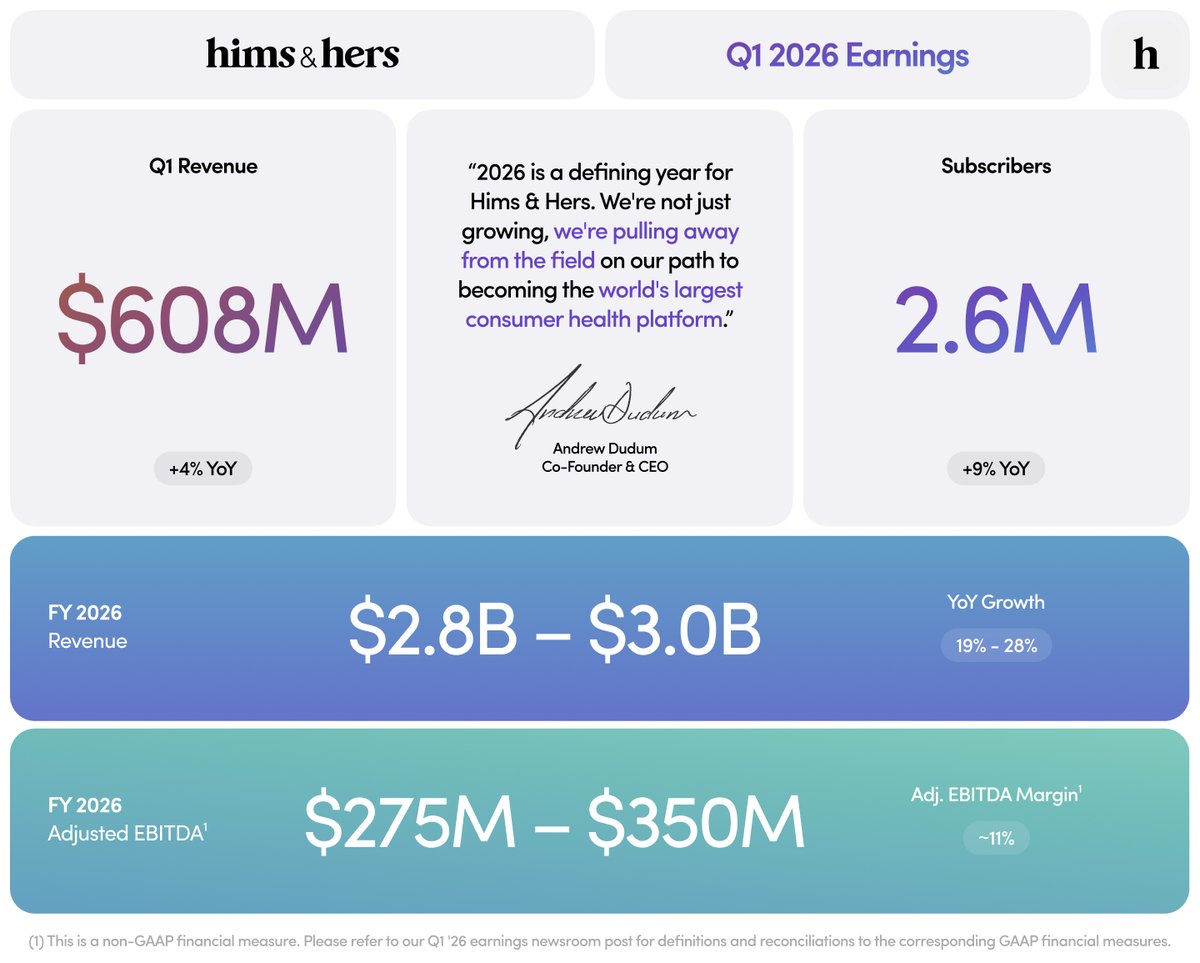
@thoughtson_tech @HimsHersComms @AndrewDudum Yes, this wording problem matters a lot. “Peptide” can mean an FDA-approved GLP-1, a compounded copy, a wellness clinic add-on, or a research vial. Those are not the same risk category. Clearer labels would help patients ask better questions before buying anything.
English
0
0
0
4
Thoughts on Healthcare Markets and Tech
Hims' GLP-1 revenue growth is real, but the category label doing the work here is worth watching closely. When a platform sells compounded semaglutide alongside peptide wellness products, the word "peptide" starts pulling double duty, and that is where the analytical risk sits. The SELECT trial showed a 20% reduction in major cardiac events. BPC-157 has no human RCT data at all. Those are not two points on the same line, they are two different fields entirely. The downstream problem for investors is that GLP-1 revenue growth can look like validation of a broad peptide platform thesis, when what it actually validates is one specific mechanism with years of dose-response data behind it. Compounded wellness peptides borrow the halo from that work without earning it. The FDA's Category 2 classification for most bulk wellness peptides, combined with active DOJ enforcement against some compounders, means the regulatory floor under part of this market is softer than the earnings story suggests. The growth is genuine. The category frame around it may be doing more work than the data supports. onhealthcare.tech/p/the-peptide-…
English
1
0
1
37
PeptidePub
PeptidePub@PeptidePub·
That is a useful maintenance question. Switching to an oral option could be a big deal for people who do not want injections forever. The key caveat is exactly in the word “maintain.” In ATTAIN-MAINTAIN, orforglipron helped preserve much of prior weight loss, but it was still ongoing treatment, not a replacement for a plan.
English
0
0
0
52
PeptidePub
PeptidePub@PeptidePub·
If you lost weight on injectable GLP-1s, would you rather maintain with: 1. the same injection 2. a daily oral GLP-1 3. lower-dose maintenance 4. lifestyle plus monitoring The science is moving fast, but patient preference may decide a lot.
English
1
0
0
29
PeptidePub
PeptidePub@PeptidePub·
The next GLP-1 access fight is not brand versus compounded. It is regulated care versus gray-market improvisation. If legal compounding narrows and prices stay confusing, patients will not simply disappear. They will search harder. That is the safety problem.
English
0
0
0
25
PeptidePub
PeptidePub@PeptidePub·
FDA is proposing to exclude semaglutide, tirzepatide, and liraglutide from the 503B bulks list. That matters because the compounding debate is shifting from shortage access to clinical need, patient safety, and legal boundaries. Comments are open until June 29: fda.gov/news-events/pr… How do you think this changes online GLP-1 access?
English
0
0
0
34
PeptidePub
PeptidePub@PeptidePub·
Brand Wegovy is about $1,350/month. The lowest online compounded semaglutide programs we track start around $149 to $179/month. That price gap explains the demand. The hard part is filtering for medical oversight, transparent pricing, and pharmacy standards. peptidepub.com/blog/cheapest-…
English
0
0
0
29
PeptidePub
PeptidePub@PeptidePub·
NIH just highlighted mouse research showing oral small-molecule GLP-1 drugs can reach deeper brain reward regions tied to cravings. That matters because the next GLP-1 race may not just be weight loss. It may be appetite, cravings, and behavior biology. nih.gov/news-events/ne… What would you want studied in humans first?
English
0
0
0
18
PeptidePub
PeptidePub@PeptidePub·
21.6% weight loss from an oral GLP-1 sounds like a headline. The important detail: that was early responders on oral semaglutide, not every patient. Non-early responders still lost 11.5% by week 64. The pill era may be less about “does it work?” and more about “who responds early?”
English
0
0
0
26