Perry Marshall

7.8K posts

Perry Marshall banner
Perry Marshall

Perry Marshall

@PerryMarshall

#1 Authority on 80/20 for Entrepreneurs. Co-Founder, Cancer & Evolution Working Group. Author, Evolution 2.0.

Chicago, Illinois USA Katılım Ağustos 2008
178 Takip Edilen28.9K Takipçiler
Perry Marshall retweetledi
Jay Cross
Jay Cross@jaycrosstweets·
I agree that pharmaceutical companies and regulators aren't hiding cures. That is a cartoonish caricature and a distraction from what is actually throttling breakthroughs, which is the way that oncology defines cancer itself. Oncology as we know it today (its research methodology, its liability architecture, its evidentiary standards, and yes, its regulatory framework) defines cancer as a physical problem. Oncology's search for cures is exclusively focused on generalizable, mechanistic, population-level knowledge. Mind you, that isn't where a fearless, unconditioned search for truth has led them. It's what they have decided, in advance, that a "cure" has to be. It is the ground-level perception instantiated in all that they do. The view of cancer as fundamentally being a physical problem is way behind the state of the art. Cancer is an informational problem that manifests physically. Cancer cells don't just divide uncontrollably. They make decisions, coordinate, adapt, and evolve for complex patient-specific reasons. This has absolutely enormous implications. It explains why the return on research investment, measured against the well over a trillion dollars that's been spent, has been strikingly modest for late-stage cancer. @PerryMarshall has often said that, if you have stage 3 or stage 4 cancer, your odds of survival today are no better than they were in 1930. For some late-stage cancers, such as melanoma, there have been significant improvements in treatment outcomes thanks to treatments like immunotherapy. Those are real achievements. I would be remiss not to acknowledge them. Yet even when immunotherapy "works" at shrinking tumors or arresting growth, it often creates side effects that are just as bad or worse than the cancer itself. My mom is experiencing some of them right now. Even the best oncologists in the world (to their credit) openly admit that immunotherapy completely fails for a large percentages of patients, and that they cannot predict in advance who those patients will be. It's also very common for two patients to have what appears to be a near-identical tumor but respond night-and-day differently to treatment. I recognize that cancer is genuinely, maddeningly complex. Oncologists can't be blamed for not being omniscient. Many are doing their level best with the understanding and the tools that they have. Still, the truth remains that you cannot safely impose force on a system whose organizing intelligence you do not understand. And that is PRECISELY what today's leading treatments do. Today's treatments grow out of the question "how can we force tumors to go away." Even if you modify the question, as you did, to say "...without harming other things", it's still a limiting question, because to focus on the cancer itself is to chase a ghost. This is perhaps most evident in oncology's continuing study of the genetic biomarkers of tumors. The underlying informational dynamics that created someone's tumor are upstream from the tumor itself by an enormous distance. Unsurprisingly, biomarkers often only explain cancer outcomes in a retrospective fashion. Not in a predictive way that can be used when a treatment decision actually needs to be made. The top oncologists in the world lament this in their own research papers. But they still seem convinced that it's the most promising research direction to be looking in. What if it's not? No amount of money, computation, or human brilliance can compensate for asking limited questions. A potentially far more fruitful question would be in the direction of "why did *this specific human* develop cancer in the first place." Oncology in its current form is not set up to seriously ask that question. Much less to center it.
Patrick Heizer@PatrickHeizer

Long post, because apparently many neither understand nor appreciate the intricacies of cancer research and think that pharmaceutical companies and regulators are holding back cures. Your immune system is constantly surveilling your body for both self and non-self recognition. It does this by checking the proteins expressed. If it finds something it doesn't recognize, it ramps up the inflammatory response and attacks. If it is actually non-self, great. If it is actual-self, that is autoimmune disease. Cancer occurs when cells acquire mutations that both 1) alter cell division and 2) cloak those cells from recognition by the immune system. If the second part doesn't occur, then the immune system will recognize that something is wrong and kill the tumor when it's just a few cells. At a high level, many modern cancer therapies are about getting the immune system to recognize the tumor and do all the work on killing it. And yes, it's quite easy to do this. But this is where the "safe and effective" line comes in. If you're treatment just cranks up the immune response in general, you start killing the tumor AND other things. If you give me a decent CAR-T at work, I have tools to boost it in ways that'll eliminate any realistic sized mouse tumor in 24-48 hours. The problem is that it's just a general immune overdrive and the cells start attacking everything. Okay, let's not send the immune system into a frenzy and just use the CAR-T, which is a T cell that has been edited with a protein that we know binds to a protein that the cancer expresses. The hope is, if the cancer cells express X and we edit the T cells to explain anti-X, then they'll go and attack the tumor. But this is where specificity and selectively come in. Your body expresses thousands of different proteins. Sometimes they look very much like each other even if they are different. Say there is a protein called XX expressed in your heart, it shares 99.9% homology (likeness) with X. We inject X-CAR-T cells, they go and kill the tumor, everything looks great. But a few binded to XX in the heart and started inflamming the heart wall. Not good to the point of unacceptability. This step gets especially hard when working in animals because mice and dogs or whatever have different proteins than humans! When we inject human tumors and human CAR-T cells into mice, they are NOT encountering the same proteins (or cytokines, hormones, other immune cells, etc.) that they would in an actual human body. This is just a brief explanation or some of the considerations that go into oncology. Here's another: we monitor experimental mice for max a few months. Even non-experimental mice have a lifespan of ~1.5-2 years. Meanwhile, you want your parent/spouse/child to be in remission for 5, 10, 15+ years! In fact, one of the main outcomes for assessing human cancer treatments is the "5-year survival rate." Mice and elderly dogs don't live for five years!! So yes, scientists and pharmaceutical companies have tools to easily kill tumors. What is hard is developing therapeutics that are BOTH safe AND effective in actual humans **relative** to current standards of care (e.g. a cutting edge treatment isn't "better" if it has a strong response in the first year but a lower 5-year overall survival, etc.) And this is where regulators come in. I expressed multiple times in the comments that I, generally, wish they weren't as risk averse and that I support "Right To Try" laws. But you need to appreciate that regulators **are** in a DIFFICULT position. An analogy: It's proven that nuclear energy is by far the safest form of energy per KwH energy produced. Yet a few high profile accidents, a couple of which didn't even kill anyone, have poisoned a large segment of the population and several nations against nuclear energy. Even though it's safe and a reliable form of carbon-free electricity!!! Now think about that relative to cutting edge medicines.

English
0
1
2
478
Perry Marshall
Perry Marshall@PerryMarshall·
A programmer with a mortgage, diapers, and car payments clicked one of my ads. I told him: “You’re not selling software. You’re selling money at a discount.” Solve a $50K problem for $10K. Better yet—solve it once and productize it. That company became Infusionsoft. Most businesses sit next to a leverage point they can’t see. That’s what SuperConductor helps you find. Read more perrymarshall.com/rjv-x
English
0
0
10
592
Perry Marshall
Perry Marshall@PerryMarshall·
Generic AI loves your ideas. Paste one in and it says: Great positioning. Huge upside. Even bad ideas get encouragement. That’s why generic AI is a terrible diagnostic tool. Scott Schang’s tools do the opposite. They show where growth will quietly stall out. The real value of AI isn’t praise. It’s diagnosis. Scott and I will show you how it works today • 2:30 PM ET perrymarshall.com/ss-x
English
1
1
6
411
Perry Marshall
Perry Marshall@PerryMarshall·
@Moneytrainers I say cancer is a symbiotic cellular merger by stressed cells, not an "invasive species". Although the merged cells are in fact a new species.
English
0
0
0
7
Perry Marshall
Perry Marshall@PerryMarshall·
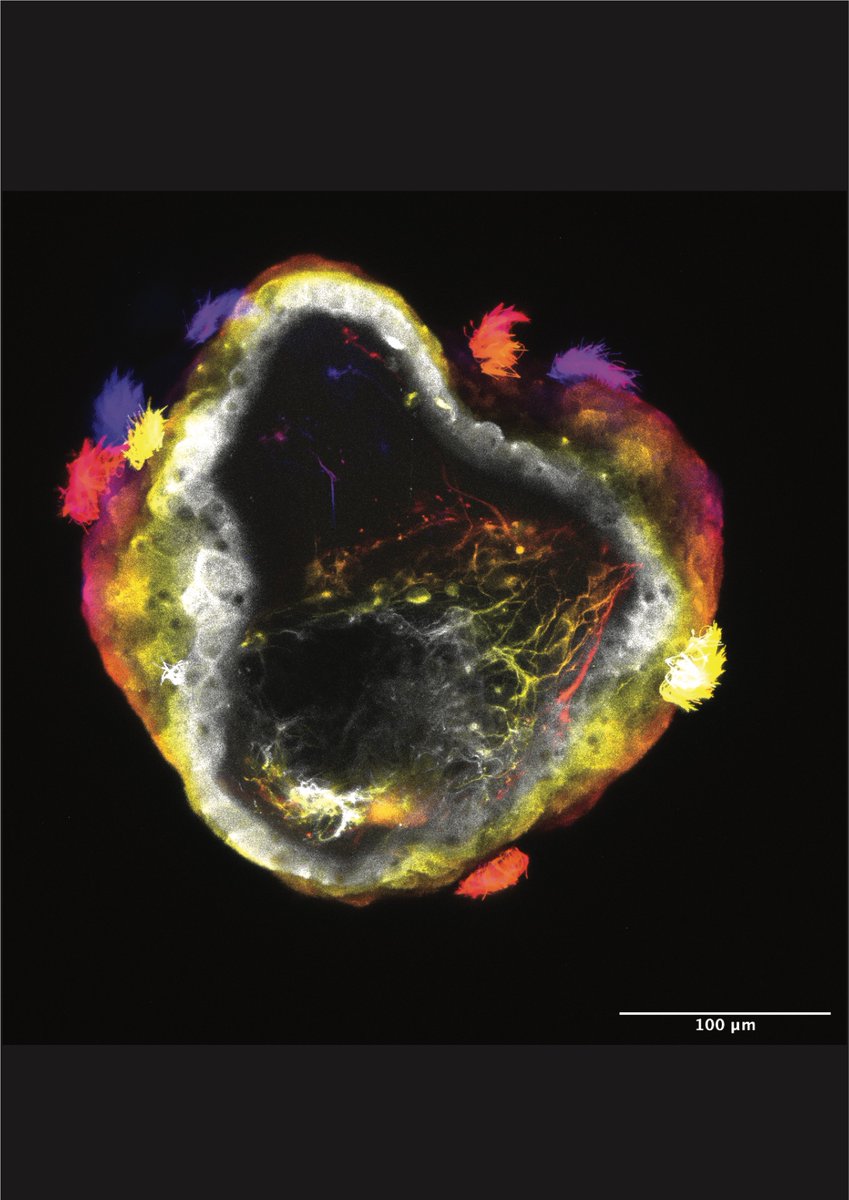
Something is happening inside my tribe. Entrepreneurs using AI with Scott Schang aren’t just getting better tactics — they’re finding structural problems: wrong moat, wrong positioning, wrong business model. Things no amount of harder work will fix. The real gap right now isn’t talent or tools. It’s diagnosis. Scott and I will show you exactly what that looks like. Live • Mar 11 • 2:30 PM ET Free registration → perrymarshall.com/ss-x
Perry Marshall tweet media
English
0
0
2
180
Perry Marshall
Perry Marshall@PerryMarshall·
@Notefromdad Because no man can learn and practice love sitting in a room all by himself.
English
0
0
0
18
NoteFromDad
NoteFromDad@Notefromdad·
@PerryMarshall Thanks for responding, I’m curious why you think it has to be that way. If you have the time, I’d love to briefly hear why.
English
1
0
0
16
Perry Marshall
Perry Marshall@PerryMarshall·
I did NOT forget the word "not." Faith needs to be practiced in some form of community, even if it's a handful of friends.
NoteFromDad@Notefromdad

@PerryMarshall Did you forget the word "not"? 😄 I assume you mean attending in a community format is not necessary

English
3
0
9
687
Perry Marshall retweetledi
dim dim
dim dim@dmytronic·
@PerryMarshall Michael Levin’s greatest role in the history of science is his dismantling of materialism from within the materialist paradigm itself, effectively revolutionizing the Academy from the inside in a way that marginalized non-materialist thinkers could not
English
0
1
4
205
Perry Marshall
Perry Marshall@PerryMarshall·
@EvanBleker You can't practice and perfect love sitting in a room all by yourself.
English
1
0
1
4
Perry Marshall
Perry Marshall@PerryMarshall·
Michael Levin describing how his intuitions about bioelectric fields eventually hit paydirt
Michael Levin@drmichaellevin

I asked myself this very question, when strategizing about it in the early 1990's. One problem was that the data (which were very good) made no contact with the dominant paradigm - molecular genetics. No one knew the source of the endogenous bioelectric patterns, and no one knew the targets downstream. Also, no one in the mainstream cared, because they thought they could ignore it - it made no impact on the pathways they were interested in (or so they thought). By 2002, we made the first molecular tools to allow visualizing patterns of Vmem in vivo over time, noninvasively, without having to poke each cell with an electrode, to manipulate the Vmem patterns via ion channel misexpression (so you knew exactly which cells were modified and in what way - very different from prior electric field applications), to find out which ion channels were responsible for the endogenous signals (inverse drug screens), and to identify which gene expression changes (of things like Sonic hedgehog, which everyone cared about) were downstream of the bioelectric signaling. We used these methods to integrate the bioelectric signals into the developmental pathways that the mainstream cared about, and now they needed to pay attention because it impacted on genes and transcriptional networks that were important to them. We used molecularly-tractable model species and released tools to everyone, which allowed mainstream labs to get into it. We developed computational tools (also open source) that enabled predictions integrating the molecular genetic signals with bioelectric changes over time - which were ultimately used to infer interventions for birth defects etc. We characterized transduction machinery - 6 molecular mechanisms by which bioelectric changes control cell behavior and gene expression, so now it was known *how* bioelectrics exerted their effects. Second, prior work focused on ion fluxes and electric fields. It was known that these could direct cell migration. We focused on resting potential patterns, which enabled mapping out at least part of the bioelectric code in inducing the creation of entire organs (ectopic eyes, first) - that had not been possible before. This in turn connected to deep ideas in neuroscience about high-level stimuli propagating through networks to control downstream mechanisms that we don't need to micromanage. There's more but this gives an idea of what was different - more powerful concepts, practical tools, and a commitment to making sure we anchored the work to endpoints that the mainstream cared about. It was (and still is) a slog, but the ice has broken. The pioneers of the past - Lund, Burr, Cone, Jaffe, Robinson, Nuccitelli, Borgens, etc. were inspirational - they had it very tough, but they saw the possibilities clearly (especially Burr, back in 1936) and fought tooth and nail so that others had access to the data showing why this is so important.

English
3
5
63
7.1K
Perry Marshall
Perry Marshall@PerryMarshall·
@Notefromdad No; I do think one needs to participate in some form of faith community.
English
1
0
3
43
NoteFromDad
NoteFromDad@Notefromdad·
@PerryMarshall Is it really necessary to attend a church to practice one’s faith?
English
1
0
0
35
Perry Marshall
Perry Marshall@PerryMarshall·
Everyone knows about the Catholic church sexual abuse scandals. Yet... a six-year-old who never went to Sunday school knows that Jesus is NOT that. There's something so pure and identifiable at the center of who Christ was, that the contrast with what church is, is so crushing that a lot of people can't even stop and contemplate the pure part. It's too heartbreaking.
English
2
1
6
308
Perry Marshall
Perry Marshall@PerryMarshall·
You’re working harder than ever — more tools, more AI, more tactics. Yet your business feels more fragile, not stronger. Rising ad costs. Falling conversions. Harder clients. AI didn’t fix it because the problem isn’t execution. It’s structure. For 20 years, better marketing solved everything. That era is over. If the structure is wrong, better tactics just burn more time and money. You don’t need more info. You need truth about what’s actually broken. If this sounds like you → The Intervention, Chicago (Apr 21–23) perrymarshall.com/int-x
Perry Marshall tweet media
English
0
0
3
190
Perry Marshall
Perry Marshall@PerryMarshall·
Jim runs CPR training near Philly. He just landed a 7,000-employee utility company. Customer acquisition cost? $120–140. LTV? $8K dental offices… up to $5–6M enterprise accounts. He believes he can go from 7 to 8 figures without expanding geographically. Not broader. Denser. The question: If there’s 10X upside in your current region, what would you change? What would you stop doing? Most businesses haven’t exhausted their own backyard. Before our Chicago seminar (April 21–23), we’ll identify where your real 10X lives. Sometimes it’s closer than you think. perrymarshall.com/int-x
English
1
0
0
283
Perry Marshall
Perry Marshall@PerryMarshall·
Everybody’s fearing for their job, but they are completely missing the fact that you can architect a new universe in a few hours.
English
0
2
8
344
Perry Marshall retweetledi
Paul
Paul@Paul_Beauchemin·
@PerryMarshall The story you create around the rise of AI will create more income inequality than any billionaire you blame now
English
0
1
2
145