Pete Modigliani retweetledi
Pete Modigliani
9.7K posts

Pete Modigliani
@PeteModi
Enabling DoD to deliver better solutions faster. Defense Tech and Acquisition: https://t.co/lhhnqnpRqo
Northern VA Katılım Ocak 2009
1.3K Takip Edilen1.8K Takipçiler
Pete Modigliani retweetledi


@antonii_doncho @PeteModi I was making a joke, I don’t really think paper airplane drones are going to dominate the battlefield.
English
Pete Modigliani retweetledi

10,000 Low-Cost Cruise Missiles In Three Years Procurement Plan Laid Out By Pentagon
The U.S. military now also plans on buying 12,000 'cheap' hypersonic missiles as part of a larger push to bolster munitions inventories.
No primes included.
twz.com/sea/10000-low-…
English

@Grok believes the top 3 likely actions by @SECNAV that John alludes to are:
- Waiving or streamlining excessive welding/NDT inspection requirements or similar QA overkill
- Approving broader use of COTS, foreign-sourced parts, or relaxed Buy American/ Jones Act-adjacent rules for non-core systems
- Direct intervention to cut @NAVSEA or program office red tape.
English

Can’t say what. Can’t say why. Can’t give details.
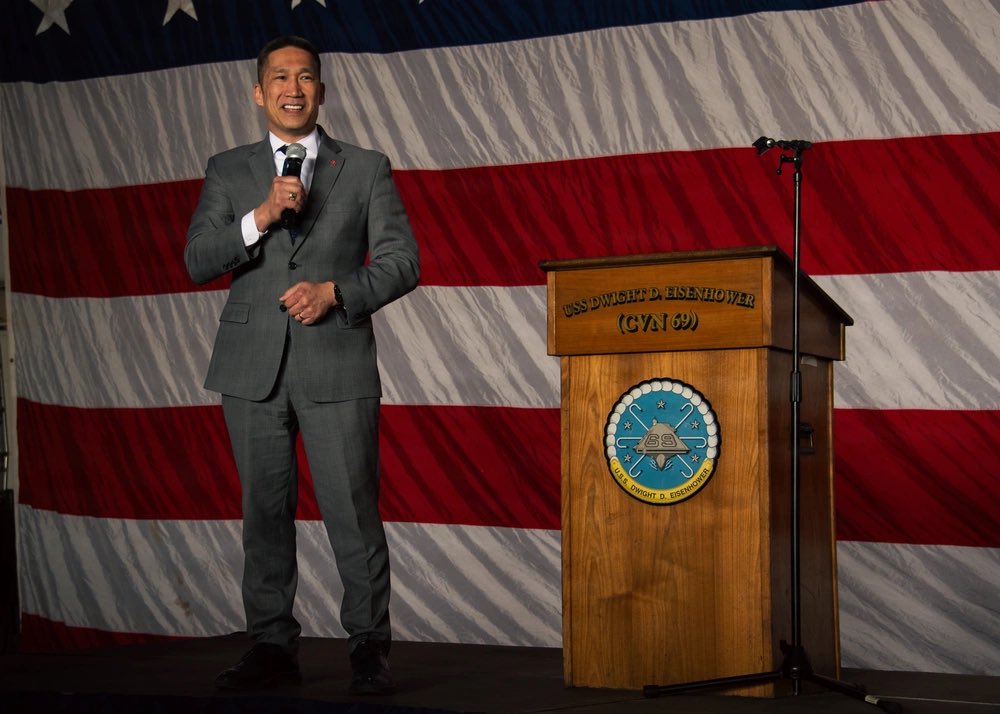
But within 24 hours of being briefed, @SECNAV @HungCao_VA cleared the single biggest bottleneck in U.S. shipbuilding.
Should’ve been fixed years ago. Nobody else in the Pentagon grasped it. Nobody would give the top cover.
BOOM.
Believe It or Not!

English
Pete Modigliani retweetledi

Elon Musk just revealed what’s actually holding AI back.
It’s not chips. Not models. Not data.
It’s concrete.
Someone asked him the obvious question. Why not just build private power plants next to data centers? Bypass the grid entirely.
His answer was four words.
Musk: “The power plant makers.”
There aren’t enough of them.
You can design the best chip on earth. Train a frontier model. Raise $10 billion for a hyperscale data center.
None of it matters if you can’t power it.
Musk: “You can drill down a level further.”
GPUs need power. Power needs turbines. Turbines need factories. Factories need permits. Permits need a government that hasn’t paralyzed itself.
Every link in the chain is physical. And every one of them is breaking.
We can train a frontier model in weeks. We can’t permit a power plant in under five years.
The country that invented the assembly line now needs 40 agencies to approve a gas turbine.
China doesn’t have this problem. They don’t run 7-year environmental reviews on infrastructure they need tomorrow. They break ground while America requests approval to break ground.
The AI race won’t be decided by whoever writes the best algorithm.
It’ll be decided by whoever can still build in the physical world.
We spent 30 years getting faster in software and slower in steel. Outsourcing manufacturing. Hollowing out supply chains. Treating builders like liabilities instead of assets.
Now the bill is due.
Every breakthrough in AI is gated by atoms. Steel. Concrete. Turbines that take years to manufacture and decades to approve.
The smartest code on earth is worthless without electricity.
Musk didn’t give a speech about this. He didn’t need to. He answered one question and the whole infrastructure myth collapsed.
“Where do you get the power plants from?”
Follow that thread far enough and you stop finding a technology problem.
You find a civilization that mastered thinking and forgot how to build.
English
Pete Modigliani retweetledi

Chamath Palihapitiya just said what Silicon Valley is terrified to say out loud.
On Joe Rogan. To millions of people. Without flinching.
Chamath: “The only person that we can trust is Elon.”
Not whispered at a dinner party. Not buried in a podcast nobody listens to.
Said on the record. Full weight behind it.
And then he told you why.
Chamath: “I feel like he’s the least corruptible. He’s the most independent thinking. And I think he’s the one that has an actual empathy for people.”
One of the sharpest capital allocators in Silicon Valley history looked at every founder building AI.
Every single one.
And chose the one the media spends the most energy telling you to hate.
That alone should stop you cold.
Chamath: “Then there are folks where there’s just an insane profit motive.”
He’s talking about OpenAI. He’s talking about Google. He’s talking about companies that swallowed billions from Wall Street and now answer to shareholders before they answer to humanity.
Chamath: “They’re less in control of the businesses that they run.”
The people building the most powerful technology in human history do not control their own companies.
Their boards do. Their investors do. Their liquidation preferences do.
And these are the ones we’re trusting with superintelligence.
Chamath: “He’s like, I need to get to Mars.”
This is the fracture line nobody wants to touch.
Every other AI founder is optimizing for the next earnings call. The next funding round. The next quarterly number that keeps the machine fed.
Elon is optimizing for the next planet.
One group builds to satisfy investors. The other builds to survive as a species.
Those aren’t different strategies. Those are different operating systems running on different hardware.
And it changes everything about how you build.
When your time horizon is 90 days, you cut corners. You monetize behavior. You trade safety for speed because the board needs a number by Friday.
When your time horizon is interplanetary, you can’t afford a single shortcut. Because shortcuts don’t survive launch.
Chamath: “Where is this going to end up?”
The only question that matters. And nobody in power wants you asking it.
Because the answer comes down to who gets there first.
If it’s a company owned by Wall Street, superintelligence becomes the most sophisticated extraction engine ever built. Every decision optimized. Every behavior predicted. Every market captured. Not for you. For the balance sheet.
If it’s someone who can’t be bought, pressured, or voted out by a board of directors, there’s at least a chance it bends toward something bigger than quarterly revenue.
History never remembers who built the most powerful technology.
It remembers who controlled it. And what they used it for.
The only founder in AI who cannot be fired by a board, leveraged by an investor, or replaced by a shareholder vote is the one they spend the most energy telling you not to trust.
Ask yourself why.
English
Pete Modigliani retweetledi

🔥 Mel Wolfgang and team @BCG spitting fire with the contrast between:
- US Navy targets vs. projected output
- US vs leading nation shipbuilding
Of note, and not what you usually hear... US also has many ADVANTAGES to be a great shipbuilding nation.
Great piece


English
Pete Modigliani retweetledi

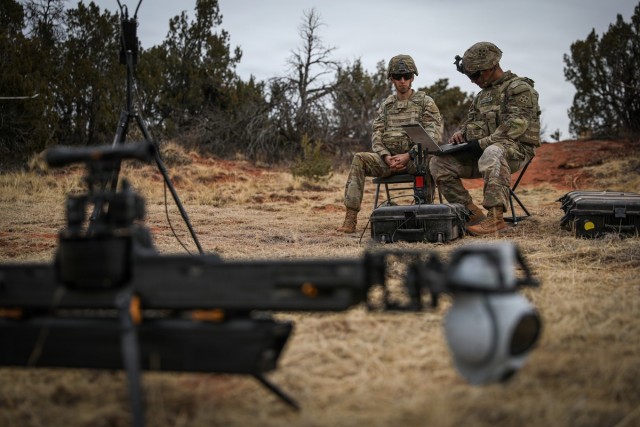
Firestorm Labs secured a $30M APFIT contract (boostable to $50M) to deploy 5 xCell drone microfactories and 200-plus Tempest UAS into the Indo-Pacific.
defence-blog.com/pentagon-funds…
English

Is this a joke?? After all the hubbub and posturing over the years? We aren’t serious. 🧐
Air-Power | MIL-STD@AirPowerNEW1
"The US Air Force is eyeing procurement of more than 150 Collaborative Combat Aircraft through 2031, service leaders revealed last week, signaling for the first time the potential quantity of drone wingmen the service anticipates buying" ~ Via Inside-Defense 🔗👇
English

Pete Modigliani retweetledi

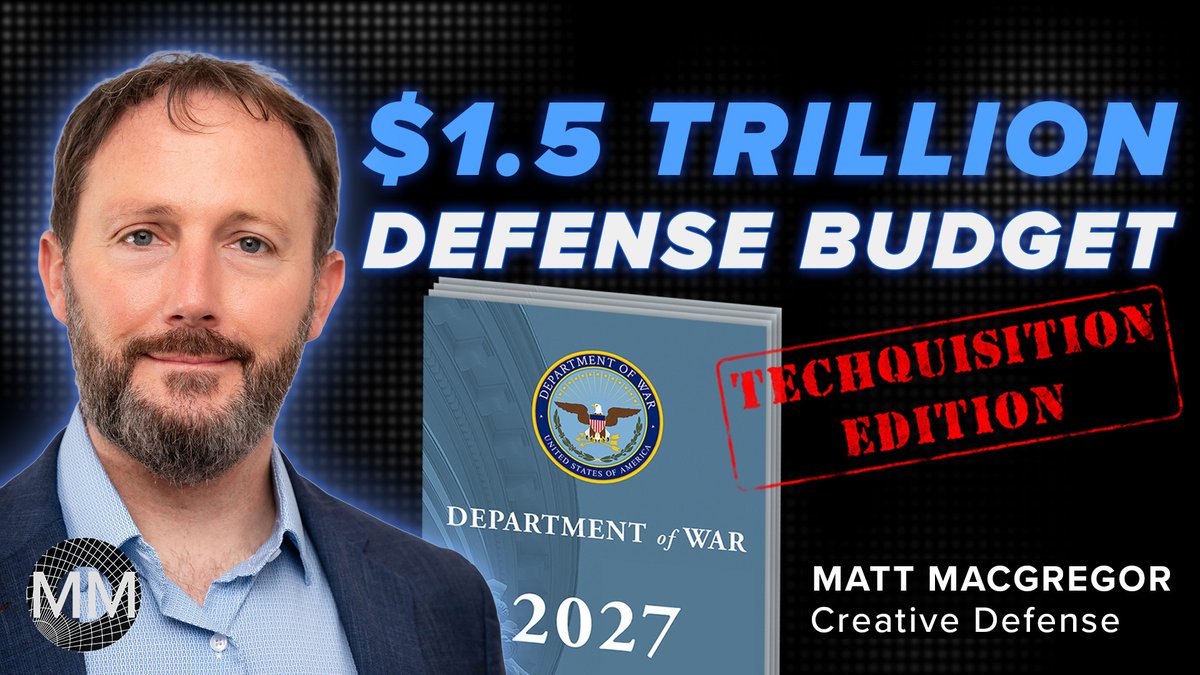
The FY27 defense budget is $1.5T spread across 3 buckets — and the J-Books just dropped.
@ShieldCapVC sat down with Matt MacGregor of Defense Tech & Acquisition News to decode what it actually means for defense tech founders.
See comment for links!

English
Pete Modigliani retweetledi

Speed matters on the battlefield. 🇺🇸
The @USArmy led by @SecArmy Dan Driscoll and defense leaders are launching the "Right to Integrate" (R2I) Hackathon to kill information silos and mandate open architecture.
We are integrating at the speed of digital information.
Full details: army.mil/article/292189
Defense Industry Partners:
@anduriltech @Boeing @generaldynamics @L3HarrisTech @LockheedMartin @northropgrumman @PalantirTech @RTX_News and Perennial Autonomy

English
Pete Modigliani retweetledi

For the record.
Iran’s Historic Mistake
Carl von Clausewitz wrote that war is “the continuation of politics by other means.” President Trump grasped this from the start: Operation Epic Fury exists to stop Iran’s nuclear march and restore deterrence, not to pursue the familiar neocon fantasy of occupation and nation-building. Epic Fury is peace through strength in action: credible force applied decisively when adversaries mistake restraint for weakness.
By weaponizing the Strait of Hormuz, Iran committed a strategic blunder of historic proportions.
Tehran meant to punish America. Instead, it exposed every power built on imported energy, vulnerable sea lanes, and the delusion that globalization repealed geography. China is exposed. Europe is exposed. Britain is exposed. Iran has created a world where hard resource power decides outcomes.
Start with China. Beijing’s industrial machine depends on imported oil and gas moving through vulnerable maritime chokepoints, the old Malacca dilemma in modern form. A great power reliant on long, exposed sea lines cannot be secure, regardless of economic scale. The Hormuz shock forced China to scramble for alternatives, proving that size is not resilience.
Europe and Britain face the same problem. After escaping Russian dependency, they traded one vulnerability for another, leaning on imported LNG and maritime flows exposed to coercion. When chokepoints tighten, they absorb shocks rather than project strength. European criticism says less about American failure than about discomfort with a world where hard power still matters.
Iran’s mistake is that once Hormuz becomes structurally unreliable, the world builds around it. That means bypass corridors, revived pipeline politics, and urgent planning for routes linking Aqaba to Mediterranean outlets near Gaza and the long-stalled Basra-to-Aqaba pipeline. The old energy order is cracking. The UAE’s OPEC exit signals cartel discipline giving way to national advantage under pressure.
Trump deserves credit, not European scolding. Operation Epic Fury struck thousands of targets, degraded Iran’s offensive capabilities, and shattered assumptions that the West would absorb escalation without response. The administration acted while others lectured. It restored deterrence in the only language Tehran understands.
The larger lesson matters more. Secure natural-resource hard power is what the Western Hemisphere possesses in abundance. The United States, Canada, and the Americas command hydrocarbons, LNG, farmland, freshwater, critical minerals, and strategic depth on a scale import-dependent Europe and Asia cannot match. This crisis clarified, not weakened, the Americas structural position.
The financial dimension reinforces the point. Demand for Federal Reserve swap lines during crisis proves King Dollar remains supreme. When stress hits, governments run toward dollar liquidity, not away from it. Hard resource power and monetary power reinforce one another, and the United States sits at the center of both.
That is Epic Fury’s real significance. Clausewitz wrote that “the political view is the object, war is the means.” Trump understood that. Iran tried to weaponize geography, Trump turned the confrontation into a demonstration of who is exposed and who is not.
The Trump administration deserves far more praise than it has received, and history will likely judge that Iran’s greatest miscalculation was not merely closing Hormuz, but revealing which powers still command the real sources of strength.

English
Pete Modigliani retweetledi