Pi-Kay

5.5K posts

Pi-Kay banner
Pi-Kay

Pi-Kay

@Pipeassiette

Amateur du mauvais goût ambiant de notre époque

Paris Katılım Ağustos 2012
1.1K Takip Edilen181 Takipçiler
Sabitlenmiş Tweet
Pi-Kay
Pi-Kay@Pipeassiette·
@francediplo La misère du langage diplomatique français face aux conséquences néfastes de sa propre politiques étrangère. Une schizophrénie au goût amer...
Français
1
0
3
0
Pi-Kay retweetledi
Marc Vanguard
Marc Vanguard@marc_vanguard·
🔴 Le niveau scolaire S'EFFONDRE à un point que vous n'imaginez même pas. Vous ne serez plus la même personne après avoir vu ces chiffres hallucinants 🧵⬇️
Marc Vanguard tweet media
Français
629
4K
8.3K
1M
Pi-Kay retweetledi
franceinfo
franceinfo@franceinfo·
"La victoire est possible, elle a une exigence, le rassemblement et la détermination". Rachida Dati (LR-Modem) tend la main aux deux candidats qui pourraient lui permettre de l'emporter, le centriste Pierre-Yves Bournazel et Sarah Knafo (Reconquête).
Français
87
67
399
154.9K
Pi-Kay retweetledi
Marcelo P. Lima
Marcelo P. Lima@MarceloLima·
Citrini’s piece is a fun read but has some major flaws. I’ll go over a few of them: lump of labor fallacy, ignoring the cost of living, capex fallacy, and wrong on SaaS. The overarching problem in the piece is the so-called “Horse Fallacy.” When the tractor and car were invented, the horse couldn’t get a better job. He became completely obsolete. But humans are not horses. Horses simply supplied labor. They never demanded much beyond food. Humans, though, are the origin of all economic demand. The whole point of the economy is to satisfy human desires. The lump of labor fallacy assumes that humans have a fixed checklist of problems to solve. But every time technology checks an item off the list, we invent another desire. Human desires are infinite. Maybe if AI does all the work here on earth, we'll terraform Mars, build O’Neill cylinders, and Dyson spheres. We’ll certainly not sit idle, desiring nothing more. As long as human desire is infinite, demand for work will be infinite. There’s an additional point on jobs: there are some jobs that will ALWAYS be done by humans. One example is sports. Your iPhone can beat Magnus Carlsen in chess but nobody cares, they want to watch humans playing chess, so chess today is a bigger sport than ever. One day robots will skate better than Alysa Liu but nobody will care, they’ll want to watch Alysa instead. Citrini models incomes collapsing but doesn’t model the massive deflation in the cost of living. If AI makes all these white collar workers unnecessary, this means that the price of products and services will be much lower (since much less labor is needed). You’d have a scenario where a household earning $40k per year could consume what previously took $120k per year. And there’s all this mysterious wealth accumulated by the owners of the GPUs and what are they spending it on? How can there simultaneously be massive wealth and mass layoffs? Will there be new jobs invented? Quite likely. This has been the pattern over the last 200 years: technological revolutions → deflation → demand for new things → new jobs get created. Because humans have infinite desires. The piece assumes that the hundreds of billions of capex go into a black hole and vanish from the real economy. In reality, it is highly stimulative as all the money ends up with many white collar workers at fabs, utility companies, cooling system manufacturers, as well as with blue collar workers. On SaaS, Citrini could have picked a long tail of point solutions that are easily vibe-codable, but they ironically instead picked one of the widest moat enterprise software companies, ServiceNow, which is in fact an AI beneficiary. Their point is: even this impossible-to-displace business won’t survive. True if you wave a magic wand, but not true in the real world where, after 20 years of cloud computing, companies are still running mainframes and IBM is still growing their mainframe installed base (yes, look it up). Of course, part of the magic wand is “this time is different!” because AI will do absolutely everything. It will vibe code the product, talk to regulators, obtain SOC2, HIPAA, FedRAMP, GDPR compliance, and do this globally too, not just in the US; it’ll somehow suck all the embedded data in these systems (ServiceNow owns the Configuration Management Database with a map of all the hardware, software, user hierarchies, permissions, and workflows inside an enterprise). More fantastically, AI will also somehow vibe code B2B enterprise go to market teams. The reality is that software is sold, not bought. At the extreme, the article is arguing that someone at PepsiCo will open the Terminal on their Mac Mini, type “Claude,” ask it to replace ServiceNow, and Claude will go to work, doing all this work autonomously, and then maintaining itself, patching itself, securing itself, talking to users inside PepsiCo to ask for new features to develop, integrate with 200+ other tools, etc. Meanwhile, the CTO at PepsiCo is like, “Yeah, cool, let’s do that, it’ll save us millions a year” while ignoring that any downtime or bug will cost the company millions per minute. All that operational liability, SLAs, uptime figures, which used to be ServiceNow’s liability, PepsiCo will now take on itself. Simultaneously, the thousands of engineers working at ServiceNow’s R&D department are sitting idle and not using AI to accelerate their own roadmaps and build new features. When you start really filling in the details of what needs to happen for this scenario to unfold, you realize it crumbles very quickly. Hopefully the discussion above on infinite human needs puts to bed the “seat count” debate: there will be more seats because there will be more employment because of the infinity of human desires. Meanwhile, ServiceNow has been charging a hybrid seat/consumption model since about 2023 when it introduced its Pro Plus SKU. These AI agents are tackling human labor, both work that was already done and new work that was never done. The TAM for this is orders of magnitude greater than the TAM for pure seat-based software. ServiceNow will get its fair share of this new TAM because it already has the customer relationships, distribution, brand, trust, technology, and product. To quote François Chollet: “The maximalist form of my thesis is basically this: SaaS is not about code, it is about solving a problem customers have and selling them the solution. Services + sales. If the cost of code goes to *zero*, SaaS will *not* go away. It will *benefit*, since code is a cost center.” To expand on this, the more likely scenario is NOT that the price of software collapses; it’s that incumbents offer their customers so much more value within the existing seat price they already pay, it becomes financially irresponsible for the customer NOT to be a subscriber. This will INCREASE their incumbency. This has already been the SaaS playbook for decades. Decades during which the cost of producing software has always gone down (more open source options and cloud computing, to name just two inputs, have dramatically lowered the cost of entry for newcomers; and yet, the per seat price of the best SaaS companies has only gone in one direction). Every SaaS company worth its salt is always improving its products, adding features, fixing bugs, and shipping updates. Many will do this for several years before changing pricing. Pricing is an output: are we delivering enough value to the customer that gives us the permission to charge more? With the deflation in the cost of producing software, a couple of things should happen: -  Existing software companies will be a lot more productive and will ship a lot more products and features than before -  Because they own the customer relationships and customer trust, they are in pole position to deliver new solutions and make their seat subscription ever more compelling -  Customers of those software companies will get a lot more value within their per-seat price and increase their reliance and trust on the best vendors The debate in tech is always, “Can the innovator get the distribution before the incumbent gets the innovation?” In this case, there is no question: the BEST incumbents already have the distribution AND the innovation. This allows them to widen their moats as they become even more essential and irreplaceable to their customers. Another mental model missing from this debate is power laws. Outcomes in the real world follow power laws: 20% of the people make 80% of the income, 4% of stocks generate all the net wealth, 10% of YouTube videos generate 90% of watched hours, etc. Power laws will continue to dominate and what does this tell us? That the most likely outcome is that the gains will accrue disproportionately to a small cohort of top software businesses. This is another framing of the “Increasing Returns” mental model of Brian Arthur. Personally, I believe that ServiceNow will be one of those power law winners. After all, they already are a winner in the power law distribution and have all the attributes necessary to continue winning.
Marcelo P. Lima tweet media
English
26
170
1.1K
193.4K
Pi-Kay retweetledi
Bitcoin News
Bitcoin News@BitcoinNewsCom·
NEW: Dutch Parliament Member Michel Hoogeveen explains how the 36% unrealized capital gains tax, just passed by the House of Representatives, will work. Here is a more detailed example: Step 1. Starting position You own 500 shares. Value on Jan 1, 2028: €50,000 Value on Jan 1, 2029: €100,000 So the paper gain is: €100,000 − €50,000 = €50,000 unrealized profit You did not sell. But for tax purposes, that €50,000 is treated as income. Step 2. Apply exemption You are married, so you get a €3,600 exemption. €50,000 − €3,600 = €46,400 taxable amount Tax rate: 36% €46,400 × 36% = €16,704 tax bill That bill is due in May, even though you never sold anything. Step 3. Market falls before you pay Now suppose by May the shares drop in value. New total value: €60,000 So your portfolio is no longer worth €100,000. It’s worth €60,000. But the tax bill is still €16,704, because it was calculated based on the January 1 valuation. Step 4. You must sell shares to pay tax To raise €16,704, you sell part of your shares. After paying the tax, you’re left with: €60,000 − €16,704 = €43,296 Originally you had 500 shares. Now you have 360 shares left. You were forced to sell 140 shares. 140 ÷ 500 = 28% of your shares gone. Step 5. What happened economically? Before the correction: Paper gain was €50,000. After the correction: Portfolio is worth €60,000. Original cost basis was €50,000. Real gain is only €10,000. But you paid €16,704 in tax. So instead of being up €10,000, you are now: €43,296 − €50,000 = €6,704 below your original starting value. You turned a €10,000 real gain into a €6,704 net loss. And you lost 28% of your shares permanently.
English
2.4K
3.3K
17.1K
6.2M
Pi-Kay retweetledi
Impact
Impact@ImpactMediaFR·
🚨🇫🇷🧪 ALERTE INFO ! UN HAUT CADRE DU MINISTÈRE DROGUAIT LE THÉ ET LE CAFÉ DE PLUS DE 250 FEMMES POUR LES CONTRAINDRE À URINER DEVANT LUI 🤯 Christian Nègre, ancien DRH du ministère de la Culture, passé également par la direction des affaires culturelles du Grand Est, est accusé d’avoir drogué plus de 250 femmes. Il versait des médicaments dans leur thé ou leur café afin de provoquer chez elles une envie irrépressible d’uriner, jusqu’à ce qu’elles ne puissent plus se retenir et soient contraintes de se soulager devant lui. 👉 Son mode opératoire était glaçant : il convoquait ses victimes pour de faux entretiens professionnels, leur servait une boisson piégée, puis les emmenait marcher, parfois plus de trois heures, loin de toute toilette, pendant qu’il les regardait. L’affaire a éclaté lorsqu’une femme l’a surpris en train de la photographier sous la table durant un entretien. (via Le Monde)
Impact tweet mediaImpact tweet media
Français
762
5.9K
15.8K
1.1M
Pi-Kay retweetledi
Sir 𝕏
Sir 𝕏@SirAfuera·
🔴💸 ALERTE : Des chauffeurs de taxi détournent 9 M d’euros à l’Assurance maladie via des médecins complices. "Des chauffeurs de taxis ont organisé une fraude à l’assurance maladie. Ils réalisaient de courses sanitaires fictives grâce à de fausses ordonnances de médecins." (BFM)
Français
67
674
1.3K
57.4K
Pi-Kay retweetledi
jbulltard
jbulltard@jbulltard1·
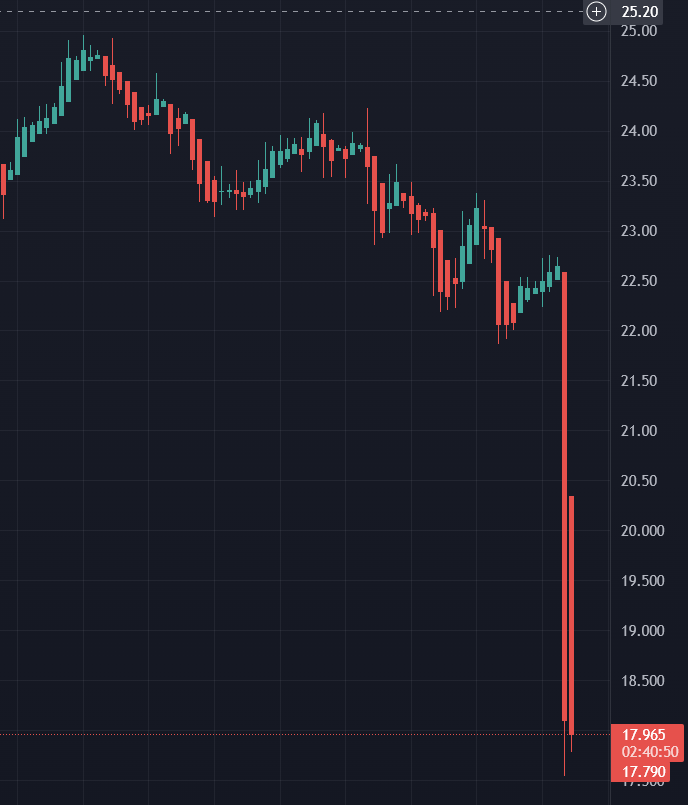
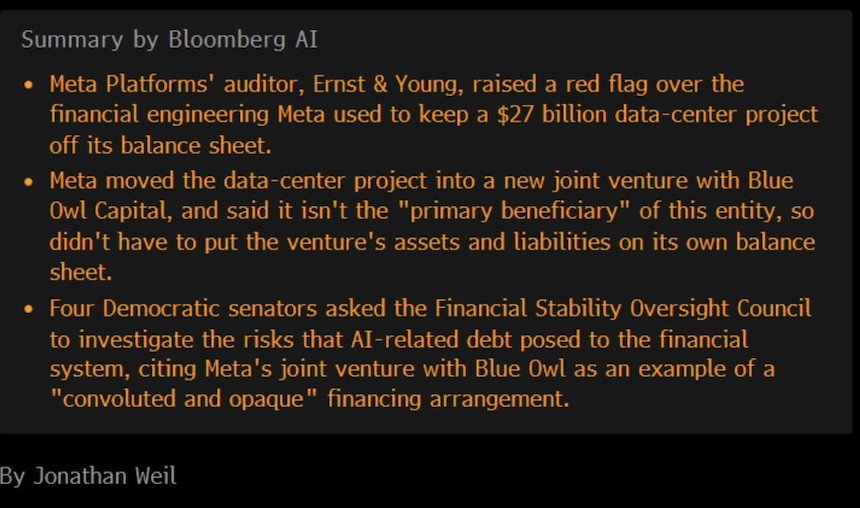
cool so now $META is enron
jbulltard tweet media
English
48
189
1.6K
141.5K
Pi-Kay
Pi-Kay@Pipeassiette·
@exec_sum Apparently, Christian ethics is money 😆
English
0
0
0
78
Exec Sum
Exec Sum@exec_sum·
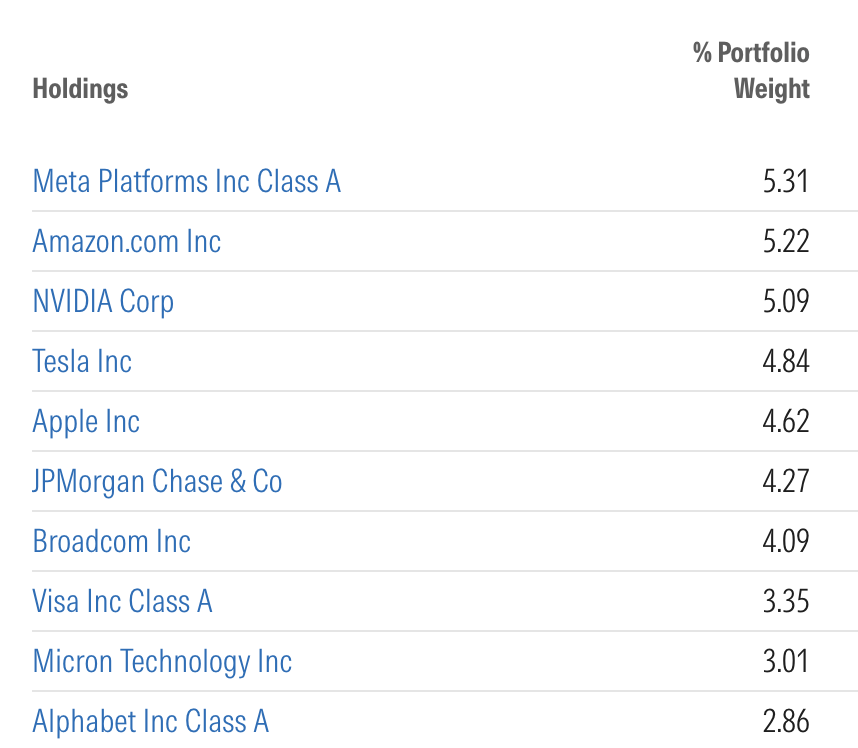
The Vatican Bank launched two equity indexes tracking stocks that it said are 'consistent with Catholic ethical principles' Mark zuckerberg's $META is the top holding for the US-based index
Exec Sum tweet media
English
123
98
1.8K
288.1K
Pi-Kay
Pi-Kay@Pipeassiette·
@Metamorphose_47 On peut rajouter le secteur des semis comme Soitec et STMicroelectronic totalement à la masse
Français
0
0
0
340
Métamorphose 47
Métamorphose 47@Metamorphose_47·
Rien ne va plus en France !!! 😱 Entre l'effondrement boursier de Dassault Systèmes, le naufrage d'Atos et le ralentissement de Capgemini, le numérique français paie cash son retard sur l'IA et sa dépendance à une industrie européenne en crise. #DassaultSystemes #Atos #IA #Bourse
Métamorphose 47 tweet media
Français
35
20
161
26.7K
Pi-Kay retweetledi
Ricardo
Ricardo@Ric_RTP·
Big Tech is spending $700 BILLION on AI this year. But their cash flow is collapsing. Amazon is going into debt. Google's free cash flow is dropping 90%. And they're literally paying influencers $600,000 each to convince you AI is worth using. If this technology was as revolutionary as they claim, why are they spending half a million dollars per creator to sell it? Here's what's actually happening behind the scenes: This week, all four tech giants reported earnings at once and every single one dropped a spending number that made Wall Street lose its mind. Amazon: $200 billion in capex. The largest corporate capital expenditure in HISTORY. Stock dropped 9%. Google: $185 billion. Wall Street expected $120 billion. Stock dropped 5%. Meta: $135 billion. Double what they spent last year. Microsoft: down 17% this year, worst performer in the group. Combined 2026 AI infrastructure spend: almost $700 billion. But here's where it gets ugly. Amazon's free cash flow collapsed 71%. Morgan Stanley projects they'll burn through $17 billion in NEGATIVE free cash flow this year. Bank of America says the deficit could hit $28 billion. Amazon quietly filed with the SEC on Friday saying they might need to raise debt to keep building. Google's free cash flow is projected to crater 90%, from $73 billion down to $8.2 billion. They already did a $25 billion bond sale in November and their long-term debt QUADRUPLED last year. These companies are spending everything they have, then borrowing more, then spending that too. Now here's the part that got me thinking: CNBC just reported that Google, Microsoft, OpenAI, Anthropic, and Meta are paying influencers between $400,000 and $600,000 EACH to promote AI products on Instagram and YouTube. AI platforms spent over $1 BILLION on digital ads in 2025, a 126% jump year-over-year. Google and Microsoft's AI ad spending jumped 495% in January 2026 alone. Anthropic is running Super Bowl ads. OpenAI is flying creators to private events and covering all expenses. When was the last time a truly revolutionary technology needed a $1 billion ad campaign and $600K influencer deals to get adoption? Did the iPhone need influencer campaigns? Did Google Search need Super Bowl ads in 1998? Did email need a billion dollar marketing push? No. People just used them because the value was obvious. You know what DOES need massive paid promotions? Pharmaceutical drugs. Crypto exchanges. Online gambling apps. MLM companies. Products where adoption is driven by hype, not utility. And now, apparently, AI. So the pitch from Big Tech is: "This technology will eliminate your job. Also please use it. Here's $600K if you tell your followers it's cool." They need HUMANS to sell a product they designed to REPLACE humans. They need creators to promote a technology that will eventually make creators obsolete. They need influencers to build trust in a system that will eliminate the need for influencer marketing entirely. The question everyone should be asking: If $700 billion per year in spending can't produce a product that sells itself, when exactly does this start making money? Because right now the math is messed up. $700 billion in spending, cash flow crashing, stocks tanking, SEC filings about raising more capital, and the best growth strategy they've got is paying tiktokers to demo features. Either AI is about to deliver the greatest economic transformation in human history, or we're watching the most expensive corporate Hail Mary ever thrown. And the fact that they need to pay half a million dollars per influencer to convince you it's the first one isn't a good sign.
English
368
1K
3.3K
723.1K
Pi-Kay retweetledi
Finneko
Finneko@finneko_prgrm·
🚨 Je reprends mon suivi de la situation japonaise car la victoire de Sanae Takaichi, avec une supermajorité des deux tiers au Parlement, est un tournant majeur. Alors, tout le monde s'extasie sur les +5% du Nikkei mais au même moment, le ministre des Finances explique calmement que le gouvernement discute à la fois avec la Bank of Japan, BlackRock et le FMI pour "comprendre" la position du pays. 🇯🇵 La phrase clé de Katayama, celle qui m'a fait lever les sourcils, c’est l’évocation des réserves de change comme source potentielle de financement budgétaire. Normalement, c’est un tabou car les réserves servent à défendre la devise, non pas à financer des baisses d’impôts ou du spending. Les mentionner, même en disant que ce serait complexe et risqué, revient à admettre publiquement que les leviers classiques sont déjà saturés (dette publique gigantesque, marché de la dette artificiellement tenu par la banque centrale et yen déjà sous pression). Le ministre le sait parfaitement, puisqu’il ajoute que ces mêmes réserves peuvent être nécessaires pour intervenir sur le marché des changes. C’est exactement ça le dilemme japonais : on ne peut pas à la fois défendre la devise, contenir les taux et relancer l’économie réelle. 🤔 Jusqu’ici, la stratégie japonaise a été de gagner du temps puisque la BoJ absorbe la dette, et le pays accepte une lente érosion du pouvoir d’achat via l’inflation importée et la dépréciation du yen, et le Japon sait très bien vivre avec des déséquilibres tant qu’ils ne se transforment pas en crise brutale. Le problème c’est que plus tu prolonges ce régime, plus la frontière entre politique budgétaire et politique monétaire disparaît, et plus le coût final devient diffus mais inévitable. 📈 Cela me permet de revenir à Takaichi car avec sa victoire on est face à la disparition du frein institutionnel. Avec deux tiers, plus besoin de compromis, on peut forcer une coordination étroite avec la BoJ, remodeler la trajectoire budgétaire et assumer une ligne idéologique claire : la croissance nominale d’abord et pour le reste on verra. À partir de là, les déclarations du ministre des Finances prennent une toute autre dimension. On teste les réactions des marchés, on verbalise des options jusque-là impensables, on explique que rien n’est simple mais que tout est sur la table. Le message est clair, on laisse filer le yen, on accepte une inflation plus élevée que les objectifs officiels, et on espère que la croissance nominale finira par stabiliser le ratio de dette en termes réels. 🔥 Tout cela doit vous rappeler el famoso scénario “Run it Hot”, pas à l’américaine avec des taux élevés et une banque centrale neutre voire restrictive, mais avec des taux réels écrasés, une devise sacrifiée, et une inflation utilisée comme outil de désendettement silencieux. Pour un pays surendetté, vieillissant, dépendant de l’énergie importée et traumatisé par trente ans de déflation, c’est même probablement l’option la plus cohérente politiquement. 🤷‍♂️ Vous connaissez les risques mais tant que le reste du monde absorbe ces déséquilibres, le Japon peut continuer, mais plus il appuie sur l’accélérateur, plus il devient un facteur de stress systémique latent. Quand tout est assumé aussi ouvertement, c’est que le pays a déjà accepté que le coût sera payé, simplement pas de manière visible, ni immédiatement. J'ai l'impression de relire mes cours d'histoire financière en voyant cette disparition des frontières entre banques centrales et gouvernements à travers le monde. Spoiler : ce n'était pas une belle période.
Finneko tweet media
Finneko@finneko_prgrm

🇯🇵 On entend beaucoup de choses en ce moment autour du Japon : hausse des rendements obligataires, fin du contrôle de la courbe, normalisation monétaire, pression sur le yen… et forcément, ça relance tout le narratif du “grand dénouement” du carry trade ou du risque systémique sur la dette japonaise. On fait donc le point. 🤦‍♂️ Le Japon navigue aujourd’hui dans un environnement macro fragile pour ne pas dire mauvais : la croissance tourne négative, l’inflation reste élevée pour un pays qui sort juste de trente ans de déflation, le yen est en PLS, et le marché obligataire reprend enfin une dynamique “normale” après dix ans de pilotage automatique via le Yield Curve Control (YCC). À cela s’ajoute un exécutif beaucoup plus interventionniste, ce qui augmente le risque d’un dérapage budgétaire au pire moment. 🤔 Mais fragile ne veut pas dire explosif. Le système japonais est très particulier : il tient non pas parce qu’il est sain, mais parce qu’il est extrêmement contrôlé et largement domestique. L’État doit gérer une dette colossale mais cette dette est détenue à plus de 90% par des acteurs japonais. Ça limite énormément le risque de fuite soudaine de capitaux ou de panique internationale. Aussi, la Bank Of Japan (BOJ) reste un amortisseur massif : elle peut intervenir à tout moment pour empêcher une envolée désordonnée des taux. C’est d’ailleurs pour ça que les rendements montent, mais pas “follement”. Personne ne croit à un 10 ans à 3/4%, parce que le Japon ne pourrait tout simplement pas le supporter. 📈 Ce qu’on voit aujourd’hui sur les taux japonais, c’est surtout un repricing logique : le marché réintègre l’inflation, les risques sur la croissance, le risque budgétaire futur et la sortie progressive du YCC. Rien d’irrationnel là-dedans. Le Japon redevient un marché obligataire “normal” après dix ans d’anesthésie monétaire. 💸 Le même phénomène vaut pour le carry trade : tant que les taux japonais restent plus bas que les taux américains et européens, l’arbitrage yen/actifs risqués reste attractif. Si les taux japonais montaient trop vite, là oui, le carry s’effondrerait. Mais ce scénario extrême est justement celui que la BOJ ne peut pas laisser se produire, parce qu’il ferait imploser le modèle fiscal. Donc le carry s’adapte et peut s’alléger par phases si le yen se renforce trop vite, mais il ne disparaît pas dans un choc soudain. ⚠️ Le vrai risque, celui qui pourrait réellement faire mal, ce n’est pas la normalisation de la BOJ. C’est une combinaison explosive : un gouvernement qui creuse encore les déficits dans une économie qui ralentit, une inflation toujours trop élevée, un yen instable, et un marché obligataire qui commence à tester les limites du système. Là, oui, il y a une zone dangereuse. On y est aujourd’hui : Takaichi renforce la probabilité d’un Japon plus dépensier, moins discipliné, plus imprévisible, et ça arrive dans un contexte où le pays doit éviter les dérapages budgétaires. 🤷‍♂️ Ce scénario ne signifie pas “krach imminent” mais plutôt “vulnérabilité augmentée”. Le Japon peut rester dans un équilibre précaire longtemps tant que la BOJ garde la main et tant que les taux ne dépassent pas des niveaux que le gouvernement peut soutenir. Mais ça veut aussi dire qu’on est plus proche du point de rupture qu’avant. Il suffirait de trois éléments pour basculer dans un vrai stress : un yen qui se renforce très vite et qui fait imploser le carry, une inflation qui atteint des seuils insoutenables (5/6%), ou un choc fiscal qui pousse le marché à pricier 2,5/3% sur le 10 ans. On y est pas encore. Pour le Japon, il faut être clair, le risque que tout craque existe et augmente de jour en jour, mais il n’est pas encore déclenché. Par contre, Takaichi arrive au mauvais endroit au mauvais moment et représente le plus gros danger surtout que la BOJ est dans l’impasse.


Français
29
108
545
87K
Pi-Kay retweetledi
Vincent Lautard
Vincent Lautard@VLautard·
Sur la religion, personne n’en a mieux parlé que l’humoriste américain George Carlin 😁
Français
80
863
2.5K
98.9K
Pi-Kay
Pi-Kay@Pipeassiette·
@FranceCryptos Dissonance logique avec le fait qu'il (Berkshire) ait une montagne de cash en dollars non ?
Français
2
0
5
2.5K
France Cryptos 🔗
France Cryptos 🔗@FranceCryptos·
🚨Warren Buffett dit clairement qu’ils ne veulent pas détenir des actifs dans une monnaie qui part en enfer. Il explique que c’est exactement ce qui l’inquiète avec le dollar. Il conclut en disant: “Le cours naturel d’un gouvernement est de rendre sa monnaie de moins en moins valable avec le temps.” 🇪🇺 Ça s’applique également à l’euro
Français
18
44
303
73.4K
Pi-Kay retweetledi
Barchart
Barchart@Barchart·
U.S. Dollar share of global foreign currency reserves have fallen to its lowest level this century 🤯📉👀💸
Barchart tweet media
English
481
2.7K
9.8K
1.5M
Pi-Kay retweetledi
RTL France
RTL France@RTLFrance·
🎙️ « Le pétrole vénézuélien ressemble à n’importe quoi entre du miel et du goudron. » Le président américain a déclaré que le Venezuela devrait « remettre» entre 30 et 50 millions de barils de pétrole, que les Etats-Unis vendront «à prix de marché». Les explications de Jean-Marc Jancovici dans "La question environnement" sur #RTL
Français
19
71
203
47.6K
Pi-Kay retweetledi
PoliticsVideoChannel
PoliticsVideoChannel@politvidchannel·
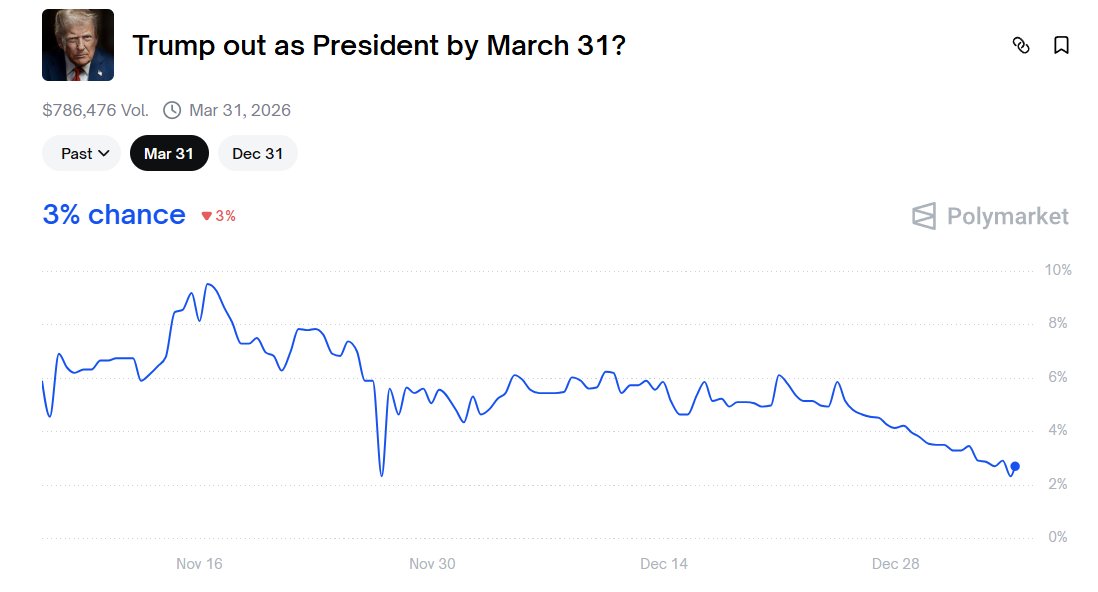
BREAKING EXCLUSIVE: House Democrats are just 5 votes away from impeaching Trump before March 31
PoliticsVideoChannel tweet mediaPoliticsVideoChannel tweet media
English
387
3K
31.5K
870.9K
Pi-Kay retweetledi
The Halfway Post
The Halfway Post@HalfwayPost·
BREAKING: Trump is pissed that oil companies don’t want to take over Venezuela’s oil industry because of the cost of modernization, security concerns, political instability, and current low price of oil which would take decades to turn a profit, and now he looks like an idiot.
English
3.6K
14.2K
91.4K
4.6M
Pi-Kay
Pi-Kay@Pipeassiette·
@CerfiaFR La France en moment
GIF
Français
0
0
0
45
Cerfia
Cerfia@CerfiaFR·
🚨🇫🇷 ALERTE INFO | Le ministère des Sports a été piraté, quelques jours après le ministère de l’Intérieur. Près de 3,5 millions de foyers sont concernés.
Cerfia tweet media
Français
177
877
4.3K
331.7K