

Mike Bruno
897 posts

Mike Bruno
@PkiMike
One of the developers of PKI Spotlight, a revolutionary PKI monitoring and alerting tool. Cybersecurity professional.
New Jersey, USA Katılım Ocak 2022
74 Takip Edilen61 Takipçiler


My latest @PKISolutions blog post is live: Logitech Inconveniences Customers with Poor Certificate Management
pkisolutions.com/blog/logitech-…
English
@JessicaValenti The GOP’s thirst for low-cost worker bees with no prospects is unquenchable! I wonder if there’s a book that would say what they’re doing is evil? 🤔🤔✝️
English

I’m calling it now: Republicans will try to make hormonal birth control illegal for teenagers
English
Mike Bruno retweetledi

Wise words
Anton Martyniuk@AntonMartyniuk
𝟱𝟬% 𝗼𝗳 𝗱𝗲𝘃𝗲𝗹𝗼𝗽𝗲𝗿𝘀 𝗳𝗮𝗰𝗲𝗱 𝗺𝗲𝗺𝗼𝗿𝘆 𝗹𝗲𝗮𝗸𝘀 𝘄𝗶𝘁𝗵 𝗘𝗙 𝗖𝗼𝗿𝗲 They're making the same mistake 👇 ❌ Improper handling of DbContext lifetimes. Many devs simply register DbContext as scoped and call it a day. ▶️ But reality is often more complex. DbContext isn't thread-safe — sharing it across threads will cause exceptions. It's lightweight and meant to be short-lived, instantiated frequently, and disposed properly. ❌ Improper handling leads to growing memory usage and eventual leaks. Thankfully, EF Core provides solutions to handle complex scenarios: ↳ 𝗜𝗗𝗯𝗖𝗼𝗻𝘁𝗲𝘅𝘁𝗙𝗮𝗰𝘁𝗼𝗿𝘆 Allows safe, on-demand creation of DbContext instances — perfect for background tasks, multi-threading and desktop applications. ↳ 𝗗𝗯𝗖𝗼𝗻𝘁𝗲𝘅𝘁 𝗣𝗼𝗼𝗹𝗶𝗻𝗴 Reuses pre-configured DbContext instances to minimize performance overhead. Pooling resets contexts after use, significantly cutting down memory and CPU waste. ↳ 𝗣𝗼𝗼𝗹𝗲𝗱 𝗗𝗯𝗖𝗼𝗻𝘁𝗲𝘅𝘁𝗙𝗮𝗰𝘁𝗼𝗿𝘆 Want the best of both worlds? Combine DbContextFactory with Pooling — Pooled DbContextFactory. You get on-demand contexts that are efficiently reused, optimizing your app's performance. ✅ Always dispose contexts promptly—either with using statements or returning them to the pool. ✅ Never share DbContext across threads. Proper lifecycle management boosts application stability, responsiveness, and scalability. Understanding these nuances can eliminate those sneaky memory leaks that plague many EF Core projects. Here are 10 more mistakes developers make in EF Core: ↳ antondevtips.com/blog/top-10-mi… —— ♻️ Repost to help others avoid memory leaks in EF Core ➕ Follow me ( @AntonMartyniuk ) to improve your .NET Skills
English

I’ve not seen anything defeat developers like CORS does.
English
Here’s some CoPilot features I’d like to see integrated in @VisualStudio:
- Keystroke to type a prompt & have it generate code in-line
- Keystroke to have CoPilot generate XML comments (without having to explicitly ask)
- “Apply” button at bottom of reposes as well as the top
English

@PkiMike I believe if you put the cursor on the "set" or "get" and hit F12, you get what you're asking for
English
@mkristensen Hi! Here are a couple of things I'd really like in VS:
- When adding a watch when debugging, I'd like Intellisense to autocomplete and show me the available fields & properties when I type "."
- In addition to "Find all references": "Find Assignments" + "Find Gets"
English
@NealCuliner @mkristensen Getting anything working in Rider is a real pain, though. Everything source control just seems to just work seamlessly OOTB in VS
English

@mkristensen Once again I’m sorry to say Rider does it better.
English
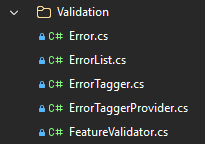
Is that little blue lock icon next to files in Solution Explorer useful for showing source control status?
English
@davepl1968 Hey Dave, do you have any stories about mkcompat.exe? That program was a miracle that got legacy software working on XP (I think?)
English
@Ifindjewtards @FrankAtHPP @VEsoterica It’s apples & oranges because the 32X was an intermediate upgrade to a platform in deep decline, while the PS5 was a full generational leap, following up a platform that was still going strong
English

I'm spending my Saturday morning imagining how things would have played out had Ultimate DOOM 32X Resurrection been the game that released in holiday 94.
What an incredible port that really shows what the hardware could do.
Thanks for the tip, @VEsoterica!

English
@Voultar You’re like a member of the party fighting Zeromus at the end of FFIV. He keeps hitting you with Big Bang, but you keep getting back up after some Curaja from Rosa!
English

Wanted to check on a patient, but Windows decided it’s update time.
Thanks, @Microsoft for keeping us connected to the traditional ways of doing medicine.

English

M1 MAX Macbook is still my daily driver since new!
Kr$na@krishdotdev
is M1 still worth in 2025 ?
English


@davepl1968 ML (pure functional language. Relatively useless but fun), QBASIC, Pascal, VBScript. Oh and AppleSoft/GW BASIC.
English
What programming languages have you learned along the way that are now obsolete?
For me, it's Ada, Prolog, VBScript... and maybe REXX if you count that!
English
@GauravArora_ @rqobela Yep. My high school had a BASIC course and a Pascal course.
English

