Po La
5.6K posts

Po La
@Polabuild369
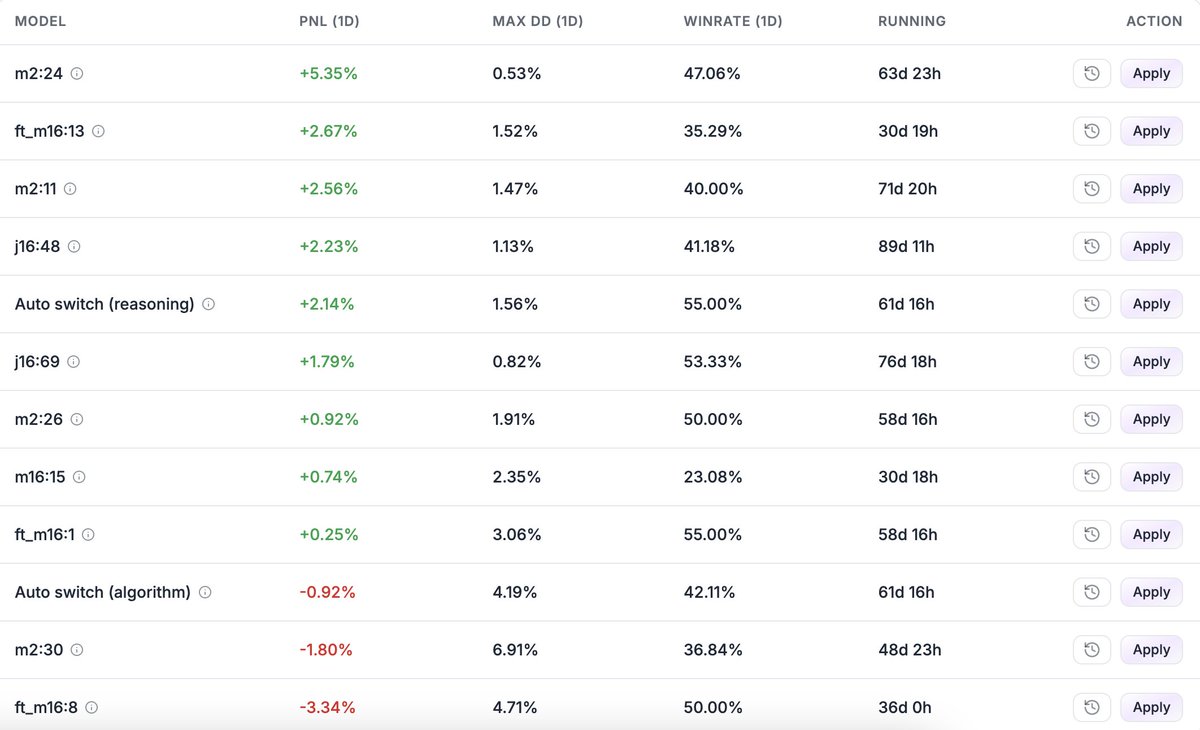
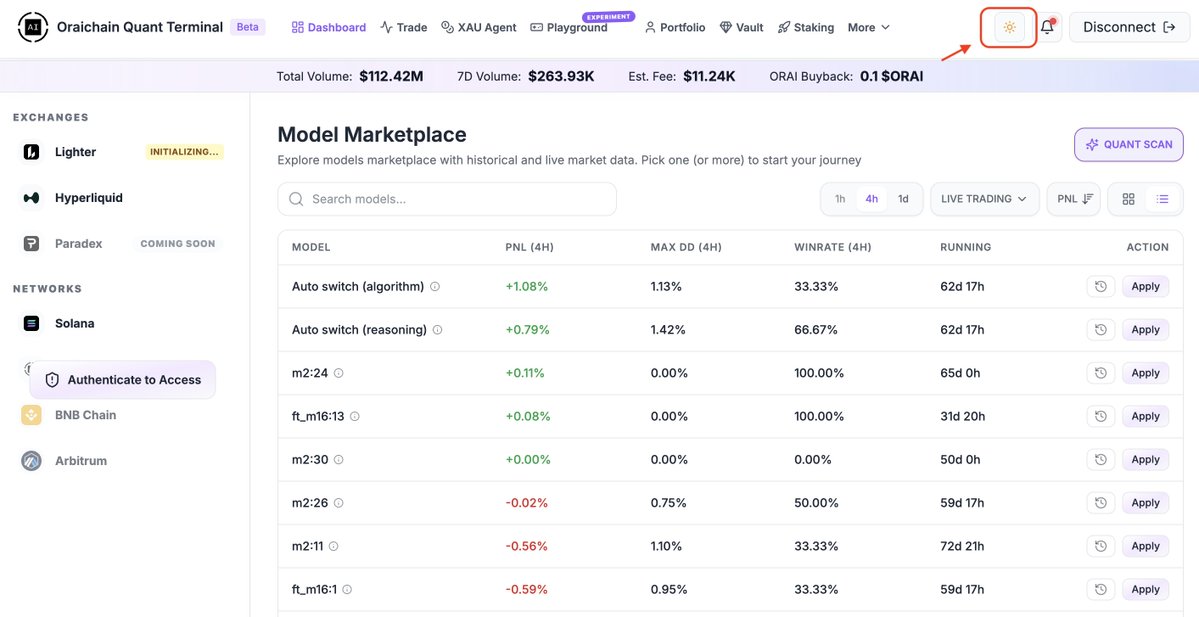
Building Quant Terminal @Oraichain | AI × Perp edge for serious traders Pola's quant trading: https://t.co/5sROngshcE


How to get a job as an AI Automation Engineer: AI automation is one of those fields where it's actually easier to get a job through non-traditional paths companies need people who can wire AI into their existing tools, automate workflows, and save them 40+ hours a week they don't care where you learned it so, here's my workflow for getting a job as an AI Automation Engineer: 1: Build your personal brand on X this should be your main platform follow AI startup founders, reply to them, post your workflows, show your thinking and value gonna to present next weeks how I'm doing it here 2: Build presence on LinkedIn or GitHub these are more traditional platforms but if you build your own automation system and it gets traction on GitHub, that's already way stronger than "work experience at a company" basically potential client checks out firstly your Github to get verification that you're good at your deal release open-source automation workflows to get the reputation 3: Share knowledge in communities n8n community, LangChain Discord, OpenAI forums, Claude community this is where real people hang out and opportunities appear cheat codes to stand out and get into the top 1%: 1: Build in public - show what you're building and how - CVs are outdated, people hire those who can build fast, ship real automations, and solve actual business problems 2. Learn to build with AI agents, not just drag-and-drop - one person with Claude Code can ship what used to take a 3-person dev team - the no-code ceiling hits fast.. agents don't have one 3. Do free audits before calls - before jumping on a call with a potential client, map out their broken workflows - show what you'd fix and how (this can also be turned into content on X) 4. Specialize narrowly - don't just be "AI automation engineer" - pick a niche: real estate, e-commerce, recruiting, legal - this makes you 10x easier to position and hire 5. Show measurable results - metrics matter (money especially) - "saved 40 hours/week" and "$12K/mo in reduced headcount" is what gets you hired - not "built a cool n8n workflow" main insight: this is a new profession, traditional "work experience" doesn't matter as much what matters is real skill, real projects, and proof you can ship forget chasing FAANG interviews right now you have a much better opportunity: - build in public - grow your brand - become visible - start earning within months, not years one more thing: everything in this field moves insanely fast what's relevant today may be outdated in a year so "experience" doesn't matter your real skill is adaptability + learning fast + constant practice I wrote a 10,000+ word roadmap breaking down exactly what to learn each month for 6 months every resource, every tool, every practice project read it below ⬇️

We’ve raised $50M led by @dragonfly_xyz to go all in on RWAs and bring TradFi liquidity on-chain. Today, we're launching Phase 1 of our RWA rollout to stress-test our infrastructure before bringing 100+ TradFi markets on-chain this summer.


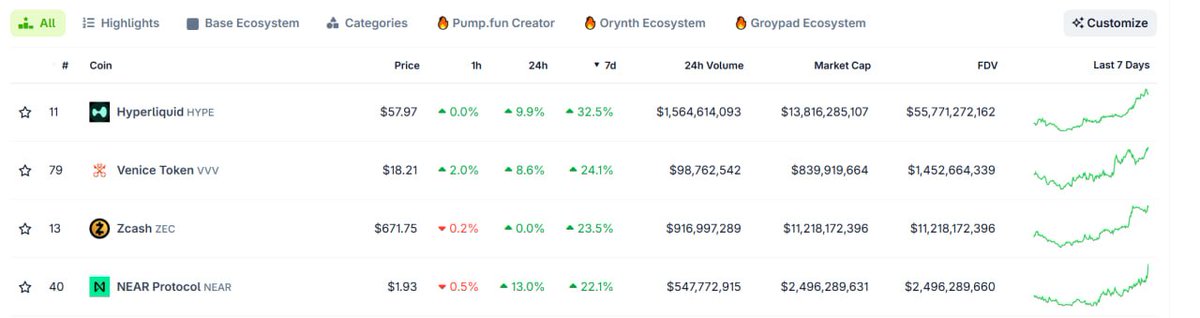
$ZEC $HYPE $VVV $NEAR Most alive tokens in crypto rn


BREAKING: hyperliquid:native IS NOW UP OVER 120% THIS YEAR - OUTPERFORMING bitcoin:native, $ETH, $XRP, solana:So11111111111111111111111111111111111111112, $BNB, $DOGE, AND $COIN (@coinbase), WHICH ARE ALL DOWN DOUBLE DIGITS YTD

Ken Griffin warned that AI will replace entire teams at Citadel, right in front of Yale juniors 38-min workshop from the CEO of Citadel on the "incredibly terrifying" future of AI in hedge funds also, you'll learn how the man who lost everything in 2008 built the most profitable hedge fund of all time save this the most honest Ken Griffin lecture has ever been in public


AI can now generate beautiful designs for almost any product or website — even if you have zero design talent. That part is no longer impressive. The real difference today comes from something else: Specificity. The people making money with AI aren’t the ones writing: “Make it look modern.” They’re the ones obsessing over details like: What exact emotion should users feel in 3 seconds? What number immediately reduces hesitation? What wording makes value feel obvious without explanation? Because great design isn’t decoration. It’s communication. And in a world where attention lasts seconds, clarity beats creativity. One of the biggest mistakes founders make is forcing users to “think.” The moment people need to calculate whether something is worth it, you’ve already lost part of the conversion. So instead of saying: → “$30/month subscription” Break it down. Show them: → “Less than $1/day” → “About the cost of a coffee” → “Cheaper than a snack, but compounds value every day” Now the brain stops comparing price. It starts comparing value. That psychological shift matters more than most people realize. The same product can feel: Expensive or Ridiculously cheap …depending on how clearly you frame the value. AI can generate visuals instantly. But knowing what details to emphasize that’s still human leverage. And the people who master that skill will dominate this era.


You can now use your @grok subscription inside @NousResearch Hermes Agent. x.ai/news/grok-herm…


AI can now generate beautiful designs for almost any product or website — even if you have zero design talent. That part is no longer impressive. The real difference today comes from something else: Specificity. The people making money with AI aren’t the ones writing: “Make it look modern.” They’re the ones obsessing over details like: What exact emotion should users feel in 3 seconds? What number immediately reduces hesitation? What wording makes value feel obvious without explanation? Because great design isn’t decoration. It’s communication. And in a world where attention lasts seconds, clarity beats creativity. One of the biggest mistakes founders make is forcing users to “think.” The moment people need to calculate whether something is worth it, you’ve already lost part of the conversion. So instead of saying: → “$30/month subscription” Break it down. Show them: → “Less than $1/day” → “About the cost of a coffee” → “Cheaper than a snack, but compounds value every day” Now the brain stops comparing price. It starts comparing value. That psychological shift matters more than most people realize. The same product can feel: Expensive or Ridiculously cheap …depending on how clearly you frame the value. AI can generate visuals instantly. But knowing what details to emphasize that’s still human leverage. And the people who master that skill will dominate this era.