Poodle Mama

4.7K posts

Poodle Mama banner
Poodle Mama

Poodle Mama

@PoodleMama2010

Proud American

United States Katılım Ağustos 2022
404 Takip Edilen316 Takipçiler
Poodle Mama retweetledi
Mary Talley Bowden MD
Mary Talley Bowden MD@MaryBowdenMD·
There is a medical school in Texas requiring students to have a Covid booster. It’s against the law, but the student doesn’t want make waves. If you need an exemption for the Covid shot, please email frontdesk@breathemd.org. I do not charge for this service.
English
211
2.7K
8.6K
107.7K
Poodle Mama retweetledi
Mary Talley Bowden MD
Mary Talley Bowden MD@MaryBowdenMD·
We have more than enough data. We just don’t have anyone in authority willing to acknowledge it.
Mary Talley Bowden MD tweet media
English
233
3.7K
7K
158.8K
Poodle Mama retweetledi
A Midwestern Doctor
A Midwestern Doctor@MidwesternDoc·
A lot of people have reported this to me
Stochastic Farmer@SanfiElderberry

@clif_high I drink a tsp of dmso in a few oz of water 1st thing in the morning (daily), ticks and chiggers no longer find me attractive. I'll do this thru to August. Lots of other benefits to the dmso as well.

English
93
392
2.1K
246.7K
Poodle Mama retweetledi
healthbot
healthbot@thehealthb0t·
Antiparasitic drugs Mebendazole & Fenbendazole are showing potent activity against cancer. Dr. Thomas Seyfried reveals the reason: cancer cells and parasites share a critical metabolic engine—mitochondrial substrate-level phosphorylation. These drugs target this specific pathway, crippling the energy production that both depend on. This synergy is powerfully enhanced under nutritional ketosis. A new paradigm for a classic drug.
English
12
266
546
13.8K
Poodle Mama retweetledi
Dr. Zakaria MD
Dr. Zakaria MD@ZakariaMDv3·
FENBENDAZOLE AND IVERMECTIN TESTIMONY IN COLORECTAL CANCER. “Hello everyone, I am a new member and wanted to share my story. In 2022, at 32 years old, I was diagnosed with stage 4 colorectal cancer that spread to my liver. The months following were a blur of scans, procedures, radiation, chemotherapy and the agonizing reality of cancer’s brutal defiance. In a short year and a half, I faced multiple surgeries to save my life including a colon and liver resection surgery. My oncology team in Illinois failed me in many ways, from denying me a life saving surgery, to telling me that I was not curable at 32 and further diagnostics and treatment would have no purpose. Through the wonderful connections made within the cancer community,I found her: she put me on a Fenbendazole and Ivermectin protocol through several encouragements and self hope. And today makes its 1 year since I have been N.E.D ( Cancer free) no more cancers and all the tumour had shrunk and my body maintained its original state. I was so surprised at the same time i was very happy as I can now take care of my family , share quality time and above all give thanks to God almighty for using Lorraine Graham as an instrument for healing. Together we stand to fight against cancer and note FENBENDAZOLE CURES CANCER. Wish y'all the best and fast recovery in your life journey.”
Dr. Zakaria MD tweet mediaDr. Zakaria MD tweet media
English
65
1.5K
4.1K
75.8K
Poodle Mama retweetledi
Humanspective
Humanspective@Humanspective·
Groundbreaking Cancer research by Dr. Andrea Cercek. Tumors “vanished” in 14 consecutive patients. New data shows another complete 100% response, in all 49 patients. None of her patients needed surgery, chemo or radiation. A monoclonal antibody with “breakthrough status” from the FDA... a new immunotherapy paradigm is evolving, steering the ship away from toxic treatments. Dr. Patrick Soon-Shiong recently said that system destroys the very cells (NK Cells) which protect your body against cancer, mentioning “we’ve been doing it wrong”. New data that emphasises his point: Dr. Andrea Cercek - “The updated data... we treated 49 patients... all 49 patients had a clinical complete response... all 49 of them chose to undergo NON OPERATIVE management... we have not had the issue of taking anyone to surgery”
English
13
217
544
16.3K
Poodle Mama retweetledi
Barbara Oneill
Barbara Oneill@BarbaraOneillAU·
Baking Soda Might Be The Most Underrated Thing In Your Home Most people only use it for baking… But baking soda has been used for generations as a simple tool for cleaning, deodorizing, soaking, scrubbing, and helping remove residue from produce. Some people even use it in natural home routines to reduce harsh chemical exposure inside the home. Simple. Cheap. Effective. What many people forget is that lowering your toxic load is also part of detox sequencing. Small daily habits add up.
Barbara Oneill tweet media
English
22
379
1.4K
35.6K
Poodle Mama retweetledi
Master Metabolism
Master Metabolism@lowmegatron·
2g of baking soda lowers inflammation and may help with some inflammatory and autoimmune diseases, such as rheumatoid arthritis. It works by shifting the balance of macrophages (immune cells) from M1 (inflammatory) to M2 (anti-inflammatory). Higher M1:M2 drives inflammation in rheumatoid arthritis and IBD. "You are not really turning anything off or on, you are just pushing it toward one side by giving an anti-inflammatory stimulus," he says, in this case, away from harmful inflammation. "It's potentially a really safe way to treat inflammatory disease." In the human part of the research, they used 2 g of baking soda dissolved in 250 ml of bottled water. This resulted in significant decreases in inflammatory M1, increases in anti-inflammatory M2, and decreases in the inflammatory TNF-α. “We tested the hypothesis that oral NaHCO3 intake stimulates splenic anti-inflammatory pathways. Following oral NaHCO3 loading, macrophage polarization was shifted from predominantly M1 (inflammatory) to M2 (regulatory) phenotypes, and FOXP3+CD4+ T-lymphocytes increased in the spleen, blood, and kidneys of rats. Similar anti-inflammatory changes in macrophage polarization were observed in the blood of human subjects following NaHCO3 ingestion... Our data indicate that oral NaHCO3 activates a splenic anti-inflammatory pathway and provides evidence that the signals that mediate this response are transmitted to the spleen via a novel neuronal-like function of mesothelial cells.” Ref: Drinking baking soda could be an inexpensive, safe way to combat autoimmune disease Oral NaHCO3 Activates a Splenic Anti-Inflammatory Pathway: Evidence That Cholinergic Signals Are Transmitted via Mesothelial Cells
Master Metabolism tweet media
Master Metabolism@lowmegatron

Baking soda improves thyroid hormone levels in chronic kidney disease/metabolic acidosis. Using baking soda to raise serum CO2 to normal levels ( ≧24 mM) increased thyroid hormones T3 and T4. “At baseline, over half of the patients had T3 below the lower limit of normal. At study completion, free T3 declined further in the control group, whereas free T3, total T3, free T4 and TSH rose significantly in the treatment group. Percentage changes of total CO2 from baseline were strongly associated with the changes of T3 parameters. Glomerular filtration rate was maintained in the treatment group but declined significantly in the control group. Conclusion: Oral sodium bicarbonate, through correction of metabolic acidosis, improved thyroid function in predialysis CKD.” Ref: Oral Sodium Bicarbonate Improves Thyroid Function in Predialysis Chronic Kidney Disease

English
14
168
998
71.8K
Poodle Mama retweetledi
Mgoes (bio/acc 🤖💉)
Mgoes (bio/acc 🤖💉)@m_goes_distance·
RIP chemotherapy - doctors are now able to sequence your tumor's genome - identify its exact mutations with AI - and inject a personalized vaccine that trains your immune system to hunt it down like a precision-guided missile your own biology becomes the weapon melanoma and kidney cancer patients remaining cancer-free 3+ years after treatment we went from burning the body to fix it to using the body to fix itself this is already in clinical trials bio/acc
Camus@newstart_2024

“It’s essentially vaccinating yourself against your own tumor.” Dr. William Li just described a groundbreaking new approach on The Beyond Tomorrow Podcast. They remove your tumor, sequence its genome along with your normal cells, use AI to identify the unique cancer mutations, then create a personalized vaccine from those mutations and inject it back into you — training your immune system to attack your own cancer like a precision-guided missile. This is already in clinical trials. In recent personalized mRNA cancer vaccine trials (e.g., for melanoma and kidney cancer), patients who responded showed strong, durable T-cell responses, with many remaining cancer-free for 3+ years. Some studies reported recurrence-free survival rates significantly higher than standard treatments. We’re moving from blunt-force chemo to hyper-personalized immunotherapy that uses your own biology as the weapon. Have you heard about the rapid progress in personalized cancer vaccines?

English
27
143
940
97.3K
Poodle Mama retweetledi
kenny
kenny@kennyhealth444·
you don’t understand how good modified citrus pectin is for cancer patients. it’s been shown that it prevents tumours from becoming vascular and gaining a blood supply (galectin-3 inhibitor). mind you, cancer becoming metastatic is usually what kills you. MCP also increases cytotoxic activity of your natural-killer T cells and regulates the tumour microenvironment to be more anti-inflammatory. and it’s virtually harmless. no other nutraceutical does this. it’s been in my cancer recovery stack ever since learning this!
English
1
23
295
9.5K
Poodle Mama retweetledi
Dr. Dawn Michael
Dr. Dawn Michael@DawnsMission·
🚨 Incredible stage 4 breast cancer recovery story from Dr. John Campbell! An 83-year-old woman was diagnosed with metastatic breast cancer that had spread to her liver, spine, bones, and lungs — basically a death sentence. She declined chemo, went on hospice, but started taking 222 mg fenbendazole daily. After 8 months: Tumor marker (CA27.29) crashed from 316 → 36 PET scan showed ZERO abnormal metabolic activity indicating cancer Dr. Campbell walks through the full case — mind-blowing results. Fenbendazole is getting serious attention for its potential anticancer actions (microtubule disruption, apoptosis induction, angiogenesis inhibition & more). What do you think — should repurposed medicines like this get more research?
English
154
2.8K
7.5K
190.1K
Poodle Mama retweetledi
Ann Vandersteel™️
Ann Vandersteel™️@annvandersteel·
No wonder the bee population has been under attack. The deep state BIG PHARMA have known about all of the cures for cancer for decades.... Imagine all the money saved if nature cures cancer.
ScienceFocus@ScienceFocusonX

A tiny bee just did what chemotherapy couldn't. Scientists in Australia discovered that honeybee venom can wipe out 100% of aggressive breast cancer cells in under 60 minutes. And the healthy cells around them? Barely touched. The breakthrough came from Dr. Ciara Duffy and her team at the Harry Perkins Institute of Medical Research, working alongside the University of Western Australia. They tested venom drawn from 312 honeybees and bumblebees across Australia, Ireland, and England. The target: triple-negative breast cancer and HER2-enriched breast cancer. Two of the deadliest, most stubborn forms of the disease. The weapon: melittin. The same tiny peptide that makes a bee sting burn. At one specific dose, melittin tore through cancer cell membranes completely within an hour. Within just 20 minutes, it shut down the chemical signals cancer cells need to grow and multiply. Bumblebee venom, which lacks melittin, did nothing. Zero effect, even at high concentrations. Scientists then recreated melittin synthetically in the lab and got almost identical results, meaning no bees need to be harmed to develop the therapy. Published in the peer-reviewed journal npj Precision Oncology, the findings are still early-stage. Human trials haven't happened yet. But one thing is clear. Nature has been hiding answers in plain sight all along, sometimes inside the smallest creatures on Earth. Source: Harry Perkins Institute of Medical Research / npj Precision Oncology (Dr. Ciara Duffy et al.)

English
250
6.1K
15.2K
607.6K
Poodle Mama retweetledi
Freedom
Freedom@ActionFixesFear·
A man walks out of his oncologist's office with a normal-looking blood test. Hemoglobin: fine. Neutrophils: fine. There is a third line on that same sheet almost nobody reads back to him. It is the one that tracks whether he lives. On Saturday, in a room of urologists at the AUA annual meeting, @DrPatrick stood up and explained why that line goes untreated. Then he kept going - announcement after announcement, on a stage, on the record. Here is what he said. THE THIRD LINE On the AUA stage Saturday, Soon-Shiong said: "We've addressed anemia, we've addressed neutropenia, we've never addressed lymphopenia. And ironically... chemo and radiation causes lymphopenia. Now you begin to see the frustration and the madness of what we are doing." That is the whole thesis in three sentences. Every routine blood test counts three things chemo and radiation knock down: red cells, infection-fighting neutrophils, and lymphocytes - the T cells and NK cells that kill cancer. Medicine built a drug to rebuild the red cells. A drug to rebuild the neutrophils. For the third - the cancer-killing one - nothing. The drugs given so patients can tolerate more chemo never touched the cell line chemo itself depletes. How much does that third line matter? Not a company number - a 31,178-person US population study (Zidar et al., JAMA Network Open, 2019): - Severe lymphopenia, all-cause death: about 1.8x the risk (age- and sex-adjusted). - Cause-specific at severe lymphopenia: roughly 3x death from cancer, 4x from cardiovascular disease, 7x from infection and pneumonia. In plain English: a $10 line on a standard blood count, that almost no oncologist treats, sorts who lives from who dies - across cancer, the heart, and infection at once. From the stage Soon-Shiong put it harder than the paper does ("if your ALC is below 2,000, your chances of dying early from all cause is 200 to 300%") - that is his framing; the published, adjusted figures are the ones above. They are damning without rounding up. JUST A NUMBER And here is what he says the agency said back. By his account, at a regulatory meeting with the FDA, the response to all of this was that the absolute lymphocyte count "is just a number." His reply from the podium: "PO2 is just a number - do you need oxygen? Hemoglobin A1C is just a number. Blood sugar is just a number." The same line a 31,178-person study ties to dying early at up to seven times the rate, waved off as not worth treating. And look at which of those figures is largest. Not cancer. Infection. That is why Soon-Shiong does not present this as only a cancer drug - he extended the same logic to sepsis and infectious disease: one collapsed immune line, several different ways to die. WHY IT EVEN WORKS This is the part that makes the rest click, and it is textbook immunology, not a company theory. Tumors hide from the immune system's T cells by deleting a surface ID tag called MHC-I. That is why checkpoint drugs like Keytruda eventually fail: they rev up T cells, but a tumor wearing no tag is invisible to T cells no matter how revved. Loss of that tag is a documented mechanism of checkpoint-inhibitor resistance. Now the elegant part, known to immunology for thirty years. NK cells run the opposite logic. A normal cell shows the tag and the NK cell passes it by. A cell that has dropped the tag screams "missing self" - and the NK cell destroys it. The tumor's single best trick against T cells is the exact signal that turns NK cells loose. In plain English: every cell wears one ID badge. The T cell is a guard who can only grab a troublemaker he matches to his list, and the only way he checks is by reading that badge. A cancer cell that rips its badge off goes invisible to him. No badge, nothing to read, nothing he can do. Giving that guard more muscle (checkpoint drugs like Keytruda) changes nothing, because there is still no badge to read. The NK cell is the opposite kind of guard, with one rule: no badge, you are out. So the cancer's smartest escape from the first guard is the exact thing the second guard exists to catch. ANKTIVA is the growth factor for those NK cells and T cells. It comes through the door the tumor opens when it slams the other shut. That mechanism is written into the federal label - section 12.1 states it is an IL-15 receptor agonist that stimulates CD8+ and CD4+ T cells and NK cells without expanding the regulatory T cells that would otherwise blunt the response. Soon-Shiong told the room he worked "desperately hard" to get that sentence into the label and is "not aware of any medicine in the history of medicine" carrying it. The cell line the death-predicting blood test measures is the cell line the label says the drug rebuilds. THE FIRST PROOF IT MOVES THE LINE For the first time, on that stage, he showed a randomized comparison from a lung-cancer trial: ANKTIVA plus Keytruda against Keytruda alone, with the same starting lymphocyte count. Over 27 weeks the ANKTIVA arm's count rose and held while the control arm's drifted down (P=0.0065). In the subgroup with the highest level of a key tumor marker, the ANKTIVA patients also went longer before their cancer progressed - a median of 7.0 months versus 2.2 (hazard ratio 0.40). It is his data, shown for the first time and not yet peer-reviewed - but it is the first randomized human signal that the drug raises the exact line that predicts who lives, and that raising it tracks with the patient doing better. (In a separate, earlier lung study he showed the patients whose count recovered lived a median 17.4 months versus 11.8 for those whose did not - he flagged that one himself as a correlation, not a randomized proof. The honest weight is on the randomized result above.) In plain English: imagine a patient, Tom, with advanced lung cancer. Tom and a matched group all start the standard immunotherapy, Keytruda, with their cancer-killing lymphocyte count at the same level. Half of them, Tom included, also get ANKTIVA. Over the next six months Tom's group sees that count climb and hold; the Keytruda-only group watches theirs sag - and that split was not chance (the odds of a fluke were well under one in a hundred). Among the patients whose tumors carried the most of the marker immunotherapy keys off, Tom's group went about three times longer before the cancer started growing again, roughly seven months instead of two. It is a first look at his own data, not yet peer-reviewed. But it is the first time, with the comparison built in, that the drug has been shown to lift the very line that tracks who survives - and for that lift to move with the patient doing better. THE DOCUMENT, AGAIN So the drug raises the line, and raising the line tracks with living longer. The question that should follow - then why is it not everywhere? - has an answer, and it does not start with the drug. It starts in 2007. In 2007 the US government answered a question oncology rarely asks out loud: of every immune molecule known, which has the best shot at curing cancer? The National Cancer Institute polled the field - NIH, the FDA, the major cancer societies. Out of more than a hundred, one came first: in Soon-Shiong's words from the AUA podium Saturday, "the number one that could address cancer is IL-15." ANKTIVA is built on it. Then he added the part that should stop you. He had discussed that government ranking on the Sean Spicer show, and, he said, "I got a warning later about talking about a nice NCI document." Sit with that. Nearly two decades after the FDA sat among the bodies that ranked this molecule number one, the agency sent the man building it a warning letter for citing that ranking on air. The ranking went to print in 2008 under a title the agency cannot take back: Mac Cheever, Immunological Reviews, "Twelve immunotherapy drugs that could cure cancers." IL-15 at the top. He didn't write that list. The government did, and the FDA was in the room. On that same list, checkpoint inhibitors ranked second. The industry poured itself into number two - by his account more than forty approvals across tumor types, many of them won on the kind of single-arm trial we are about to come back to. Number one waited twenty years for someone to build it. THE RULE THEY SAID DIDN'T BEND Still in the same talk: "When the previous heads of the FDA, Dr. Prasad and Dr. Makary said... no trial has ever been approved for single arm, that's not true... Merck got it approved for single arm trial for 149 patients for all tumor types." He is right, and this one is fully checkable. On May 23, 2017 the FDA gave Keytruda the first-ever tissue-agnostic cancer approval on 149 patients across five single-arm trials. The standard the prior CBER leadership held ANKTIVA to is one the agency itself waived for the market leader, on 149 single-arm patients. We built the file on that asymmetry; he said it to a room of urologists. Stay on that for a second. The two people who pressed that standard ran US drug approval. Dr. Vinay Prasad was Director of CBER, the FDA center that regulates biologics, which is to say the center that regulates ANKTIVA. Dr. Marty Makary was the FDA Commissioner. What they said was untrue was not some obscure footnote. It was their own agency's most famous modern cancer approval. How do the two officials gatekeeping this drug get the single most checkable fact in their own building wrong, and then invoke it as the reason to make the drug wait? And by the time Soon-Shiong called them "the previous heads" on Saturday, both were already gone. Prasad left the FDA at the end of April. Makary resigned on May 12, four days before the talk, and the day before he was scheduled to testify before a Senate subcommittee. The men who set the standard against this drug were out the door while the FDA's own record kept disproving it. And it is not only that 2017 record. By his account on that stage, the same FDA has already granted ANKTIVA Expanded Access for any patient who has failed chemotherapy, radiation, and a checkpoint inhibitor, across cancers. Expanded Access is not a verdict on whether a drug works; it is the agency judging it safe enough to give patients with nothing left to try. So the FDA has opened a broad door to this drug for those patients, while the narrow approval that would let earlier ones through still sits unanswered. His objection to that sequence was the obvious one: why force a patient to fail everything else before being allowed this at all? That is his account from the stage, not an FDA letter we have read. THE SECOND SOURCE ANKTIVA is only approved given together with BCG. No BCG, no ANKTIVA - that is the label, not a preference. And BCG in the US has been a one-company, one-strain shortage for over a decade. We walked through that history yesterday. So on Saturday he announced he had locked exclusive US rights to a second strain, Tokyo-172. The obvious doubt writes itself: a company secures its own backup and naturally swears it works. Here is why that doubt does not hold. He did not run the trial that proves it. The US government did - SWOG, the NCI-funded cooperative group, in a nine-year randomized head-to-head (Svatek et al., 2026): Tokyo-172 against the only US-approved strain. Result: non-inferior. The part his own slide left out, kept here: that result held for the standard way of giving it; a second dosing schedule in the same trial did not work; and serious side effects ran somewhat higher with Tokyo-172. A proven equal, not a gentler one - and the government, not the company, paid for the proof. Which is why his one blunt line on stage matters: "our approval just says any BCG. It doesn't say TICE." Hear what he is signalling. ANKTIVA's label never named Merck's strain, and the government's own nine-year trial just proved a second strain works. Tokyo-172 still needs the FDA to clear it. And Seth Lerner, the SWOG genitourinary chair he credited for that trial, is on the program at this week's FDA workshop: the proof is already in the FDA's own room, and so is the man who oversaw it. WHAT THE SECOND SOURCE WAS REALLY FOR The supply is not the prize. It is the runway for the prize. ANKTIVA today is approved only for patients whose cancer already came back after BCG - a fraction of the disease. BCG is given far earlier, first-line, to almost everyone who gets it. That first-line population is several times larger than the one the drug reaches today. By his account: the first-line trial, QUILT-2.005, finished enrolling in February, an independent committee reviewed it and said it had seen enough, and the application is ready to file. He says it; the FDA has not confirmed it. But the sequence is deliberate - lock a proven, government-validated BCG supply first, then file the first-line regimen that cannot exist without it, for a population many times the size of the one ANKTIVA serves now. THE QUESTION THAT IS GENUINELY OPEN Bladder cancer shows up in two shapes. Flat patches in the bladder lining, which doctors call carcinoma in situ, or CIS. And little finger-like growths, called papillary. ANKTIVA is already approved when CIS is present. The application that has been stuck is the one for the papillary-only form. So everything hangs on a single question: are these two shapes the same disease, or two different ones? Soon-Shiong argues they are one - a single rogue cell line that just grows in two patterns. The science is genuinely split: some genetic studies show a shared origin; others find real molecular differences. It is honestly unsettled. That is not a footnote - it is the whole ballgame for the stuck application. And it is one of exactly two items on the agenda of the FDA's public workshop this Monday. The other item is the BCG shortage and what it does to clinical-trial design - the fight running through the rest of this post. The FDA did not convene a meeting on a side issue. It put on its agenda the two questions this drug's future turns on. A BUREAUCRATIC RUT And while that question waits on a workshop, the FDA's answer for the stuck application, by his account, is a randomized trial against chemotherapy. Sit with what that asks. Chemotherapy is the thing that causes lymphopenia - the collapsed third line a 31,178-person study ties to dying early. The comparator the agency wants is itself a driver of the harm. The problem he raised was ethical, not regulatory: how do you look a patient in the eye and randomize them into the chemotherapy arm - chemotherapy the FDA itself approved this past September, with serious adverse reactions in roughly a quarter of patients on its label - when chemotherapy is the very thing that collapses the cells keeping them alive? He said he would still run the trial. He also said he did not know how he could ethically recruit for it. He had a phrase for the loop: "a bureaucratic rut," he said. "It's not biology." He spelled it out himself: the workshop asks "exactly the question we posed to the FDA group that's reviewing our BLA six months ago." Sit with the timing. Two days before the FDA sits down to decide whether CIS and papillary are one disease, the man whose stuck application hangs on that answer made the case for it - in public, to a room of the urologists who treat the disease. We called this pre-positioning before he said so. Then he said so. THE BODY THAT ALREADY SAID YES Here is what makes the wait extraordinary. While that question sits "open" at the FDA, it is not open at the body that writes the treatment guidelines American oncologists actually follow. This past March the NCCN added ANKTIVA plus BCG for BCG-unresponsive papillary-only disease - the exact stuck indication - as a Category 2A recommendation. That is not a company press release. By federal statute, Social Security Act section 1861(t)(2), a Category 1 or 2A listing in NCCN's drug compendium is a medically-accepted indication for Medicare coverage. In plain terms: the federal payer's own statutory test for what counts as covered cancer care is already met - while the FDA approval it would normally follow is not. Soon-Shiong's stage framing for it - "unanimous," "30 independent comprehensive cancer center directors," "bigger than an ODAC" - is his characterization; the guideline change and the statute are not. THE MISSING LINK One thing he could not announce that day: "The 60 days have passed. We've not heard anything from the FDA. We're awaiting some response. I'm hopeful." That is the honest center of an enormous day. The first randomized proof the drug raises the line. The first-line filing ready to go. A government-validated second BCG supply locked. Saudi Arabia already approving it for lung cancer the US has not. Everything moving - except the one application that would let the next patient actually reach it. On one clinic's list, by his count, fifteen thousand of them are waiting. The story was never whether the science works. It was whether anyone would treat the line on the blood test that decides who lives, and whether the agency that ranked this molecule number one would let the patient have it. A foreign regulator already crossed that line - by his account the Saudi FDA accepted the whole frame, that the root cause is the collapse of the immune system and the cancer is only its symptom. On Saturday the man who built it answered the first question, on the record, in a room of the doctors who will use it. The second answer is still sitting on a desk at the FDA, sixty days unanswered - on the very day the agency finally sits down to debate the very questions it turns on. He gave Saturday its own name: "maybe we've actually closed the missing link." Everything in this post says he did. The last word on whether the patient ever gets it is not his.
Freedom tweet media
English
15
51
209
76.7K
Poodle Mama retweetledi
Ivermectin Shop | Ivermectincure |
🚨 After a year of intensive research, Dr. William Makis presents what he calls the most critical graph of his career: the ivermectin dosing schedule for cancer. @Ivermectincure According to Dr. Makis, for most cancers — including breast, colon, lung, pancreatic, renal, gastric cancers, and leukemias — a starting dose of 1 mg per kg of body weight per day is recommended. For a 60 kg individual, this equates to 60 mg daily: • Five 12 mg pills • Or 6 mL of liquid (approximately one teaspoon plus 1 mL) The evidence for efficacy is described as compelling and dose-dependent: • Dr. Shankara Chetty reportedly observed a prostate cancer patient’s PSA level drop from 89 to 11 on 45 mg/day. • A case shared by Dr. Tess Lawrie showed CA-125 (an ovarian cancer marker) dropping from 288 to 22 on just 0.2 mg/kg. • A long-term Castro study involving children with leukemia reportedly found no side effects after six months at 1 mg/kg. For aggressive cancers (such as pancreatic or brain cancer), the blood-brain barrier may require higher doses. Dr. Makis cites: • Dr. Landrito’s colleague with terminal gallbladder cancer, whose cancer reportedly disappeared after 14 months at 2 mg/kg/day. The highest documented dose mentioned is 2.5 mg/kg (by Dr. Chetty), with only transient visual side effects that reportedly resolved. Mainstream oncology does not currently offer this treatment. Supporters argue this is because ivermectin is generic, off-patent, and unprofitable, resulting in limited funding for large clinical trials. Dr. Makis’s conclusion: “Using ivermectin in cancer is honestly very straightforward. It is a very, very safe drug.” His strong suggestion for those struggling: start at 1 mg/kg/day. According to anecdotal reports, it can be taken for many months — even over a year — with an excellent safety profile. The power to fight may already be on your shelf. Visit: Ivermectincure.us #CancerResearch #Ivermectin #Fenbendazole
English
17
754
1.9K
89.2K
Poodle Mama retweetledi
Dalton (Analyze & Optimize)
Dalton (Analyze & Optimize)@Outdoctrination·
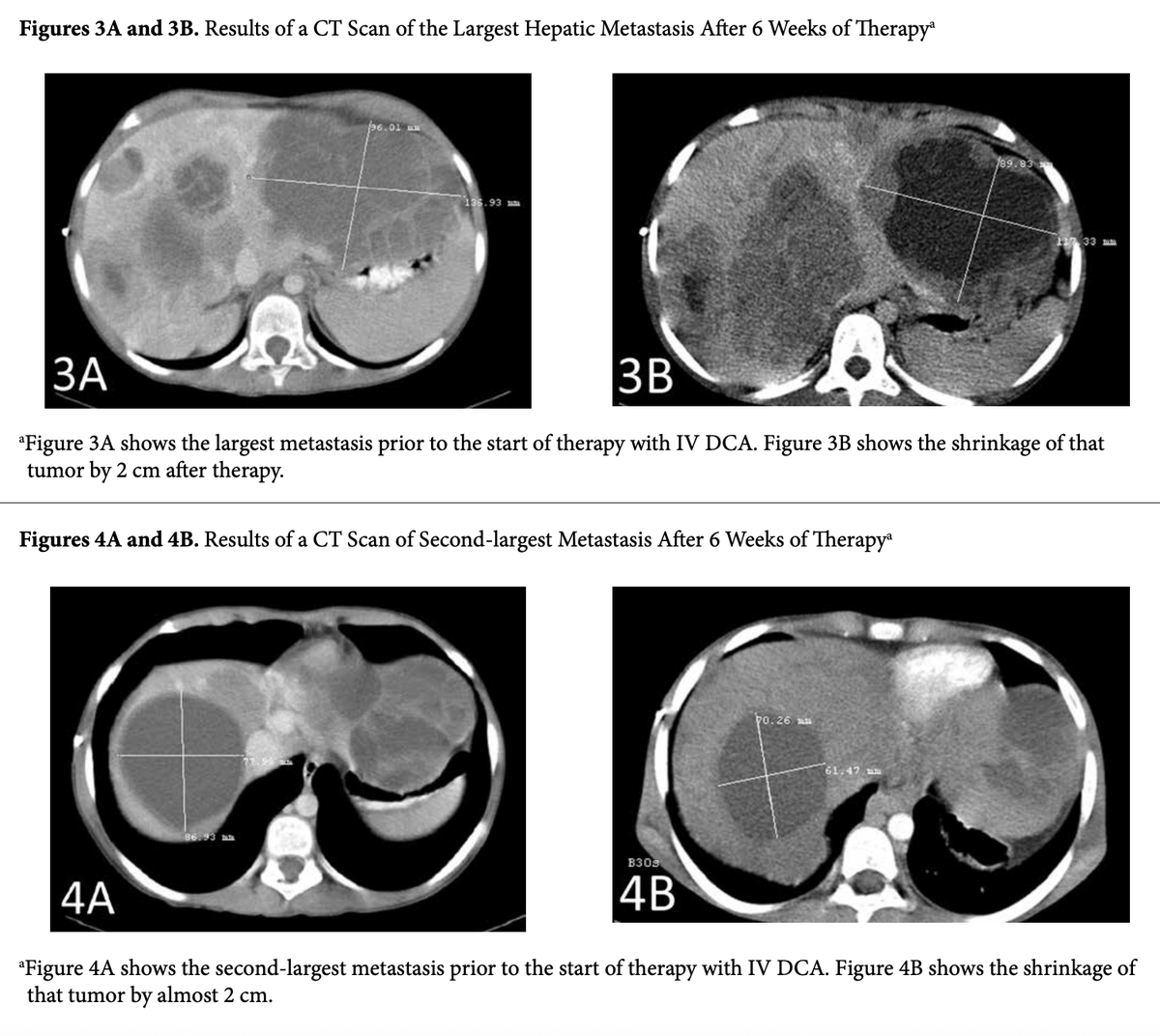
High dose thiamine (vitamin B1) + alpha lipoic acid for cancer: This is a case showing two different tumors in the same patient, both reducing in size by about 2 cm. This patient was on IV DCA therapy. What does DCA do? It mainly works by inhibiting an enzyme called pyruvate dehydrogenase kinase (PDK). This allows for the proper metabolism of glucose into energy, and prevents its excessive conversion into lactate. Excessive lactic acid production turns on countless pro-tumor, pro-metastatic pathways that drive cancer. Cell studies (PMID: 24452394) have shown that vitamin B1 (thiamine) can actually work by the same mechanism - but at lower concentrations. They concluded: "high dose thiamine reduces cancer cell proliferation by a mechanism similar to that described for dichloroacetate." Another common supplement, alpha lipoic acid (ALA) was shown to do the same (PMID: 34211631). "LA (α-lipoic acid) is a novel PDK1 inhibitor for the treatment of lung cancer." These are preclinical - but the evidence is there. This could be a powerful combo for cancer.
Dalton (Analyze & Optimize) tweet media
Dalton (Analyze & Optimize)@Outdoctrination

DCA even shrank existing tumors. This is a case showing two different tumors in the same patient, both reducing in size by about 2 cm. Wow.

English
7
62
360
21.2K
Poodle Mama retweetledi
Barbara Oneill
Barbara Oneill@BarbaraOneillAU·
This is a homemade remedy that uses only 4 ingredients that you probably already have at home This is for those having Tumors and Growths You need the following ingredients: - 1/4 teaspoon turmeric powder - ½ teaspoon olive oil; - A pinch of black pepper - ½ teaspoon of ginger. Preparation: Just mix all the ingredients together and you're done Add the mixture to your favorite soup salad or other dish. Or drink as tea 🧡🩷
English
15
347
1.6K
63.9K
Poodle Mama retweetledi
ScienceFocus
ScienceFocus@ScienceFocusonX·
A tiny bee just did what chemotherapy couldn't. Scientists in Australia discovered that honeybee venom can wipe out 100% of aggressive breast cancer cells in under 60 minutes. And the healthy cells around them? Barely touched. The breakthrough came from Dr. Ciara Duffy and her team at the Harry Perkins Institute of Medical Research, working alongside the University of Western Australia. They tested venom drawn from 312 honeybees and bumblebees across Australia, Ireland, and England. The target: triple-negative breast cancer and HER2-enriched breast cancer. Two of the deadliest, most stubborn forms of the disease. The weapon: melittin. The same tiny peptide that makes a bee sting burn. At one specific dose, melittin tore through cancer cell membranes completely within an hour. Within just 20 minutes, it shut down the chemical signals cancer cells need to grow and multiply. Bumblebee venom, which lacks melittin, did nothing. Zero effect, even at high concentrations. Scientists then recreated melittin synthetically in the lab and got almost identical results, meaning no bees need to be harmed to develop the therapy. Published in the peer-reviewed journal npj Precision Oncology, the findings are still early-stage. Human trials haven't happened yet. But one thing is clear. Nature has been hiding answers in plain sight all along, sometimes inside the smallest creatures on Earth. Source: Harry Perkins Institute of Medical Research / npj Precision Oncology (Dr. Ciara Duffy et al.)
ScienceFocus tweet media
English
1.6K
19.2K
49.4K
2.5M
Poodle Mama retweetledi
Wall Street Apes
Wall Street Apes@WallStreetApes·
Yale Medical School caught by the Justice Department discriminating against White Student admissions The Civil Rights Division found Yale's leadership intentionally selected applicants based on their race, excluding white students Black students were 29x more likely to be admitted “The DOJ says the school discriminated based on race in its admissions process. It's claiming admissions data shows that Black and Hispanic applicants were admitted with consistently lower academic qualifications than white and Asian applicants” Here’s what I found A year long investigation into Yale School of Medicine’s admissions by the DOJ concluded that Yale intentionally discriminated on the basis of race in violation of Title VI of the Civil Rights Act of 1964. Yale’s leadership used a “holistic review” process (and racial proxies) to continue favoring Black and Hispanic applicants while disadvantaging White and Asian applicants with stronger qualifications Black and Hispanic applicants were admitted with consistently lower GPAs and MCAT scores than White and Asian applicants - Black students had a median GPA of ~3.88 and MCAT in the 95th percentile - Asian students had 3.98 GPA and 100th percentile MCAT; White students similar to Asians - But the black students were admitted Black applicants had up to 29 times higher odds of getting an interview than an equally qualified Asian applicant with similar credentials Keep in mind, this is for medical school. The last profession on earth you want DEI standards. You only want the very best
English
148
1.1K
2.9K
52K