Прагматичний педагог retweetledi

Hi David,
Arrogance married with ignorance are not good traits.
Let's review your claims one by one:
Claim 1: "Tariffs address trade deficits, which prevent money from fleeing the country, which protects the value of your currency I.E. your purchasing power from dropping."
Verdict: This claim overstates the effect of tariffs on trade deficits and currency value.
Explanation: Tariffs aim to make imports more expensive, potentially reducing imports temporarily. However, tariffs do not sustainably address trade deficits or "protect" currency value. In a floating exchange rate system like the U.S., currency value is influenced mainly by factors such as interest rates, inflation, and investor confidence.
Additionally, tariffs can increase consumer prices, thus reducing purchasing power. For instance, tariffs imposed on Chinese goods under the Trump administration cost American households an estimated $460 per year in higher prices.
Federal Reserve Bank of New York found tariffs raised consumer prices, harming purchasing power: newyorkfed.org/research/staff…
Peterson Institute analysis on consumer impact of tariffs: piie.com/research/piie-…
Claim 2: "In the instance of China, it literally prevents them from winning a war against you...raising the value of their currency at the expense of your own."
Verdict: This claim is misleading and overly simplistic.
Explanation: Tariffs do not directly alter currency values in a straightforward manner. Exchange rates are determined by international markets based on factors like interest rates, inflation, and investor confidence. Tariffs on Chinese goods may reduce demand for these imports but do not inherently strengthen the U.S. dollar or weaken the Chinese yuan. The National Bureau of Economic Research (NBER) found that tariffs imposed on China raised costs for U.S. businesses, thereby hurting the economy rather than strengthening the currency.
National Bureau of Economic Research report on economic costs of tariffs: nber.org/papers/w26610
Federal Reserve analysis on tariffs’ impact on U.S. economy: federalreserve.gov/econres/notes/…
Claim 3: "When you fly to Spain to get a hip replacement because it's cheaper there, it's in large part because the value of your currency is stronger than theirs."
Verdict: This claim is oversimplified.
Explanation: While currency strength affects purchasing power abroad, the main reason Americans go abroad for medical care is the high cost of healthcare in the U.S., not solely currency value. For example, the average cost of a hip replacement in the U.S. is around $40,000, compared to about $7,000 in Spain. This cost difference is due to healthcare system structures, not currency.
Commonwealth Fund’s analysis on U.S. healthcare costs: commonwealthfund.org/publications/i…
Health Care Cost Institute data on U.S. medical expenses: healthcostinstitute.org
Claim 4: "It also discourages offshoring of jobs to other nations, increasing your manufacturing base at home, leading to higher-paying jobs..."
Verdict: This claim overstates the effectiveness of tariffs in protecting jobs.
Explanation: Tariffs can raise import prices but do not guarantee job growth in manufacturing. The 2018 tariffs raised costs for U.S. industries reliant on imported materials, leading to price hikes and sometimes job losses. The Tax Foundation estimated that tariffs led to a net loss of 145,000 jobs due to increased costs for manufacturers, outweighing any job protection benefits.
Tax Foundation report on tariffs’ impact on U.S. jobs: taxfoundation.org/how-tariffs-im…
National Bureau of Economic Research study on costs of tariffs for manufacturers: nber.org/papers/w26610
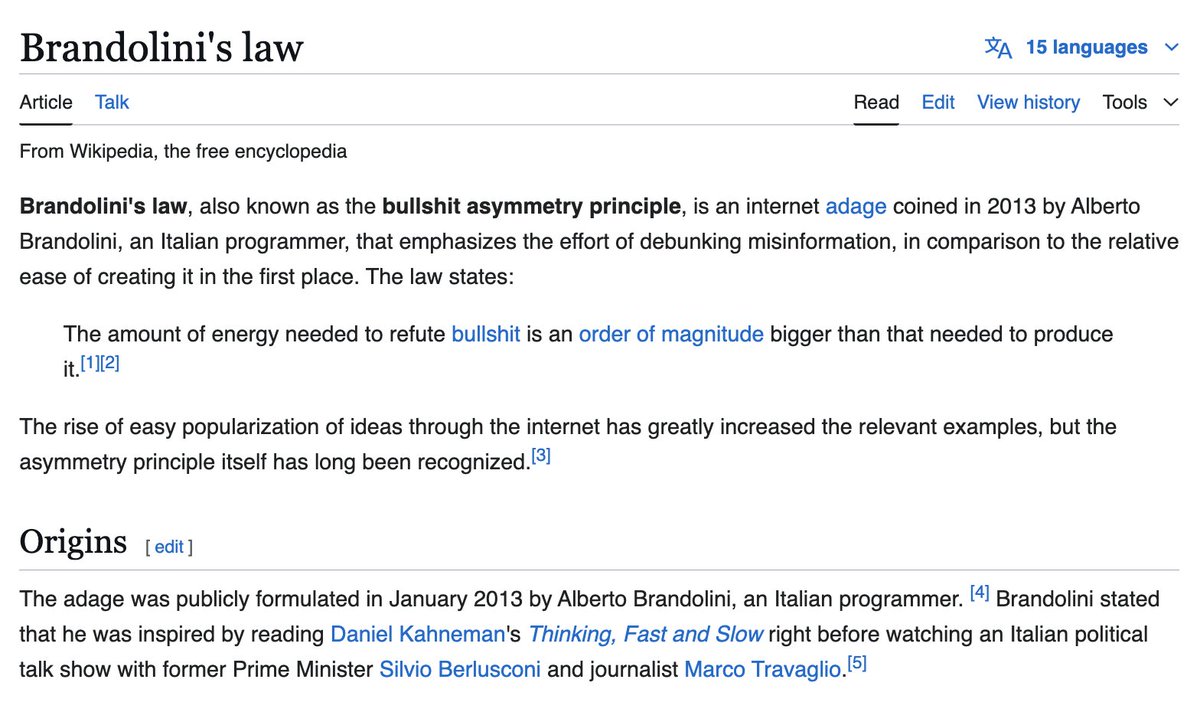
Irony: "...you haven't been taught basic economic principles, so it's understandable." (see Brandolini's Law)
English