Precision Health Reports 📑❤️

676 posts

Precision Health Reports 📑❤️ banner
Precision Health Reports 📑❤️

Precision Health Reports 📑❤️

@PreciseHlthRpt

Personalized insights for cardiometabolic disease to prevent heart attack, stroke, and type 2 diabetes—one person at a time. Member of @StartupHealth🚀

United States Katılım Mart 2020
154 Takip Edilen1.3K Takipçiler
Sabitlenmiş Tweet
Precision Health Reports 📑❤️
"Does cholesterol predict risk for cardiovascular diseases?" -- @Lipoprotein Here's the deal: cardiovascular disease risk is complicated. It's more than cholesterol, ApoB, insulin resistance, glucose, or inflammation. That's why the Cardiometabolic Risk Assessment considers 40+ risk factors to help doctors & individuals see what is unique about each person's individual risk and where to go to reduce that risk.
English
3
2
9
2.4K
Precision Health Reports 📑❤️ retweetledi
Thomas Dayspring
Thomas Dayspring@Drlipid·
If you have competent carotid imagists available (a big if) - CIMT can be even more important than CAC as vascular pathology appears before calcification. After age 40 maybe do both. A significant proportion of low-risk individuals may have undetected plaque, justifying reconsideration of early screening strategies. Open access at pubmed.ncbi.nlm.nih.gov/41449009/ @nationallipid @society_eas @ASPCardio @escardio @atherosociety @FamilyHeartFdn
Thomas Dayspring tweet media
English
15
14
74
8K
Precision Health Reports 📑❤️
Precision Health Reports 📑❤️@PreciseHlthRpt·
Cardiometabolic disease affects ~1 in 3 American adults. Most have never heard the term. Standard testing often misses it entirely. We wrote the explainer we wish existed ⬇️
English
1
0
0
35
Precision Health Reports 📑❤️
@BenBikmanPhD A1c is a fine marker...if you want to measure A1c. But, like many other biomarkers in isolation, its flaws are glaring. Instead, A1c is just one small 🧩 of the cardiometabolic risk picture.
English
0
0
7
858
Benjamin Bikman
Benjamin Bikman@BenBikmanPhD·
I don't like HbA1c as a clinical marker. I don't like how it's replaced almost every fasting marker, including fasting glucose. Of course, without fasting, you miss even better markers, such as fasting insulin, triglycerides, and HDL cholesterol. I also don't like that too many clinicians think HbA1c is only a marker of glucose. They forget there's another feature of that marker--the red blood cell. The most common blood disorder worldwide is iron deficiency anemia (because of lack of red meat). Unfortunately, even this can confuse HbA1c. With less iron, comes reduced RBC turnover, which can lead to an artificially elevated HbA1c. In this case, it's not a reflection of glucose at all, but rather "zombie" red blood cells that aren't allowed to die on time. The sooner HbA1c stops being the darling of clinical markers, the better. pubmed.ncbi.nlm.nih.gov/25994072/
English
50
99
584
44.6K
Christina Farr
Christina Farr@chrissyfarr·
Per the most recent valuation, Function Health appears to be worth about 12% the value of Quest Diagnostics. I’ve had some interesting debates with healthcare friends on whether this is warranted. Thoughts?
English
20
1
60
14.2K
Precision Health Reports 📑❤️
📌"High Lp(a) levels are independently associated with subclinical coronary atherosclerosis in ageing endurance athletes..." Get your Lp(a) checked, even if you're not an endurance athlete. It could save your life.
EJPC Editor-in-Chief@EJPCEiC

⬆️Lp(a) levels are independently associated with subclinical coronary atherosclerosis in ageing endurance athletes and healthy controls even with low conventional CV risk. 👉 Highlights the value of Lp(a) for risk stratification in low-risk populations. tinyurl.com/36yrv7tj

English
0
0
1
134
Precision Health Reports 📑❤️
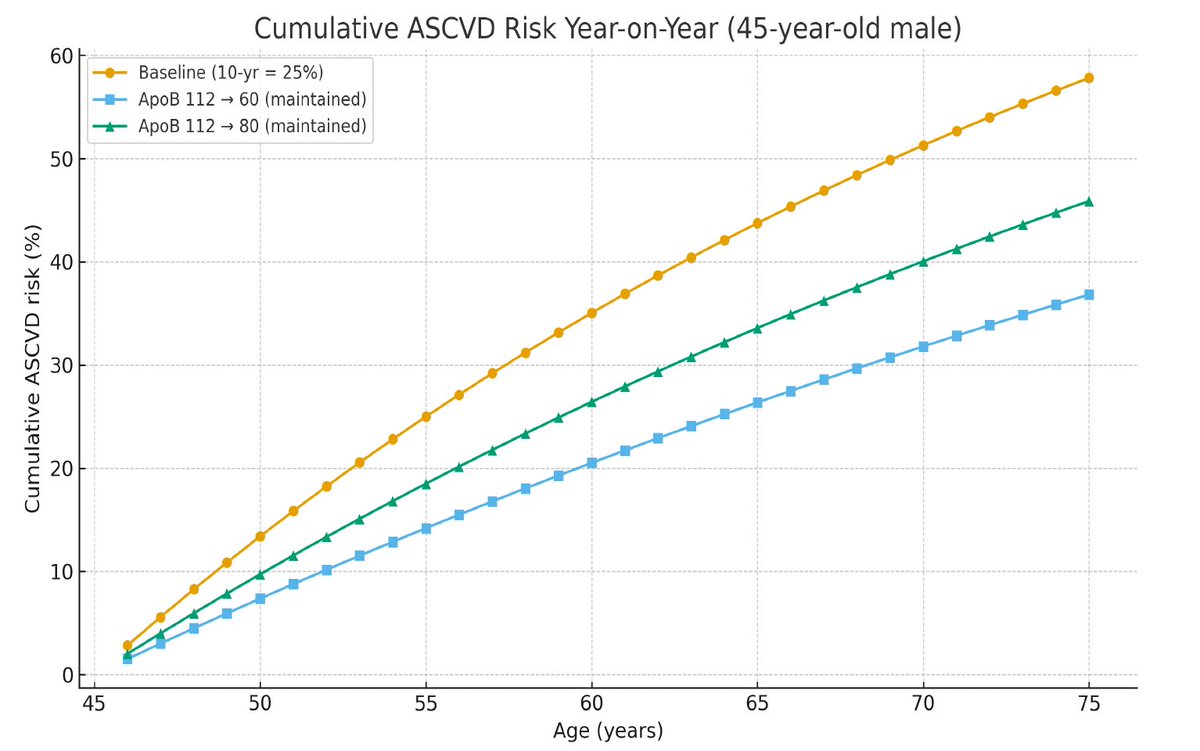
Want to see why measuring and managing ApoB is important? Take a 45 y/o male with an ApoB of 112 mg/dL. This example is an average of a cohort of people going through our Assessments the first time. For argument's sake, assume he has no other risk enhacing factors (unlikely, but possible). Too many people will jump on the "lowering your ApoB only makes a minor difference" bandwagon. Simply lowering his ApoB actually has a dramatic effect on his long-term prospects of having an ACSVD event (heart attack or stroke). Lowering his ApoB from 112 mg/dL to just 80 mg/dL: - 10-year baseline risk is 25% - 10-year improved risk is now 18.5% - 30-year baseline risk is 57.8% - 30-year improved risk is now 45.9% Going further, this gets more exciting. Lowering his ApoB from 112 mg/dL to 60 mg/dL: - 10 year baseline risk is 25% - 10 year improved risk is now 14.2% - 30 year baseline risk is 57.8% - 30 year improved risk is now 36.8% Cutting his risk of having a heart attack before the age of 75 dropped from almost 60% to a bit over 36%--wouldn't you take those odds? That's compound interest at its finest! And that is just one intervention in the process. A true personalized assessment using a full Cardiometabolic Risk Assessment would give a much more precise threshold goal to attain to lower his risk. Over time, with regular reviews and management tweaks, those risk curves continue to improve as a result of the compounding effects of taking the best steps.
Precision Health Reports 📑❤️ tweet media
English
2
0
3
118
Precision Health Reports 📑❤️
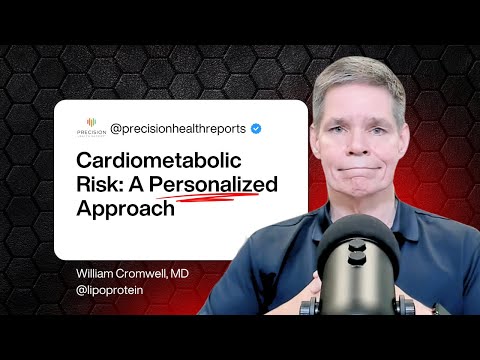
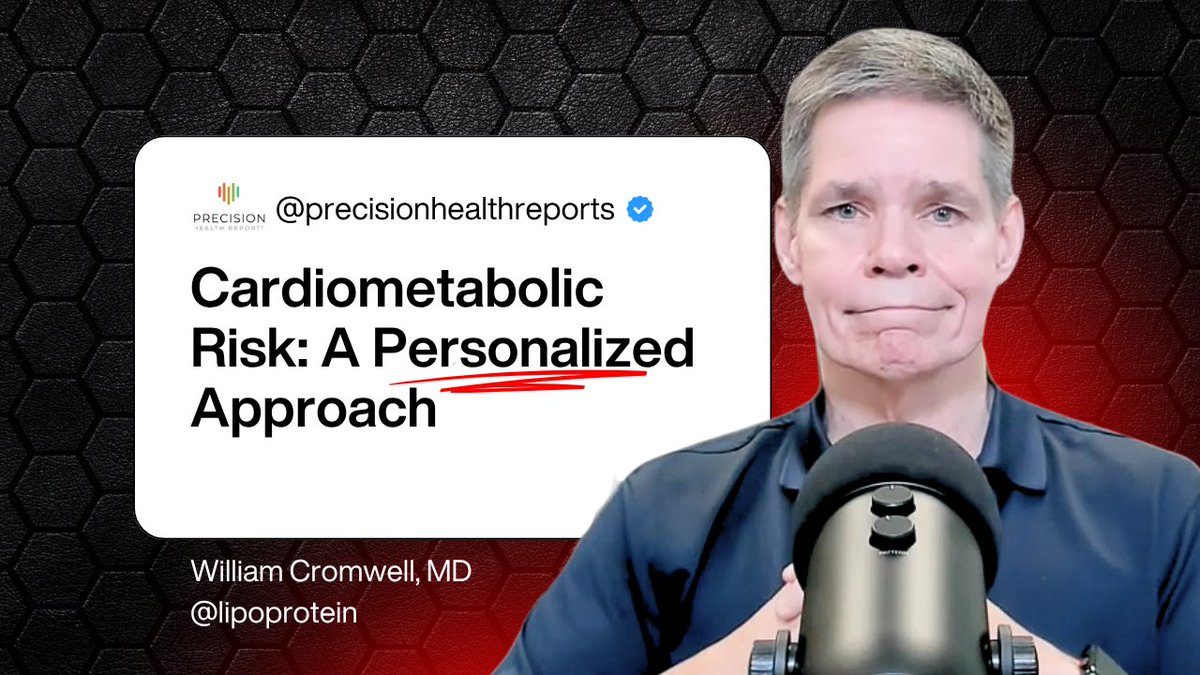
When we say 'cardiometabolic risk", what does that mean? What about taking a personalized approach? Sub 4-minute video from @Lipoprotein below just to whet your appetite to want to learn more!
Precision Health Reports 📑❤️ tweet media
English
1
0
2
113
Precision Health Reports 📑❤️
"How does Precision Health Reports stack up against CardioIQ, Function Health, or Boston Heart Labs?' We get this question all the time. Now you can learn more about where each of these are better options than we are and vice versa in our Comparison Hub. See 🔗 below.
Precision Health Reports 📑❤️ tweet media
English
1
0
1
109
Precision Health Reports 📑❤️
🚨 Cholesterol numbers don’t tell the whole story. LDL-P (particle count) reveals hidden cardiovascular risk even when LDL-C looks “normal.” We just updated our page with new FAQs + references to make understanding this often missed biomarkers easier to understand. 🔗 below
GIF
English
1
0
1
94
Precision Health Reports 📑❤️
Every ASCVD event costs employers $250K–$500K in the first year. How many hidden costs are in your workforce? 🔗 below
GIF
English
1
0
1
55