William Cromwell, MD

341 posts

William Cromwell, MD

William Cromwell, MD

@Lipoprotein

Lipidologist with over 30 years of clinical experience. Cofounder @PreciseHlthRpt. My passion is creating tools that optimize individual cardiometabolic care.

Raleigh, North Carolina Katılım Nisan 2010
69 Takip Edilen6.3K Takipçiler
William Cromwell, MD
William Cromwell, MD@Lipoprotein·
There is nuance to this statement. The VLDL family of particles is heterogeneous in size (~30-80 nm) and atherogenicity. VLDL remnants (~25-35 nm) are more atherogenic than LDL on a per particle basis and comprise 10-30% of all VLDL particles. Large VLDL particles (60 nm and larger) are not more atherogenic than LDL particles.
English
1
1
14
713
Gil Carvalho MD PhD🌈🇵🇸
Gil Carvalho MD PhD🌈🇵🇸@NutritionMadeS3·
▶️ VLDLs more atherogenic than LDLs particle for particle, but less prevalent (91% of apoB=LDLs in general population) thus larger total risk linked to LDLs (possible exceptions: obese, diabetes, statin-treated) @Lipoprotein @EliasBjornson
English
3
0
27
4.4K
William Cromwell, MD
William Cromwell, MD@Lipoprotein·
I want to provide context for understanding the GlycA signal, its relationship to triglycerides, and whether triglycerides influence commercially available GlycA tests. It’s important to note that the information collected by nuclear magnetic resonance (NMR) spectroscopy is not self-revealing. Various signals from numerous individual entities often overlap in a given NMR region, giving rise to a larger composite NMR signal that is the sum of the underlying components. Beyond quantifying a single composite signal, it is often important to quantify the individual components that contribute to the composite signal. Take GlycA as an example. You are correct that various separate components, including triglyceride-rich lipoproteins, reside in the same region and would typically contribute extensively to a composite GlycA signal. The LabCorp GlycA test (developed by LipoScience) quantifies the composite proton NMR signal centering at 2.00 ppm and includes components between 2.080 and 1.845 ppm. With detailed foreknowledge of over 70 individual lipoprotein subclasses, LabCorp’s GlycA test quantifies the individual chylomicron and VLDL particle subclass between 2.080 and 1.845 ppm, then removes these components from the composite GlycA signal. What remains in LabCorp’s GlycA analysis is the spectroscopy signal of the methyl groups found on N-acetylglucosamine residues attached to all circulating plasma proteins. However, because most circulating N-glycosylated proteins are acute-phase reactants, the GlycA test reflects changes in the overall levels and the oligosaccharide chain complexity of acute-phase reactant proteins. Five acute phase reactants contribute the most to the GlycA signal, namely alpha-1-acid glycoprotein (AGP), alpha-1-antitrypsin (AAT), alpha-1-antichymotrypsin (AACT), haptoglobin, and transferrin. Importantly, no triglyceride or triglyceride-rich lipoprotein signal is included in the LabCorp GlycA analysis. Historically, other NMR methods have not overcome the problem of restricting the contribution of triglyceride-rich lipoproteins in the GlycA signal. Thus, care should be taken to obtain GlycA measurements that do not include triglyceride-rich constituents.
English
1
0
6
264
Austin Dudzinski, PharmD, BCACP
Austin Dudzinski, PharmD, BCACP@DudzLightLime·
🩺 The TyG Index: A Window into Metabolic Syndrome, Inflammation, Oxidative Stress and Insulin Resistance? 🔬 😍A recent study delved into the Triglyceride-Glucose (TyG) Index and its relationship with biomarkers of inflammation, oxidative stress, and adipokine dysregulation. The findings underscore the TyG index’s utility as a powerful metabolic health predictor.
Austin Dudzinski, PharmD, BCACP tweet media
English
3
1
8
2.6K
William Cromwell, MD
William Cromwell, MD@Lipoprotein·
@drpablocorral I agree with Pablo (and Tom). Optimizing modifiable risk, empowered by assessment of ALL individual enhancing factors, before symptomatic ASCVD occurs is critical to maintaining your cardiovascular health.
English
3
0
14
916
Pablo Corral MD
Pablo Corral MD@drpablocorral·
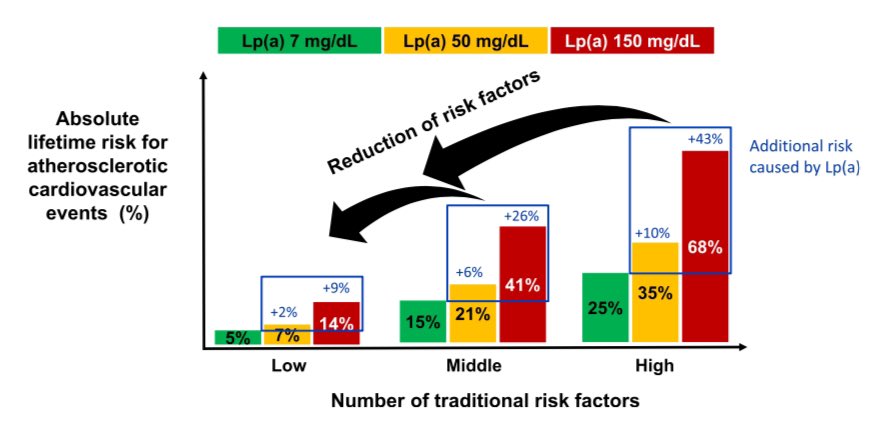
☝️To simply wait for Lp(a)-lowering drugs without doing anything in the meanwhile is wrong for three main reasons: 1️⃣ after approval, these drugs will prob- ably only be available in the secondary prevention setting until studies in the primary prevention setting are performed; 2️⃣ it is cynical and unethical to wait whether cardiovascular disease develops in a person with high Lp(a) since the first event is quite often fatal; 3️⃣ it counteracts the move our society should make from “repair medicine” to a 4P Medicine approach (predictive, preventive, personalized, participatory) which focuses on prevention, health promotion, innovation, and awareness raising 🔓Open Access link.springer.com/article/10.100… @KronenbergLab @society_eas
Pablo Corral MD tweet mediaPablo Corral MD tweet media
English
19
37
155
24.4K
Taher Modarressi, MD, FNLA
Taher Modarressi, MD, FNLA@tmodarressi·
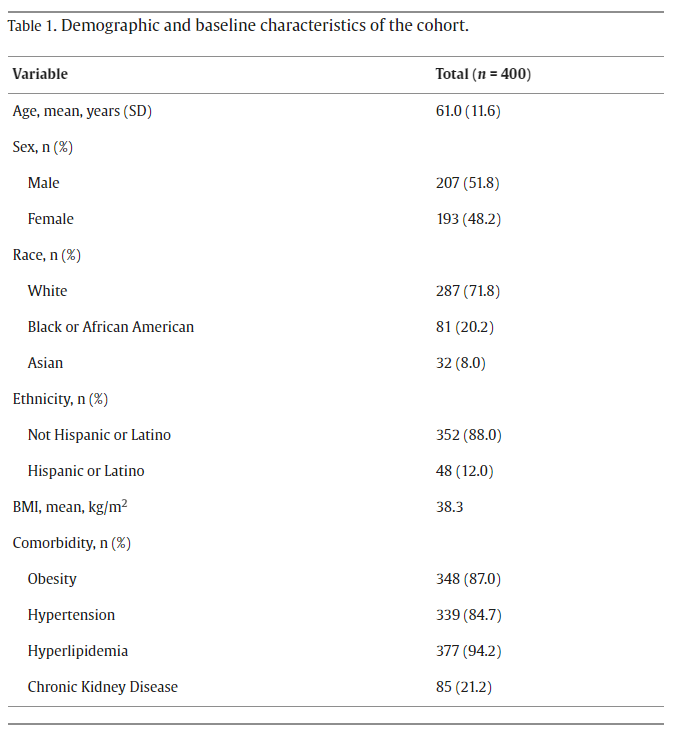
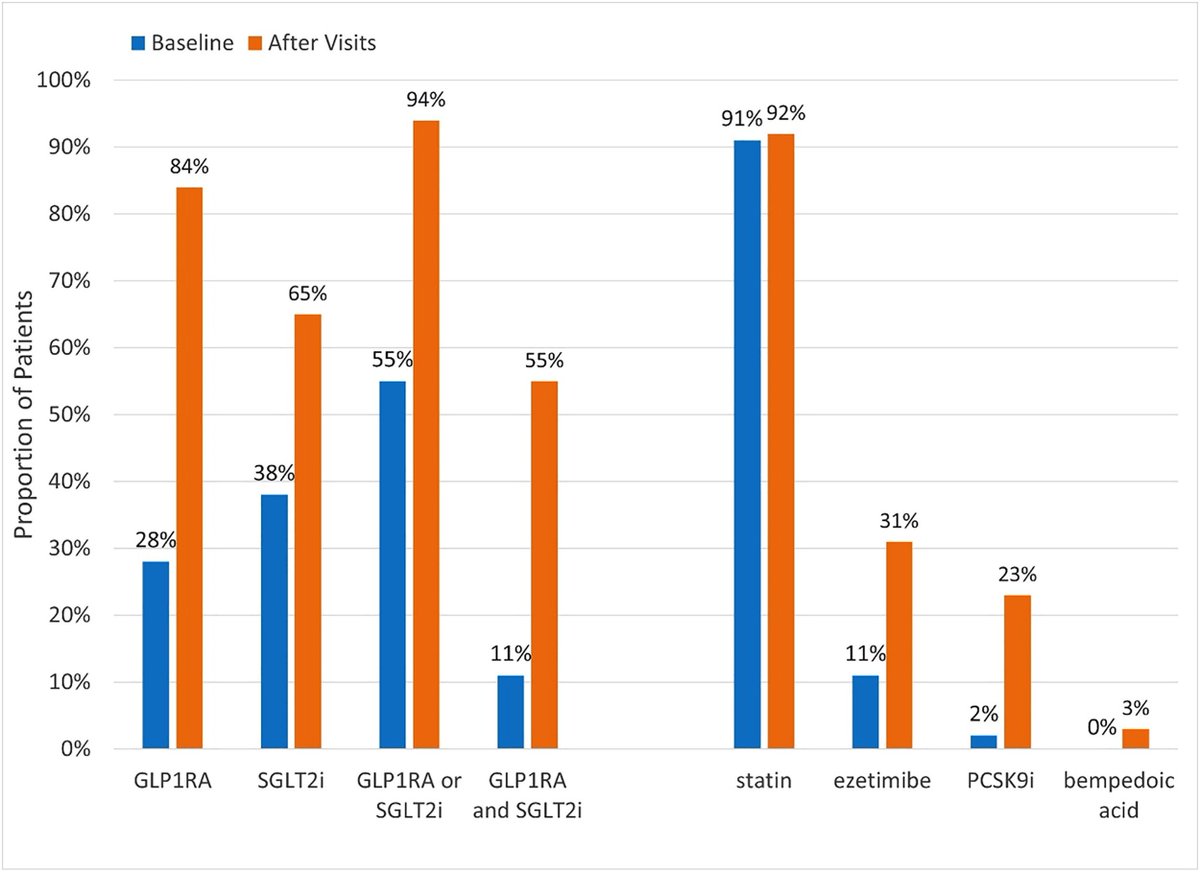
Out now in @AJPCardio! Managing high-risk pts w T2D+ASCVD in our specialized cardiometabolic clinic: high-volume implementation of GLP1RA/SGLT2i, and 89% achieved LDL-C levels below thresholds for intensification, incl <55mg/dL for pts at very-high risk doi.org/10.1016/j.ajpc…
Taher Modarressi, MD, FNLA tweet mediaTaher Modarressi, MD, FNLA tweet media
English
5
15
66
6.7K
William Cromwell, MD
William Cromwell, MD@Lipoprotein·
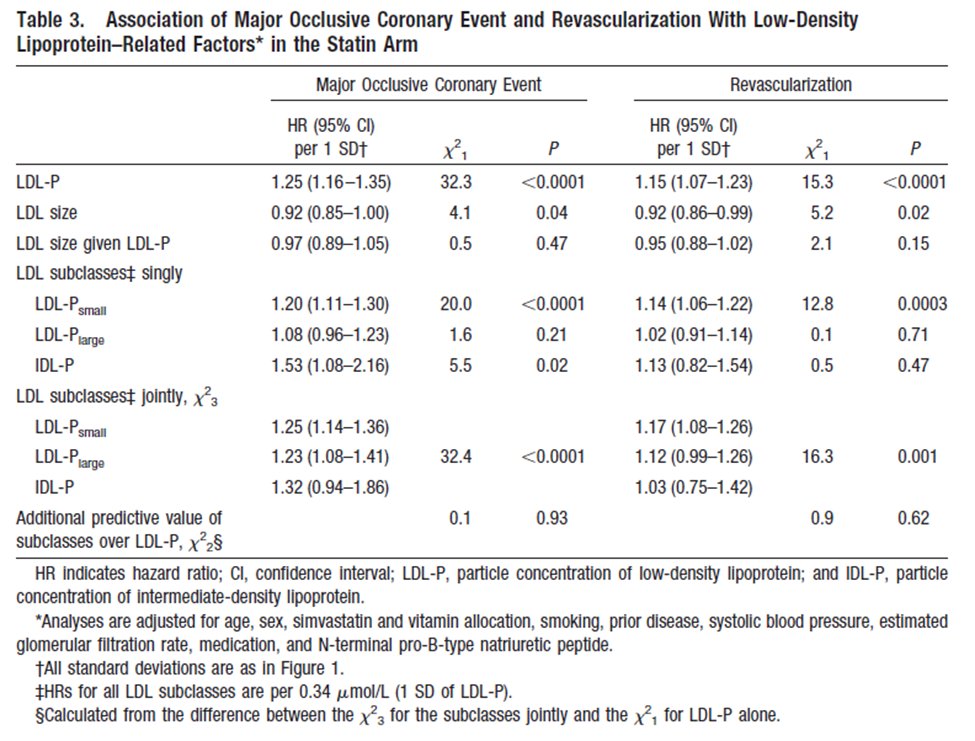
The largest data set related to your question comes from the Heart Protection Study. (1) This was a 5.3 year-long randomized, double-blind, placebo-controlled trial of simvastatin 40 mg versus placebo in 20,536 men and women with one of the following: 1. Previous diagnosis of CHD, cerebrovascular disease, other occlusive disease of noncoronary arteries 2. Diabetes mellitus (type I or II) or men > 65 years of age undergoing treatment for hypertension. Table 3 from this paper at the bottom of the post. To assess the association of total LDL particle number (LDL-P), LDL size, LDL subclass quantity (small LDL, large LDL, and IDL particle number) with outcomes, the authors performed the following analyses: 1. Univariate association of each variable with outcomes 2. Adjustment of LDL size for LDL-P 3. Assessment of LDL subclasses with all subclasses (small LDL-P, large LDL-P, IDL-P) in the model 4. Additional predictive value of LDL subclasses over LDL-P Here are the author's findings: 1. Considered singly, the association with small LDL-P was stronger than that with large LDL-P, but both were weaker than the association with LDL-P. 2. Univariately, small LDL-P was significantly associated with outcomes versus large LDL-P, which was not significantly associated with events. 3. When all subclasses were placed in the model to relieve confounder effects, small LDL-P and large LDL-P were equally associated with outcomes. 4. The strength of the association with the 3 LDL subclasses jointly was the same as that for LDL-P alone (32.4 versus 32.3), indicating that the LDL subclasses did not contribute any additional predictive value over LDL-P. In the discussion, the authors concluded: “Small LDL-P was the subclass most strongly correlated with LDL-P, but its association with major occlusive coronary event risk was weaker than that of LDL-P.” 1. Parish S, et al. Circulation 2012;125(20):2469-78
William Cromwell, MD tweet media
English
1
2
12
1.5K
Philippe Stephenson, MD
Philippe Stephenson, MD@TotalCytopath·
@Lipoprotein Which specific findings actually support the statements that sdLDL doesn't remain a predictor after adjustment for LDL-P, whereas LDL-P remains a predictor after adjustment for sdLDL?
English
1
0
0
1.5K
William Cromwell, MD
William Cromwell, MD@Lipoprotein·
Depending on the data analysis employed, conflicting data have been reported over the past 30 years regarding the relationship of LDL particle size, particle number, and quantities of small LDL or large LDL particles with various ASCVD outcomes. The interrelationships of particle size, particle number, and particle subclasses confound the strength of each biomarker's association with CVD risk. Analyses that adjust for the confounding interactions between these measures yield uniquely different insights versus data that do not address this. When LDL particle size and LDL particle number are adjusted for one another, only LDL particle number remains significantly predictive of events. (1-6) Additionally, small LDL particles have a strong inverse relationship with large LDL particles. (6, 7) In older reports that fail to adjust for this confounder effect, small LDL size appears more strongly related to CV risk than large LDL. Data that address confounding of small and large LDL size demonstrate both small and large LDLs are significantly associated with CVD risk independent of each other, traditional lipids, and established risk factors, with no association between LDL size and CVD risk after accounting for the concentrations of the two subclasses. (6, 7) Thus, rather than small dense LDL (sdLDL) being differentially atherogenic, analysis designed to address confounder variable effects demonstrates that small and large LDL particles have a similar strength of association with ASCVD risk. These relationships underscore expert panel recommendations finding insufficient evidence to advocate measuring LDL size or subclasses to assist ASCVD risk assessment or management. 1. Contois JH, et al. Clin Chem. 2009;55:407-19. 2. Brunzell JD, et al. J Am Coll Cardiol. 2008;51:1512-24. 3. Lamarche B, et al. Circulation. 1997;95:69-75. 4. Mora S, et al. Circulation. 2009;119:931-9. 5. Blake GJ, et al. Circulation. 2002;106:1930-7. 6. Otvos JD, et al. Circulation. 2006;113:1556-63. 7. Mora S, et al. Atherosclerosis. 2007;192:211-7.
English
22
24
115
30.2K
Thomas Dayspring
Thomas Dayspring@Drlipid·
@drpablocorral Spot on Pablo. It is time for the Guideline Folks to run with your wish. STOP retarding lipid management by promulgating cholesterol metrics.
English
4
1
32
3.9K
Pablo Corral MD
Pablo Corral MD@drpablocorral·
👉ApoB triumphs once more over LDL-C and non-HDL-C in risk prediction: ready for guidelines? ☝️ In conclusion, the era of focusing solely on LDL-C for assessing cholesterol-driven risk is coming to an end. ☝️These findings advocate for the integration of apoB as a central component in ASCVD risk prediction within future guidelines for dyslipidaemia management and cardiovascular disease prevention Open Access 🔓 academic.oup.com/eurheartj/adva… @society_eas
Pablo Corral MD tweet media
English
16
110
367
60.9K
William Cromwell, MD
William Cromwell, MD@Lipoprotein·
I appreciate your comments and agree that there is a difference in monocyte gene function in FH versus non-FH individuals. However, we are using different definitions to describe the origin of these functional differences. In general, alteration in gene function may arise from a change in the DNA nucleotide sequence (aka polymorphisms) or from altered gene regulation/expression that is not due to a change in the nucleotide sequence (epigenetics). In both cases, the genetic function is altered. In the case of polymorphisms, the DNA is structurally different in affected versus normal subjects. In epigenetics, the DNA is structurally the same in affected and normal subjects, but affected individuals differ in one or more genetic expressions. The EAS poster states, “Advanced coronary atherosclerosis is associated with changes in epigenetic pathways and bio-energic metabolism.” These observations are why I stated, “Despite monocyte DNA being the same in FH and non-FH subjects, these data demonstrate that environmental factors uniquely affect gene expression (epigenetics) and bio-energetic metabolism in FH individuals.” I hope this helps clarify my position and move us forward in the discussion.
English
2
0
5
209
Michael Mindrum, MD
Michael Mindrum, MD@MichaelMindrum·
Dr. Cromwell, monocyte DNA in FH patient would be different than a non-FH correct? If circulating elevated apo-B is the major unifying environmental factor of FH monocytes, what is it that leads to distinct inflammatory pathways btw. one FH patient & another (and thus such a diff. is ASCVD outcomes)?
English
3
0
2
293
William Cromwell, MD
William Cromwell, MD@Lipoprotein·
Thanks, Tom. It's been a fantastic journey. I'm glad we've traveled the road together. I remain inspired by Warren Weaver's quote (1960) as we seek to integrate new learnings to optimize individual care. "Science is not technology, it is not gadgetry, it is not some mysterious cult, it is not a great mechanical monster. Science is an adventure of the human spirit. It is essentially an artistic enterprise, stimulated largely by curiosity, served largely by disciplined imagination, and based largely on faith in the reasonableness, order, and beauty of the universe of which man is a part."
English
0
1
10
853
William Cromwell, MD
William Cromwell, MD@Lipoprotein·
Like many today, I pause to reflect and honor those who made the ultimate sacrifice so that we can live in freedom. Thanks to all my brothers and sisters who answered the call. It was an honor to serve. 🇺🇸
English
1
0
39
5.3K
William Cromwell, MD
William Cromwell, MD@Lipoprotein·
This short video illustrates how our thinking regarding various drivers of fatal and non-fatal outcomes has matured. Having Jim Otvos as my research partner for over 25 years has been an honor. Our team has had the unique opportunity to explore the clinical relevance of analytic improvements in lipoprotein quantification and discover new individual and multi-markers that extend our understanding of disease behavior and clinical management. As I enter my 36th year in lipidology, we are moving in the right direction regarding understanding complex outcomes and improving individual shared decision-making conversations about cardiometabolic risk assessment and management. Beyond individual risk factors and risk calculations, optimal care now requires integrating clinical history, nearly 40 risk-enhancing factors, outcome-proven biomarkers, and harmonizing various guidelines to inform a personalized, shared decision-making conversation. @PeterAttiaMD has been a leading voice in exploring opportunities to transition to this next-level approach in individual care. It would be a pleasure to have a conversation with him to explore these ideas and opportunities for precision cardiometabolic care. @PeterAttiaMD
Nick Norwitz MD PhD@nicknorwitz

☠️ApoB and All-Cause Mortality☠️ 🚨My Most important Tweet (and video) of the Week WATCH (10m): youtu.be/sAjDjLJUlQQ High level: There is controversy over the relationship between ApoB and All-Cause Mortality (ACM), with some noting a J-curve whereby at lower levels of ApoB mortality is higher. BUT... 👉We must ask: what are/is the major driver of ACM? 👉Answer: Metabolic Vulnerability Metabolic Vulnerability can now be quantified with a multi-marker (MVX), which constitutes a metabolic "signature" suggestion a complex of nutritional and inflammatory disfunction. And MVX is GREAT at predicting ACM. One can conceptualize MVX as the background noise if one is looking at the impact of ApoB on ACM: it's like dropping a pebble into white water rapids... you won't see a ripple because the background is too strong. BUT, if you "still" the water (account for MVX), the relationship can change... and the J-curve can transform into a straight line! What are the consequences? Additional nuances? You'll have to watch the video to find out! I review: 👉Signal-to-noise ratio with respect to ACM 👉Drivers of Fatal vs Non-fatal events 👉Metabolic "Signatures" 👉Weighing the costs of intervention Major ht/ to @Lipoprotein (for references and education) and @theproof (for great 5 hour chat that you should definitely check out when it drops on his podcast... ⚠️WARNING: WILL BE PROVOCATIVE⚠️) Please engage. Watch the full video, and comment thoughtfully: youtu.be/sAjDjLJUlQQ

English
5
6
54
15.3K
William Cromwell, MD
William Cromwell, MD@Lipoprotein·
All cause mortality is an interesting endpoint. I discuss new learnings regarding the relationship of metabolic vulnerability and inflammation with all cause mortality in the lecture linked below. youtu.be/qZb_16m44dg?si… Toward the end of the lecture, I also review an interesting cohort analysis in which the J-shaped curve of ApoB Call with all cause mortality becomes linear after adjustment for malnutrition.
YouTube video
YouTube
English
2
2
7
536
Sandeep Palakodeti, MD MPH
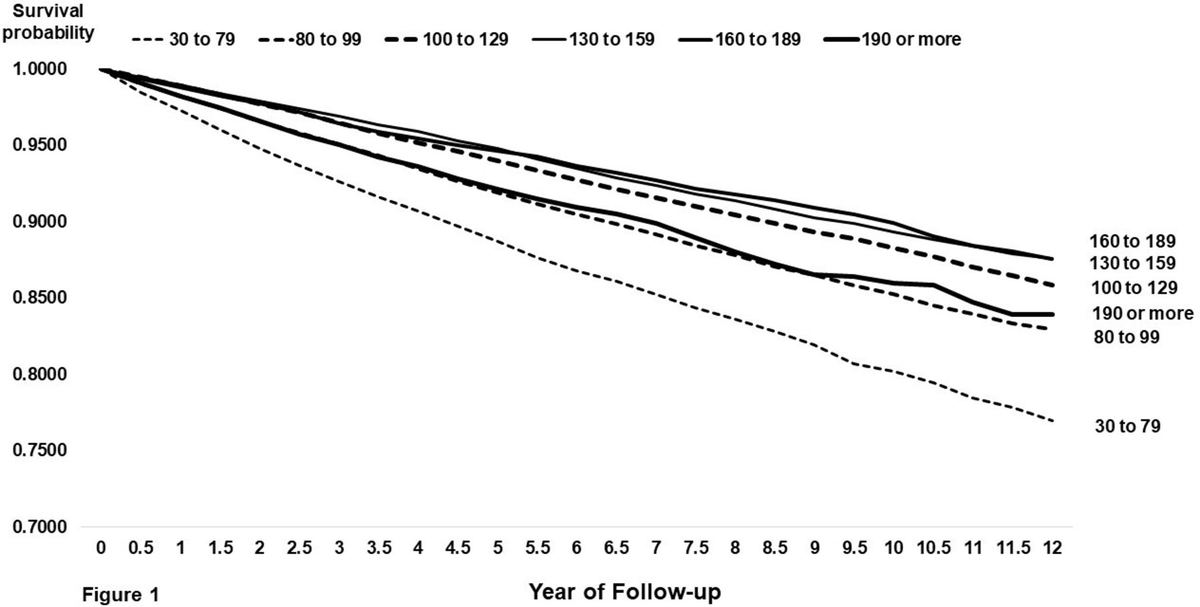
Interesting large retrospective cohort study from one healthy system (>170k patients) not on statin that shows U-shaped curve for all-cause mortality and LDL-c. 100-189 mg/dl seemed to portend lowest risk "Among primary prevention-type patients aged 50–89 years without diabetes and not on statin therapy, the lowest risk for long-term mortality appears to exist in the wide LDL-C range of 100–189 mg/dL, which is much higher than current recommendations"
Sandeep Palakodeti, MD MPH tweet mediaSandeep Palakodeti, MD MPH tweet media
English
2
1
8
4K
William Cromwell, MD
William Cromwell, MD@Lipoprotein·
@theproof Thanks for the opportunity to have this conversation! It was a pleasure and I look forward to additional discussions on a future podcast 😀
English
0
0
8
199