2ISEE
8.5K posts

💸 Francis Ngannou meets his first ever promoter and remembers his first money:
“He is my first promoter. But… first fight, was a free tournament but for the second one, I won €2k…
I was so happy. He gave me a stack of 20 euro in an envelope. I went in the corner, counted my money bro, so excited!”
🎥 @francis_ngannou
English
2ISEE retweetledi

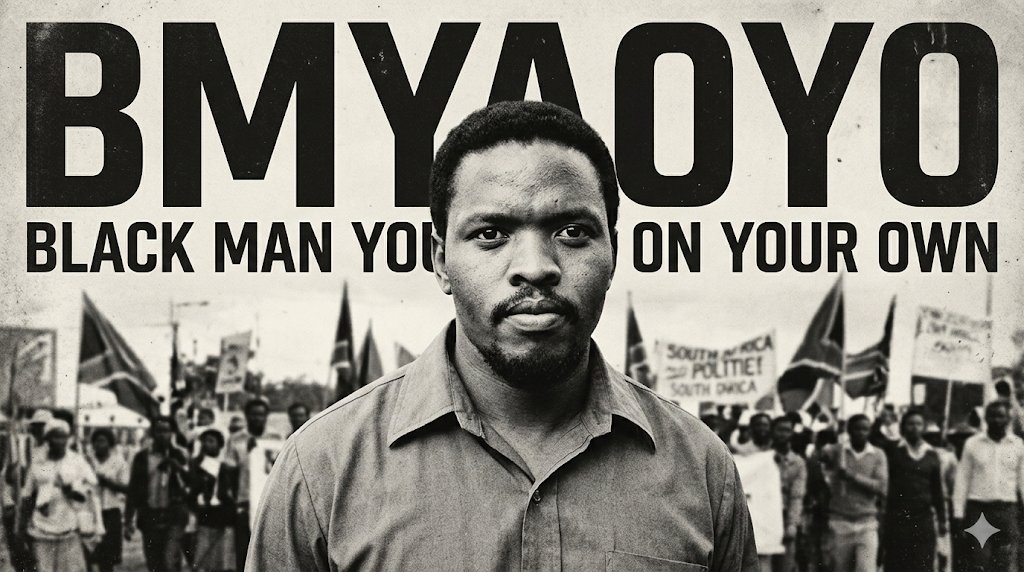
People assume that when Steve Biko said, “Black man, you are on your own,” he was expressing despair or abandonment. The assumption is that he was saying, “Don’t expect help,” or “No one is coming to save you.”
In reality, Biko meant the opposite. When you read Biko’s writings, it becomes easily apparent that he was pushing back against a few things, including the growing dependence of Black people on White liberal “allies.” He argued that even well-meaning White involvement would unintentionally reinforce power imbalances.
When he said the now-famous slogan, Biko was identifying a pattern where White liberals were leading Black organisations, which was causing natives to frame freedom in terms of entry into white-defined norms. His issue with this was that it kept Black people in a dependent position, or as a “perpetual pupil,” as he put it.
Biko saw White liberals as often wanting to “uplift” Black people within the existing colonial structure, rather than dismantle it. Their help, even if well-intentioned, kept Black people as junior partners.
Biko was frustrated by how the “freedom” many natives wanted was just better treatment within a White-run system, things like less harsh passes, slightly higher wages, a few parliamentary seats, while still playing under rules set by the coloniser. To Biko, this was not genuine liberation.
Biko further noted how, once liberation is framed as something White people teach about, Black people are forever in a learning position. According to him, the first lesson is that there is nothing to be taught from that position at all, that the pupil must declare the teacher irrelevant to that particular journey.
That’s why his Black Consciousness philosophy insisted on not rushing into policy negotiations, which is what the ANC eventually settled for, but a psychological revolution where Black people rejected the very premise that they needed White guidance.
Unfortunately, this is the trap the ANC fell into when it pursued exactly what Biko warned against by negotiating for a place WITHIN a fundamentally unchanged economic and political structure of neoliberal capitalism, a constitution protecting property rights inherited from Apartheid, etc.
In fact, Biko was so deep that the fight he saw wasn’t first against Apartheid laws, but against the internalised belief that a White-run world is natural; a belief that makes “freedom” look like asking for better seats on someone else’s ship, rather than learning to build your own.
If Steve Biko were alive today, he would bemoan a psychological revolution that never happened. A walk through modern South Africa, would lead him to conclude that the revolution was stalled at the ballot box.
He would be devastated to see that for many, “liberation” has been redefined as the ability to consume like the oppressor, to own the same luxury German cars, live in the same gated suburbs, and send children to schools that still prioritise Eurocentric curricula. To Biko, If you are still using the oppressor’s yardstick to measure your success, you are still mentally occupied.
Steve Biko would also see a psychological stagnation in how labour is still structured. Even with a Black government, the fundamental relationship of the Black servant to the White corporate master persists in the economy. Biko wanted a Black man who could stand upright and look the world in the eye; he would likely find that the crouched posture of economic dependency remains the default for millions of natives.
Biko’s greatest fear was that Black people would win the country but lose their souls to the belief that they are naturally inferior in the realm of governance. His fear has come true.
English
2ISEE retweetledi

イタリアのファシスト刑務所で、アントニオ・グラムシは一つの逆説に直面していた。なぜ労働者たちは自分たちを搾取する体制に自ら同意するのか。
伝統的な権力論は「警察と軍隊が人々を従わせている」と答える。しかしグラムシは見抜いた。本当に強力な権力は見えない。 学校、メディア、宗教、家族という日常の中に潜み、「これが自然なことだ」と人々に思い込ませる仕組みこそが本質だと。
これをグラムシは「文化ヘゲモニー」と呼んだ。支配階級は暴力ではなく、知的・道徳的リーダーシップによって大衆の「自発的な同意」を獲得する。特定の階級の利益を「国民全体の利益」に見せかける物語を、教育や報道を通じて浸透させるのだ。
この理論の核心は「統合的国家」という概念にある。国家とは政治社会(警察や軍隊)と市民社会(学校や教会、メディア)の総体だ。暴力装置は背後に控えつつ、日常的に機能するのは同意を生産する市民社会の側である。
この同意の心理的メカニズムを解く鍵が、「コモン・センス」と「グッド・センス」の区別である。
コモン・センスとは、支配階級の世界観が長年の伝統や格言として染み込んだ、無批判な現実認識のこと。「給料が上がらないのは景気のせいだから仕方ない」「いじめられる方にも原因があるんじゃないか」――こうした信念は、支配への同意を内部から支える。
これに対してグッド・センスとは、労働や生活の現場から生まれる批判的で実践的な知恵である。「時間厳守でサービス残業はおかしい」「週5フルタイムで働いてるのに生活不安」。これらはまだバラバラだが、本質的に支配の論理と矛盾する。
ヘゲモニーとは、このグッド・センスをコモン・センスの中に封じ込め、人々が自らの矛盾した意識のまま行動し続けるように仕向けるプロセスに他ならない。
ここでグラムシの戦略論が生きてくる。「機動戦」と「陣地戦」の区別だ。ロシア革命のような機動戦は、市民社会が未発達で国家が裸の暴力で立つ社会でのみ有効である。西欧では市民社会(学校、メディア、教会など)が強固に機能しており、その機能は現在、支配階級への同意を日々生産する方向に働いている。
必要なのは「陣地戦」である。教育、メディア、宗教、文化といった市民社会の各要塞を、何年もかけて一つずつ奪取していく長期的な闘争。これは選挙やストライキではなく、人々の「良識」を組織し、新たな「コモン・センス」を構築する文化活動である。
現代のネオリベラリズムはこの理論の完璧な実例だ。市場原理は「競争が唯一の合理的な原理である」というコモン・センスを世界中に普及させた。人々は市民ではなく「自己責任の起業家」となり、失業や貧困を個人の失敗と感じる。「これ以外に選択肢はない」という発想そのものがヘゲモニーの勝利である。
デジタル時代はこの構造をさらに精緻化した。アルゴリズムは「新しい有機的知識人」として機能する。私たちの関心や不安を学習し、パーソナライズされた現実を提示することで、同意を自動的に製造する。フィルターバブルは大衆を分断し、「共通の国民的意志」の形成を妨げる。
しかし希望はある。グラムシは「対抗ヘゲモニー」の可能性を説いた。支配階級が自らの有機的知識人(経営者、技術者、ジャーナリスト)を持つように、従属階級もまた大衆から生まれる有機的知識人を育てねばならない。
彼らは学校なきところで学校を創り、メディアなきところでメディアを運営し、いまあるコモン・センスを解体する別の語彙を生み出す。これが「近代的君主」すなわち革命的集団の役割である。単なる抗議ではなく、新しい道徳的・知的リーダーシップを社会に提供する文化事業として。
結局、権力の最も深い場所はバリケードではなく、私たちの頭の中にある。ある社会秩序が「当然」と思われる瞬間、その秩序は勝っている。逆に言えば、その「当然」が揺らぐとき、歴史は動き出す。グラムシが刑務所で書き続けたのは、まさにその「当然」を解体するための思考の道具だった。
—
Douglas C. Youvan(研究者)
『The Architecture of Consent: A Comprehensive Analysis of Antonio Gramsci's Theory of Cultural Hegemony, Intellectual Leadership and Modern Power Structures』
(同意の建築:アントニオ・グラムシの文化ヘゲモニー理論、知的リーダーシップ、現代権力構造の包括的分析)
researchgate.net/publication/40…

日本語
2ISEE retweetledi

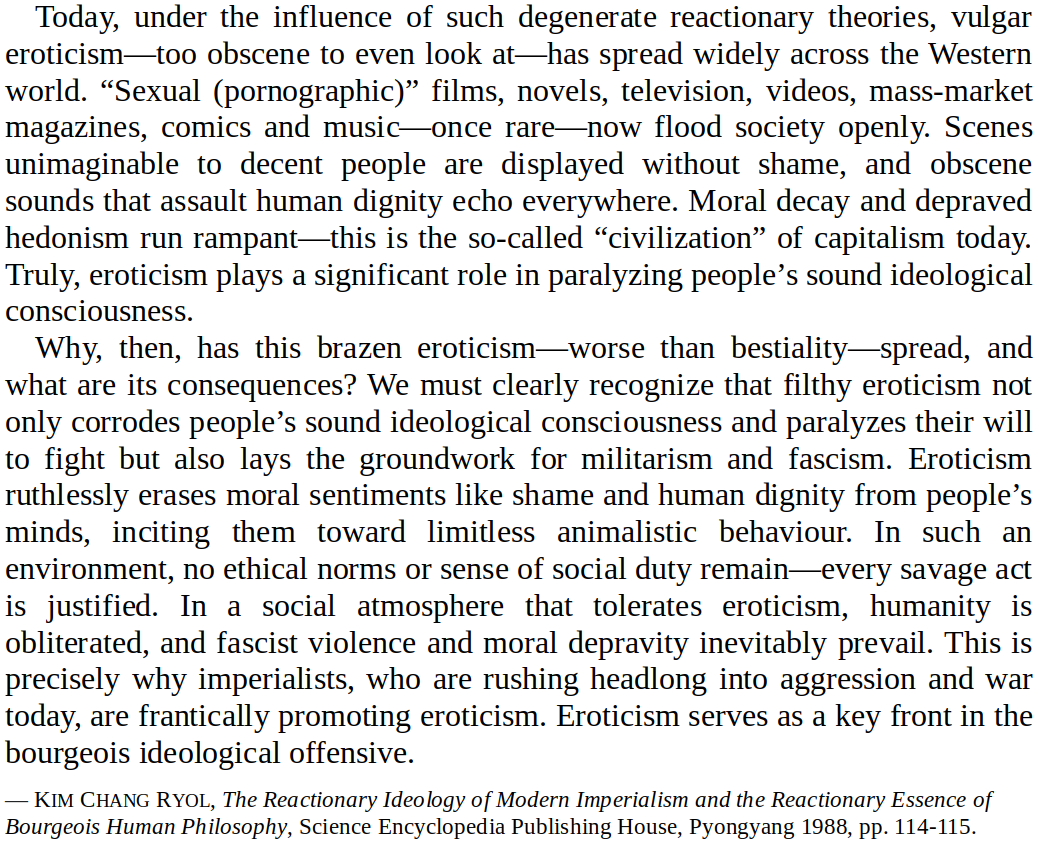
True story. According to prof. Kim Chang Ryol, pornography is a major tool in the “animalization of man” and destruction of human morality, sense of meaning and collective ethos under late capitalism, paving the way for misanthropic violence and imperialist war.
Brutal Truth Bombs@FORTRESSMAXXING
Porn is the most evil shit on the planet. It does psychological and societal damage like drugs but is 10000x more widespread. And it's weaponized and owned by those who rule the West. One of the strongest means of population control, societal retardation, and goy cattlification
English
2ISEE retweetledi

To put it simply, Kelly:
The West sabotages countries that threaten the extraction.
Singapore had nothing to extract.
The West sabotages countries that inspire dangerous ideas about structural change.
Singapore's model is not replicable at scale and Lee Kuan Yew was careful to never frame it as a universal template for the Global South.
The West sabotages countries whose leaders build coalitions across the developing world that could collectively challenge the rules of the system.
Lee Kuan Yew built no such coalition.
He was famously contemptuous of Third World solidarity movements and non-aligned politics.
Remove yourself as a threat on all three dimensions simultaneously and you get room to operate.
The cost of that room is that you are not a threat on all three dimensions simultaneously.
Singapore got its developmental state.
It did not get, and did not try to get, a world in which other countries could also build one.
That is the price Lee Kuan Yew paid for the West's tolerance.
Whether it was worth it is a question Singapore never had to answer.
The countries that tried to answer it differently paid a very different price.
Kelly Brooks@BbbrooksKelly
@nxt888 I don’t understand how the west allowed Lee Kuan Yew to do what he did. How did he get away with it without the usual sabotage for any country who defies the Breton Woods prescriptions?
English
2ISEE retweetledi

1. Open VLC and go to Browse.
2. Click on Open Network Stream.
3. Download m3u files of your choice from github.com/iptv-org/iptv and paste into the VLC Open Network Stream and it will load thousands of publicly available internet protocol television.
Peter Agboola@baba_Omoloro
If you have VLC, you don't need Amazon Firestick. You can watch Premier League with your VLC for £0.00
English
2ISEE retweetledi

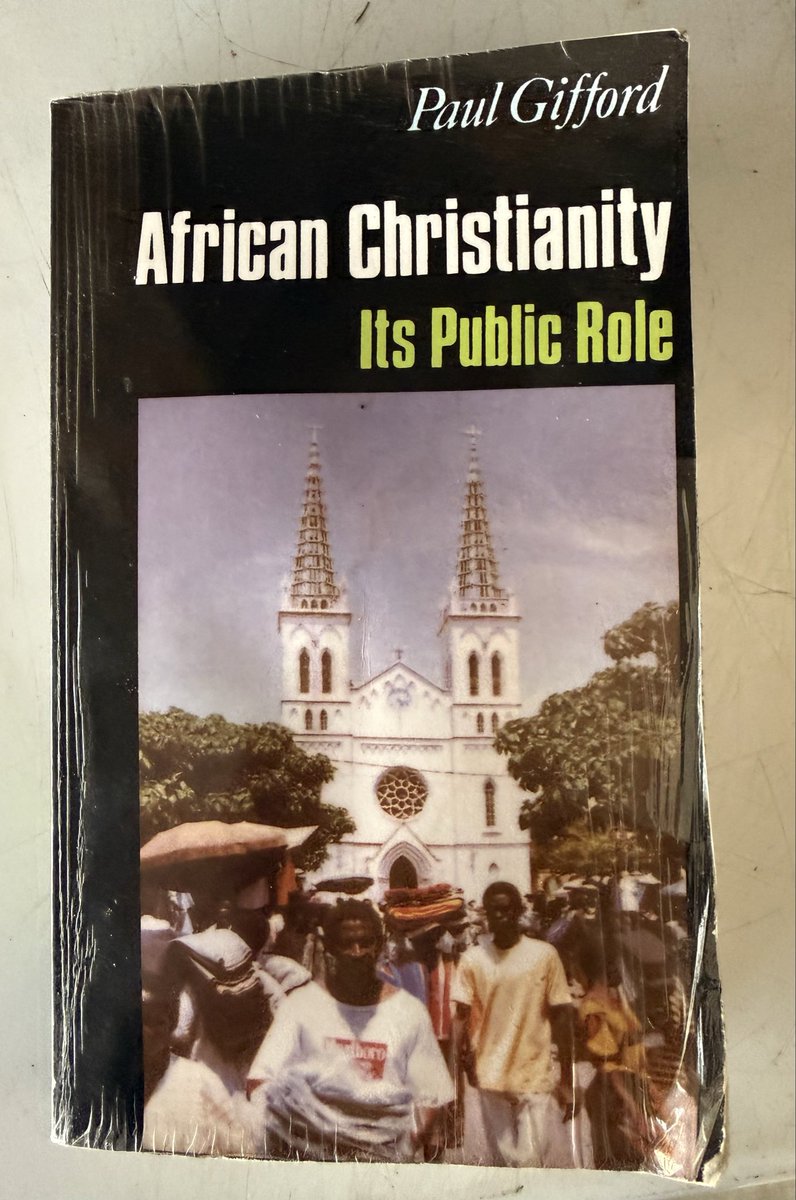
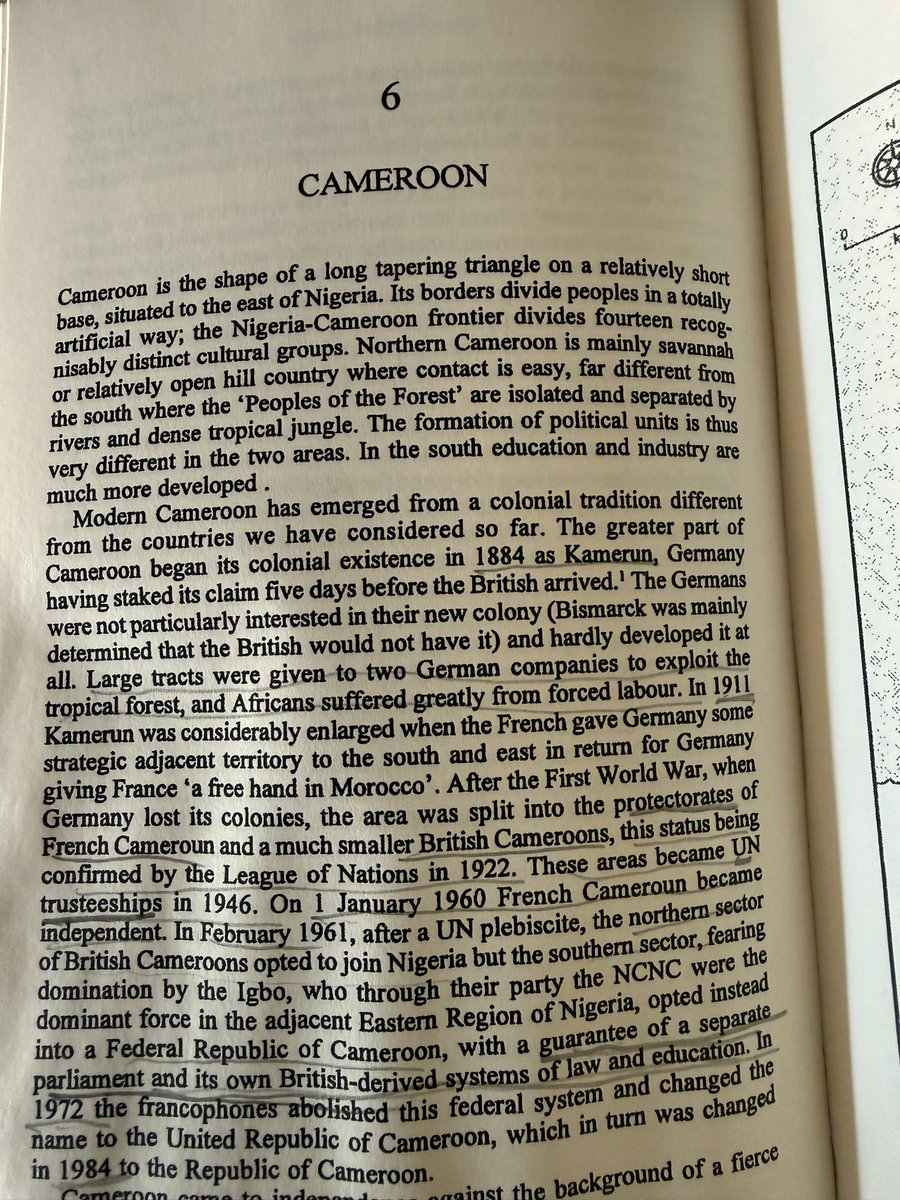
As I was saying, Prof. Gifford did an extensive survey of Christianity in Cameroon, and what he found was a Christianity that fights over the same things politicians fight over. It is a thoroughly ethnic church. This shameful fight is not new. It happened in Douala.

Berthier Ace®@BerthierAce
Traitement discriminatoire de la communauté SAWA lors de la visite du Pape à Yaoundé. #ChezMoiAuCmr
English
2ISEE retweetledi
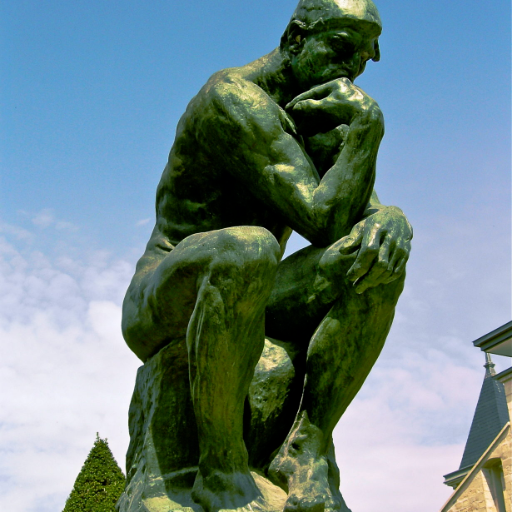
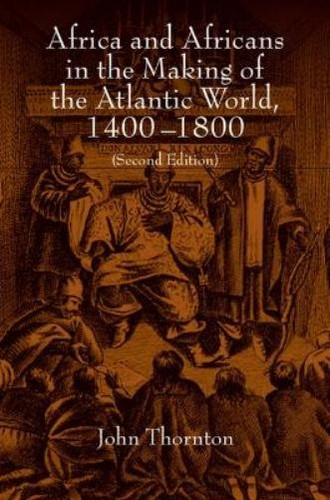
I wouldn't be exaggerating to say that this book was life-changing
Perspective is everything when it comes to history, and this book is all you need for an introduction to African history from an African perspective
G. F. Allen@AuthorGFAllen
Have you ever finished a book and thought, “Okay, I’m reading everything this person writes”?
English
2ISEE retweetledi

Et si l’Europe, en colonisant le monde, s’était aussi abîmée elle-même ? Et si le travail de décolonisation commençait d’abord à l’intérieur, dans notre regard, dans nos mots, dans nos habitudes de pensée ?
Voilà les questions que pose Aimé Césaire dans son Discours sur le colonialisme. En transformant les peuples en objets, les terres en butin, l’Europe s’est ensauvagée.
Première leçon de ce texte : une civilisation se juge à la manière dont elle traite ceux qu’elle pourrait vouloir écraser.
Deuxième leçon : la langue est un champ de bataille. Césaire s’attaque aux mots qui anesthésient, comme ces « missions civilisatrices » qui, en réalité, sont une entreprise méthodique de déshumanisation. Il nous impose une discipline de fer : nommer avec justesse. Car mal nommer l’inacceptable, c’est lui permettre de s’accomplir sous le couvert de la respectabilité.
Troisième leçon : l’universel n’est pas un masque à géométrie variable. Il n’existe pas de droits de l’homme qui s’arrêtent aux frontières ou à la couleur de peau. Accepter que certains soient « moins humains » que d’autres, c’est permettre la destruction de l’édifice entier de notre dignité.
La quatrième leçon, enfin, c’est que l’indifférence est une complicité. Le colonialisme prospère dans l’habitude et le confort des consciences qui s’accommodent de la souffrance lointaine. Dès que la vie de l’autre devient une statistique ou un « dossier », nous préparons le lit des barbaries futures.
Lire Césaire aujourd’hui est un acte de vigilance absolue : c’est refuser la chosification sous toutes ses formes, qu’elles soient économiques ou sécuritaires, et tenir l’humanité entière pour seule mesure afin de ne plus jamais laisser la force devenir la loi.
Français
2ISEE retweetledi

"Western culture was, at its core, individualistic and democratic and liberty-minded and tolerant and progressive and rational and scientific. Never mind that pre-modern Europe was none of these things, and that until the past century democracy was the exception in Europe, something that few stalwarts of Western thought had anything good to say about. The idea that tolerance was constitutive of something called Western culture would have surprised Edward Burnett Tylor, who, as a Quaker, had been barred from attending England’s great universities. To be blunt: if Western culture were real, we wouldn’t spend so much time talking it up."
Kwame Anthony Appiah: "The lies that bind : rethinking identity : creed, country, colour, class, culture"
drive.google.com/file/d/1KwzaRM…

English
2ISEE retweetledi
Ils aiment beaucoup parler des «Africains ayant vendu les autres Africains en esclavage», mais ils ne parlent presque jamais de ceci: les soldats juifs qui ont travaillé pour Hitler. Ils étaient plus de 150mille.

Le Figaro Histoire@Figaro_Histoire
«Pourquoi ne parle-t-on jamais de la responsabilité des Africains dans l’esclavage des leurs ?» La tribune de l'historienne Marie-Claude Mosimann-Barbier pour le @Figaro_Histoire après la résolution de l'ONU condamnant la seule traite transatlantique > lefigaro.fr/histoire/pourq…
Français
2ISEE retweetledi

2ISEE retweetledi

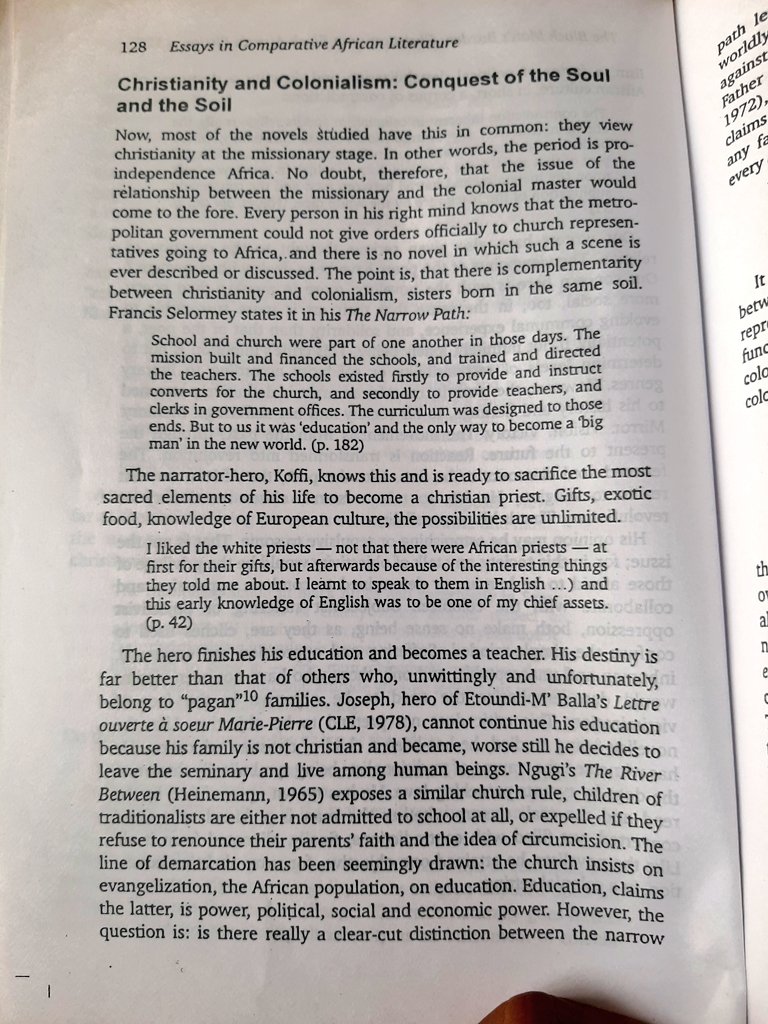

2ISEE retweetledi

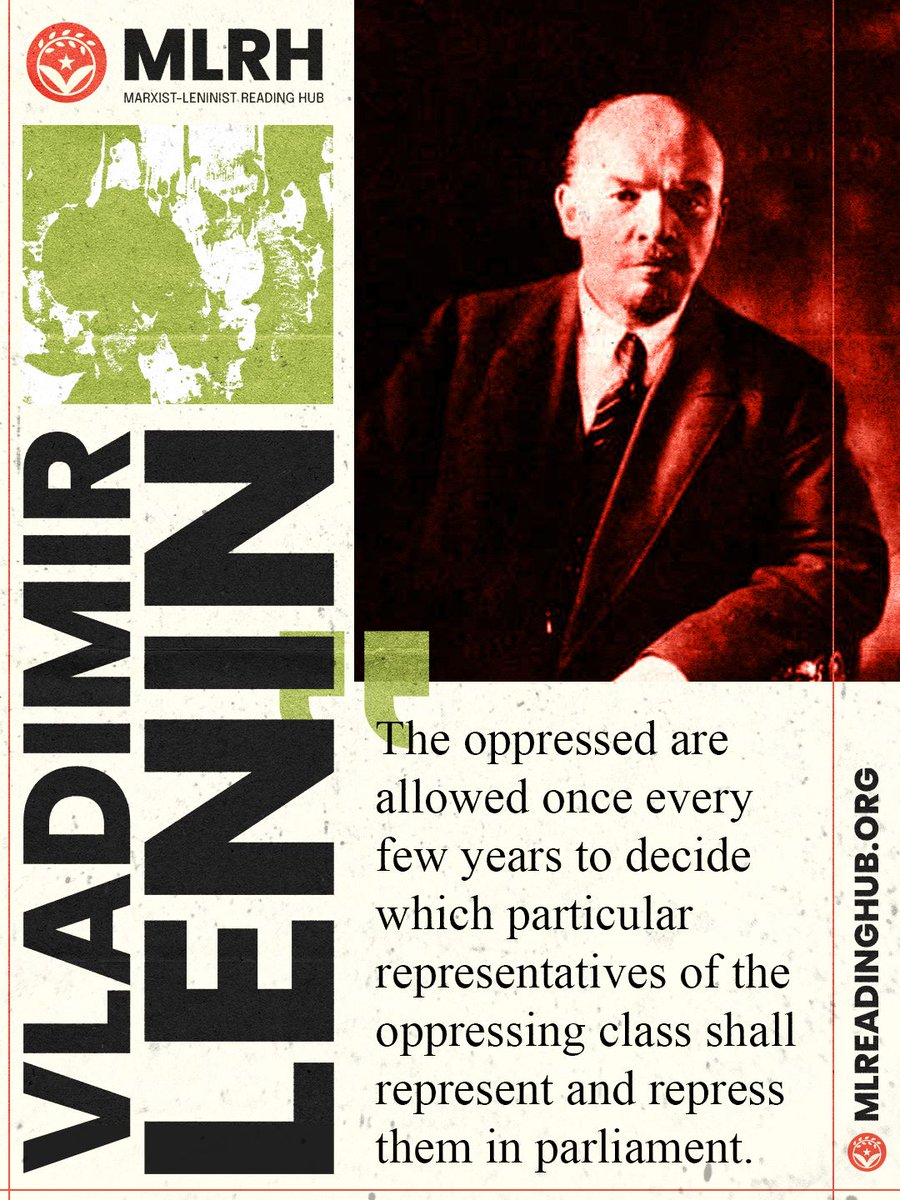
"The oppressed are allowed once every few years to decide which particular representatives of the oppressing class shall represent and repress them in parliament." V. I. Lenin
English
2ISEE retweetledi

Do you know that French-speaking countries in Africa take $500 million in loans every year just to buy school books from France?
Not laboratories, not research centers, not teachers’ training: poor quality school books filled with caricatured faces of Africans and racial slurs. Borrowed money, disbursed directly to French publishing houses, in exchange for textbooks written in Paris, printed in Paris, and shipped to African children who will spend their entire education believing this is normal. According to French state media @lemondefr in an article published 12 years ago, the same French parent company, Hatier and its subsidiary Hachette, controls roughly 95% of the school manual market across “Francophone” Africa.
And how do we fund such purchases annually through loans from the World Bank. And again, am not making up. It is clearly explained in the article published by Le Monde. Our nations do not even touch the money. The $500 million are disbursed directly as loans from the World Bank on behalf of our countries to the French publishing company annually to produce and print in France poorly written, racist school books that are shipped to our countries. We are the only enslaved people on the planet that take loans with interests to subsidize our own enslavement.
I am telling Angola this because Angola just made French compulsory in its primary schools from age ten. And I want to be precise about what it has joined, because imprecision is exactly what keeps these arrangements alive. Two years ago, Macron stood in front of cameras and presented a government memo laying out exactly how Paris intended to arrest its accelerating loss of influence across Africa. The remedy prescribed was linguistic and cultural penetration of non-Francophone countries. Angola and Ghana were designated priority targets. João Lourenço and Nana Akufo-Addo were identified as men whose cooperation could be secured. France came bearing curricula, resources, and a check. Both men apparently found the terms reasonable although may be luckily for Ghana, it is yet to be deployed.
Here is what is worth understanding about that check: France is not being generous. France is being desperate. The survival of French hegemony depends, structurally and existentially, on maintaining influence in Africa. 70% of all French speakers on earth live on this continent, concentrated in some of the poorest countries in the planet. Without Africa, the “Francophone world” is a provincial club with a prestigious accent and a shrinking membership. France does not “invest” in African language education because it loves Africa. It does so because without Africa, France is a medium-sized European country with a permanent UN Security Council seat it would struggle to justify.
And Angola, a country whose economy is now robust enough that Portuguese nationals emigrate there looking for work, decided that the gift it would give its ten-year-old children is access to a linguistic corridor that covers less than 8% of global scholarship and connects them to none of their SADC neighbors. South Africa, Zimbabwe, Zambia, Tanzania: all English-speaking. The pragmatic choice, setting aside entirely the more principled argument for an African language, was obvious.
The saddest part is not that France keeps trying. France’s self-interest is consistent and entirely predictable. The saddest part is that some of our leaders keep making it so effortless for Paris to buy our dignity.
African Hub@AfricanHub_
Your thoughts on this ...
English
2ISEE retweetledi

I'll simplify it for you:
Africa & China (including the broader Asia) had DIFFERENT KIND of colonialism...
Different kinds of colonialism and the intensity produce different kinds of results and outcomes.
Hope this helps.
Nathan is in.. Maine 🔎@NathanpmYoung
I don't think colonialism explains why Africa has such low growth. Asia had colonialism too.
English
2ISEE retweetledi

Le racisme, ce n'est pas forcément traiter un Noir de primitif. C'est penser à un primitif dès qu'on voit un Noir.
Duval Philippe@p_duval
A propos du maire de Saint-Denis Bally Bagayoko. "On n'est pas dans une tribu primitive [...] Vous avez le mâle dominant qui est là qui décide [...] toi tu auras à manger, toi t'auras pas à manger, moi j'aurai les femelles, toi t'auras pas les femelles [...]"
Français
2ISEE retweetledi
Without Lisa Aubrey, Bimbia would never have been recognized globally as a Central African slave trade hub. That’s a fact. Anything else is a lie. Kudos to Dr. Aubrey. @rootsreconnect1 .

English
2ISEE retweetledi



2ISEE retweetledi