@Kolas_Yotaka Who empowers DPP - The USA and CiA ? Such a naive statement. Proof first that you can work independently and separately from your western master, then you can talk abt China influence..
English
Prince n Duke
2.4K posts
@PrinceDuke98
finance and engineering background - observer of nature, people & politics (emphasis on US, China, East & South East Asia)


Cheng Li-wun discusses her hope to meet President Trump following her Beijing visit, aiming to convey Taiwan's commitment to avoiding conflict and securing lasting cross-strait peace bloom.bg/4dg1FgD




Treasury’s Office of Foreign Assets Control today alerted financial institutions to the sanctions risks associated with independent “teapot” oil refineries in China, which import Iranian oil to ultimately benefit the Iranian regime, military, and weapons programs. Financial institutions should be on notice that Treasury will leverage its full range of tools and authorities to hold accountable financial institutions that facilitate these transactions.

🇺🇸 U.S. oil exports hit a record 6.4 million barrels per day



China’s anti-Japan rhetoric is not resonating because Japan has been peaceful in recent decades and China has not been. What is especially worrying is that China has not adjusted its rhetoric when it can see that it’s not working.

Food for thought. The age of cartel scarcity is ending The United Arab Emirates’ decision to leave OPEC is not just another quarrel inside an oil cartel. It is a move in the New Great Game taking shape across energy, trade routes and strategic commodities. For years, Abu Dhabi accepted the logic of collective restraint. Saudi Arabia would lead, Russia would amplify, and other producers would sacrifice volume for price. That bargain worked while members shared the same goal: defend oil prices without destroying demand. The UAE no longer fits the model. It has invested heavily to expand capacity, while OPEC+ quotas have limited its ability to monetise those barrels. ADNOC has targeted crude production capacity of 5mn barrels a day by 2027, while UAE production has often been restrained by OPEC+ agreements (EIA). Abu Dhabi wants to convert oil in the ground into sovereign wealth while demand still has value. The cartel wants patience. The UAE wants velocity. That is the structural shift. The oil market is moving from price defence to market-share capture. The UAE is not leaving OPEC because it has lost faith in oil. It is leaving because it wants to sell more of it while the world still needs it. Investors should separate the shock from the regime. In the short term, the Iran conflict drives prices because it determines whether barrels can move through Hormuz. If tankers cannot sail, spare capacity is theoretical. War risk, insurance costs and inventories set the front-month price. But Iran does not define the long-term price structure. Wars create spikes; structures determine regimes. The structural story is bearish: OPEC is less cohesive, the UAE is more willing to chase volume, and the US is now the resource superpower OPEC once feared. The US became the world’s top crude producer in 2018 and produced a record 13.2mn barrels a day in 2024 (EIA). For Donald Trump, the rupture is useful. A weaker OPEC means Saudi Arabia and Russia have less ability to manage prices. Lower oil is a tax cut for US households and a weapon against inflation. But Hormuz limits the victory lap. Trump can pressure cartels; he cannot repeal geography. China sees the same map differently. It remains exposed to Gulf flows and needs reliable suppliers. Beijing has relied on discounted Iranian and Venezuelan barrels, but those supplies carry sanctions, shipping and insurance risk. A freer UAE can offer something more valuable than cheap crude: reliability. This is the New Great Game in energy form. The US wants lower cartel power. China wants secure supply. The UAE wants autonomy and relevance in both capitals. Saudi Arabia wants to preserve cartel authority. Russia wants disruption to keep energy geopolitics in play. The age of cartel scarcity is giving way to the age of market-share oil. The marginal barrel is no longer merely an economic unit. It is a geopolitical instrument.


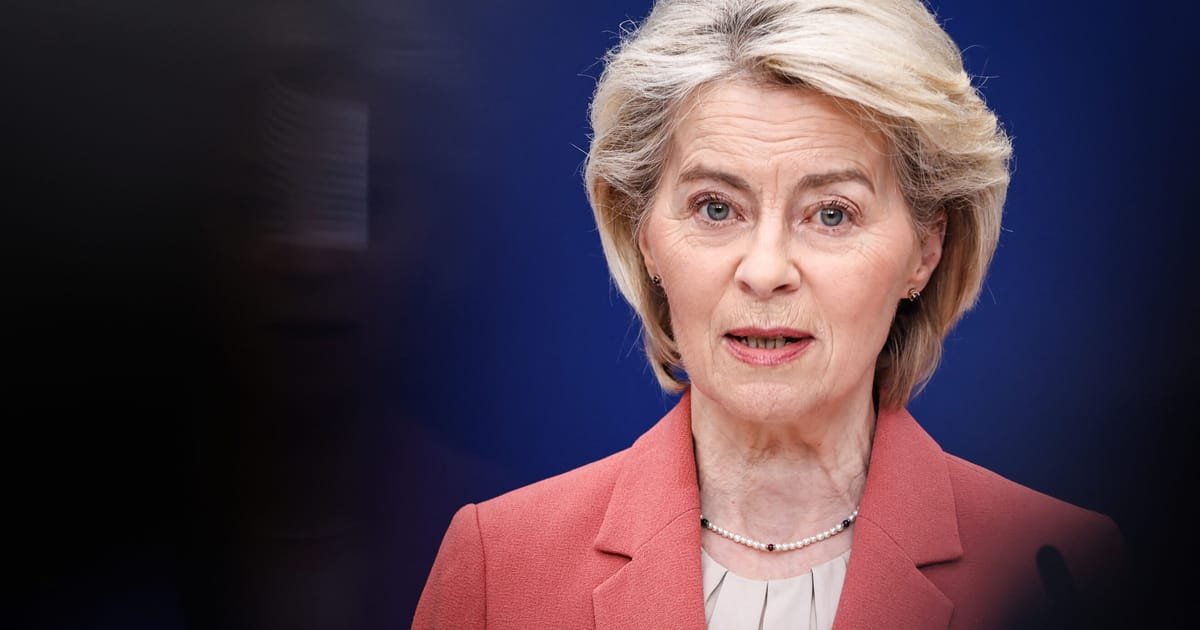
Breaking news: China has blocked Meta’s $2bn acquisition of artificial intelligence platform Manus, after regulators reviewed whether the deal violated Beijing’s investment rules. ft.trib.al/JnwLniN


@Write4Republic Funny how “self-determination” becomes propaganda the moment it is applied to U.S. territory. So the rule is simple: If it weakens China, it is freedom. If it questions America, it is a bot. Thanks for proving my point.

@StatisticUrban The soviet sphere was famously unsanctioned by capitalist nations