ProBucks_
19.6K posts

ProBucks_
@ProBucks_
Futures swing trader & contrarian investor. Truth and integrity come before reputation

*SPACEX MULLS CUTTING ROBINHOOD, SOFI OUT OF IPO: REUTERS


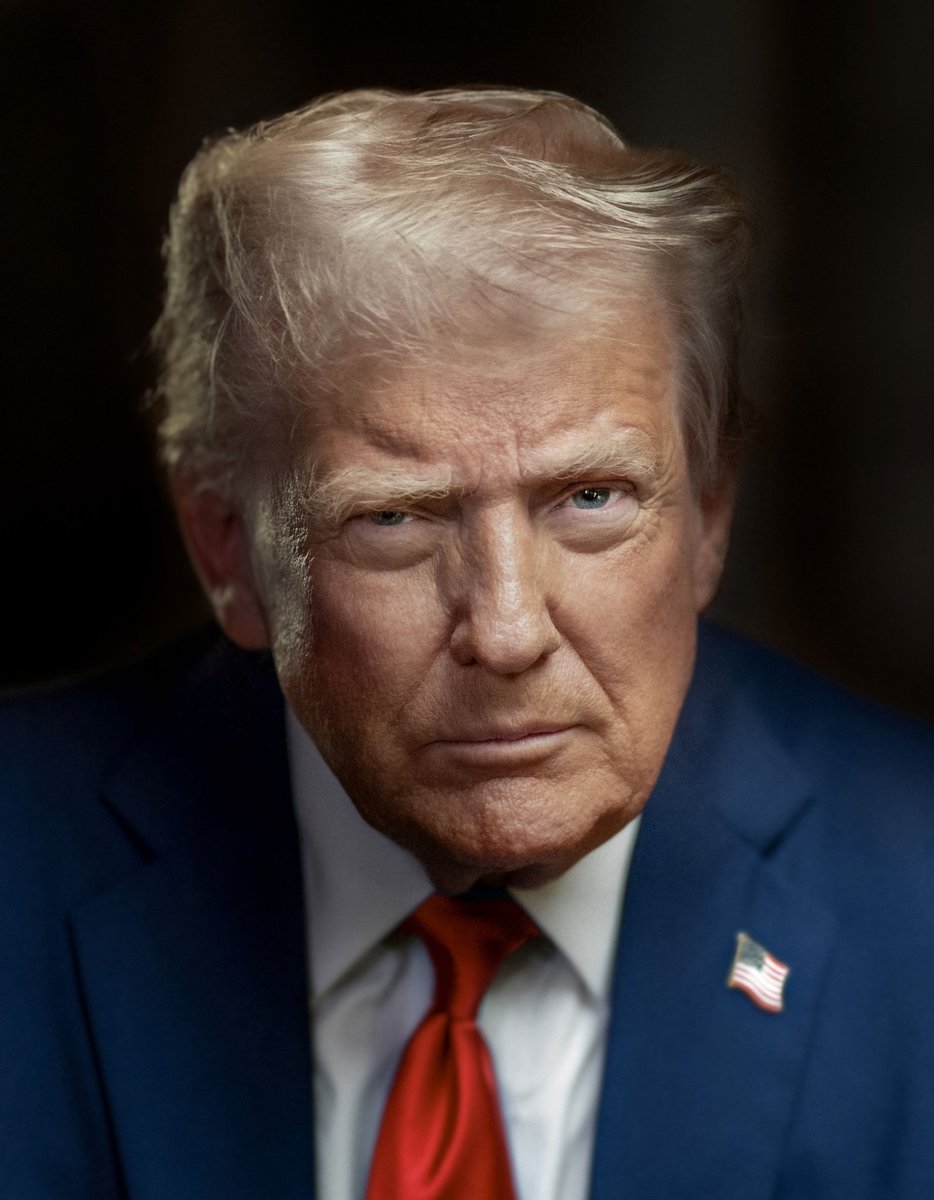
🇺🇸 Trump pulled out six poster boards of White House renovation plans on Air Force One between questions about Iran, Cuba, and Democrats. Trump is interior decorating mid-conflict. Unmatched multitasking😂


"The democratically elected prime minister of Iran was overthrown by the CIA in 1953" The democratic election in question:


Lymphatic drainage on the face with a brush!! It even shows the result of how it looks

#Iran War Update No. 29 (focus on Iranian strategic narrative): 🔹The war is increasingly defined by a divergence in strategic timelines. Iran still appears to be pursuing a war of attrition designed to raise costs over time, while Israel is intensifying strikes – including on civilian and infrastructural targets – in an effort to force a quicker, decisive outcome. 🔹This dynamic is reinforcing escalation on both sides. Iranian sources continue to frame Tehran’s approach as establishing deterrence and equilibrium under sustained pressure, while Israeli operations are expanding in scope and intensity, particularly against civilian and industrial infrastructure. 🔹Meanwhile, the war has clearly entered a phase of reciprocal infrastructure warfare. After Israeli strikes on Iran’s steel and industrial bases, the IRGC confirmed attacks on major aluminum facilities in the UAE and Bahrain, signaling a deliberate shift toward targeting economic production nodes across the region. 🔹These targets are strategically significant. Facilities such as EMAL and ALBA are deeply integrated into global supply chains and energy-intensive industries, meaning that strikes on them generate broader economic and market effects beyond the immediate battlefield. 🔹At the same time, Israel has continued expanding its target set inside Iran. Strikes on water infrastructure in Khuzestan, as well as on universities and research centers, suggest a continued focus on degrading Iran’s long-term economic and scientific capacity as well as weakening the state’s resilience. 🔹In response, the IRGC has escalated its rhetoric by declaring Israeli and U.S.-linked universities in the region as legitimate targets, signaling a potential widening of the target set into civilian and educational domains. 🔹A potentially significant military development of the day was the reported destruction of a U.S. E-3 AWACS aircraft at Prince Sultan Air Base. This represents further degradation of U.S. early warning capabilities in the region. 🔹The United States is simultaneously reinforcing its military posture. The deployment of the USS Tripoli amphibious group, alongside additional naval assets including the USS George W. Bush carrier group, reflects growing preparation for a wider range of operational scenarios. 🔹These deployments are being interpreted in Tehran as possible precursors to ground or heliborne operations. Iranian sources increasingly assess that the United States may be preparing for limited ground incursions, including targeting Iranian islands. 🔹In response, Iran’s strategy is increasingly shifting toward what its own analysts describe as “active preemption.” In this vein, Iranian forces are targeting U.S. deployments, logistics hubs, and staging areas across the region to disrupt force buildup – particularly around bases in Saudi Arabia, Kuwait, Bahrain, and Iraq – in an effort to prevent a potential ground or heliborne operation before it materializes. 🔹This shift is also reflected in official messaging. Iranian commanders have indicated that responses will no longer be strictly proportional, suggesting a move beyond “eye for an eye” toward broader and less predictable escalation. 🔹At the same time, hardline voices inside Iran are calling for an even sharper escalation. Some argue that infrastructure strikes alone are insufficient and that imposing direct human costs on U.S. and Israeli forces is necessary to restore deterrence. 🔹The Strait of Hormuz remains central to Iran’s strategy. Tehran continues to enforce selective access, allowing passage for countries such as India, Pakistan, and Thailand while restricting others. 🔹This controlled approach also has an economic dimension. Reports suggest Iran could generate substantial revenue through transit fees, indicating that the strait is being used not only as a coercive tool but also as a source of financial leverage. 🔹The regional dimension continues to expand. The Houthis’ entry into the war – though still not in any decisive way – has created expectations of a second maritime axis, with growing discussion of potential disruption in the Red Sea and Bab el-Mandab alongside Hormuz. 🔹Houthi officials have raised the possibility of closing Bab el-Mandab. At the same time, Iranian experts link the Houthis’ future escalation to factors such as GCC involvement, attacks on Iranian infrastructure, and the prospect of a ground offensive. 🔹Iraq is increasingly emerging as another area of instability. U.S. strikes on Iraqi military positions and tensions with PMF groups are placing the government under pressure, contributing to a deteriorating security environment. 🔹At the same time, incidents such as the drone attack on Nechirvan Barzani’s residence in Duhok highlight the risks posed by fragmented coordination among Iran-aligned actors, creating complications for Tehran’s broader strategy. Iranian foreign ministry, IRGC, and Artesh, have all condemned the attack and Iranian media claim the source of the attack was unknown. 🔹Tensions are also rising with the UAE. Iranian discourse increasingly frames Abu Dhabi as a central actor supporting U.S. operations, with growing calls for broader retaliation against Emirati infrastructure. 🔹In parallel, reports of restrictions on Iranian nationals in the UAE and the revocation of their visas and residence permits suggest that the conflict is beginning to spill over into micro-economic and social domains. 🔹The nuclear dimension is becoming more pronounced. Following repeated strikes near sensitive facilities such as Bushehr, Arak, and sites in Yazd, members of the Iranian parliament have prepared an urgent draft law calling for withdrawal from the NPT, alongside proposals to shift oversight away from the IAEA toward alternative frameworks involving organizations such as BRICS and the SCO, signaling a potential structural shift in Iran’s nuclear posture. 🔹This reflects a broader strategic framing of the war as part of a transition toward a new global order, with Iran seeking to reposition itself within non-Western institutional structures. 🔹Meanwhile, Israel is facing its own constraints. Reports indicate that it is rationing advanced interceptor systems, suggesting pressure on its air defense capacity as the war continues. 🔹Domestically, the Iranian government is working to maintain control and project resilience, organizing regular public mobilization of regime supporters while tightening internal security to prevent unrest. 🔹Overall, Day 29 points to a tightening escalation loop in which both sides are increasingly targeting the foundations of each other’s war-sustaining capacity. Iran is leaning further into cost-imposition across maritime, regional, and economic domains, while Israel is expanding strikes against civilian and infrastructural targets, reducing the space for controlled escalation and increasing the risk of a broader and less containable conflict.


🇺🇸🇮🇷 17,000 troops on Iran's doorstep and nowhere good to send them... Every option the Pentagon drew up is a version of the same bad math. Seize Kharg Island and Marines sit 16 miles from the mainland absorbing missiles and drones around the clock. Take Abu Musa and ships have to pass through mine-infested shallow waters where Iranian supersonic missiles arrive in seconds. Go after the uranium and you need a week of excavation under fire at bombed-out nuclear sites. A retired admiral called it plainly: troops on any island would be "sitting ducks." A former CENTCOM commander said securing uranium "isn't a quick in and out kind of deal." For context, the U.S. used 30,000+ troops across two divisions plus British forces just to take Baghdad. 17,000 can't hold anything for long under sustained fire. The most honest assessment came from the same former commander: the biggest purpose these troops serve might simply be leverage. The threat of boots on the ground is more useful than the boots themselves. Source: WSJ