Rachel Tanner 💉

2.8K posts

Rachel Tanner 💉 banner
Rachel Tanner 💉

Rachel Tanner 💉

@ProfTtweetsTB

Associate Professor in #OneHealth • PI Tanner Lab @UniofOxford #TB #bovineTB #vaccines #immunology #3Rs • Tutorial Fellow @StHughsCollege #access • Views own

University of Oxford Katılım Eylül 2017
1.6K Takip Edilen1.8K Takipçiler
Sabitlenmiş Tweet
Rachel Tanner 💉
Rachel Tanner 💉@ProfTtweetsTB·
Incredibly excited to be leading this new @IneosOxford-funded interdisciplinary consortium developing new #drugs for #AMR #TB! 🫁🦠💊💉 ox.ac.uk/news/2025-02-2…
Ineos Oxford Institute for Antimicrobial Research@IneosOxford

Tuberculosis is a curable and preventable disease, yet millions of people fall ill or die of TB due to antimicrobial resistance #AMR. To tackle this challenge, the IOI has awarded £5m to a consortium of Oxford researchers to develop new therapies to tackle TB.

English

3
2
36
1.8K
Rachel Tanner 💉 retweetledi
Dr Juliet Turner
Dr Juliet Turner@juliet_turner6·
POV: you are a young woman celebrating a recent academic success
Dr Juliet Turner tweet mediaDr Juliet Turner tweet mediaDr Juliet Turner tweet media
English
5.8K
12.9K
146.9K
16.2M
Rachel Tanner 💉 retweetledi
Andrew Akbashev
Andrew Akbashev@Andrew_Akbashev·
Journals can’t find peer reviewers. Preprints aren’t taken seriously. Garbage papers slip through peer review. Meantime, AI is slowly taking over. Nature describes the current situation. I highly recommend reading the article. 📍 The summary (+ my comments): 1. We are facing a SIGNIFICANT overload on reviewers. Fatigue is epidemic. Few scientists have time for much peer review. As a result, manuscript turnaround times are chaos. They’re unpredictable and painfully slow. 2. Grant and facility proposals demand massive peer review too. They push the system even further. 3. Review quality is decreasing. Rigor is inconsistent. Technical aspects are poorly assessed. 4. Gatekeeping and bias are very real (we all know how manuscripts are rejected due to competition & jealousy). It causes a growing dissatisfaction among scientists. 5. Paid reviewing does NOT automatically improve the acceptance rate. Trials show mixed results. For example, acceptance rates barely increased from 48% to 53% for Critical Care Medicine. The quality of PR remained the same. But for Biology Open, the PR process has become much faster. In either case, paid reviews are very hard to scale business-wise. 6. Distributed Peer Review is becoming more popular. Some funding agencies now require applicants to review peers’ proposals. But to to eliminate bias in it? I don’t know. ❗ There’re no simple solutions. As a careful observer, I think that the complex picture is evolving along the following trajectory: AI-assisted peer view (AI pre-screening, AI PR-assistant, AI audition of peer reviews) + Community reviewing + Some form of compensation + Involvement of wider community in PR lists (not only most recognized scientists) What’s your view on it?
Andrew Akbashev tweet media
English
37
146
618
80.6K
Rachel Tanner 💉 retweetledi
Michael Totty
Michael Totty@MicTott·
This should be required reading by all graduate students and postdocs | A brief guide to statistical analysis of grouped data in preclinical research nature.com/articles/s4225…
English
6
200
819
55K
Rachel Tanner 💉 retweetledi
Richard White
Richard White@richardwhite321·
Are you interested in #TB and have experience in #modelling infectious diseases? Come join us in the fun, supportive, and world-leading TB Modelling Group at @LSHTM ! We have a 1 year Research Fellow position (with possible extension) Closing date of 30 May 2025 👉 jobs.lshtm.ac.uk/vacancy.aspx?r…
English
0
11
16
1.1K
Rachel Tanner 💉 retweetledi
British Society for Immunology
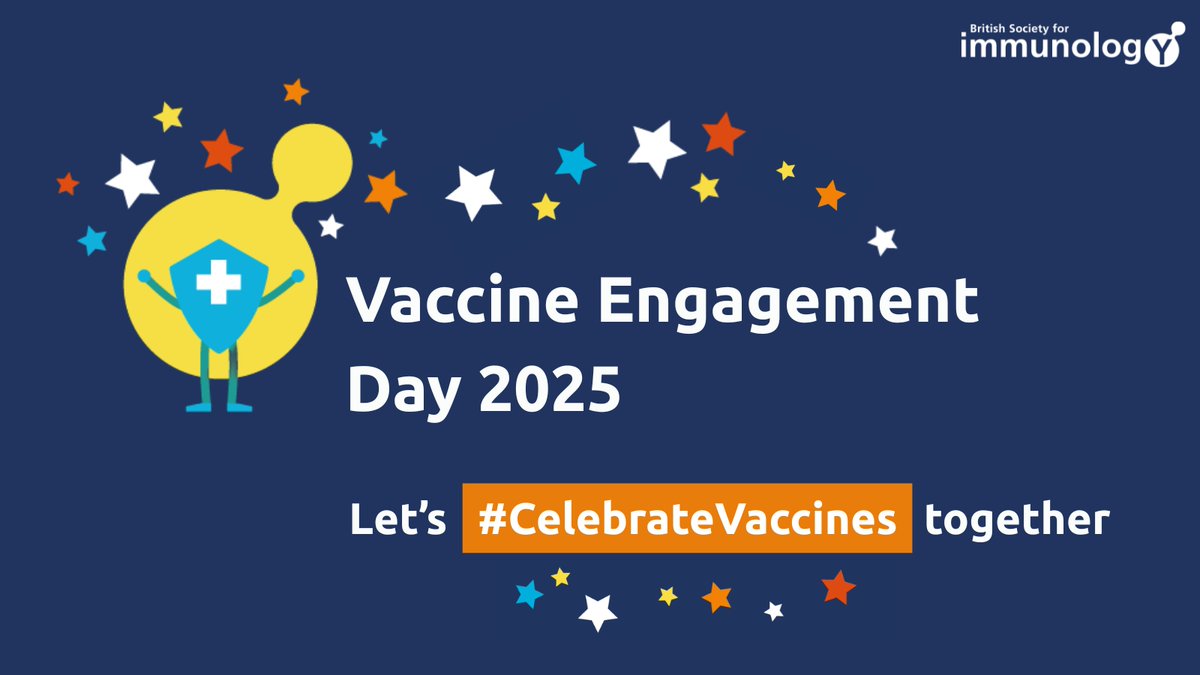
Our Vaccine Engagement Day is on 26 March 2025! Let's #CelebrateVaccines to strengthen public understanding and empower informed decisions about vaccines 🎉 Get involved by posting on social media to highlight the successes of vaccines! 🌟 bit.ly/3Rasp6s
British Society for Immunology tweet media
English
0
13
20
3.1K
Rachel Tanner 💉 retweetledi
Dr Sreenivas A Nair
Dr Sreenivas A Nair@sreenivas_nair·
Modelling on potential impact of Tuberculosis globally shows the US funding cuts would result in 2.2 million additional TB deaths and 10.6 million additional TB cases during 2025-30. A Deadly Equation: The Global Toll of US TB Funding Cuts | medRxiv @StopTB @SahuSuvanand
English
1
4
2
197
Rachel Tanner 💉 retweetledi
Oxford Biology
Oxford Biology@OxfordBiology·
Tuberculosis is a curable disease, yet millions of people fall ill or die of TB due to antimicrobial resistance. Now a consortium led by Oxford Biology @ProfTtweetsTB aims to develop new therapies to tackle TB thanks to a £5m grant from @IneosOxford bit.ly/4kcGxcL
English
0
2
10
643