Sabitlenmiş Tweet
Wade Eckert
1.2K posts

Wade Eckert
@Protonimus
Servant of the Heavenly King! 👑 Husband to a Proverbs 31 wife and father of 3 wonderful boys! Enjoys coffee , history , brisket, 3D Printing , fitness
Texas Katılım Haziran 2012
284 Takip Edilen194 Takipçiler
Wade Eckert retweetledi

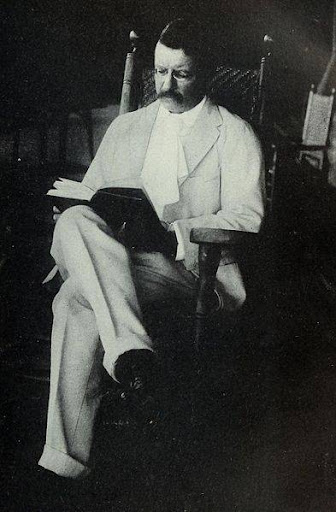
President Theodore Roosevelt on reading for enjoyment:
“Personally, the books by which I have profited infinitely more than by any others have been those in which profit was a by-product of the pleasure; that is, I read them because I enjoyed them, because I liked reading them, and the profit came in as part of the enjoyment.”

English
Wade Eckert retweetledi

The Mexican-American War, fought from 1846 to 1848, was a conflict between the United States and Mexico that arose from territorial disputes and expansionist ambitions. The U.S., driven by Manifest Destiny — the belief that the nation was destined to spread across the North American continent — sought to acquire lands that would later become the southwestern states. Tensions escalated after the U.S. annexed Texas in 1845, a region Mexico still claimed as its own. When a border dispute near the Rio Grande turned violent, Congress declared war on Mexico, setting the stage for two years of intense fighting.
During the conflict, U.S. forces, led by generals like Zachary Taylor and Winfield Scott, won a series of key battles, including at Palo Alto, Buena Vista, and Veracruz. The American advance ultimately reached Mexico City, forcing the Mexican government to surrender. The war officially ended with the Treaty of Guadalupe Hidalgo in 1848. In the treaty, Mexico ceded over half of its territory, which includes what are now California, Arizona, New Mexico, and parts of several other states, to the U.S. While the war expanded U.S. territory and fulfilled much of its Manifest Destiny ambitions.
Total U.S. Service Members: 78,718
Battle Deaths: 1,733
Other Deaths (In Theater): 11,550
Non-mortal Woundings: 4,152

Echoes of War@EchoesofWarYT
If you had to fight in 1 American war, which would it be?
English

@texasrunnerDFW Happy Mother’s Day Amy hope you have a most wonderful day!! Love your content keep up the great work!
English
Wade Eckert retweetledi

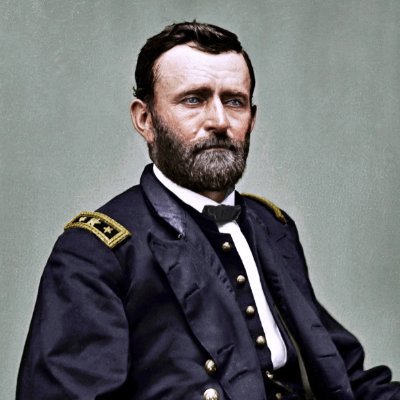
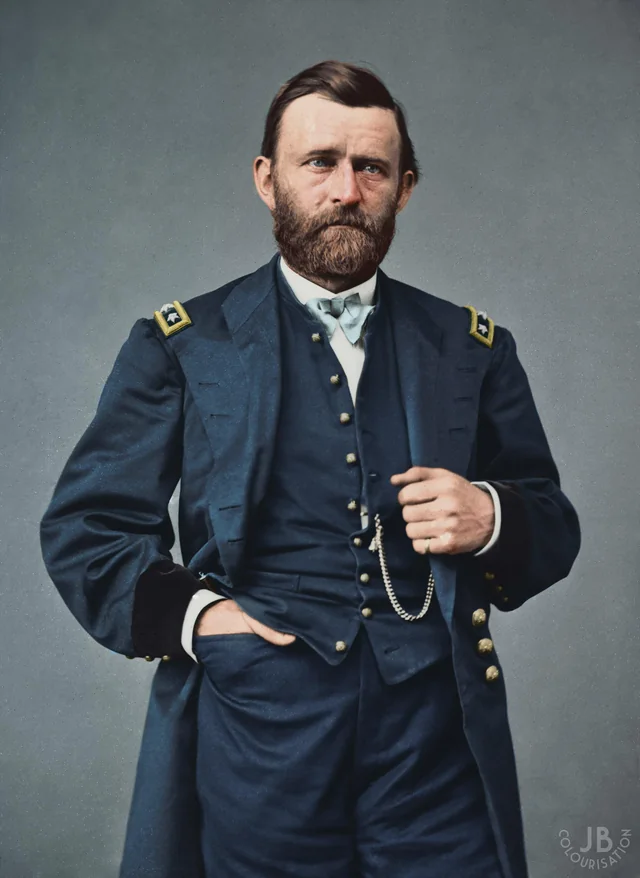
He won the Civil War, broke the Klan, went bankrupt at 62, got terminal throat cancer, and wrote one of the greatest books in American literature in the final year of his life. He finished it 5 days before he died.
Ulysses S. Grant was born 204 years ago today.
His name wasn't even Ulysses S. Grant. He was born Hiram Ulysses Grant in Point Pleasant, Ohio on April 27, 1822. The congressman who nominated him to West Point wrote down the wrong name. Grant kept it. The "S." stands for nothing.
He hated his father's tannery and loved horses. Graduated 21st of 39 at West Point. Fought in the Mexican-American War, then came home convinced it was an unjust war designed to expand slavery. He later said he believed the Civil War was divine punishment for it.
He married Julia Dent in 1848, into a slave-owning Missouri family. His abolitionist father refused to attend the wedding. In 1859, broke and desperate, Grant freed the one enslaved man he'd briefly owned instead of selling him. He could have gotten a year's wages.
In the Civil War he became what no other Union general was: relentless. Vicksburg (July 4, 1863) split the Confederacy in half. Lincoln then gave him every Union army. His Appomattox surrender terms: officers kept sidearms, men kept horses for spring planting, no one prosecuted.
As president (1869 to 1877) he did something no president would do again until LBJ: used federal troops to crush the Ku Klux Klan. He suspended habeas corpus in 9 South Carolina counties, prosecuted Klansmen before predominantly Black juries, and broke the first Klan.
His presidency was also rocked by scandal: Black Friday 1869. Crédit Mobilier. The Whiskey Ring. Belknap. Grant himself never took a dime. He was just disastrously loyal to corrupt friends. The pattern damaged his reputation for a century.
After the White House, he toured the world for 2 years. Dined with Queen Victoria. Met the emperor of Japan. Then in 1884, a Wall Street partner named Ferdinand Ward ran what we'd now call a Ponzi scheme. Grant was wiped out. 62 years old. Penniless.
Weeks later he was diagnosed with terminal throat cancer. Mark Twain offered to publish his memoirs. Grant wrote in agony, sometimes 50 pages a day, racing the disease to leave Julia an inheritance. He finished the manuscript July 18, 1885. He died July 23.
The book made Julia $450,000, about $14M today. It's now considered one of the finest memoirs in the English language. For decades historians ranked Grant a failure. Since 2000 he's jumped 13 spots in the C-SPAN survey, the biggest rise of any president.
Happy birthday, General 🇺🇸

English
Wade Eckert retweetledi

Physical books have survived radio, movies, TV, computers, the internet, blogs, forums, email newsletters, e-readers, PDFs, search engines, Wikipedia, social media, smartphones, push notifications, streaming platforms, podcasts, audiobooks, short-form video, algorithmic feeds, daily newspapers, weekly magazines, and now AI.
English
Wade Eckert retweetledi

An email from Coach Sommer I revisit often:
Hi Tim,
Patience. Far too soon to expect strength improvements. Strength improvements [for a movement like this] take a minimum of 6 weeks. Any perceived improvements prior to that are simply the result of improved synaptic facilitation. In plain English, the central nervous system simply became more efficient at that particular movement with practice. This is, however, not to be confused with actual strength gains.
Dealing with the temporary frustration of not making progress is an integral part of the path towards excellence. In fact, it is essential and something that every single elite athlete has had to learn to deal with. If the pursuit of excellence was easy, everyone would do it.
In fact, this impatience in dealing with frustration is the primary reason that most people fail to achieve their goals. Unreasonable expectations timewise, resulting in unnecessary frustration, due to a perceived feeling of failure. Achieving the extraordinary is not a linear process.
The secret is to show up, do the work, and go home.
A blue collar work ethic married to indomitable will. It is literally that simple. Nothing interferes. Nothing can sway you from your purpose. Once the decision is made, simply refuse to budge. Refuse to compromise.
And accept that quality long-term results require quality long-term focus. No emotion. No drama. No beating yourself up over small bumps in the road. Learn to enjoy and appreciate the process. This is especially important because you are going to spend far more time on the actual journey than with those all too brief moments of triumph at the end.
Certainly celebrate the moments of triumph when they occur. More importantly, learn from defeats when they happen. In fact, if you are not encountering defeat on a fairly regular basis, you are not trying hard enough. And absolutely refuse to accept less than your best.
Throw out a timeline. It will take what it takes.
If the commitment is to a long-term goal and not to a series of smaller intermediate goals, then only one decision needs to be made and adhered to. Clear, simple, straightforward. Much easier to maintain than having to make small decision after small decision to stay the course when dealing with each step along the way. This provides far too many opportunities to inadvertently drift from your chosen goal. The single decision is one of the most powerful tools in the toolbox.
English
Wade Eckert retweetledi

Nobody has ever given a full-throated sales pitch for a tin of sardines. That is a market gap.
Allow me.
The tin is food-grade steel, lined, sealed, oxygen removed. The environment inside is more controlled than most restaurant kitchens you have eaten in happily and without incident.
No preservatives. Canning is heat and the absence of oxygen. Just the fish, suspended exactly as they were the day the boat came in.
The omega-3s survive it. Studies comparing fresh to tinned show no meaningful difference in EPA and DHA. The fish was caught, canned within hours, and the fatty acids went nowhere.
The bones are edible. They have been sitting in olive oil long enough to become soft, and they are the calcium delivery mechanism the sardine built for itself. You eat them. That is the intended use.
What the tin actually contains: EPA and DHA in immediately usable form. Selenium, iodine, B12, CoQ10, vitamin D, calcium, complete protein with every essential amino acid.
Your protein shake has twenty-three ingredients. The sardine grew its own nutrition in the North Atlantic and asked for nothing.
A food humans have eaten since before written history now apparently requires a defence.
Buy the tin.

English
Wade Eckert retweetledi

“In 1903, the biggest industry in the world was whaling. It disappeared almost overnight.”
Jimmy Carr dropped this on the Joe Rogan podcast and it made me rethink how fast entire economies can vanish.
Whaling collapsed in about 18 months once petrochemicals replaced whale oil. The same thing happened with horse manure in New York City — the streets were literally covered in it, brownstones had steps to stay above the filth, and laws couldn’t fix it. Then Henry Ford’s cars arrived, and within a few years the horses (and the problem) were basically gone.
Carr’s point: the resources and industries we treat as permanent today can disappear shockingly fast when something better comes along.
What “essential” industry or resource of today do you think could vanish in the next 20 years?
English
Wade Eckert retweetledi

In the year 1942, a new fearsome weapon entered the battlefield, with armor so thick most Allied shells just bounced off.
88mm gun. 100mm of frontal armor. A weapon so dominant it made every Allied tank crew rethink how they fought.
Then, they found a way to tackle the beast.
🔸The Tiger I made its combat debut in September 1942 near Leningrad. German engineers had spent years designing a tank that could dominate any battlefield. They succeeded beyond anyone's expectations.
🔸The standard Allied tank at the time was the American M4 Sherman. Its 75mm gun could not penetrate the Tiger's frontal armor at any range whatsoever. To even scratch the side armor, a Sherman crew had to close to within 100 meters, close enough to see the German commander's face.
🔸The Tiger's 88mm gun was derived from a Flak 36 anti-aircraft cannon, whose extreme shell velocity made it devastatingly effective against ground targets. German engineers recognized this potential during the Spanish Civil War and developed a tank version. It became the most feared gun of the entire war.
🔸Allied tank crews were issued unofficial but very real advice: do not engage a Tiger from the front. Ever. The only chance of survival was to flank it, find its weaker side armor, and pray you got there before it spotted you.
🔸The psychological impact was as devastating as the weapon itself. Allied commanders reported soldiers refusing to advance when a Tiger was suspected in the area. A single Tiger could pin down an entire company just by existing.
🔸Germany's answer to Allied numerical superiority was technological superiority. One Tiger was expected to do the work of five Sherman tanks. On paper, the kill ratios proved them right, but in reality, it created a strategic problem Germany never solved.
🔸The Tiger weighed 57 tonnes. For comparison, the Sherman weighed around 30 tonnes. This meant the Tiger broke pontoon bridges, got stuck in soft ground, and could not be easily transported by rail without removing its wide battle tracks first.
🔸Maintenance was a nightmare. The Tiger required approximately 10 hours of maintenance for every hour of combat operation. Skilled mechanics were in short supply, spare parts were constantly delayed, and breakdowns were so common that more Tigers were lost to mechanical failure than to enemy fire.
🔸The Allies studied every captured Tiger obsessively. British engineers got their hands on an intact Tiger in North Africa in early 1943. They spent weeks tearing it apart, looking for weaknesses. What they found changed Allied tactics overnight.
🔸The top armor was only 25mm thick, the same as a tin can compared to its 102mm frontal plate. Allied tacticians built entire air attack strategies around this number. A Tiger that dominated every tank on the battlefield could be cracked open from above like an egg.
🔸The British responded by mounting the powerful 17-pounder gun on their tanks. The Sherman Firefly was born. Suddenly Allied tankers had a weapon that could penetrate Tiger armor at realistic combat distances. German crews learned to target Fireflies first.
🔸The Soviet Union took a different approach entirely. Rather than building a better tank, they built more tanks. The T-34 was faster, simpler, and could be produced in massive numbers. Soviet factories churned out thousands while German factories struggled to build hundreds.
🔸Allied air power became the Tiger's greatest enemy. The P-47 Thunderbolt ( on which I'm making a card next) and British Typhoon carried rockets and bombs that could crack a Tiger's thin top armor wide open. German tank commanders learned to fear clear skies more than enemy tanks.
🔸By 1944 the Tiger's dominance was fading. Better Allied guns, improved tactics, and overwhelming numbers were shifting the balance. The Tiger was still dangerous, but it was no longer unstoppable. Germany had built a masterpiece it couldn't afford to use at scale.
🔸Germany produced only 1,347 Tiger I tanks during the entire war. The Soviet Union produced over 57,000 T-34s. The United States built nearly 49,000 Shermans. The Tiger won almost every one-on-one engagement it fought. It just couldn't be everywhere at once.
🔸The Tiger's legacy influenced every major tank design that followed. The lesson it taught, that firepower and armor protection matter as much as speed and numbers, shaped how every army in the world thought about building tanks after 1945.
🔸In the end the Tiger didn't lose because it was outfought. It lost because Germany ran out of fuel, factories, and men to keep it running. A weapon is only as powerful as the industry behind it ( we can observe this lesson with the drones in Ukraine as wel). And by 1945, that nation was collapsing from every direction.
🔸The most fearsome tank of World War II was defeated not by a better tank, but by spreadsheets, factories, and logistics. The Allies out-produced, out-supplied, and out-lasted it. The Tiger was a masterpiece but the Allies built a machine for winning wars.
🔸The last Tigers fell silent in May 1945. A handful survive in museums today. I have never seen one in the flesh but I've heard that if you stand next one you immediately understand why men feared it.
As a final takeaway remember that 1,347 of them lost to 57,000 T-34s. That is the real lesson of the Tiger tank.
Quantity has a quality of its own.
Alright, that's a wrap. Thanks for sticking with me. Tomorrow I've got another fantastic story lined up for you.
Hope to see you there.

English
Wade Eckert retweetledi