
A
47 posts


Brand A: Testing 50+ creatives a week. Stuck at $300k/month. No winning ad in months.
Brand B: Testing 10-15 concepts a week. Doing $100k days.
Same niche. Same budget. Completely different results.
The difference is their hit rate.
Volume × Hit Rate = Winning Ads
Both sides matter. The question is which one you fix first.
If you're at lower scale and stuck, it's likely a hit rate problem.
You're testing 40+ creatives a week with 0 winners. Blaming Meta. Wondering why nothing sticks.
It's not Meta. Your ads just don't make your customers believe in the product/offer because your understanding of the customer is shallow.
You don't actually know who's buying. So you sound like the 10,000th brand saying the same thing. No wonder your ads are not converting.
Go deeper into the research and get better at executing. The hit rate follows.
Gulfam scaled to $160k/day making 1 high intent creative a day. Spencer hit $100k days doing 1 creative or less a day.
Not because they did less. Because every creative they made was built to win.
100 creatives at 1% hit rate = 1 winner
20 creatives at 20% hit rate = 4 winners
Adding volume to a broken process just makes you lose faster.
At scale, the constraint flips.
Hit rate is dialled. You're converting concepts into winners consistently.
Now the bottleneck is output - you can't feed a $100k/day account alone.
Traditionally people tell you that you're stuck because you're not testing enough. And that you should hire more people to fix that.
Bad process × more output = more losing ads, faster.
The 9-fig brands running thousands of creatives like Ridge or Grüns aren't just throwing mindless volume.
The end goal is to make more winning ads, not just to test more.
And if you can't make winners yourself, expanding the team with shaky processes won't save you.
Get in the trenches of creative strategy first. Lock in what makes something win. Then scale that through people.
Low hit rate = Fix research and concepts before adding volume.
High hit rate = Scale volume through people who can maintain it.
Tis the way of the chad scaler.
Vincent Huygens@vincent_chipper
@shauneng For smaller brands intent-quality > volume? Same for bigger brands? What’s the biggest unlocks you see from brands that scale vs not scale
English
@shauneng Started Influencer Marketing last week & quickly built the waitlist to 1200+ signups. Strong momentum and demand - but scaling influencers is hard. So we want to test Meta with €10K to accelerate launch. By foundation, I mean how to allocate spend and how many creatives to test
English


@ecomAJb @clayyroy I was referring to giga chads who hypertune their ad account and focus on niche targeting with specific KPIs, as opposed to just doing broad targeting, having a good creative pipeline & knowing when to increase or lower ad spend, which is simpler to set up but much higher volume
English

@paulhan_23 @brezscales What county? I own a skincare brand and know a lot founders
English

Who’s the biggest player in the skincare space?
Heard it’s @brezscales
English

@VinceNijhof @DTC_ScalingAds Damn impressive but that would only work with a proper six figure starting capital
English

@DTC_ScalingAds Relatively new, we launched the first ads 6/7 months ago but we had a pretty long R&D and sample
English



@2nervik @ChadwKeller Your growth with Froya is insane as well! What did your initial set up look like?
English

@ChadwKeller Insane!
How do you structure your ambassador program?
English

Went from running an agency to building one of the fastest growing DTC brands of all time.
$110M in 9 months. No outside funding.
What do you want to know?

English

@Co1eem So true. The amount of sales I generate just by doing this is crazy. Another tip: post the video ads as trial reels too.
English

After taking Qure to $90M+ across multiple markets and coaching 150+ brands on how to do the same
I put together everything I know about picking the right market, testing it, and scaling profitably into one doc.
Like + Comment "GLOBAL", and I'll send it.
(Must follow for priority access)
GIF
English
@lucareverie @SimScaler @surfinmars24 Crazy, what do you think about white hats? Didn’t know this was a thing!
English

@PumaMxst @SimScaler @surfinmars24 Yes bro, some people are selling grey hats too, less profit but much safer.
English

He now ran it through 3 guys and found all 3 brands, huge ones aswell that everyone knows😭
Sim@SimScaler
AI is getting CRAZY lol This is also why i haven’t posted much personal results lately, just chilling on the low… Just know next time i show a dashboard it’s a $100k day🥷🏼
English
@PumaMxst @surfinmars24 People that sell black hats on their store. It’s winning product rn
English
@heystevetan Shoutout to my Evolve homie
We running it back to $1M days real soon 😇
English

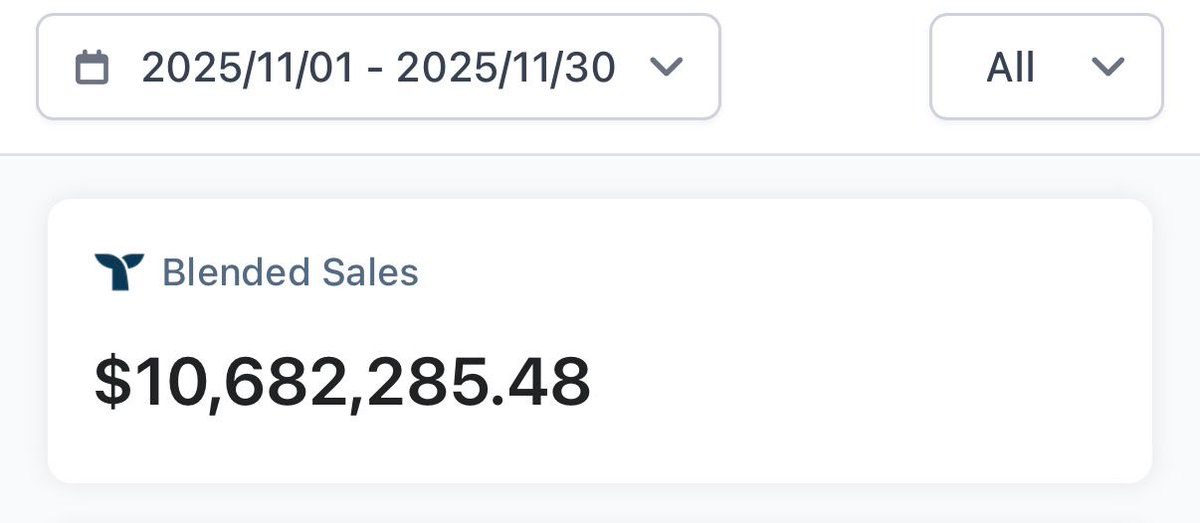
I posted that day on X that I was catching up with a friend who’s currently doing $10M/month, yes, in US dollars.
But what he told me over dinner absolutely shocked me.
What’s crazy is this is his new DTC brand, and he did it in less than a year. Super inspiring. What a comeback.
He saw everything happening around the Luke Belmar situation and messaged me wanting to catch up. So I invited him over for dinner.
Some context:
I first met this entrepreneur in 2018 when he attended my Singapore eCommerce mastermind.
(Yeah, the same mastermind Luke Belmar was given a FREE scholarship to attend, whereas other entrepreneurs paid $12k each)
Back then I had a good impression of him:
he is super down to earth, zero ego, hungry to learn, hungry to build.
He later shared with me a story from that time that stuck with me:
he was so broke he stayed in Johor (Malaysia) and took a car into Singapore every day just to save on hotel costs.
That’s how badly he wanted to be in the room.
Over the next few years he built his beauty DTC brand to around $10M/year consistently.
He often shared that the mastermind played an important role in helping him scale his eCommerce business and I appreciated that a lot. I’m also genuinely happy for his success; seeing another builder win like that always inspires me.
I hadn’t seen him for about 1.5 years.
I’d heard some rumors that he left his old business, but I didn’t know the full story.
At dinner he told me what actually happened.
And honestly… it shocked me.
He lost the original company he built for 8 years.
In the end, he got pushed out.
His setup was simple and effective:
he handled the creative + marketing machine.
His business partner handled payments + backend operations.
Roles were very clearly segmented.
They trusted each other for years.
Then his partner wanted to sell part of the company to an outside investor.
My friend didn’t think too much of it, he trusted his partner to protect both of them.
The new investor comes in.
Then starts bringing in his own people, especially finance and operations.
Slowly the control dynamic changed.
The investor + the old partner started running things and meetings without him.
Then one day he got locked out of everything.
Ads accounts.
Company email.
Slack.
All gone.
From there it turned into something uglier.
He described months of subtle pressure and psychological games:
credit being taken for systems he built,
decisions being made without him,
and conversations that made him feel small inside a company he founded.
He started doubting himself.
Thinking maybe he was the problem.
Trying harder to “prove” himself to them.
But looking back, he realized it wasn’t random.
It was a setup.
The plan was to reduce his leverage until leaving became the only option.
I won’t share his name for privacy, but I got his permission to share the story.
I’ll also keep certain details out too
When he opened up about what happened, it hit me deeply.
Not because it was shocking but because I had lived through the same emotional pattern.
His story felt like a parallel to my own, and I understood exactly how heavy that chapter must have been for him.
The part that hit him hardest wasn’t the new investor.
It was his own partner, someone he built with for 8 years, choosing the new guy over him.
That cut deeper than anything else.
He didn’t even get to say goodbye to the team he built.
Just cut off and erased.
The one thing that saved him from getting completely wiped?
He still held the trademark + the domain.
That gave him leverage.
So he negotiated an exit.
Not the buyout he ideally wanted, but enough to walk away with something and preserve his energy.
He told me he didn’t want to stay in something that toxic one more day.
He was destroyed for 2 months.
Mentally and emotionally.
Then he snapped back into builder mode with FIRE, more determined then before.
And this is the part that’s insane:
In less than 1 year…
He built a new beauty DTC brand from scratch.
Last month he crossed $10M/month.
And he’s on track for a $100M+ run rate at the pace he’s going.
I’m rooting hard for his comeback
And I couldn’t be happier for him.
Success really is the best revenge.
And a big detail people miss:
It’s not that he couldn’t do ops/backend.
He just wasn’t passionate about it before.
His edge was always creative.
But being forced into the deep end showed him:
you’re capable of more than the role you preferred to play.
When life strips you down, you find out what’s actually inside you.
I’ve known him for more than 7 years.
It never stops amazing me how resilient and determined he is.
I’m sharing this because I know many of you are builders and have been burned by bad partners, friends, investors or life itself.
But don’t forget:
You didn’t make it this far because life was fair.
You made it here because you’re unbreakable.
And when life strips you down, it’s not to destroy you,
it’s to force you to level up and become the stronger version of yourself. 💪
Some key takeaways:
- Loyalty only gets tested when real money and power show up.
Everyone is loyal when nothing is on the line.
- Trust isn’t a strategy.
Protect control of core assets (trademark/domain = leverage).
- Pick partners for values, not vibes
Values determine who stands beside you at the end.
- If you built it once, you can build it again.
Your ability is the asset, not the company.
- Real builders never truly “start from zero.
We restart from experience, mistakes, scars, and speed.
That’s worth more than capital.
- Resilience wins long term.
Take the hit, stand back up, and let success do the talking.
English