
Puneet Jain

2.2K posts

Puneet Jain banner
Puneet Jain

Puneet Jain

@Puneet_idk

Researcher in HCI+AI - learning realms of Senses+Disability+Perception @Milieux_news Prev, Master's @ IISc & Data Scientist @saplabsindia

Bengaluru, India Katılım Ekim 2018
822 Takip Edilen150 Takipçiler
Sabitlenmiş Tweet
Puneet Jain
Puneet Jain@Puneet_idk·
Excited seeing an email from @ACM_VRST 2023 (Virtual Reality Software and Technology) committee that my paper "Navigating in VR using free-hand gestures and embodied controllers: A comparative evaluation" is accepted as a poster/demo for this year conference at Christchurch NZ.
English
1
1
7
362
Puneet Jain retweetledi
ACM CHI Conference
ACM CHI Conference@acm_chi·
Become a Student Volunteer at #CHI2026! Would you like to attend CHI 2026, be part of the conference team, and have your registration fee waived by volunteering ~20 hours? Learn more and apply here: 🔗 chi2026.acm.org/2025/10/16/cal…
English
0
5
13
2.5K
Puneet Jain retweetledi
Masafumi Oizumi
Masafumi Oizumi@oizumim·
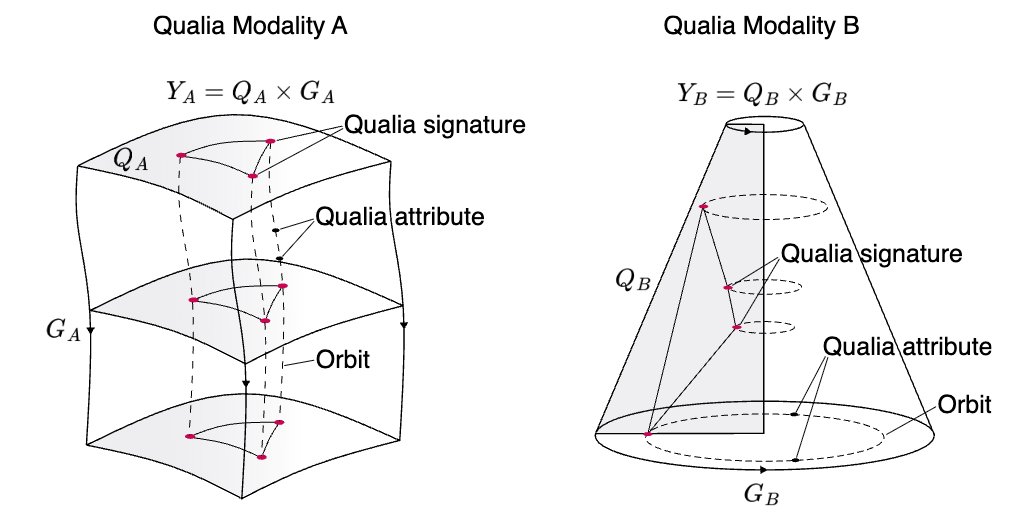
Excited to share our new preprint! "Principal bundle geometry of qualia: Understanding the quality of consciousness from symmetry", co-first-authored with Ryota Kanai @kanair_jp and co-authored with Chanseok Lim. osf.io/agupq_v2 We propose that the relational structure of qualia is characterized by principal bundle geometry, which naturally arises from the symmetries that the brain learns from the world.
Masafumi Oizumi tweet media
English
20
54
199
72.5K
Puneet Jain retweetledi
Thomas G. Dietterich
Thomas G. Dietterich@tdietterich·
The Computer Science section of @arxiv is now requiring prior peer review for Literature Surveys and Position Papers. Details in a new blog post
English
42
81
527
365.6K
Puneet Jain retweetledi
Xin Eric Wang (hiring postdoc)
It is just so sad that the #NeurIPS2024 main conference ended with such a racist remark by a faculty when talking about ethics. How ironic! I also want to commend the Chinese student who spoke up right on spot. She was respectful, decent, and courageous. Her response was exemplary: she began by acknowledging the speaker’s efforts, then gave the speaker an opportunity to clarify (though, regrettably, the speaker’s reply only reinforced her bias), and ultimately called attention to the inappropriate racial bias and offered constructive suggestions. Thank you for speaking out!
Xin Eric Wang (hiring postdoc) tweet media
English
61
260
2.1K
373.5K
Puneet Jain retweetledi
Irene Zhang
Irene Zhang@schemeprincess·
The University of Washington CS school is an unsafe environment for women, so as grad application season starts, please tell your students not to apply. There are at least 3 men in the systems lab that have sexually harassed numerous women and they continue to do so.
English
63
413
2.6K
550.6K
Puneet Jain retweetledi
Konstantin Mishchenko
Konstantin Mishchenko@konstmish·
A student reached out asking for advice on research directions in optimization, so I wrote a long response with pointers to interesting papers. I thought it'd be worth sharing it here too: 1. Adaptive optimization. There has been a lot going on in the last year, below are some papers I personally found interesting. First of all, this paper by Li and Lan on Nesterov's acceleration of adaptive gradient descent: arxiv.org/abs/2310.10082 Check Corollary 1 for a simple description of their method. There is one thing I don't like about it: the amount by which we can increase the stepsize at each iteration decreases as t grows. That being said, I don't know if this restriction can be lifted, and perhaps it's the best thing we can get. Yura Malitsky and I also did some work on adaptive gradient descent, making the stepsizes a bit larger, roughly sqrt(2) improvement over our previous result: arxiv.org/abs/2308.02261 We still don't know if that's the best we can do or if a tighter analysis can give us better methods. I should also mention that there is more push in the literature on Polyak stepsize, see for instance these two papers: arxiv.org/abs/2407.04358 (a stepsize very similar to Polyak) arxiv.org/abs/2406.04142 (Polyak stepsize with momentum) 2. Adagrad-like methods still can be studied, I believe it's an underexplored direction. I wish there was more papers on studying the importance of coordinate-wise stepsizes. One paper on the topic I really liked is this study of when Adam is more useful than SGD: arxiv.org/abs/2402.19449 There is also some research on new practical methods, for instance, acceleration of DoG is interesting: arxiv.org/abs/2404.00666 And I also enjoyed reading this paper by Rodomanov et al. on line-search-inspired stochastic methods: arxiv.org/abs/2402.03210 3. I also like the direction of getting better assumptions for optimization theory and studying the implications. A good example is the gradient clipping literature: arxiv.org/abs/1905.11881 ((L₀, L₁)-smoothness) arxiv.org/abs/2305.01588 (same revisited) arxiv.org/abs/2406.04443 (on heavy-tailed noise) We need to bridge optimization assumptions with what we know about neural networks, so read about properties of neural networks themselves like this: arxiv.org/abs/2405.14813 (on scales of layers and how their type affects Lipschitz constants) 4. These days, people are using deep networks of all scales for their tasks, and they have discovered a lot of tricks that haven't been studied thoroughly in optimization literature: quantization, Straight-Through Estimator, (arxiv.org/abs/1903.05662), low-rank techniques such as LoRA, learning-rate warm-up, etc. You should expose yourself to those tricks to get a better understanding of what the current theory is lacking. If you're considering choosing optimization as the topic for your PhD, here are some extra thoughts. Right now there is less activity than about 5 years ago, most low-hanging fruits seem to have been taken, and the remaining questions seem quite challenging. So if you're looking for a field where it is easy to get publications, it might not be perfect. However, it's still a good field to produce meaningful theory. It's also important who you would work with, i.e. if you can find a good advisor, that often affects one's satisfaction to a larger degree than the topic itself, so make your decision carefully. As my last word of advice, I definitely encourage testing new methods on neural networks (and preferably not on CIFAR10/CIFAR100, because they give misleading results), at least something like nanoGPT (github.com/karpathy/nanoG…). When I was a PhD student, I did a lot of theoretical research testing my methods on logistic regression and that was useful to understand the theory, but I also had the wrong impression about what works and what doesn't because of that. If you can, do both, understand the theory as much as you can, but also learn its limits and failure modes.
English
12
139
906
108.2K
Puneet Jain retweetledi
Kelly
Kelly@broadwaybabyto·
A few months ago a “friend” told me that he felt disabled people should be denied access to healthcare so “survival of the fittest” could happen faster. That people like me are the reasons he - a non disabled cishet white man - can’t get ahead. How did we get here? 🧵/1
English
667
4.6K
35.3K
2M
Puneet Jain retweetledi
Nicholas Fabiano, MD
Nicholas Fabiano, MD@NTFabiano·
Depression may be contagious through a dysfunctional mirror neuron system. 🧵1/11
Nicholas Fabiano, MD tweet media
English
125
970
5.3K
1.4M
Puneet Jain retweetledi
Kat Scott 🐀
Kat Scott 🐀@kscottz·
The Open Hardware Summit is what technology could look like if women, trans and queer folks, people of color, indigenous groups, and marginalized individuals were given their fair share of the technology spotlight. If you want techno-optimism this is what it looks like.
English
2
7
59
6.7K
Puneet Jain retweetledi
Juho Kim
Juho Kim@imjuhokim·
<Summer Research Internship at @kixlab_kaist> I'm looking for undergrad research interns to join my research group (kixlab.org) this summer. Most projects this round are about human-AI interaction. Please share broadly! juhokim.com/2024-summer-in…
English
2
62
133
19.1K
Puneet Jain retweetledi
Danielle Beckman
Danielle Beckman@DaniBeckman·
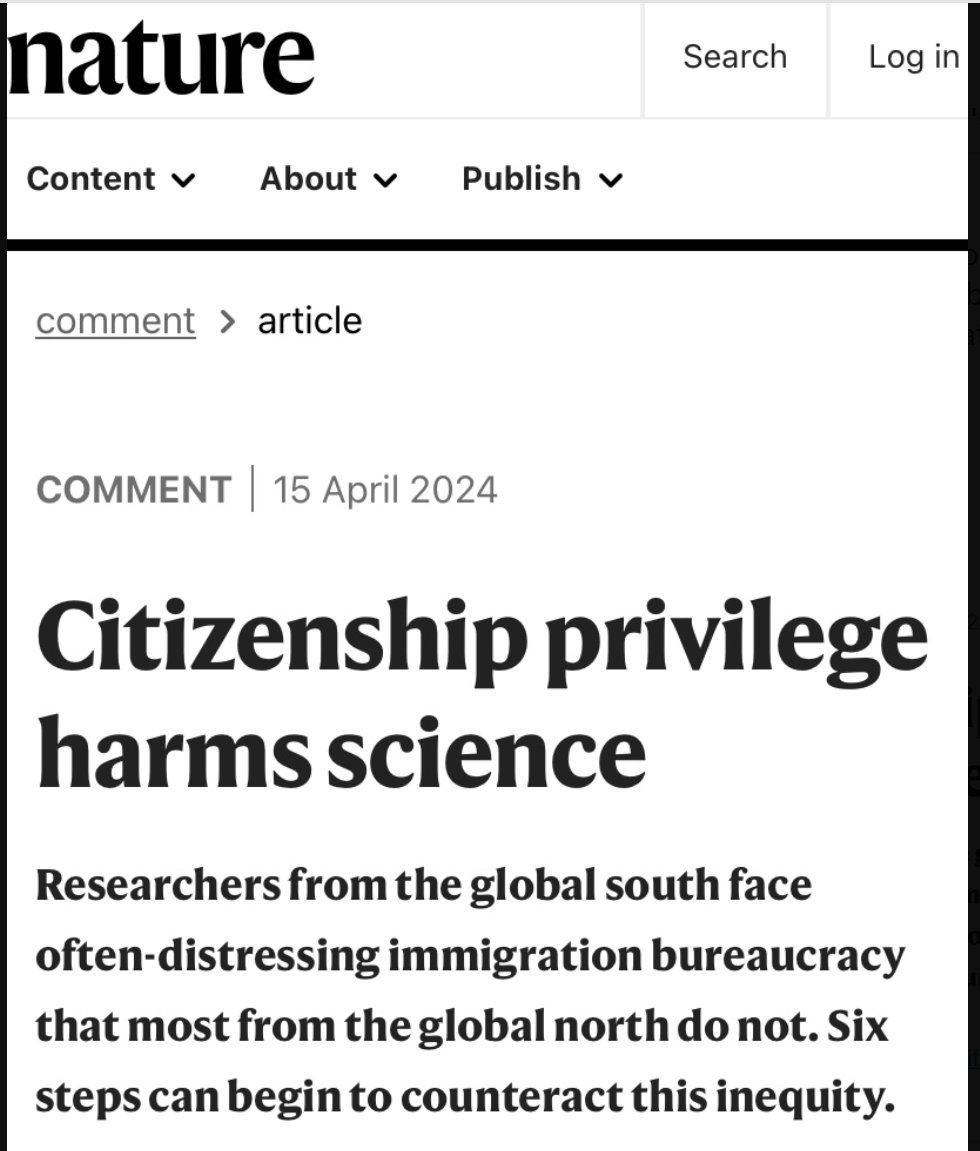
Many people have no idea how these things work. For example, right now, as a Brazilian, I can't accept invitations to speak at conferences in Europe because my visa to work in the U.S. has expired. I am not illegal; I have a work contract with the University of California until 2027. Still, I must travel outside the U.S. and get a visa stamp on my passport to allow me to move freely to talk about science. I have to do this every single year I stay in the U.S. The costs of the visa, traveling, time lost, etc, are all on me. Not every international scientist can handle this.
Danielle Beckman tweet media
Jason Shepherd@JasonSynaptic

This is a reminder that international scientists face various hurdles and citizenship in some countries is worse than others. I had 2 students miss 4-6 weeks this year JUST to renew their visas (India and China). (have to admit that global south was confusing, coming from NZ)

English
44
711
3K
508.2K
Puneet Jain retweetledi
stephen west
stephen west@iamstephenwest·
Last night episode 198 dropped! Hooray. 😂 Closing in on 200 episodes of the podcast. Can’t thank you enough for making it all possible. This one is bringing what Zizek is doing a little more into focus. Hope you have a great week. 🙂 pdst.fm/e/chrt.fm/trac…
stephen west tweet media
English
24
40
672
22.5K
Puneet Jain retweetledi
stephen west
stephen west@iamstephenwest·
New episode of the podcast just released. Episode #197 New Atheists and cosmic purpose without God. As usual it’s a metamodernist steelmanning of different ideas. This one features ideas from Zizek, Thomas Nagel and Philip Goff. @Philip_Goff The book referenced from Goff is called Why? The purpose of the universe. Hope this episode brings some joy to your life! Be well and have a great week. :)
stephen west tweet media
English
8
32
327
26.5K
Puneet Jain retweetledi
regine debatty
regine debatty@wmmna·
Flowers are “giving up on” pollinators and evolving to be less attractive to them as insect numbers decline, researchers have said. theguardian.com/environment/20…
English
0
3
14
2.6K
Puneet Jain retweetledi
Michael Black
Michael Black@Michael_J_Black·
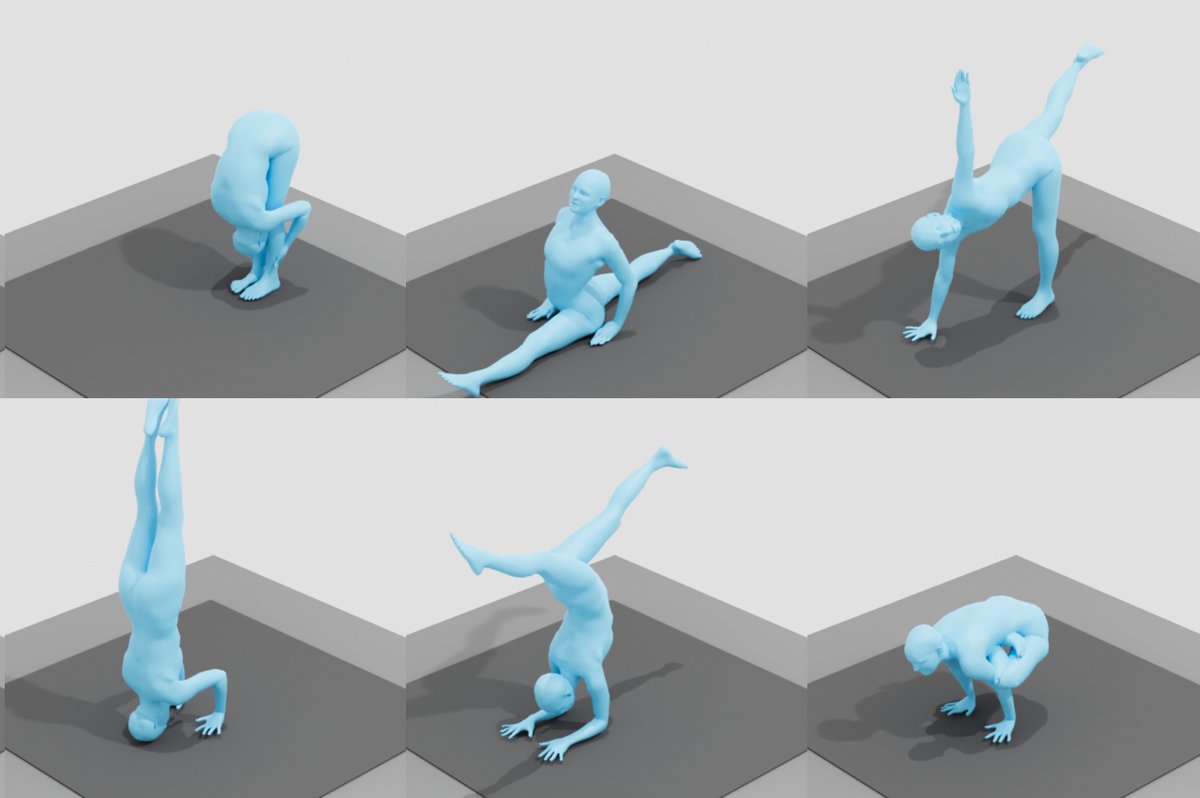
I think about the field of 3D human pose, shape, and motion estimation as having three phases. 1: Optimization. 2: Regression. 3: Reasoning. With #PoseGPT, we are just entering phase 3. I summarize the coming paradigm shift in this blog post: perceiving-systems.blog/en/news/third-…
Michael Black tweet media
English
2
42
263
31.9K
Puneet Jain retweetledi
Perttu Hämäläinen
Perttu Hämäläinen@perttu_h·
I'm really quite proud of this CHI PLAY 2023 paper exploring non-standing VR locomotion. I've done a lot of AI things in the past few years, and getting back to exergaming felt like coming home. Also won an honorable mention. Congrats to all co-authors! dl.acm.org/doi/10.1145/36…
English
1
7
44
3.2K
Puneet Jain retweetledi
Benjamin Bratton
Benjamin Bratton@bratton·
It may be that everything planetary computation has done over the last 70 years was a warmup for what AI going to do over the next 10. A lot of institutions won't survive in any recognizable form. Unfortunately, militarized monotheistic eschatology probably will.
English
5
18
80
18.2K