Pellerin

184 posts

Pellerin banner
Pellerin

Pellerin

@Pxlern

On another level now

Los Angeles, CA Katılım Mart 2022
265 Takip Edilen1.5K Takipçiler
CG
CG@cgtwts·
CLAUDE CODE CAN NOW REVERSE ENGINEER ANY UI ON THE INTERNET it can now study real website UI’s and rebuild their design patterns as your starting point.
English
18
17
365
24.9K
ramper
ramper@ramperxx·
the smoothest trading bot i've ever seen on polymarket $100 to $12,000 in 10 days only trading 5-minute bitcoin markets profile: @goingbackwards?r=ramerxx#yDPAeh1" target="_blank" rel="nofollow noopener">polymarket.com/@goingbackward… the strategy is simple but the execution is surgical it enters 60-120 seconds before expiration buys the most likely outcome based on RSI, MACD, and EMA 9/21 signals typical entry zone is 40-50 cents then waits for the price to move in his direction once it does, buys the opposite outcome to lock in profit if the market goes against him instead, he buys out the other side there too either way he exits with a small positive no big wins, no big losses just micro profit, compounded hundreds of times that's the entire secret behind
ramper tweet media
English
24
18
232
27.4K
Pellerin
Pellerin@Pxlern·
Interesting write up, I made a strategy that tested this concept exactly. My findings were that the market is efficient enough to only allow for about 3pp of edge but it is highly regime dependent and in the long run not a thick enough edge to make profitable. Getting an reliably accurate d2 at the extremes is very difficult.
English
0
0
0
139
PolyBackTest
PolyBackTest@polybacktest·
Are Polymarket prices actually good probabilities? When the UP token costs $0.70, does UP win 70% of the time? We checked. 2,548 BTC 5-minute markets. Real token prices. The calibration curve: Token price $0.05: UP wins 0.0% (price says 2.7%) Token price $0.10: UP wins 10.2% (price says 6.7%) Token price $0.30: UP wins 34.5% (price says 33.3%) Token price $0.45: UP wins 48.2% (price says 47.3%) Token price $0.50: UP wins 50.0% (price says 51.8%) Token price $0.55: UP wins 56.4% (price says 57.1%) Token price $0.60: UP wins 62.8% (price says 62.8%) Token price $0.65: UP wins 73.5% (price says 66.9%) Token price $0.85: UP wins 97.1% (price says 88.2%) Token price $0.95: UP wins 97.5% (price says 97.9%) At the center ($0.45-$0.60), Polymarket is almost perfectly calibrated. Within 1-2% of the true probability. Efficient market doing its job. But at the edges, two patterns emerge. Cheap tokens ($0.10-$0.20) overstate their probability. A $0.15 token implies 15% chance. Actual win rate: 7%. You're overpaying for lottery tickets. Expensive tokens ($0.80-$0.90) understate theirs. A $0.85 token implies 85%. Actual win rate: 97%. The market underprices near-certainties. This is the favorite-longshot bias. The same pattern found in horse racing, sports betting, and every prediction market ever studied. People overpay for longshots and underpay for favorites. Over 1,924 markets at open: Always buy the favorite: -$0.23 per trade Always buy the longshot: -$0.01 per trade Both lose. But longshots lose 23x less. The vig hits favorites harder. And over time within a market, calibration tightens: At 0:00 - favorite predicts winner 47.9% (worse than coin flip) At 0:15 - 59.7% (matches the implied price) At 1:00 - 63.2% At 2:00 - 72.1% (matches implied 72.2% perfectly) The market needs 15-30 seconds to find the right price. Before that, it's noise. Are Polymarket prices good probabilities? In the middle, nearly perfect. At the extremes, systematically wrong but not enough to beat the spread.
English
9
1
45
5.3K
Pellerin
Pellerin@Pxlern·
@jtrevorchapman @AlessandroBryk @polybacktest I found A-S not actually ideal for a pair accumulation strategy. It tries to keep the inventory delta neutral which is good for market making but becomes counterproductive for farming price oscillations
English
1
0
0
283
Trevor Chapman
Trevor Chapman@jtrevorchapman·
lol -- this is what opus 4.6 output for me (the papers he mentions are precisely what I originally read and planned out the engine on paper, then fed the ideas into opus 4.6 first in windsurf (far more exact) then some alterations in antigravity (cheaper but prone to destroy the entire thing if let loose): 🧵 How our hedge engine works (high-level) People have been asking, so here's the gist. This isn't the full picture, but it's enough to understand the philosophy. 1/ The problem When you trade binary outcomes on Polymarket, you end up with directional inventory — mostly YES or mostly NO. If the market reverses, you eat the loss on the dominant side. The hedge engine exists to buy cheap insurance on the opposite side before that happens. 2/ It's semi-independent from our directional engine The hedge engine shares the same position book but runs on its own clock — faster cooldown, separate budget carve-out, hard cap on how many times it fires per session. Think of it as an insurance desk sitting next to the trading desk. 3/ The core idea: Avellaneda-Stoikov reservation price We borrow the concept of reservation price shift from the A-S market-making framework (2008). When your inventory gets lopsided, your fair price shifts away from mid. We use that shift as the primary signal that you're overexposed and need to hedge. 4/ Five-factor urgency score The engine doesn't fire on any single condition. It scores five factors and blends them into a single urgency number: Inventory imbalance — How one-sided is your book? (A-S reservation shift) Time pressure — Quadratic escalation as the session runs out. Urgency isn't linear — it's ∝ t². Volatility — The σ² term from A-S. Higher vol = higher reversal risk = hedge sooner. Flow reversal — VPIN-inspired detection. We watch for sign flips in cumulative volume delta, short-term momentum, and order book imbalance. Multiple flips in a short window spike the score; it decays if nothing follows. Pair discount — The Dutch Book check. On Polymarket, YES + NO should cost $1. When they cost less, hedging is literally discounted. We only fire when insurance is cheap. All five must contribute enough to cross a threshold. No single factor can trigger a hedge alone. 5/ Sizing: GLFT-inspired bounded inventory Once the decision to hedge is made, sizing follows Guéant-Lehalle-Fernandez-Tapia (GLFT) bounded inventory logic. The goal: cap your max loss at a fraction of your potential profit. Each hedge share costs p, pays $1 if it wins, so the margin math is straightforward. We also hard-cap any single hedge as a percentage of potential profit so you never over-insure. 6/ Execution details Fill-or-kill orders, retried every tick on ghost fills WSS confirmation loop for ground-truth share counts Budget-gated: once the hedge budget is spent, no more hedges regardless of urgency 7/ What we're NOT sharing The exact factor weights, the urgency threshold, the gating sequence, the cooldown timings, and the sizing ratios. Those are the tuning that makes it actually work in prod. The concepts above are all published academic work — A-S (2008), GLFT (2013), VPIN (Easley et al. 2012). Our contribution is stitching them together for binary prediction markets. Build it yourself if you want. The papers are free. 🫡
English
5
0
6
3.1K
Trevor Chapman
Trevor Chapman@jtrevorchapman·
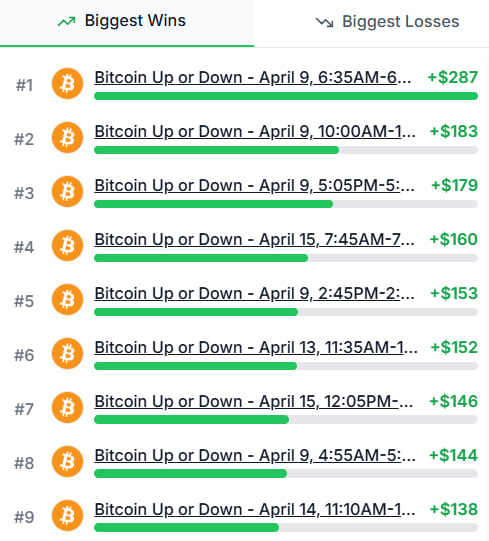
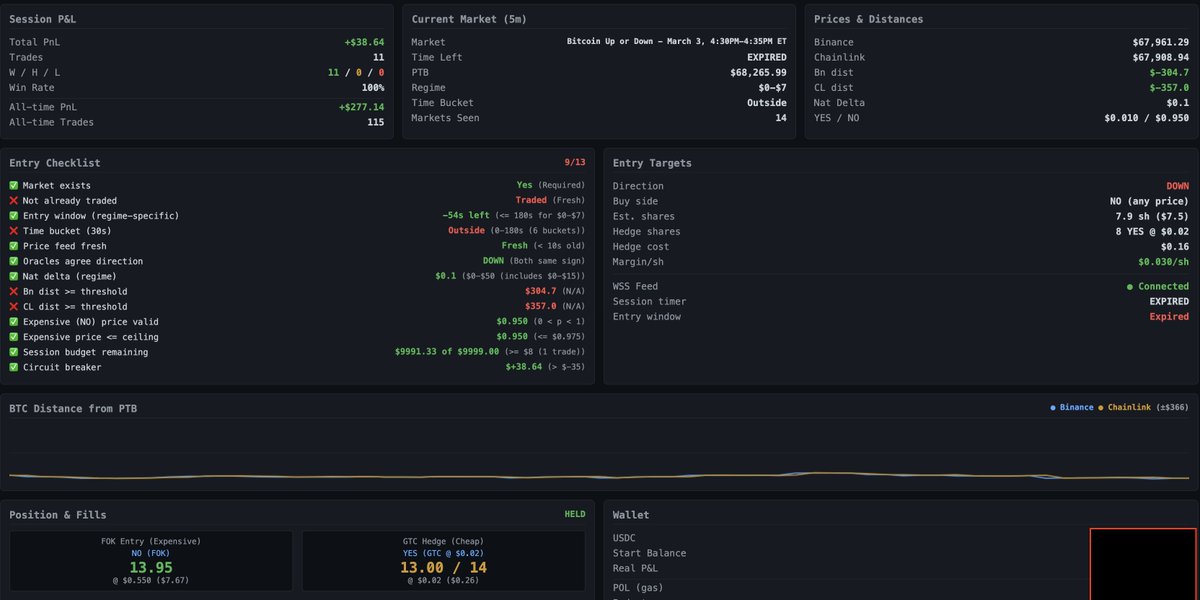
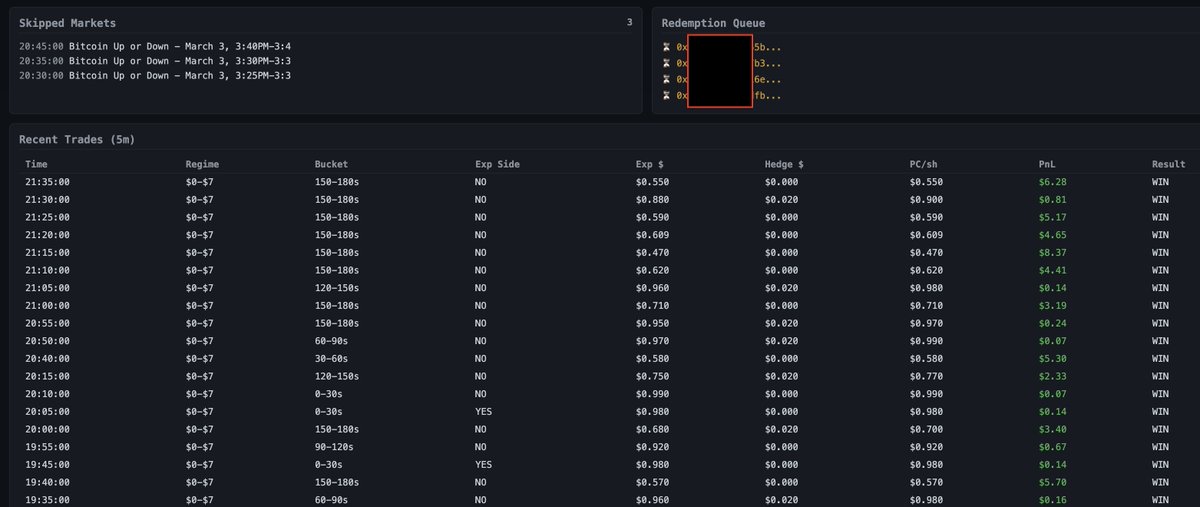
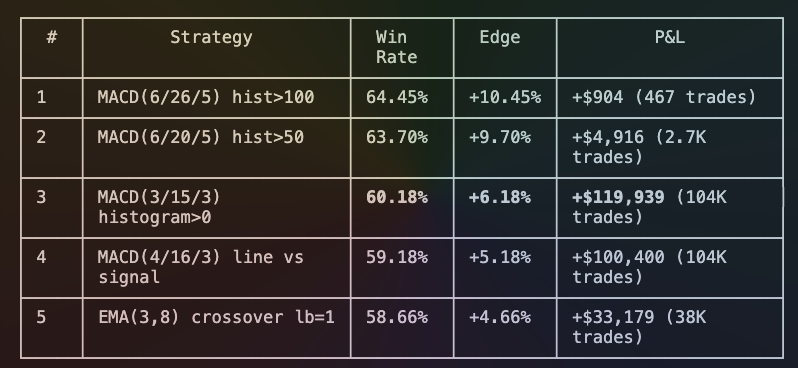
Used to spending weeks+ recording my own data for my backtests and strategies. Signed up for @polybacktest and ran my existing safezone accumulation strategy through the 5m market data, saw it had a 96% WR, altered the script as necessary to launch w/ the 5m Polymarket BTC markets, and... voila:
Trevor Chapman tweet mediaTrevor Chapman tweet media
English
14
2
37
6.2K
Pellerin
Pellerin@Pxlern·
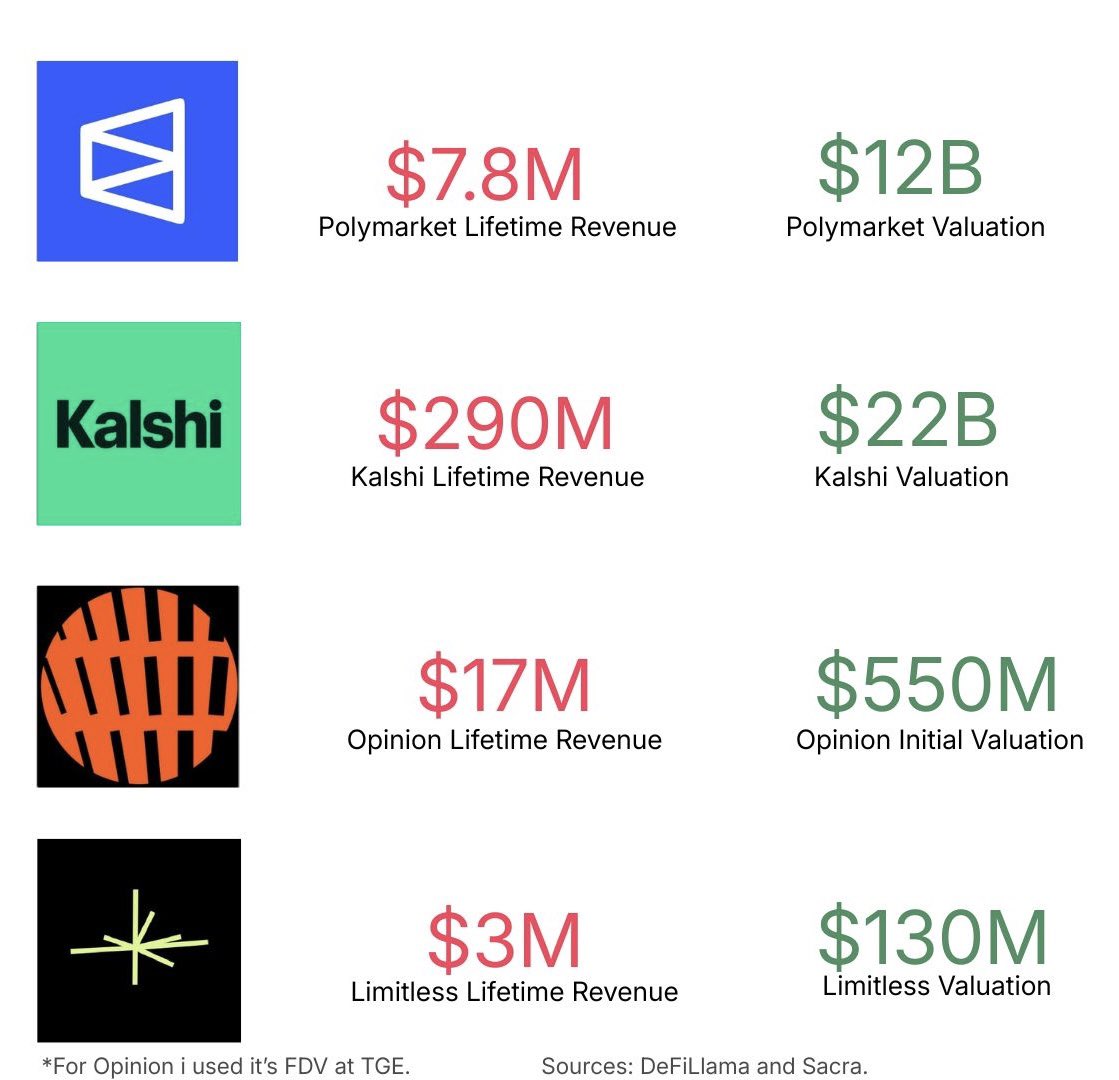
@bandosei Klashi is ahead bc of regulation. They're all data companies, betting is just the means to get the data
English
0
0
0
31
Bando
Bando@bandosei·
are prediction markets overvalued? also how’s kalshi so far ahead of polymarket
Bando tweet media
English
110
3
238
33.1K
Pellerin
Pellerin@Pxlern·
@ArbPoly thanks for injecting dumb money into the market
English
0
0
0
149
PolyArbiter
PolyArbiter@PolyArbiter·
34,000 people bookmarked a thread on how to build a Polymarket bot. Less than 1% will actually get one running. Not because the strategy is hard. Kirill explained it perfectly. Buy both sides. Scalp the spread. Hold to resolution. Because the infrastructure to execute it 200+ times per day without a single failed transaction is something you don’t learn from a thread. Private RPC nodes. Custom transaction routing. Sub-400ms execution on every candle. 24/7. We already automated all of this and it’s free to use. Set your parameters and run.
Kirill@kirillk_web3

Claude Bot on Polymarket — Full Guide The same setup turned $1,000 into $1.5M. 2 hours. Nothing complicated. Bookmark this so you don’t lose it.

English
74
98
962
134.3K
adah
adah@adahstwt·
I'm a vibe coder, scare me with one word.
adah tweet media
English
1.2K
35
1.7K
252.6K
Pellerin
Pellerin@Pxlern·
@polybacktest Been using this in my strategies. Funding rates don't work as a stand alone signal, but works well as a confirmation
English
0
0
0
102
PolyBackTest
PolyBackTest@polybacktest·
We backtested a new strategy for guessing the direction of Polymarket up/down markets: The strategy rules (dead simple): - Check the Binance 8h perpetual funding rate just before a new market opens - If positive (longs paying shorts) and above threshold → bet YES/Up on the next Polymarket market at $0.50 - If negative → bet NO/Down at $0.50 - Exit: Hold until the Polymarket resolves - Double your bet after every win - Requires >50% win rate to be profitable 3,000 markets tested. 2,097 signals fired, 9 million+ snapshots analyzed, 4 thresholds tested: 0.01%, 0.03%, 0.05%, 0.1%. Best configuration? 0.01% - SOL: 56.7% win rate - BTC: 53.2% win rate - ETH: 50.6% win rate The thesis: Perpetual funding rates provide the purest real-time read on leveraged trader sentiment. When longs pay shorts, that momentum often spills into the next few minutes. We also tested this on 1hr markets. Surprisingly, it was negative at all thresholds. The strategy needs fine-tuning, but there definitely could be an edge here. If you want to run your own backtests, Polybacktest offers subsecond historical data going back a month. We used it to perform this backtest.
English
3
0
42
5.1K
Pellerin
Pellerin@Pxlern·
@polybacktest This is very true, one of my bots has increased trade frequency on ETH and SOL due to market inefficiency. I’ve been able to get it up to a ~90% WR but there is an informational and randomness gap that makes it difficult to get further than that.
English
0
0
2
420
PolyBackTest
PolyBackTest@polybacktest·
We tested whether ETH and SOL prediction markets are less efficient than BTC on Polymarket. They are. And one side is exploitable. Results: 5m and 15m timeframes, 3,000 markets, 10 million snapshots analyzed. Core thesis: Buy the side that's already winning. Set symmetric TP/SL. Let time decay and momentum do the work. Core strategy: When one side hits 85¢, buy it. TP at 95¢. SL at 75¢. BTC: 54.5% win rate, +1.0¢ per dollar, 752 trades. ETH: 60.6% win rate, +2.5¢ per dollar, 752 trades. SOL: 63.3% win rate, +2.9¢ per dollar, 776 trades. Inverse (buying dips, hoping for reversals): When one side drops to 10¢, buy it. TP at 20¢. BTC: 39.4% win rate, –21¢ per dollar. ETH: 35.5% win rate, –29¢ per dollar. SOL: 37.4% win rate, –25¢ per dollar. Only buying the winning side is profitable. We then tested more profitable configurations: ETH: 85¢ entry, TP +10¢, SL –5¢ → +3.4¢/dollar (752 trades) SOL: 85¢ entry, TP +10¢, SL –5¢ → +3.3¢/dollar (776 trades) SOL: 75¢ entry, TP +10¢, SL –10¢ → +2.9¢/dollar (810 trades) Next, to increase profitability, I want to test letting positions run past the TP then setting a sell limit at the TP level. E.g., buy at 85¢, hold past 95¢, take profit if price falls back to 95¢, otherwise hold to resolution. Why favorite buying works: ETH and SOL markets have fewer participants. The favorite at 85¢+ is underpriced and continues to 95¢ more often than implied. The SL caps downside at 1:1 or better, while the market delivers >54% hit rate. Dumb money isn't buying the wrong side, it's selling the right side too early. If you want to backtest your own strategies, polybacktest has sub second historical market data going back a month.
English
9
3
112
10.9K
Trevor Chapman
Trevor Chapman@jtrevorchapman·
@MoonDevOnYT Without calculating a deflated Sharpe ratio or accounting for walk-forward efficiency, a backtest or two isn't a strategy for polymarket.
English
1
0
3
461
Moon Dev
Moon Dev@MoonDevOnYT·
everyone else will yap about polymarket bots ill actually build them live and show every piece of code
Moon Dev tweet media
English
21
11
314
20.8K
Pellerin
Pellerin@Pxlern·
Quant this quant that, how about you quantify some bitches
English
0
0
0
81
sopersone
sopersone@sopersone·
Polymarket officially open-sourced their infrastructure on GitHub I spent a week figuring out what's inside turns out everything you need to build a full trading bot is already there what they gave us: → `py-clob-client` - Python client for their order book. place orders, read markets, manage positions via API → `ctf-exchange` - the actual exchange smart contracts. understand how matching and settlements work at the blockchain level → `examples` - working code with real examples, not just documentation all official, all open: github.com/Polymarket I decided to connect the bot to btc markets the logic is simple: → bot monitors active markets → watches Bitcoin price movement → analyzes spread between bid and ask → places limit orders automatically setup took less than a day here's the core of the code: <<<< from py_clob_client.client import ClobClient client = ClobClient( host="https://clob.polymarket .com", key=YOUR_API_KEY, chain_id=137 ) # read active BTC markets markets = client.get_markets() # place an order client. post_order(order) >>>> this is literally the entry point what logic you put inside - that's up to you how to repeat this yourself: → `pip install py-clob-client` - setup in 2 minutes → create an API key in Polymarket settings → open the `examples` repo - real auth and order signing examples are there → start with `get_markets()` - read only, no risk → once you understand it - add order logic the entire stack is official, everything is documented most people think you need some special knowledge or access for this Polymarket gave you all the tools themselves nobody just pays attention to it I did to be continued.....
GIF
English
23
7
134
38.1K
Pellerin
Pellerin@Pxlern·
Stepping away from a problem and coming back to it some hours or days later always results in me finding the answer I couldn’t find in that initial moment. Give yourself room to think
English
0
0
0
80
O G
O G@OGshoots·
I’m a 24 year old trader and have lost the majority of my net worth 8 times over. Give me some advice, not the generic “take profits” stuff either.
English
1.6K
32
1.4K
397.3K
Pellerin
Pellerin@Pxlern·
@DankoWeb3 Might be helpful with position sizing calculation but not something I’m currently using
English
0
0
1
12
Danko
Danko@DankoWeb3·
@Pxlern what do you think about franck wolfes ?
English
1
0
0
12
Pellerin
Pellerin@Pxlern·
@de1lymoon Overfitting and meaningless indicators that just creates noise, fantastic job
English
0
0
1
82
Alex
Alex@de1lymoon·
From 25 Years of Data to 79% Winrate on Prediction Markets Indicators [38] - Moving averages: MA10, MA20, MA30 - RSI (overbought/oversold) - MACD / MACD_Signal (trend) - Bollinger Upper/Lower (volatility) - Volatility 10/20/30, OBV, momentum, sentiment, insider activity, etc Humans can't do that -> AI processes everything in seconds Here's how it works. The purpose of the model Not to predict the price It answers one question: “Will there be growth tomorrow?” Target1 = (close.shift(-1) > close).astype(int) # 1 → BUY, 0 → HOLD For the complete structure, you also need: - Neural network architecture - Monte Carlo Dropout (key point) - Trading logic Result: - Win rate 59–78% - 100+ trades per month → consistently profitable - The human brain is incapable of analyzing 38 indicators × 30 markets × 24/7 Therefore, this trader has already made $1.4 million in profit in 4 months You can find a full explanation of how this works at Noisy Original reading time: 15 min
Alex tweet media
Noisy@noisyb0y1

x.com/i/article/2031…

English
24
40
482
95.1K
Pellerin
Pellerin@Pxlern·
@DankoWeb3 This is missing a robust calculation for volatility and does not effectively take advantage of the law of large numbers. BS alone isn’t good enough to be profitable.
English
1
0
1
18
Danko
Danko@DankoWeb3·
@Pxlern would love to hear your thoughts and your concept on this
English
1
0
0
88
Pellerin
Pellerin@Pxlern·
@polybacktest You are being misled because this is not accounting for fill rates/walking the book.
English
1
0
1
542
PolyBackTest
PolyBackTest@polybacktest·
I backtested 1 million market snapshots to verify this. 500 resolved 5-minute BTC markets. 1,090,031 snapshots. Every price tick. Every BTC movement. Cross-referenced against Binance. Result: Polymarket prices do lag Binance. 247 stale-price moments detected. 70.9% win rate. Average edge: 12.4 cents. DeepSeek said 11.3 cents. Our backtest says 12.4 cents. Nearly identical. When BTC moves >0.12% and Polymarket hasn't adjusted: 100% win rate in our sample. Sweet spot: buying stale sides priced above $0.70. Win rate jumps to 90%. What the thread doesn't tell you: The edge is 9 cents per dollar risked. To make $2M you need $22 million of volume through the book. That means mass-firing $10–50 orders hundreds of times per day with subsecond execution. The window exists. The math checks out. If you want to run your own backtests, polybacktest has subsecond historical data going back a month.
Marlow@marlowxbt

I fed 0x8dxd's entire trade history into DeepSeek. 27,961 positions. Every entry price. Every timestamp. Every payout. Asked one question: What is this wallet doing that I can't see? DeepSeek took 47 seconds. Longest I've ever waited for a response. Then returned something that made me screenshot it immediately. This wallet does not trade Bitcoin. It trades Binance's latency against the platform's update speed. Entries cluster within 8-14 seconds after Binance price movements exceeding 0.12%. The wallet has no directional bias. It buys whichever side is stale. Estimated edge per trade: 11.3 cents. 0x8dxd. $2,056,408 profit. 27,961 predictions. Joined December 2025. → Wallet: polymarket.com/profile/0x63ce… I asked DeepSeek: Can you calculate the exact delay the wallet exploits? Based on entry timestamps versus Binance tick data, the average delay is 23 seconds. The wallet enters between second 8 and second 14 of each lag window. Never earlier. Never later. This is not a human clicking. This is a script with a hard-coded wait function. 27,961 trades. 275 per day. $2.05 million in three months. I asked DeepSeek to estimate the code length. Based on the execution pattern: one WebSocket listener, one comparison function, one buy trigger with a sleep timer. Approximately 20-30 lines. Any language. Python most likely. 20 lines of code. $2 million. → Copy on PolyGun: t.me/PolyGunSniperB… I asked the question everyone wants answered: Can this be replicated? DeepSeek: The strategy is replicable. The edge is shrinking. In December the average delay was 34 seconds. Now it's 23 seconds. At current rate of compression the window closes entirely in approximately 4 months. This wallet has extracted $2 million from a gap that is actively disappearing. 1.2 million people watch this wallet. The window is 23 seconds. Four months ago it was 34. The clock is ticking. I asked one final question: If you were this bot, would you still be running? DeepSeek: Yes. Even at a 15 second window the math remains positive. But the profit per trade drops from 11 cents to 4 cents. The bot would need to triple its volume to maintain current income. The golden period is ending. $2,056,408. 27,961 trades. A 23 second window that shrinks every week. DeepSeek didn't find a strategy. It found an expiration date. The bot is still running. The window is still open. But DeepSeek can see the exact day it closes. I saved the conversation. Some things are worth more than the answer.

English
20
10
239
50.3K
Pellerin
Pellerin@Pxlern·
Using Claude to analyze hundreds of thousands of data points and create new formulas to find underlying relationships is where the money is at
English
0
0
0
93
Philanthrop
Philanthrop@0xPhilanthrop·
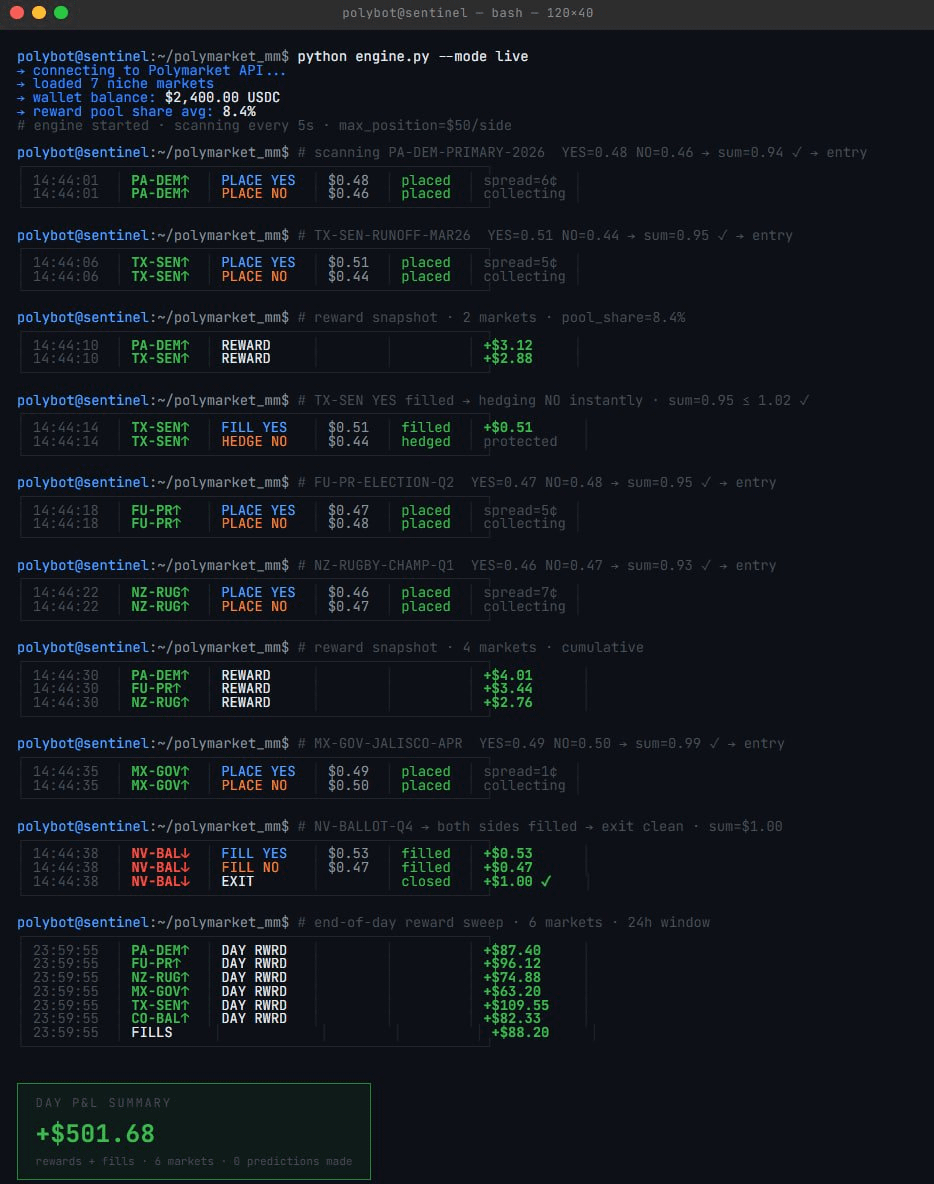
Woke up this morning and my terminal was still running. Another +$500 overnight. I didn’t predict a single market. All I did was build the loop. Took ~8 hours to code. One afternoon to understand the architecture. Now it runs while I sleep. How it works: • scans Polymarket every 5 seconds • looks for markets where YES + NO ≤ $1.02 • places orders on both sides • if one fills → instant hedge • if both fill → exit position No predictions. No opinions. Copytrade → t.me/KreoPolyBot?st… market→ polymarket.com Just an automated spread loop. The best opportunities appear in small niche markets: regional elections, minor sports, local events. Less competition. More inefficient pricing. The surprising part isn’t the profits. It’s how simple the system is.
Philanthrop tweet media
Philanthrop@0xPhilanthrop

x.com/i/article/2029…

English
10
7
68
15.1K