
Python and Chess

8.7K posts

Python and Chess banner
Python and Chess

Python and Chess

@PythonChess

Chess patzer and programming enthusiast

Somewhere Katılım Mart 2010
615 Takip Edilen418 Takipçiler
Python and Chess retweetledi
Ihtesham Ali
Ihtesham Ali@ihtesham2005·
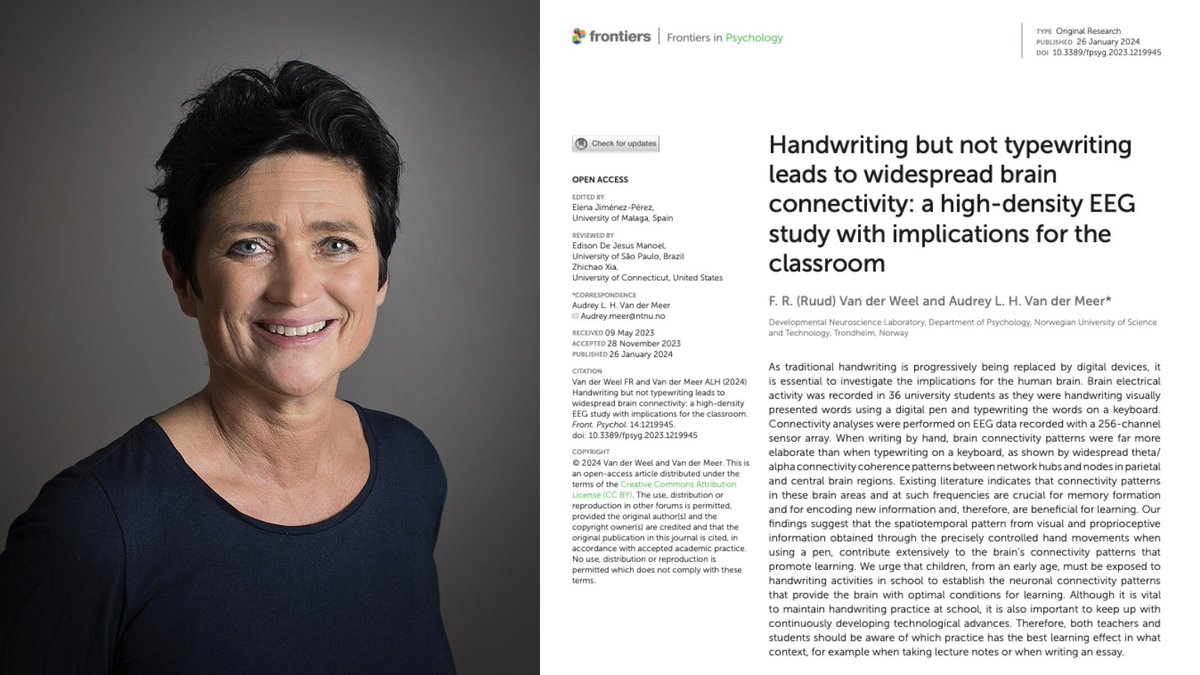
A Norwegian neuroscientist spent 20 years proving that the act of writing by hand changes the human brain in ways typing physically cannot, and almost nobody outside her field has read the paper. Her name is Audrey van der Meer. She runs a brain research lab in Trondheim, and the paper that closed the argument was published in 2024 in a journal called Frontiers in Psychology. The finding is brutal enough that it should have changed every classroom on Earth. The experiment was simple. She recruited 36 university students and put each one in a cap with 256 sensors pressed against their scalp to record brain activity. Words flashed on a screen one at a time. Sometimes the students wrote the word by hand on a touchscreen using a digital pen, and sometimes they typed the same word on a keyboard. Every neural response was recorded for the full five seconds the word stayed on screen. Then her team looked at the part of the data most researchers had ignored for years, which is how different parts of the brain were communicating with each other during the task. When the students wrote by hand, the brain lit up everywhere at once. The regions responsible for memory, sensory integration, and the encoding of new information were all firing together in a coordinated pattern that spread across the entire cortex. The whole network was awake and connected. When the same students typed the same word, that pattern collapsed almost completely. Most of the brain went quiet, and the connections between regions that had been alive seconds earlier were nowhere to be found on the EEG. Same word, same brain, same person, and two completely different neurological events. The reason turned out to be something nobody had really paid attention to before her work. Writing by hand is not one motion but a sequence of thousands of tiny micro-movements coordinated with your eyes in real time, where each letter is a different shape that requires the brain to solve a slightly different spatial problem. Your fingers, wrist, vision, and the parts of your brain that track position in space are all working together to produce one letter, then the next, then the next. Typing throws all of that away. Every key on a keyboard requires the exact same finger motion regardless of which letter you are pressing, which means the brain has almost nothing to integrate and almost no problem to solve. Van der Meer said it plainly in her interviews. Pressing the same key with the same finger over and over does not stimulate the brain in any meaningful way, and she pointed out something that should scare every parent who handed their kid an iPad. Children who learn to read and write on tablets often cannot tell letters like b and d apart, because they have never physically felt with their bodies what it takes to actually produce those letters on a page. A decade before her, two researchers at Princeton ran the same fight using a completely different method and ended up at the same answer. Pam Mueller and Daniel Oppenheimer tested 327 students across three experiments, where half took notes on laptops with the internet disabled and half took notes by hand, before testing everyone on what they actually understood from the lectures they had watched. The handwriting group won by a wide margin on every question that required real understanding rather than surface recall. The reason was hiding in the transcripts of what the two groups had actually written down. The laptop students typed almost word for word, capturing more total content but processing almost none of it as they went, while the handwriting students physically could not write fast enough to transcribe a lecture in real time, which forced them to listen carefully, decide what actually mattered, and put it in their own words on the page. That single act of choosing what to keep was the learning itself, and the keyboard had quietly skipped the choosing and skipped the learning along with it. Two studies. Two countries. Same answer. Handwriting makes the brain work. Typing lets it coast. Every note you have ever typed instead of written went into your brain through a thinner pipe. Every meeting, every book highlight, every idea you captured on your phone instead of on paper was processed at half depth. You did not forget those things because your memory is bad. You forgot them because typing never woke the part of the brain that would have made them stick. The fix is the thing your grandmother already knew. Pick up a pen. Write the thing down. The slower road is the faster one.
Ihtesham Ali tweet media
English
1.8K
32.7K
85.7K
3.9M
Python and Chess retweetledi
investly
investly@investlylab·
No necesito un 60% anual para forrarme. 20% es más que suficiente.
Español
3
1
5
399
Incentivising
Incentivising@incentivising·
Being unpredictable is more valuable than being smart. A predictable player, no matter how intelligent, can be modeled and manipulated. When you're smart but predictable, your opponent will not need to outthink you; they merely need to forecast your next move somewhat reliably. Mix your strategies frequently. Never allow patterns to compromise your real position. Move with an invisible intent.
English
12
50
464
9.1K
Python and Chess retweetledi
Proton
Proton@ProtonPrivacy·
It's time people stopped consenting blindly to clear and obvious privacy violations. Say "no" to Google and Big Tech.
Valentino Međimorec@valic

No consent, moved to @ProtonPrivacy three months ago, and I cant be more satisfied with the entire suite there (bussiness, few users on it)

English
12
63
374
22.7K
Grand Chess Tour
Grand Chess Tour@GrandChessTour·
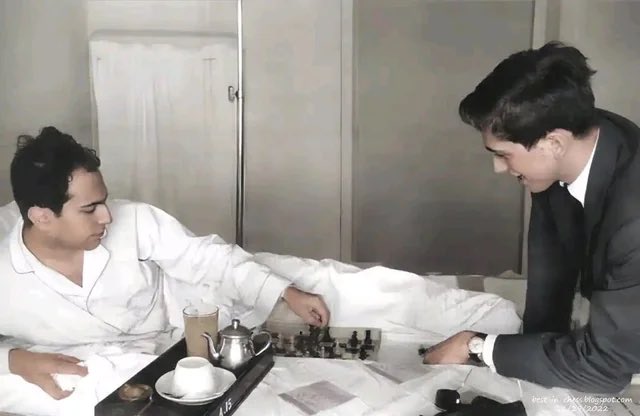
After suffering an ankle injury, Alireza Firouzja is playing against Javokhir Sindarov from a special room at the hotel during Round 5 of the Superbet Chess Classic. A truly historic moment in elite chess! #Grandchesstour
Bucharest, Romania 🇷🇴 English
92
228
2.3K
442.5K
Python and Chess retweetledi
IT Guy
IT Guy@T3chFalcon·
Let me be direct: Privacy and anonymity are not the same thing. Privacy is about control. It means you decide what information about you is collected, who can see it, how it is used, and when it is deleted. You can be fully known, with your real name, face, and job title, and still have strong privacy if you set the terms for sharing that information. Anonymity is different. It is about hiding your identity from the people you interact with. You can be totally anonymous and still have no privacy. For example, you might post under a fake name on a site that tracks everything you do and sells that data to brokers who could later figure out who you are. A journalist protecting a source has privacy without anonymity. The source is known to the journalist, but their relationship is carefully managed and kept safe. On the other hand, a user on an "anonymous" forum has anonymity without privacy. There is no name attached, but every action is tracked, analyzed, and sold. Besides, de-anonymization, which means matching an identity to "anonymous" data, is now very easy. Researchers have shown that with just a few details, like your location at two times of day, your device type, or your typing style, your real identity can be found in so-called anonymous datasets with surprising accuracy. Netflix, AOL, and fitness trackers all had "anonymous" datasets. All of them were eventually identified. You do not need to hide who you are. What you need is data minimization, clear consent, and real rights over your information. That is what privacy means. It depends on systems, laws, and social rules that anonymity alone cannot offer. You do not have to be invisible to have privacy. What matters is being in control. Begin by asking better questions. Instead of only asking, "does this app know my name?" ask, "what does this app collect, where does it go, how long is it stored, and can I delete it?" That's real privacy.
IT Guy tweet media
Abdulkadir | Cybersec@cyber__razz

Privacy ≠ Anonymity People tend to confuse the two

English
0
9
43
2.2K
Python and Chess
Python and Chess@PythonChess·
@hetmehtaa Nice! You should make a LinkedIn post showing how this helped you grow as a person.
English
2
0
62
4.5K
Het Mehta
Het Mehta@hetmehtaa·
my company got breached the attacker had access for 11 days on day 3 he emailed our IT helpdesk complained that the VPN was slow our helpdesk reset his password upgraded his access tier to fix the "connectivity issue" and closed the ticket as resolved CSAT score: 5 stars we found this in the logs during forensics the attacker had rated our IT support excellent
English
107
587
17.1K
874.3K
Python and Chess retweetledi
Norway Chess
Norway Chess@NorwayChess·
Norway Chess is coming to Oslo 🇳🇴 ♟️ Two elite tournaments. Twelve of the world's best players. Live at Deichman Bjørvika from May 25 to June 5. Norway Chess lineup: 🇳🇴 World #1 Magnus Carlsen 🇮🇳 World Champion Gukesh D 🇫🇷 Alireza Firouzja 🇮🇳 Praggnanandhaa R 🇺🇸 Wesley So 🇩🇪 Vincent Keymer Norway Chess Women runs alongside it with equal format and equal prize fund: 🇨🇳 Women's World Champion Ju Wenjun 🇺🇦 Anna Muzychuk 🇮🇳 Humpy Koneru 🇨🇳 Zhu Jiner 🇮🇳 Divya Deshmukh 🇰🇿 Bibisara Assaubayeva Two tournaments. Six players each. Every game ends with a winner. Whether you are a seasoned chess fan or you are just discovering the game, this is where you want to be. Watch live on YouTube 🔴 or join us in person at Deichman Bjørvika. 🎫 Get your tickets now 👇 enjoy.ly/no/aktivitet/9…
English
9
16
109
12.1K
IM David Shahinyan
IM David Shahinyan@ImShahinyan·
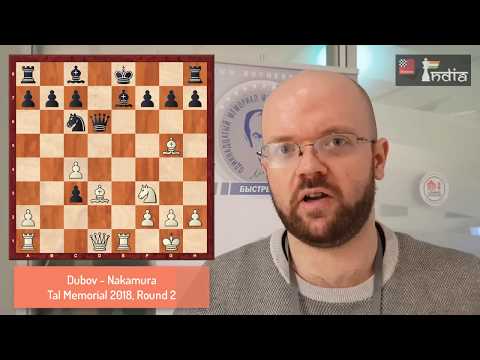
Asked several grandmasters whether a 2100-rated player can be a useful second for a 2700+ GM. Most said no or sounded unsure. But meanwhile, here's a position from a @GMJSindarov vs @rpraggnachess game where my 2100 student had analyzed this line about a year before the game – and his preparation went deeper than what the players had (he even had 15. Rh4 as clearly better than 15. Nh4 in his file). If any top player is looking for a second who's actually good at finding ideas, feel free to reach out. Happy to connect with him 🤝
IM David Shahinyan tweet mediaIM David Shahinyan tweet media
English
6
5
69
13.9K
TK 😏🏆
TK 😏🏆@ThankGod1903·
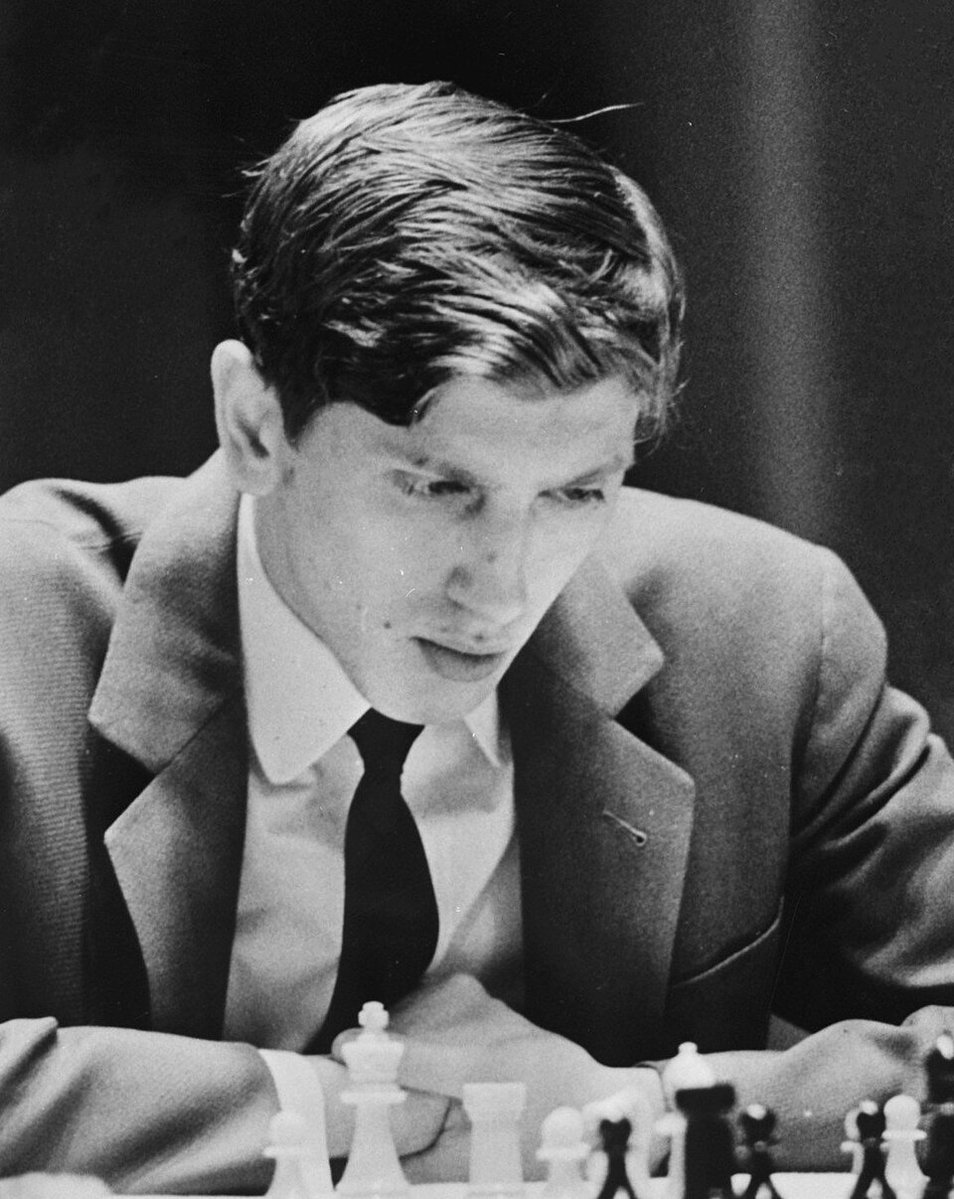
Who would win: Carlsen at his peak or Fischer at his?”
TK 😏🏆 tweet mediaTK 😏🏆 tweet media
English
57
5
132
44.5K
Alex Colovic
Alex Colovic@GMAlexColovic·
If you didn't know the engine evaluation, what would you say about the position?
Alex Colovic tweet media
English
18
3
18
4.1K
Python and Chess retweetledi
MICHÆL
MICHÆL@CuiBono1984·
@LinkedInLunat1c When people have nothing significant to contribute, they find a small thing and pretend it's meaningful. This is true in many areas- returning shopping carts, voting, standing for the flag, or answering the phone in a different way.
English
1
1
31
590
Python and Chess retweetledi
trish
trish@TrisH0x2A·
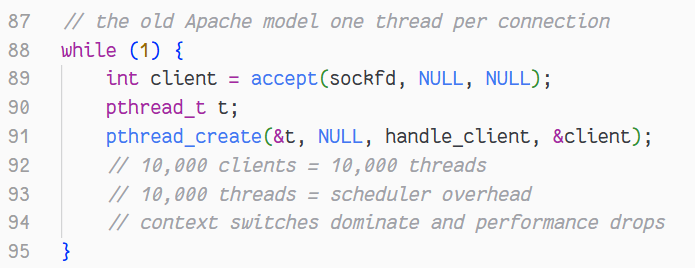
C10K problem in 1999 a software engineer named Dan Kegel wrote an article that changed how web servers are built the question was simple how do you handle 10,000 concurrent connections on one machine at the time Apache used one thread per connection, each thread needed memory for its stack around 8MB and 10,000 connections meant around 80GB of RAM just for stacks the system spent more time switching threads than doing real work servers crashed long before reaching 10k connections this became known as the C10K problem
trish tweet media
English
38
122
1.7K
195.9K
Pablo Gowezniansky
Pablo Gowezniansky@AjedrezdPrimera·
Anton jugó Rf3 tras el jaque de Bortnyk. ¿Qué jugada se perdió el prodigio español?
Pablo Gowezniansky tweet media
Español
6
3
40
8.3K
Zach
Zach@thechessnerd·
dare to drop your favorite chess opening and I will roast you ⤵️
English
150
1
58
10.2K
Python and Chess retweetledi
Judit Polgar
Judit Polgar@GMJuditPolgar·
Family together, birthday(s) edition.❤ 👸🧔👱‍♀️👩👩‍🦰 #myfamily
Judit Polgar tweet media
English
12
18
555
16.7K
Proton Pass
Proton Pass@Proton_Pass·
Are you more worried about corporations or governments tracking you?
English
326
44
636
37.5K