QueenslyCrypt

65.8K posts

QueenslyCrypt banner
QueenslyCrypt

QueenslyCrypt

@QueenslyCrypt

Web 3 Enthusiast | Exploring and sharing insights across every facet of Web3 | Marketing | https://t.co/GIC1q5XEBb

Crypto space Katılım Ekim 2013
1.6K Takip Edilen27.9K Takipçiler
QueenslyCrypt retweetledi
Stacy Muur
Stacy Muur@stacy_muur·
Every AI tool you need. Web2 to Web3, research to trading, in one map. Save this.
Stacy Muur tweet media
English
62
65
446
30.1K
QueenslyCrypt retweetledi
Mars_DeFi
Mars_DeFi@Mars_DeFi·
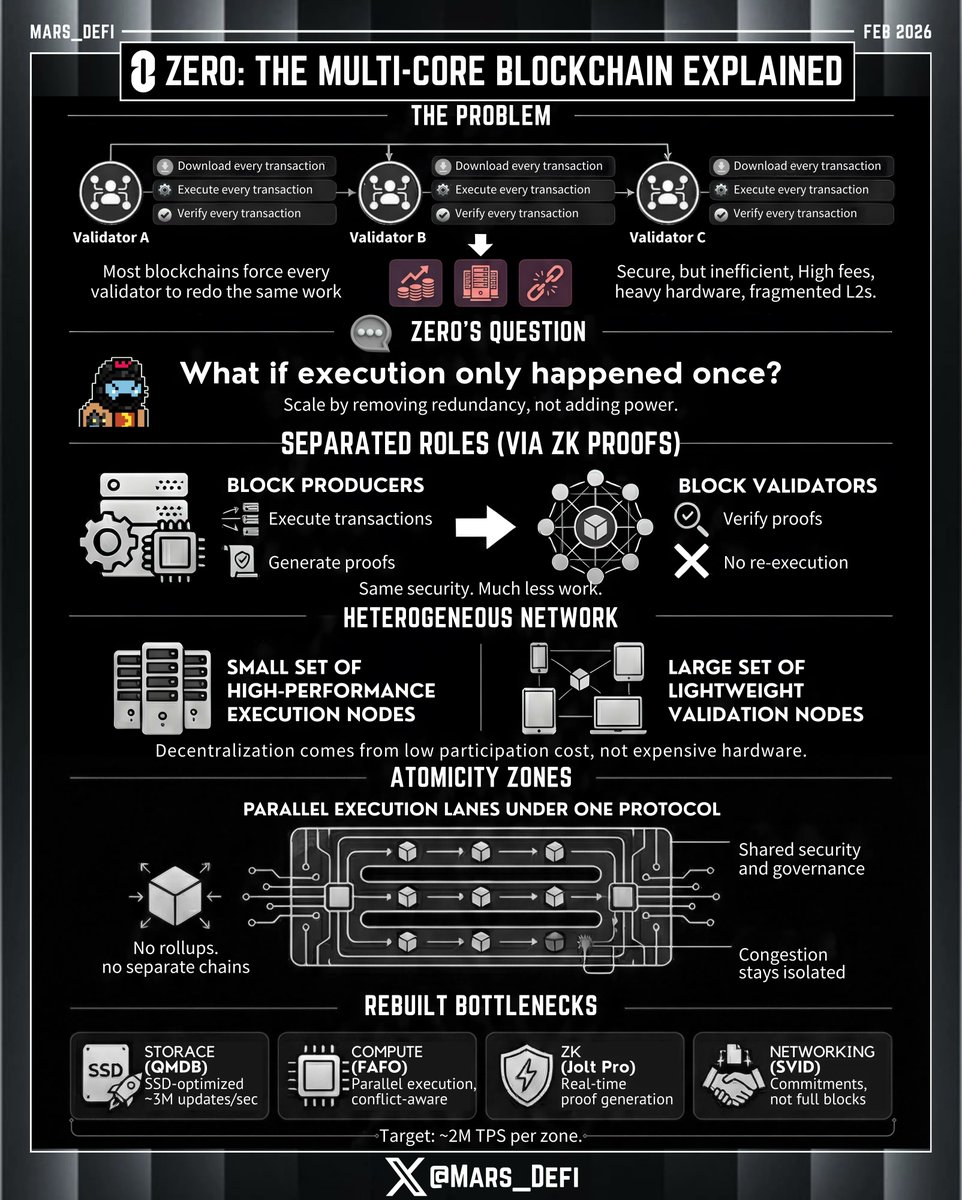
Every blockchain today makes the same mistake which is forcing thousands of validators to redo the same work. That redundancy was necessary once. Now it’s the reason scaling keeps breaking. @LayerZero_Core starts with a simple question most architectures never ask: What if execution only had to happen once? Zero introduces a multi-core blockchain model where execution is specialized, verification is universal, and scale comes from removing redundancy not adding power. — Most blockchains (Ethereum, Solana, etc.) are built the same way: • Every validator downloads every transaction • Every validator executes every transaction • Every validator verifies every transaction This duplication keeps the network secure but it creates massive inefficiency. The entire system becomes limited by: • The weakest validator • The need for all nodes to stay identical • Serial transaction processing This is why: • Ethereum becomes expensive during congestion • Solana requires powerful hardware • Layer 2s fragment the ecosystem The architecture itself doesn’t scale cleanly. — Zero breaks a long-standing assumption in blockchains: Execution and verification do not need to be done by everyone. Instead, Zero separates roles: ● Block Producers • Execute transactions. • Generate cryptographic proofs of correctness. ● Block Validators • Verify those proofs • Do not re-execute transactions This is possible because of Zero-Knowledge proofs. Rather than thousands of nodes re-running the same computation, validators check a compact mathematical proof that guarantees the result is correct. This ensures same securitya with far less duplicated work. — Traditional blockchains by their design are homogeneous where every node does the same job and every validator needs similar hardware. Zero however introduces a heterogeneous network: • A smaller set of high-performance nodes handle execution • A much larger set of lightweight nodes focus on verification This matters for decentralization. You don’t get decentralization by forcing everyone to buy expensive hardware. You get it by making participation cheap and accessible. Zero lowers the cost to validate without lowering security. — Zero doesn’t just optimize a single execution environment. It introduces Atomicity Zones which are independent execution lanes that share the same security and governance. Think of it like upgrading from a single-core CPU to a multi-core processor: • Applications no longer fight over one execution thread • Different workloads run in parallel • Congestion in one Zone doesn’t slow down the others Important distinction: • These Zones are not rollups • They are not separate chains • They do not fragment security or validators Everything still lives under one base protocol. — Zero redesigned every major bottleneck instead of patching around them. ● Storage ( QMDB ) • Append-only, log-based design • Optimized for modern SSDs • ~3 million updates per second ● Compute ( FAFO ) • Parallel transaction scheduling • Automatically detects conflicts • Removes the need for serial execution ● ZK Proving ( Jolt Pro ) • Real-time proof generation • Fast enough to verify execution at scale ●Networking ( SVID ) • Validators download compact commitments • Not full block data • Massive bandwidth reduction Each piece is engineered toward the same target: ~2 million transactions per second per Atomicity Zone. — Zero uses delegated proof of stake with: • Low participation barriers • Fully onchain governance • No external councils or off-chain gatekeepers It also introduces a Senator model: • Token holders can delegate governance decisions to experts • Delegation is optional and reversible at any time • Control always stays with stakeholders. — Ethereum preserved decentralization but struggles with throughput. Solana improved throughput but increased hardware concentration. Layer 2s scale by fragmenting security and governance. Zero attempts a different approach: Scale by removing redundancy. Instead of making validators more powerful, it makes validators do less. That unlocks: • Lower costs • Higher throughput • Parallel execution • Broad validator participation • Unified governance — Zero redesigns blockchain architecture so execution happens once, verification happens everywhere, and applications scale in parallel under a single decentralized network. That’s the multi-core world computer.
Mars_DeFi tweet media
LayerZero@LayerZero_Core

x.com/i/article/2020…

English
47
5
76
4.7K
The Altcoin KING
The Altcoin KING@0xAltKing·
StandX had a busy stretch this week, and it showed across product updates, infrastructure fixes, and community-facing initiatives. The team rolled out fast, addressed issues directly, and kept users informed at every step. If you’re using @StandX_Official regularly, or thinking about getting more active, this roundup breaks down everything you need to know. From product upgrades to incentives and community opportunities, there’s a lot packed into this week. Let’s get into it 👇👇 It started with a message from the founder saying no days off as @StandX_Official rolled out multi-language support, a feature users had been asking for. The update allows traders to experience the platform in their native language, making the interface more accessible regardless of location. 🔗 Announcement: x.com/standx_ag/stat… ❖ The feature is already live on the UI. Users can switch languages by clicking the 🌐 icon directly on the StandX interface. It’s a small change on the surface, but it makes a big difference for global users interacting with perps and vaults daily. 🔗 UI update: x.com/standx_officia… ❖ Vaults, $DUSD Yield, and How Claims Work StandX also highlighted how its Vaults work for users focused on capital growth alongside $DUSD yield. Vault participants earn yield over time, and the process to claim it is simple. You can claim their $DUSD yield anytime by heading to the Portfolio tab on the platform. There’s no waiting period or complicated steps. This reminder matters, especially for users who park funds in vaults and forget to check the accumulated yield. 🔗 How to claim: x.com/standx_officia… ❖ $DUSD Point Multipliers Updated StandX also updated point multipliers for $DUSD holders, clarifying how different balances are weighted across the platform. Here’s how it now works: ➣ $DUSD in Perps Wallet earns 1.0x points ➣ $DUSD in Vaults earns 1.25x points The change clearly encourages vault participation while still rewarding active perps traders. 🔗 Update: x.com/standx_officia… ❖ PnL Cards Go Live Another product update focused on trader visibility and social sharing. PnL cards are now live on StandX. Traders can generate a PnL card directly from their position by clicking the icon next to their PnL numbers. The card makes it easy to share trade results with friends or on social platforms. It’s a simple feature, but one that aligns with how traders already behave online. 🔗 PnL cards: x.com/standx_officia… ❖ Infrastructure Latency Incident and Transparent Resolution On January 15 and January 16, StandX experienced infrastructure latency that temporarily affected perps trading. During this period, perps trading was paused, but $DUSD on-chain balances were not affected. The team explained that the issue was caused by instability in the Validator Gossip Protocol, which disrupted node communication. To prevent repeat issues, StandX deployed a Dedicated Redundancy Layer and continued improving automated recovery systems. Affected users who submitted claim forms were fully compensated, with funds distributed directly to Perps Wallets as system transfers. StandX also clearly explained why some claims did not qualify, including trades outside the timeframe or hypothetical trades that never occurred. 🔗 Incident report & compensation update: x.com/standx_officia… ❖ Not All Points Are Equal Following comments from @StandX_Justin during the last Townhall, the team clarified how points weighting works across the ecosystem. Referral points, trading points, $DUSD holder points, maker points, and vault points all carry different weights. Among them, traders remain the top priority. More details on exact weighting are expected soon. 🔗 Points clarification: x.com/standx_officia… ❖ StandX Strikers: KOL Ambassador Program Opens To close the week, StandX opened applications for its KOL Ambassador Program, called StandX Strikers. Selected ambassadors will run AMAs, Twitter Spaces, livestreams, onboarding sessions, and tutorials. In return, they’ll earn rewards for growing and supporting the ecosystem. This move formalizes community education and outreach while giving creators a clear path to contribute. 🔗 Program overview: enormous-pink-7c0.notion.site/StandX-KOL-Amb… 🔗 Apply here: docs.google.com/forms/d/e/1FAI… Final Take Taken together, these updates show a clear direction. @StandX_Official is focusing on making the user experience of the platform easier for people to use. That's all for the week!! See y'all another time.
The Altcoin KING tweet media
English
112
1
115
2.3K
QueenslyCrypt
QueenslyCrypt@QueenslyCrypt·
@Defibecc I noticed it too. Wallets do a lot more now, and having everything in one place just makes life easier.
English
1
0
1
41
Bec🩵
Bec🩵@Defibecc·
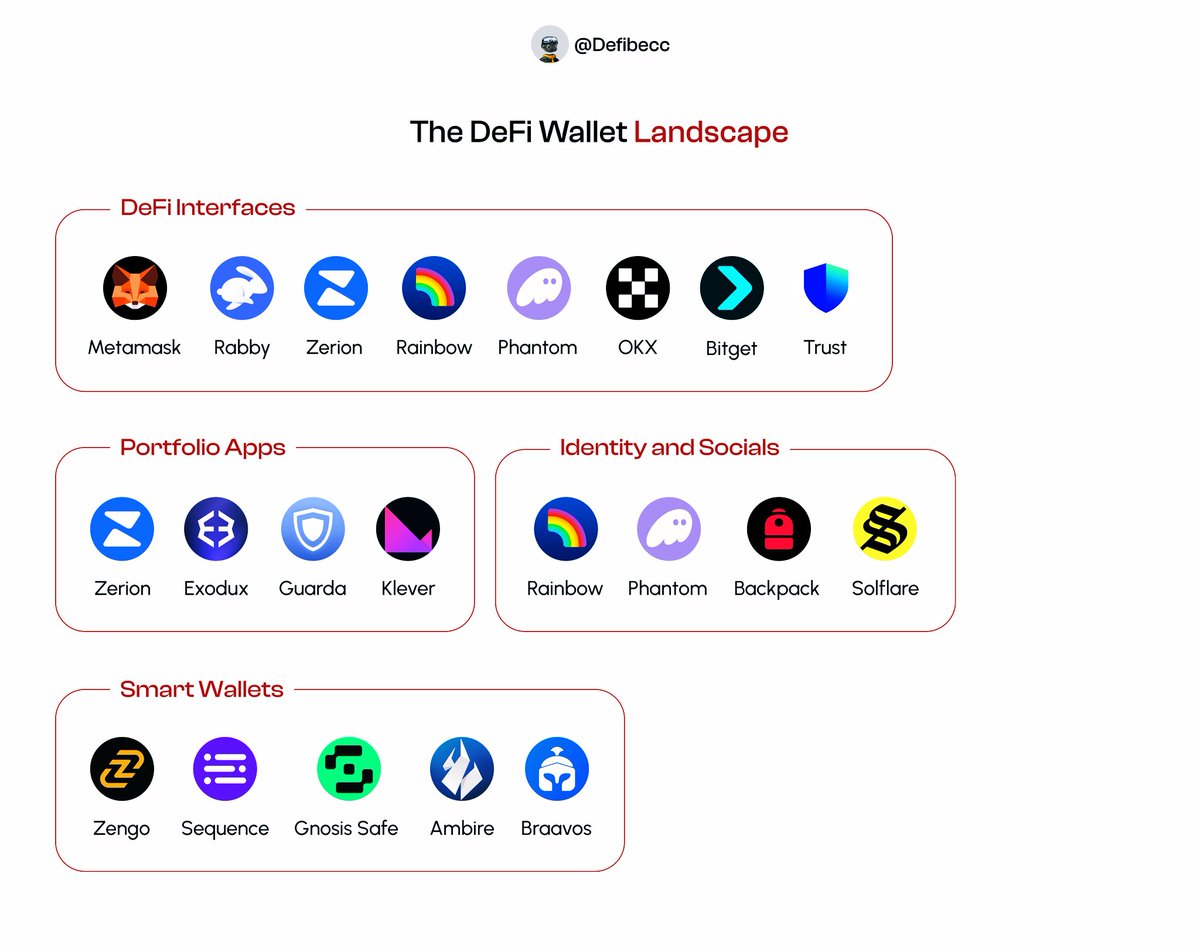
This morning I opened my wallet to send 10 $USDC Getting there, I saw perpetual positions, trending tokens, a swap interface with better routing than most DEXs, and even a prompt to bet on the election via prediction markets. That’s when it hit me, this isn’t a wallet anymore. It’s a full on DeFi product. ▪️The Product Shift With Wallets Nobody’s Talking About Wallets aren’t competing on security anymore. That problem is basically solved. They’re not competing on custody either. MPC and smart contract wallets made key management almost boring. Now they’re competing on products. @MetaMask has portfolio tracking and native swaps. @rainbowdotme lets you mint NFTs inside the app. @Rabby_io shows real-time protocol exposure across chains. @zerion feels more like a DeFi terminal than a wallet. ▪️Three shifts wallets capitalized on • Wallets got distribution. Millions of daily active users. Every crypto transaction flows through them. That’s leverage. • DeFi got fragmented. Thousands of protocols, dozens of chains, endless apps. Nobody wants to jump between 50 dapps just to use crypto. Wallets became the aggregator layer. • Users got tired. Managing approvals, tracking positions, finding yield, avoiding scams. Wallets absorbed the complexity, and users stayed because it worked. ▪️The New Wallet Stack Modern wallets don’t just store assets anymore. • They aggregate products: swaps, perps, options, prediction markets, yield, all inside one interface. • They surface opportunities: trending tokens, new protocols, high APY pools personalized from your activity. • They manage risk: transaction simulations, approval dashboards, security warnings before you sign. • They handle identity: ENS, transaction history, on-chain reputation, even social layers. Storage is just one feature now and honestly, not even the main one. ▪️Why This Matters • If you’re building a DeFi protocol, getting integrated into wallets is the new getting listed on exchanges. • If you’re a user, you’re probably doing most of your crypto activity inside one interface instead of navigating dozens of sites. • And if you’re a wallet, you’re sitting on a gold mine. Small fees on every swap, trade, and bet scale fast when you control billions in volume. ▪️Where This Goes @phantom isn’t a wallet with trading features it’s a trading platform with custody. @Rabby_io isn’t a wallet with portfolio tracking, it’s a DeFi interface with key management. At some point, wallet stops being the right word. So maybe we need a new term or maybe we just accept that wallets evolved into something bigger. Either way, we’re no longer in the storage era. We’re in the interface era and this is only the beginning. Which wallet do you actually spend most of your time in?
Bec🩵 tweet media
English
21
4
30
8.5K
QueenslyCrypt
QueenslyCrypt@QueenslyCrypt·
@evancrypt The vesting structure is actually pretty smart. Worth keeping an eye on, especially with that many agents live.
English
0
0
1
22
Evan
Evan@evancrypt·
The trenches are heating up again. One of the most overlooked sources of real alpha lately has been Assisterr AI. While most people weren’t paying attention, they quietly shipped. What dropped: ATaaS, a new tokenization framework with ~80% automated vesting for future launches. A clear push toward AI agents intersecting with capital markets Over 200 agents already live Actual monetization paths, not theory. This doesn’t read like noise or narrative chasing. It reads like positioning before the crowd shows up. Watching closely.
assisterr@assisterr

We’re introducing AI agent Tokenization as a Service (ATaaS) — a new core product by @assisterr for AI × Capital Markets use cases At the center of ATaaS is a new 80/20 tokenization approach powered by @MeteoraAG (DBC) program, built to fix broken market incentives. 🔹 How the 80/20 model works - 80% of tokens are automatically vested over 48 months, with a 6-month cliff - 20% of tokens are allocated to the bonding curve for initial price discovery and liquidity Vesting is enforced at the platform level — no manual intervention, no shortcuts 🔹 Why this matters - Aligns teams, users, and long-term holders - Reduces sniper-driven volatility and short-term extraction - Creates predictable supply dynamics for tokenized agents and assets - Supports sustainable, multi-cycle projects instead of launch-day speculation 🔹 What ATaaS enables - Tokenization of AI agents, digital products, and on-chain assets - Built-in monetization and market exposure - Transparent token logic and distribution rules - Scalable infrastructure for AI × Capital Markets use cases This release marks another step in Assisterr’s mission to build intelligence-native capital markets — where participation, ownership, and upside are aligned by design. build.assisterr.ai

English
36
2
40
1.3K
QueenslyCrypt
QueenslyCrypt@QueenslyCrypt·
@Elikrypt The fact that usage is still up even when the market is slow is interesting.
English
0
0
0
9
ΞLIKRYPTO
ΞLIKRYPTO@Elikrypt·
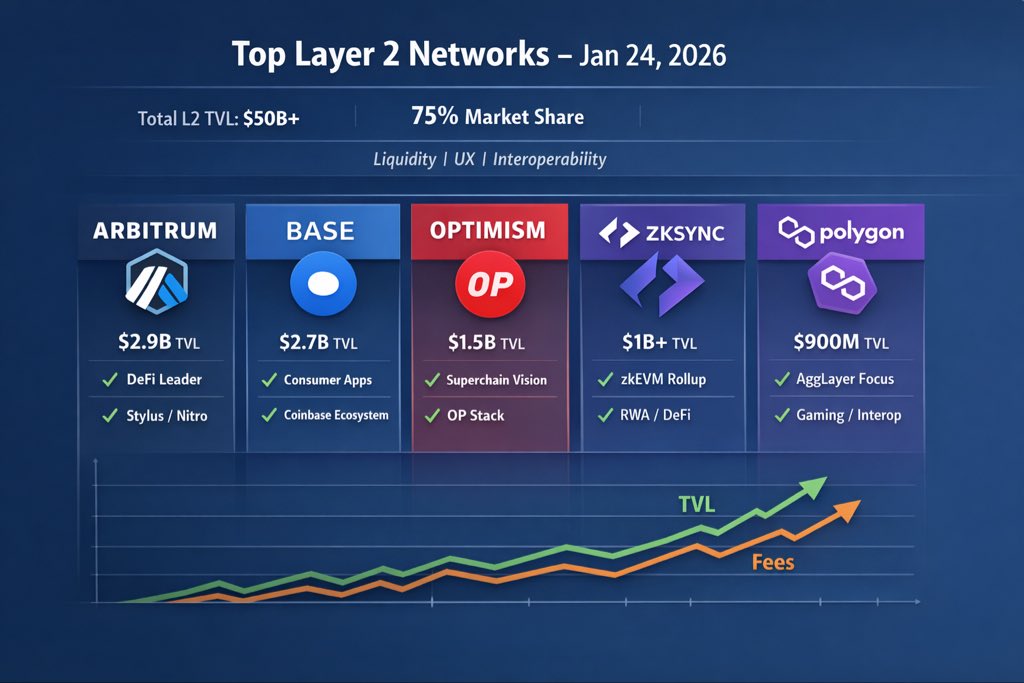
Most users in 2026 won’t know they’re using Layer 2. And that’s exactly the point. Quick check on the market first… BTC is hovering around $87K, alts are mixed, timelines feel undecided. Nothing dramatic on the surface. But under all that noise, Layer 2s are still busy. Usage hasn’t dropped. Fees are still coming in. Builders are shipping. That tells you something important. The scaling wars everyone talked about last cycle didn’t end…they changed shape. This isn’t about who can post the biggest TPS number anymore. 2026 is about who wins users, liquidity, and interoperability. ➟ What Layer 2s actually do (in simple terms) Layer 2s take transactions off Ethereum mainnet, process them faster and cheaper, then settle back to L1 for security. That’s it. Different approaches, same goal • Optimistic rollups assume transactions are valid, with fraud proofs as backup • zk-rollups use cryptographic proofs for faster finality • App-focused L2s specialize in gaming, DeFi, or consumer app Blobs (EIP-4844) changed everything here. Data costs dropped massively, and suddenly L2s became usable at scale. ➟ Why Layer 2s get stronger into 2026 A few things are lining up at the same time… • RWAs need cheap, fast settlement • AI agents need constant on-chain execution • Consumer apps need gasless UX and smooth onboarding • Institutions don’t want mainnet congestion Layer 2s sit right in the middle of all that. This is why even on choppy days, L2 activity stays resilient. ➟ The real shift happening now Throughput is becoming commoditized. What actually matters now • Interoperability, moving across L2s without friction • Liquidity depth, not isolated ecosystems • Consumer experience, wallets, accounts, gas abstraction • Specialization, not one-size-fits-all chains That’s where the winners separate themselves. ➟ Core mechanics that define today’s L2s • Optimistic rollups, cheap and battle-tested • zk-rollups, faster finality and privacy-friendly execution • Cross-L2 bridges and intents, reducing fragmentation • Account abstraction, making crypto feel like Web2 This is infrastructure, not speculation. ➟ Prominent Layer 2 projects to watch • Arbitrum (@arbitrum) Still the DeFi heavyweight. Deep liquidity, strong developer activity, and one of the most battle-tested rollup stacks.  Stylus brings Rust and C++ support, which quietly matters more than people think. • Base (@base) This is where consumer crypto is happening. Coinbase distribution, smooth onboarding, and apps people actually use. Centralization concerns exist, but adoption is hard to ignore. • Optimism (@Optimism) The OP Stack quietly became the backbone for multiple chains. The Superchain thesis is about shared liquidity and coordination, not competing silos. • zkSync (@zksync) zk-rollups moving into real production scale. Fast finality, strong RWA and DeFi potential, still early in UX polish but improving steadily. • Polygon (@0xPolygon) Pivoted hard into interoperability with AggLayer. Gaming, enterprise, and cross-chain liquidity are the focus now, not just one chain metrics. Each of these is attacking the problem from a different angle, and that diversity is healthy. ➟ The uncomfortable truth Scaling wars didn’t end. They just stopped being loud. Raw throughput is no longer the flex. Liquidity, UX, and real users are. In a cycle shaped by regulation, RWAs, AI agents, and institutions, Layer 2s become the rails everything else runs on. Not flashy. Not viral. But absolutely essential. Tomorrow, I’ll talk about restaking, how it evolved, and why EigenLayer changed incentives across crypto. Quiet narratives tend to compound first.
ΞLIKRYPTO tweet media
English
11
0
21
4.8K
QueenslyCrypt retweetledi
Cointelegraph
Cointelegraph@Cointelegraph·
🚨 LATEST: Ethereum Foundation launches Post-Quantum security team with $2M funding to protect against quantum computing threats.
Cointelegraph tweet media
English
193
279
1.7K
75.9K
QueenslyCrypt
QueenslyCrypt@QueenslyCrypt·
@jacycrypt Money becoming internet-native changes expectations in ways banks can’t easily adapt to. Great Article Jacy👍
English
1
0
1
50
QueenslyCrypt retweetledi
RWA.xyz
RWA.xyz@RWA_xyz·
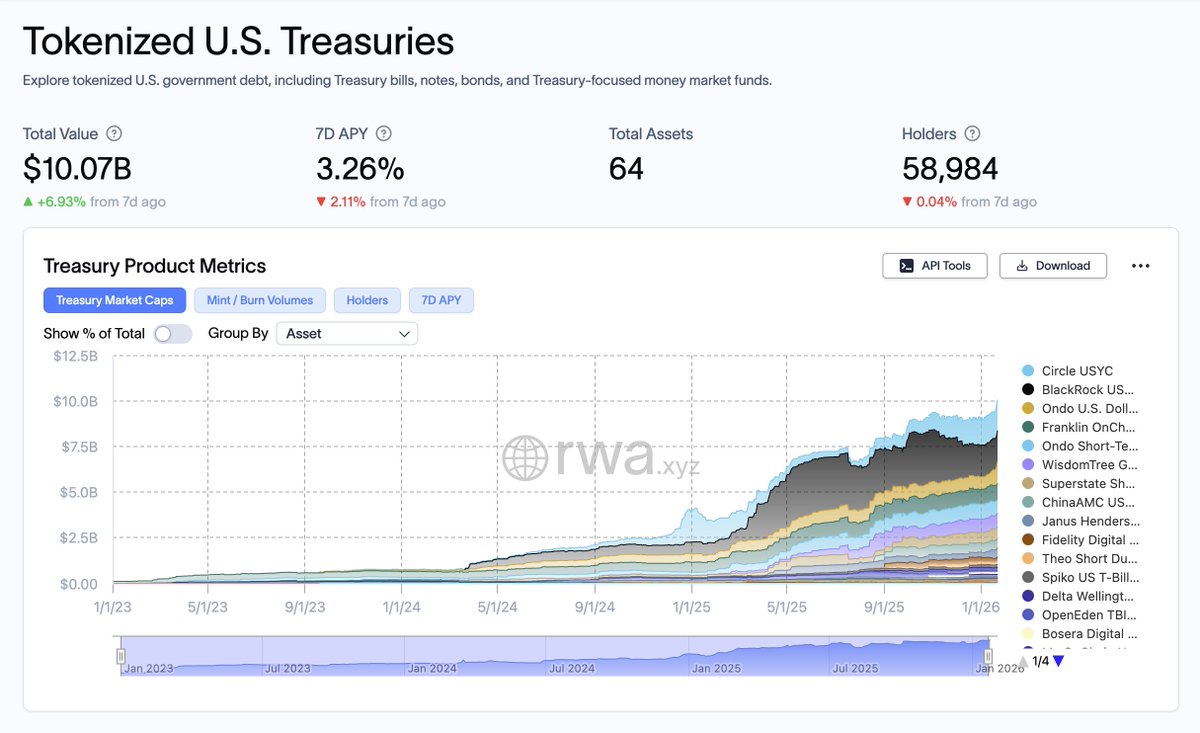
BREAKING: Tokenized Treasuries has surpassed $10B Circle's USYC deployed on BNB Chain tipped the asset class into next stage of scale
RWA.xyz tweet media
English
50
101
530
35.9K
QueenslyCrypt
QueenslyCrypt@QueenslyCrypt·
@Elikrypt Privacy really isn’t optional anymore. The longer I’m in this space, the more obvious it becomes that privacy is the missing layer for real adoption.
English
1
0
1
29
ΞLIKRYPTO
ΞLIKRYPTO@Elikrypt·
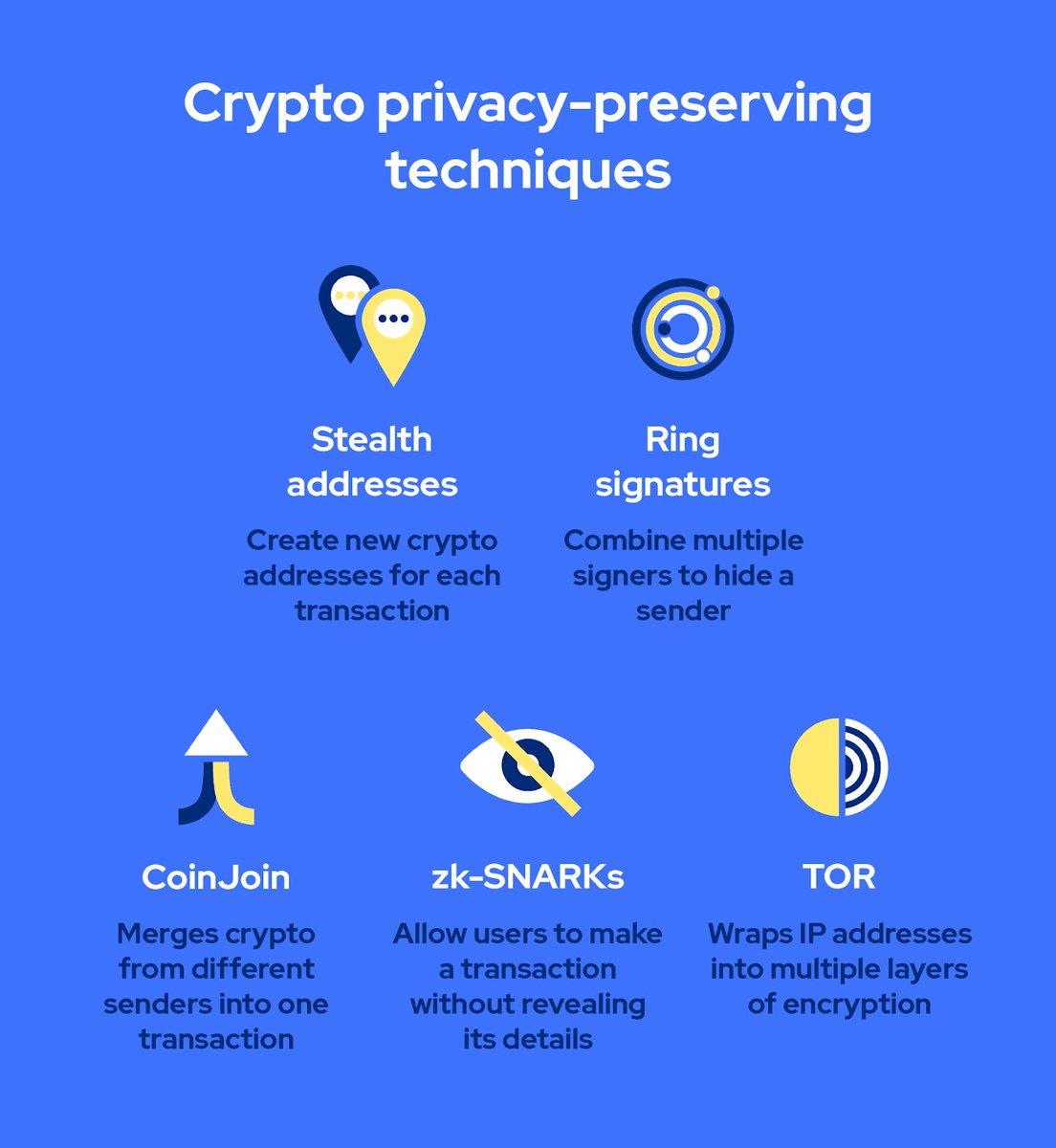
While timelines argue about memecoins and AI agents. Something else is quietly holding up better than most. It’s called privacy. Not because it’s trendy. Because it’s necessary. As regulation tightens, transparency stops being a feature and starts becoming a liability. Institutions don’t hate blockchains. They hate exposed balance sheets. Privacy fixes that. ➟ What privacy really means on-chain • Transactions that can be verified without exposing sensitive data • Smart contracts that execute without leaking positions • Assets that move without inviting MEV or front-running This isn’t about hiding wrongdoing. It’s about controlled disclosure. Regulators see what they need. Counterparties get certainty. Markets stay functional. ➟ Why privacy gets stronger into 2026 • RWAs can’t scale if positions are public • Traders won’t tolerate constant MEV extraction • Institutions require confidentiality by default • Stablecoins and settlement rails demand discretion Privacy isn’t competing with compliance. It enables it. ➟ Core privacy primitives • Zero-knowledge proofs, verifying truth without revealing data • Fully homomorphic encryption, computing on encrypted values • Shielded transactions, hiding sender, receiver, and amount • Privacy layers that plug into existing L1s and L2s This is infrastructure, not speculation. ➟ Prominent privacy builders to watch 🔹@zama_fhe Confidential smart contracts using FHE, enabling private stablecoins, RWAs, and encrypted execution at the protocol level. 🔹 @aztecnetwork A privacy-first Ethereum L2 focused on private smart contracts and shielded DeFi using zk-SNARKs. 🔹 Monero (XMR) The original privacy asset. Default private, resilient across cycles, and still the benchmark for censorship resistance. 🔹 @SecretNetwork Encrypted smart contracts on Cosmos, enabling private DeFi and cross-chain confidentiality. 🔹 @Railgun_Project Privacy for existing ERC-20 assets through zk-based shielded pools, without issuing new tokens. ➟ The uncomfortable truth Privacy isn’t flashy. It doesn’t trend loudly. It doesn’t market well. But without it: • RWAs stall • Institutions hesitate • Capital stays cautious In a market shaped by regulation, settlement, and real assets… privacy isn’t optional. It’s the quiet requirement everything else depends on. Silence, this cycle, is strength.
ΞLIKRYPTO tweet media
English
15
1
17
6K
Jacy🌸
Jacy🌸@jacycrypt·
I just spinned up a strategy using @Infinit_Labs’ Prompt-to-DeFi, and honestly, it’s one of the finest attempts at simplifying on-chain strategy creation. Instead of manually hopping across protocols, you just explain your intent in plain English. The system handles the rest. I got an early access code a while back, so I decided to explore. Glad I did. Have a code and don’t know how to go about it? The flow is pretty simple: ✧ Go to app.infinit.tech/en/prompt ✧ Connect wallet ✧ Bind the code to your wallet ✧ Select the “create a new strategy” button ✧ Input start token, prompt, and strategy name ✧ Hit “next”, then “generate”. PS - you have to wait a while for the Agent Swarm to generate the strategy. Once generated, run a simulation, save the strategy, and you’re good to go. What stood out to me is how much of the complexity is hidden behind a clean interface. You’re not “building” a strategy in the traditional DeFi sense. You’re describing an outcome, and the execution layer translates that into an actual strategy. It was a seamless and fun experience, so I’ll definitely try creating more strategies. If you don’t have an access code yet, you can join the waitlist and likely get one in the next distribution phase.
English
20
5
43
7.3K
QueenslyCrypt retweetledi
fabiano.sol
fabiano.sol@FabianoSolana·
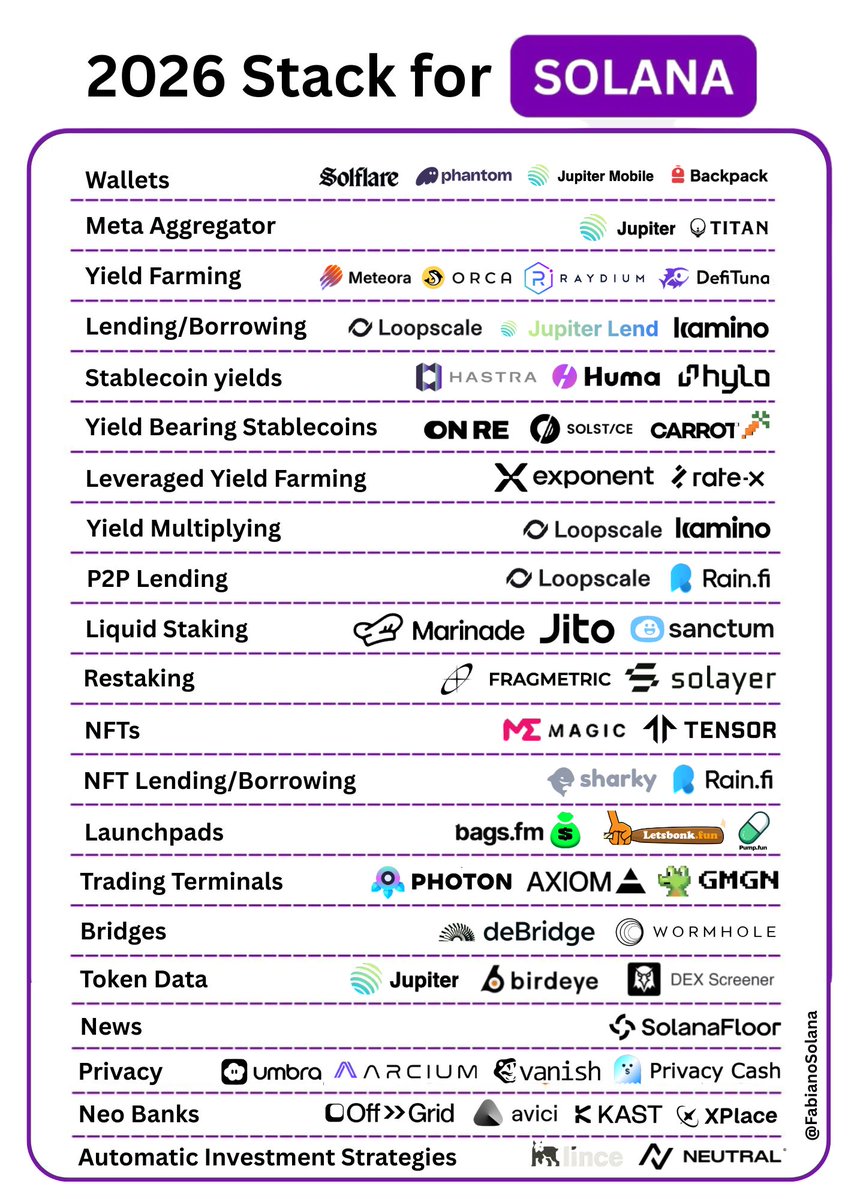
2026 Stack for Solana DeFi Save this if you are into Defi
fabiano.sol tweet media
English
217
239
1.2K
129.5K
QueenslyCrypt
QueenslyCrypt@QueenslyCrypt·
If someone is bold enough to claim your entire work as theirs, you’ve clearly reached a level where even your layout is worth stealing 😃. But let’s call a spade a spade, taking someone’s full research and cropping out their name is wild. At least respect the effort that went into it.
English
1
0
2
110
Mars_DeFi
Mars_DeFi@Mars_DeFi·
The first real sign you’ve “made it” is when someone steals your entire research, crops out your name and calls it “original work.” At that point, congrats because you’re influential enough to be plagiarised and they’re lazy enough to prove it.
Mars_DeFi tweet media
Michy / 米奇@michyexe

The x402 ecosystem is exploding, and the most telling proof is the number of teams integrating it directly into their products. Whether it’s APIs charging per request, compute providers charging per inference, or agents paying for data and tools as they operate, x402 has quietly become the backbone of an emerging machine economy. The next era of software won’t rely on monthly subscriptions or human-triggered payments, but on real-time, per-action settlement between machines. Here's a list of more projects spearheading the shift. — Core Infrastructure & Protocol Extensions Projects extending or securing the x402 protocol layer itself, adding privacy, consensus, or specialized runtime enhancements. ● Protocol Extensions & Security Layers : - Projects : @PRXVTai (px402), @t54ai (x402-secure) & @Ch40sChain They build privacy, trust, and consensus layers over x402. - PRXVTai focuses on ZK privacy - t54ai on trust/security, and Ch40sChain replaces the facilitator with a BFT workflow. ● ZK & Trustless Payments : - Projects : @NovaNet_zkp & @radrdotfunzkx402 enables ZK-verified USDC payments RADR’s ShadowPay provides gasless ZK payments on x402. ● Infrastructure-Level Integrators : - Proejcts : @quaindotcom & @alt_layer Quain integrates x402 at the RWA/AI infrastructure level Alt Layer’s “x402 Product Suite” includes a Facilitator and Gateway. — Agentic Frameworks & AI Ecosystems These implement x402 for AI agent payments, agent coordination, or monetization of autonomous systems. ● AI Agent Platforms / Launchpads : - Projects : @EternalAI_, @Treasure_DAO & @memeputer They enable AI agents to launch, transact, and monetize services using x402. ● AI Agent Frameworks: - Projects : @karum_AI, @TheKodeusLabs, @Cod3xOrg, @animusuno & @Unibase_AI They build SDKs and dev kits for agents to coordinate, pay, or share data via x402. ● Compute & Robotics Integration : - Projects : @comput3ai, @Roba_Labs, @SynthdataCo & @turf_network They Implement x402 micropayments for compute access, robotics, and data transformation. ● Major AI Integrations - Projects : @AnthropicAI, @openmind_agi, @Orbofi & @Hyperware_ai They Integrate x402 into MCP or agentic frameworks to let models (like Claude) pay for data, services, or API calls. — Payment Facilitators, Gateways, & SDKs These are the core payment enablers and developer tools for embedding x402 micropayments. ● Facilitators / Gateways - Projects : @0xGasless, @alt_layer, @Treasure_DAO, @Unibase_AI & @scattering_io They provide infrastructure to process x402 payments across ecosystems like Base and Avalanche. ● Payment SDKs / Dev Tools - Projects : @vercel, @brewitmoney, @1shotapi, @HeyElsaAI, @AurraCloud, @onchainpayment & @OneAnalog They offer developer tools and SDKs for adding M2M micropayments or pay-per-intent functionality to apps. ● Payment UX / Gateway Tools - Projects : @useload & @itsgloria_ai They enable micropayment-gated links, pay-per-call APIs, and paywalled data gateways. — Explorers, Analytics, and Meta-Layer Services Projects that analyze, visualize, or aggregate the x402 ecosystem’s on-chain data. ● Explorers / Dashboards - Project: @x402scan It is an onchain explorer and agent dashboard for monitoring x402 ecosystem activity. ● Analytics / Aggregators - Project: @scattering_io It serves as a facilitator aggregator and analytics hub for x402 protocols. — Platform-Level Integrations Entities embedding x402 directly into their existing API or platform infrastructure to enable monetization. ● API Monetization Platforms - Project: @neynarxyz, @Hive_Intel, @ar_io_network & @Polymer_Labs They integrate x402 to monetize access to APIs, blockchain data, and gateways. ● Enterprise & Merchant Tools - Project: @AurraCloud & @itsgloria_ai They offer merchant-facing micropayment systems powered by x402.

English
112
7
172
11.2K
QueenslyCrypt retweetledi
Stacy Muur
Stacy Muur@stacy_muur·
Mega list of tools for daily research ↓ 1️⃣ Market Overview + ETF Netflows + Supply & Profitability Cohorts • @CoinMarketCap - Market cap, dominance, sentiment, ETF flows • @coinglass_com - Liquidations, funding, OI, long/short, corporate BTC treasuries • @glassnode - On-chain cohort behavior, realized price, ETF cohort activity • @SentoraHQ - Holder cohorts + netflow shifts • @artemis__xyz - Mint/burn flows + cross-chain asset movements • @rwa_xyz - Stablecoin issuer collateral transparency • @tokenterminal - Stablecoin holder concentration + issuance pace • @Dune - Community dashboards for stablecoin flows • @DefiLlama - DAO treasuries
Stacy Muur tweet media
English
74
42
303
17.3K
🪙 KC 🪙
🪙 KC 🪙@KCethbtc·
@QueenslyCrypt @cube_protocol Thank you for sharing this insightful information about Cube Protocol. The emphasis on trust and transparency in robotics is crucial as the industry evolves. I'm looking forward to seeing how this will impact the future of automation.
English
1
0
1
70
QueenslyCrypt
QueenslyCrypt@QueenslyCrypt·
@Bitvizory @cube_protocol Exactly .. Once actions become verifiable, everything else scales naturally. Glad the vision clicks for you too.
English
0
0
0
12
Bitvizory
Bitvizory@Bitvizory·
@QueenslyCrypt @cube_protocol That trust layer concept Queensly is huge because verifiable actions are the key to mass adoption for decentralized AI and robotics, I'm definitely watching that Uniswap launch today 🤔
English
1
0
1
50