JasonEllis

721 posts

JasonEllis

JasonEllis

@REBTChit

Fan of interdisciplinary approaches to social science and human behavior.

Katılım Haziran 2022
311 Takip Edilen24 Takipçiler
JasonEllis retweetledi
Finn Stockinger
Finn Stockinger@FinnStockinger·
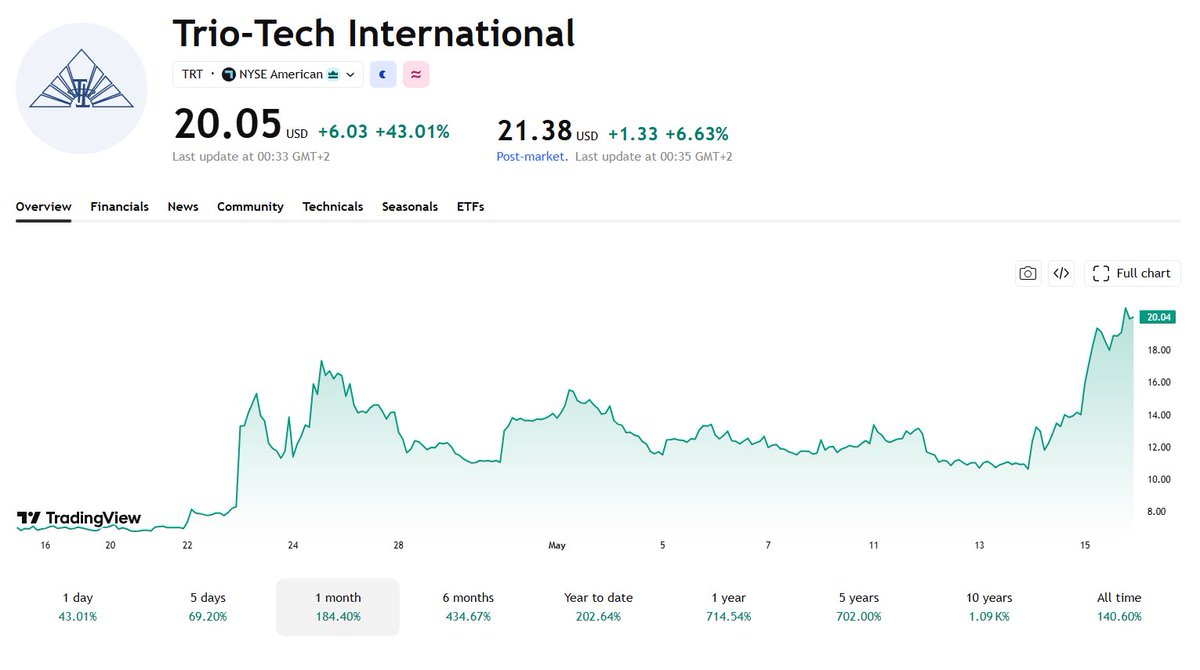
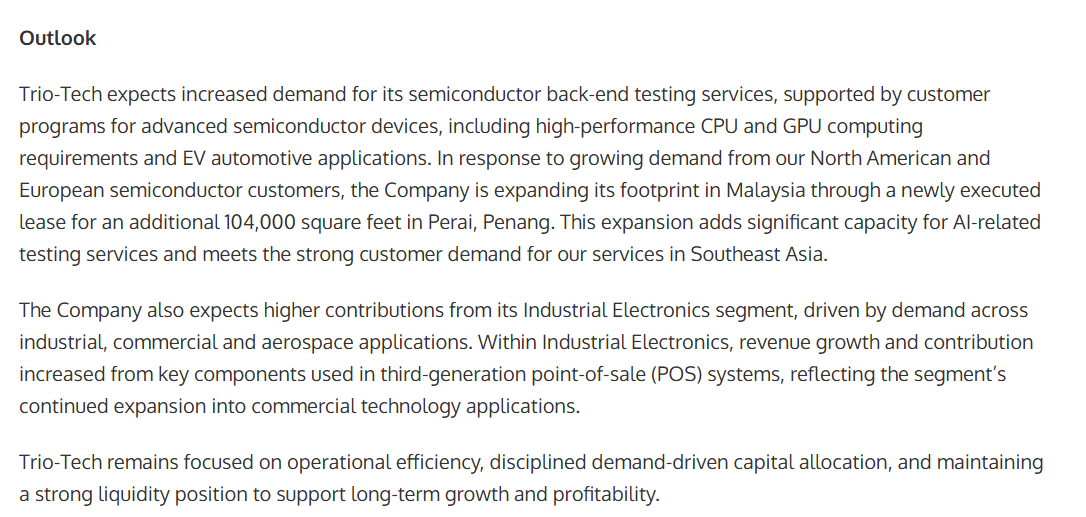
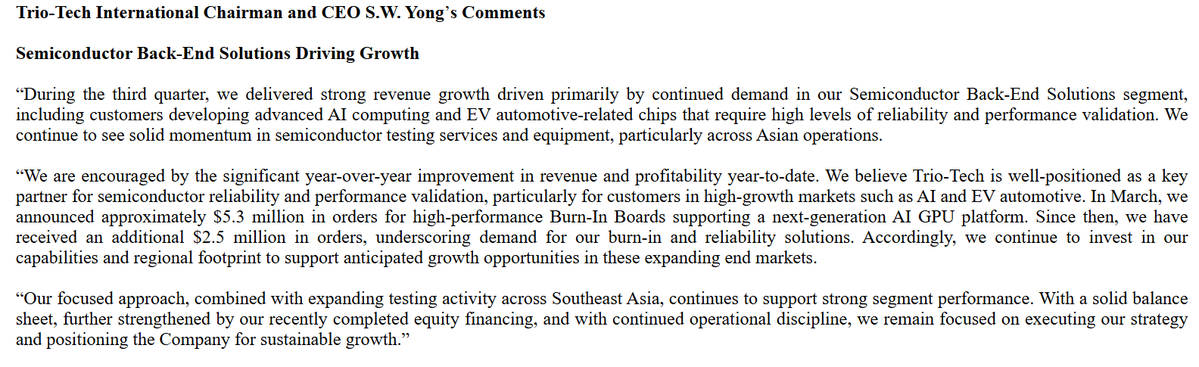
Trio-Tech ($TRT): My Next +100% Bag this Year. My investing philosophy for 2026 is simple: find the companies that own the un-bypassable infrastructure, buy them cheap, and ignore the daily noise. Trio-Tech ($TRT) fits that description perfectly. They don't sell hyped-up promises; they run physical back-end labs in Southeast Asia that the tech elite depend on. After their latest 10-Q filing on Thursday, the stock jumped 40% in a day, locking in a +100% gain for my port. Let’s look past the sudden price spike and break down the actual balance sheet. Here is why Trio-Tech International ($TRT) just stopped being an ignored micro-cap and turned into a critical, un-bypassable infrastructure lynchpin for the second half of 2026. ➡️This stock has delivered another +100% for me this year in a relatively short period. I initiated my first position 23rd April and accumulated on the way up, with a cost basis of ~$10. I’m not selling a single share. 👇 The Q3 2026 Earnings Anatomy: Numbers Without the Makeup On May 14, 2026, Trio-Tech published its Q3 FY2026 Form 10-Q on the NYSE American exchange. The market's reaction was violent - the stock surged over 40% in a single session, tearing past the $20 mark. To understand if this rally has actual fundamental legs, we need to strip away the market euphoria and dissect the raw financial architecture. 1⃣Top-Line Explosion & Segment Shift TRT generated $16.51M in revenue for the quarter (ended March 31, 2026) compared to $7.38M in the prior-year period. That is a staggering 124% YoY growth. The true magic, however, lies in where this money is coming from: ➡️Semiconductor Back-End Solutions (SBS): $13.08M vs. $5.43M last year (+141% YoY) ➡️Industrial Electronics (IE): $3.43M vs. $2.00M last year (+76% YoY) Nearly 80% of TRT’s entire business is now concentrated in the SBS segment - specifically final reliability testing and "burn-in" services for packaged silicon. This is a direct consequence of the insatiable demand for physical validation of AI data center clusters and 800V automotive grids. 2⃣The Gross Margin Paradox: Risk or Scaling Feature? The bears and basic trading algorithms immediately flagged one metric: gross margins compressed sharply from 27% down to 16%. In the micro-cap world, a sudden margin drop often triggers panic. But a granular look at the balance sheet reveals this is a temporary byproduct of massive scaling, not structural decay. The compression is driven by two highly logical factors: ➡️A deliberate transition into massive, high-volume testing contracts which carry lower unit margins but secure immense aggregate dollar volume. ➡️Mobilization & Ramp-up Costs: TRT is aggressively preparing its operational footprint for an unprecedented influx of business. The engineering, logistics, and setup costs are being recognized today, before the new facilities book their first dollar of revenue. ⬇️ Despite this margin pressure, the net loss for the quarter was narrowed to just $38k (compared to a loss of $495k in Q3 FY2025). The company essentially achieved an operational break-even while expanding at a breakneck pace. 3⃣The Malaysian Masterstroke: Embedding into the Penang Megacluster The absolute crown jewel of this investment thesis is buried in the company’s regulatory filings from May 2026. Trio-Tech signed a lease agreement for a massive 104,000 square foot facility in Perai (Penang, Malaysia) at a cost of $115k per month, effectively commencing June 1, 2026. Let's put that footprint into perspective: ➡️Doubling Global Capacity: This single facility increases TRT’s global laboratory testing square footage by an estimated 80% to 100%. ➡️The "China+1" Geopolitical Arbitrage: Western chip designers are desperately trying to de-risk their supply chains by moving back-end processes out of China. Penang has established itself as the undisputed capital of semiconductor packaging (OSAT) in Southeast Asia. By placing a 104k sq ft lab right in the heart of this industrial zone, TRT is setting up shop door-to-door with a legendary roster of tech titans. In fact, $AMD, $INTC, $AVGO, $JBL, $COHR, and $KEYS are all located within a tight 15-to-20 minute drive from new $TRT location. Instead of packing highly sensitive, multi-thousand-dollar AI modules onto planes to be tested in mainland China or Taiwan, Western tech companies can now complete the entire packaging and final validation loop locally in Penang. TRT is building the toll booth right outside their factories. 4⃣The Proprietary Moat: Vertically Integrated Hardware Most testing service companies face a brutal operational bottleneck: they have to buy their burn-in ovens and test equipment from external vendors, forcing them to pay immense markups and wait in line for tool allocations. Trio-Tech operates on a fundamentally superior architecture. They design and manufacture their own burn-in systems, custom Burn-In Boards (BIBs), and hydraulic centrifuges in-house. This creates a dual advantage: They don't wait for supply chains. They can outfit the massive new Penang facility at internal manufacturing cost, dramatically lowering their CapEx requirements. They do not sell this equipment for a one-time product margin. Instead, they deploy it internally to sell recurring, high-volume testing services to the biggest names in tech. This is where the massive operating leverage comes into play. The lease and fixed overhead costs for the Penang facility are static. Once the utilization rate of their in-house manufactured machinery crosses the 75% threshold, every additional hour of chip-cooking translates into pure, exponential profit falling straight to the bottom line (EPS). 5⃣A Fortress Balance Sheet Meets Undervalued Multiples In April 2026, the company executed a registered direct offering, securing $10M in gross proceeds from institutional investors at $9.50 per share. Retail investors initially lamented the dilution. In reality, this capital was immediately deployed as the working capital engine required to stand up the Penang mega-lab and execute on their surging backlog, which includes a confirmed $7.8M in firm orders for specialized BIBs tailored exclusively for next-generation AI GPU architectures. When you look at the balance sheet post-offering, the financial health is pristine: ~$28.3M in total net cash (combining March cash balances with the April raise). Long-term bank debt: A negligible $255k. ⬇️The Valuation Disconnect Following the 40% post-earnings surge to around $21, and accounting for the expanded share base (now sitting at roughly 5.1M shares outstanding), TRT's market capitalization rests at approximately $202M. Over the first 9 months of fiscal 2026, TRT has already locked in $47.7M in revenue. Even under a highly conservative assumption that the fourth quarter simply matches the current run-rate ($16.5M), the company will comfortably close the fiscal year with $64M in revenue. This leaves the company trading at a forward EV/Sales multiple of 3x. Paying a 3x Enterprise Value-to-Sales multiple for a debt-free, asset-owning business that is actively doubling its global physical capacity, while anchoring itself right in the middle of a 15-minute radius shared by AMD, Intel, and Broadcom - is a textbook market mispricing. At a $10 cost basis, this position offers an immense margin of safety. The structural fundamentals are moving significantly faster than the stock price. I am locked in for the long haul, and any macro-driven volatility or short-term pullbacks will be viewed as an open invitation to accumulate more shares.
Finn Stockinger tweet mediaFinn Stockinger tweet mediaFinn Stockinger tweet mediaFinn Stockinger tweet media
Finn Stockinger@FinnStockinger

Trio-Tech $TRT: The Final Line of Defense in the AI and 800V Infrastructure Chain Meet Trio-Tech International ($TRT), a company perfectly positioned at the epicenter of the global hardware infrastructure shift. They provide critical high-voltage reliability testing and "burn-in" services for the world’s leading semiconductor manufacturers, ensuring the physical survival of chips powering AI Data Centers and 800V DC grids. Read on to discover why this micro-cap is great opportunity to invest in the 2026 hardware boom. 1⃣Technical Moat: Why $TRT is Not AEHR To understand TRT’s value, one must distinguish its role from market darling Aehr Test Systems (AEHR). $AEHR (Wafer-level): Their systems screen chips while they are still part of a silicon wafer. This is the first stage of filtration—efficient, but not final. $TRT (Package-level): Trio-Tech enters at the Final Stage. They test chips after they have been cut, bonded, and packaged. In the era of AI Data Centers, where a single module costs tens of thousands of dollars, package-level testing is the only guarantee that a chip still holds its parameters after the stresses of the packaging process. TRT acts as the "Final Auditor." They subject finished units to extreme thermal stress (burn-in) and mechanical forces in centrifuges to eliminate latent defects. TRT does not compete with AEHR; TRT closes the loop that AEHR begins. 2⃣Financial Fundamentals: $19M Cash vs. Low Valuation The 2026 balance sheet reveals a rare disparity between market valuation and real capital: Cash Position: The company maintains approximately $19.5M in cash (approx. 32% of its market cap). This provides a massive safety cushion with no significant long-term debt. Inventory Strategy: Inventories have scaled to roughly $11M. This is not "dead weight" but a strategic stockpile of components for their proprietary Burn-in Boards (BIBs) and test systems. TRT has pre-positioned itself for a surge in orders, drastically shortening lead times. Enterprise Value (EV): After stripping out the cash from the $73M market cap, the market is valuing TRT’s global operational business at only $40M. With annual revenues near $40M, you are paying roughly 2.0x Sales (EV/S) for this infrastructure. 3⃣The AI Direction: Infrastructure Over Software AI chips operate under extreme loads and generate record amounts of heat. This drastically shortens their lifespan without proper "seasoning" in the testing phase. Optical Modules & Accelerators: TRT has secured orders for testing boards dedicated to high-speed interfaces and GPUs. Vendor Lock-in: By designing custom test fixtures (sockets) for the specific housing of new AI chips, TRT creates high switching costs for customers, ensuring revenue stickiness for years. 4⃣The 800V DC Standard: Breakout in Automotive & Data Centers The transition to the 800V DC standard is one of the strongest current technological trends, and TRT is positioning itself as a key partner in this shift. ➡️AI Data Center Infrastructure: AI data centers are moving away from low voltages toward 800V DC buses to drastically reduce energy losses when delivering massive power to GPU clusters. Every power conversion module operating at these voltages must pass rigorous reliability tests in TRT’s chambers. ➡️Renewable Energy & BESS: Battery Energy Storage Systems (BESS) and solar inverters are also shifting to the 800V standard to increase transmission efficiency. TRT tests the power semiconductors (SiC/GaN) that manage these flows. ➡️Automotive 800V: In the EV sector, 800V architecture allows for ultra-fast charging. TRT holds unique military-grade certifications (MIL-STD) that allow them to test components for ADAS and high-voltage drivetrains where the margin for error is zero. 5⃣Production Capacity and Cycle Timing The company has completed a period of heavy capital expenditure (CapEx) to modernize its laboratories in Singapore and Thailand. It is now in the monetization phase: ➡️In-House Manufacturing: TRT builds its own centrifuges and burn-in systems. During a boom, they don't wait in line for equipment; they scale their own lines internally. ➡️Operating Leverage: With fixed costs for service centers already covered, any increase in machine utilization above 75% translates into a rapid spike in operating margins and Earnings Per Share (EPS). ⬇️Verdict Trio-Tech is a classic "Deep Value Play" with a massive cash floor. The company has prepared its inventory and infrastructure for the next wave of orders from the AI and 800V DC high-voltage sectors. For the investor, this is a purchase of a critical link in the supply chain at a moment when the market is beginning to realize that without physical reliability, no technological revolution can survive the test of time.


English
6
12
87
11.5K
JasonEllis retweetledi
Chip 🍪
Chip 🍪@ChipGotIt_·
Marlon shares an old clip from before he blew up, where he promised himself he would stay consistent, get his visa, move to the States, and get a house. 2 years later, he really made it happen 🥹
English
21
79
3.4K
238.1K
JasonEllis retweetledi
Kova
Kova@kovainvest·
方向是对的,AI光化是物理必然。 但几个细节需要纠偏: NVL72机架光占比远低于20%。GB200最大的工程亮点恰恰是机架内Scale-Up用无源铜缆,省下20kW功耗。这是Jensen亲自在GTC讲过的事。光的战场在跨机架,不在机架内。 写光通讯不提 $AVGO 和 $MRVL,等于写存储不提 $MU。这两家才是CPO时代的真正受益者。AVGO在交换机芯片+CPO研发第一梯队,MRVL在光模块DSP接近垄断。 硅光和传统InP长期是替代关系。把 $LITE 和 $TSEM 同时重仓,意味着你既赌InP继续主导,又赌CPO快速量产。这两件事不能同时为真。 我的看法不变 光通讯有真实的alpha。但alpha集中在已经被市场认可的leader上,不在被精心挑选的”低估值7龙珠”里。 我现在盯的方向: $LITE $COHR 是Tier 2 其他暂时观察 不追故事,等setup
Art of Speculation@ArtofSpecuycky

所有人都在买GPU和存储。没有人告诉你光模块公司的总市值比美光还低 我想从一个反常识的问题开始:GPU是AI的大脑,存储是AI的记忆。那光是什么?光是AI的神经系统。但神经系统从来不是最先被注意到的。存储已经涨了10倍,GPU更不用说。光的时代,刚刚开始。 1. 先说一个结构性的错误定价 在Nvidia的NVL72机架里,光模块的采购金额占到整个机架的20%。2026年全球AI光收发器市场规模预计从2025年的$165亿增长到$260亿,同比增速超过57%——这是半导体赛道里增速最快的子领域之一。 但所有光模块公司的总市值,比美光一家还低。这个错误会被纠正。问题只是什么时候。 2. 光和存储不一样的地方 存储的接力是季度级别的事件——供需拐点,财报超预期,市场重新定价,SNDK从$200涨到$900,这个过程很快。光的接力是年级别的结构性变迁,因为光的技术路线本身正在发生一次范式转移: 第一阶段(现在):可插拔光模块 800G → 1.6T → 3.2T 线性增长,随数据中心扩张 第二阶段(2026下半年):近封装光学NPO 光模块移向芯片旁边 需求非线性跳升 第三阶段(2027-2028):共封装光学CPO 光引擎直接封装进芯片 这是终局,也是最大的价值重构 Meta在OFC 2026分享了大量数据,证明CPO比可插拔光收发器更可靠,成本更低,功耗更少。Nvidia在GTC展示了CPO将在2027/28年用于Scale-Up互连。5年内所有AI数据中心互连都将是光。 这不是预测,是物理定律。铜在高速率下信号损耗太大,功耗太高,距离太短。光没有这些问题。 3. 光在吃铜,不只是光吃光 生成式AI集群需要比传统云服务多10到100倍的光纤,正在把现有铜互连逼到物理极限。 这是大多数人没想到的逻辑——光的增长不只来自数据中心规模的扩大,还来自光替代铜的渗透率提升。每一代迭代,光吃掉更多铜的市场。这是双重驱动,不是单一驱动。 4. 产业链七个卡位,从上游到下游 现在我来把整条产业链拆清楚。 七个公司,覆盖从最上游的衬底到最下游的网络设备。 🔬 最上游:硅光衬底 $SOI 做的是硅光PIC的衬底材料——整个产业链最上游的原材料。没有SOI的衬底,硅光芯片就没有基础。护城河极高,几乎没有竞争对手能短期内介入。和TSEM形成上下游绑定:SOI提供衬底,TSEM代工成芯片。 🏭 代工层:硅光晶圆厂 $TSEM(Tower Semiconductor)硅光版本的台积电。 今天刚刚发生的重大事件: TSEM宣布签署$13亿的2027年硅光合同,收到$2.9亿产能预付款,2028年还有更大合同在谈判中。计划资本支出$9.2亿专门用于硅光扩产,Q2营收指引$4.55亿同比增22%。 TSEM最聪明的地方在于:它不赌哪条技术路线赢。 可插拔、NPO、CPO,三条路线都用TSEM代工。就算市场对技术路线判断错了,TSEM依然受益。这是光通讯产业链里确定性最高的picks-and-shovels。 💡 激光器层:光的心脏 光模块的核心是激光器。没有激光器,光模块什么都不是。 激光器分两条技术路线: 磷化铟(InP)路线——$LITE(Lumentum) LITE是目前唯一能量产200G每lane EML激光器的供应商,是1.6T收发器的关键零件。Nvidia预先锁定了LITE的EML产能,推迟交货期超过2027年。 Nvidia向LITE投资$20亿,用于加速AI基础设施光学技术。LITE CEO称2026年是激光器芯片销售的"突破年",刚收到历史上最大的CPO超高功率激光器采购承诺。 LITE的护城河是时间积累的——InP激光器的制造需要极其精密的工艺,20年积累的经验是任何竞争对手短期无法复制的。而且LITE不只押注现在:EML是可插拔时代的命门,ELS外置激光器是CPO时代的命门,OCS光路交换机是未来AI集群的光学路由器。 三个产品线覆盖了光通讯从现在到2030年的完整需求。 硅光(SiPho)激光器路线——$SIVE(Sivers Semiconductors) Sivers专注于CPO系统的高性能InP激光阵列,Jabil合作是第一个商业验证信号,证明技术正在从研究走向真实超大规模部署。 SIVE不是要打败LITE,而是作为CPO时代激光器供应链里的补充供应商——当LITE和COHR产能不足时,SIVE是下一个选项。整个CPO产业的激光器供应严重短缺,补充供应商的价值会被重新定价。 🔭 光学系统层:从组件到整合 $COHR(Coherent Corp) COHR最新Q3财报:营收$18.1亿同比增21%,数据中心和通信板块$14亿,同比增40%。Nvidia同样投资$20亿入股COHR。COHR是整个光通讯赛道里垂直整合程度最高的公司。从InP晶圆到激光器到光模块到系统,全部自己做。COHR正在扩大6英寸InP晶圆产能,这是推动毛利率持续提升的核心驱动力——规模越大,每片晶圆的成本越低,利润越高。 LITE和COHR的关系是竞争者也是互补者: LITE:激光器专家,EML垄断,聚焦 COHR:光学系统整合商,体量更大,更全面 🏗️ 物理基础设施层:光纤和连接 $GLW(Corning) Corning是光通讯产业链里最让人意外的标的——一家成立于1851年的玻璃公司,正在成为AI基础设施的核心受益者。 Q1 2026光学通信业务增长36%,分部净利润增长93%。2028年营收目标$300亿,2030年$400亿,内含年化增速19%。两个额外的超大规模云厂商签署了长期协议。 Nvidia命名Corning为下一代AI基础设施光连接合作伙伴,投资$5亿+最高$32亿股权,在美国建三座专属光学工厂。 Corning做的是光纤、线缆和连接器——不是最性感的产品,但是不可或缺的基础设施。 城市要运转,不只需要主干道,还需要所有的小路、接头、路牌。 Corning做的就是光通讯世界里的所有"小路和接头"。 而且这些"小路和接头"是消耗品——每建一个数据中心都需要,每升级一个机架都需要。 📡 网络层:AI时代的网络基础设施 $NOK(Nokia) Nokia是这七个标的里最被市场误解的。大多数人还在用"翻盖手机公司"的眼光看Nokia。 Nokia 2026营收预期同比增长7.5%,EPS增长21.2%,光网络业务增速20%,AI和云业务增速49%,单季度新增€10亿AI和云订单。 Nokia做的是什么? 光传输网络(OTN)——把数据中心之间用光连接起来的骨干网络。这是Scale-Across的核心基础设施。 Nokia的第六代超相干光学技术PSE-6s,是目前全球少数能实现800G甚至1.2T长距离光传输的技术之一。 Nokia收购Infinera之后,从"转卖别人芯片的公司"升级为"拥有自己光芯片工厂的公司"——同样的技术路线,市场给LITE估值66.5倍,给COHR估值35倍,Nokia只有30.8倍Forward PE。 这个估值差距是最大的错误定价之一。 七个标的的完整产业链图 最上游 SOI(硅光衬底) ↓ TSEM(硅光代工) ↓ 激光器层 LITE(InP EML,可插拔+CPO) COHR(垂直整合,光学系统) SIVE(CPO激光阵列,高赔率) ↓ 物理基础设施 GLW(光纤、线缆、连接器) ↓ 网络层 NOK(光传输网络,骨干连接) 每一层都有自己不可替代的护城河。 每一层都在受益于同一个趋势。 6. 为什么是现在? 2026到2027年是在1.6T供应链建立立足点的关键时期,在一线客户的设计导入将决定长期赢家。现在是design-in阶段——产品正在被超大规模客户选中和锁定。等量产阶段到来,市场才会充分定价这些公司的价值。 在design-in阶段买入,等量产阶段收获——这是光通讯投资最好的时机。 7. 仓位逻辑 高确定性(重仓): TSEM → 今天$13亿合同,产业链里最硬的催化剂 LITE → EML垄断+Nvidia锁定,现在到2028年都受益 COHR → 垂直整合,体量最大,Nvidia $20亿入股 中等确定性(配置): GLW → Nvidia直接合作,物理基建不可或缺 NOK → 最被低估的估值,但故事兑现需要更多时间 高赔率(小仓位): SOI → 和TSEM绑定,护城河高但流动性低 SIVE → CPO时代的纯粹赌注 8. 光会接力存储吗? 会。但不一样的方式。存储的接力是一次性的价格重估——供需拐点到来,几个季度内完成定价。 光的接力是分阶段的持续重估—— 2026年:可插拔1.6T带来第一波 2027年:CPO开始量产带来第二波 2028年:Scale-Up全面光化带来第三波 三波叠加,才是光通讯超级周期的全貌。存储让你在一年内赚了10倍。光可能让你在三年内赚同样多,但过程更平稳,确定性更高。 最后一句话 光通讯不是一个新故事,是一个被重新发现的旧故事。 光纤已经存在几十年了,但AI让这个故事的量级发生了质变。每当数据中心需要更高密度、更低功耗、更远距离的连接时,答案永远是光。 #光通讯 #TSEM #LITE #COHR #GLW #NOK #SOI #SIVE #CPO #硅光 #光模块 #AI基建 #数据中心 #存储接力 #Nvidia #美股 #USStocks #SiliconPhotonics #CoPackagedOptics #EML #光互连 #AIInfrastructure #光纤 #Nokia #Corning #Coherent #Lumentum

中文
13
39
212
56.8K
JasonEllis retweetledi
Daniel Romero
Daniel Romero@HyperTechInvest·
Memory and power shortages will worsen before they get better If you sit down and analyze the tech trends, you quickly realize there is no way supply can catch up with demand Only massive demand destruction could bring prices down And the AI capex cycle is backed by the deepest pockets on Earth hypertechinvest.com/p/portfolio-up…
English
9
3
64
6K
JasonEllis retweetledi
Jukan
Jukan@jukan05·
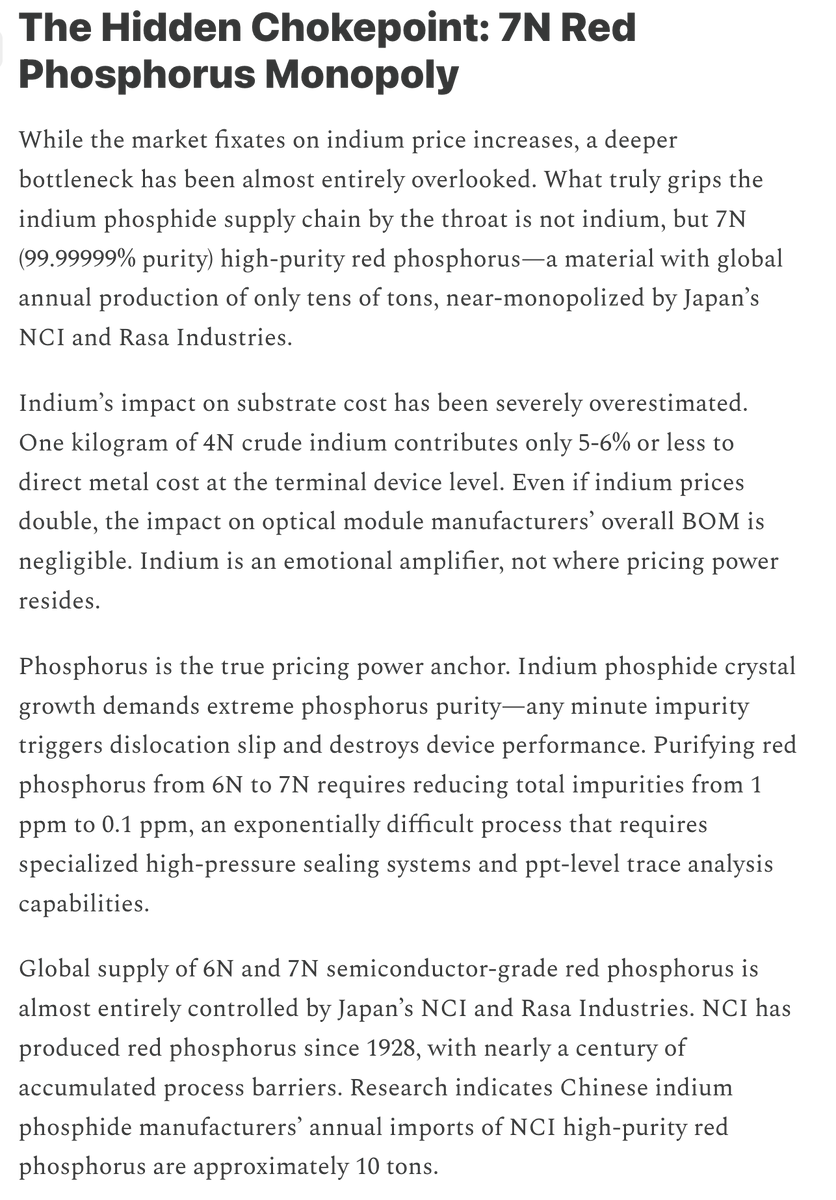
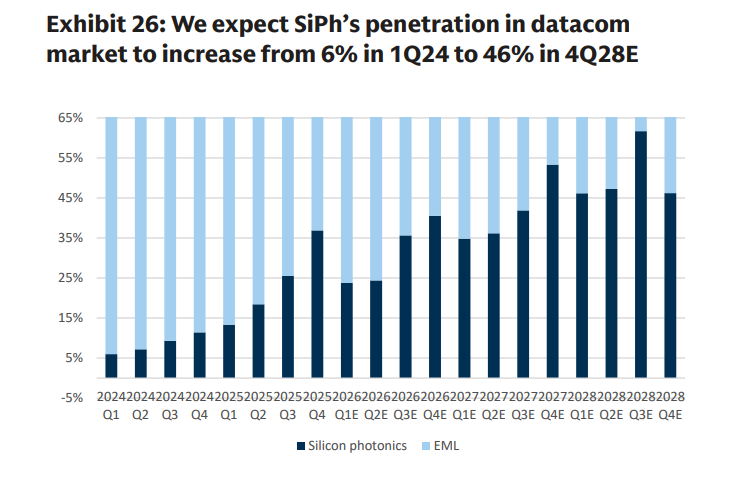
My friend GSR wrote a really good piece. He found a new bottleneck. The market is overly focused on indium prices, but the more structural bottleneck in the InP supply chain is qualified high-purity phosphorus. NCI and Rasa are key Japanese suppliers of red phosphorus for InP feedstock, or 6N/7N high-purity red phosphorus. Once again, obscure Japanese companies I had never heard of are controlling the bottleneck lol. This material is not just a simple commodity input. It is a process-sensitive material directly tied to crystal growth yield and qualification.
Jukan tweet media
English
13
50
510
64.8K
JasonEllis retweetledi
Slime🐍
Slime🐍@ItsKingSlime·
Rubi Rose had Nina Drama BLUSHING because she genuinely couldn’t believe how YOUNG she looked despite being 37 years old 😭❤️ “How old are you?… You’re lying b*tch… God bless you. You look fantastic… You’re maybe 24, 25.”
English
136
202
17.5K
1.7M
JasonEllis retweetledi
Jonah Lupton
Jonah Lupton@JonahLupton·
I talked to one of the better optics / photonics analysts today... his top 2 picks are $LITE (1st) and $COHR (2nd)... he said $AAOI is one of the riskiest in his group (because of management credibility) but says $AAOI definitely has the most upside from current prices if management is able to hit their aggressive financial targets. NFA DYOR **We own $LITE $COHR and $AAOI at @FirstWaveFund
Jonah Lupton@JonahLupton

Some of you know that I launched a hedge fund several months ago (early November). We run a long/short strategy, focused on owning the 20-40 growth stocks that we believe have the most upside over the next 2-3 years... this means they need to have great fundamentals, strong management teams, compelling valuations, and multiple catalysts that we can identify and track accordingly. It's been a rough few months for many growth investors (we also took some pain)... thankfully we were averaging down into our core positions but we've still seen some red months and it has not been enjoyable. I'm not a fan of losing money. Stepping back... I've never had more conviction in my process or my portfolio than I do right now... especially with some of my favorite stocks down 20-40% from their September/October/November highs despite strong Q4 earnings reports, strong CY2026 guidance and extremely compelling valuations. With that said, here are our top 10 positions in alphabetical order: $APP $CPNG $CRDO $HIMS $HROW $SKHYNIX $IREN $NBIS $RDDT $TMDX I believe all of these stocks are trading at meaningfully higher prices in 2-3 years which remains my focus for generating outsized long-term returns. Enjoy the rest of your day 😊 NFA. DYOR. ** @FirstWaveFund owns all of the stocks mentioned in this post.

English
19
16
235
55.9K
JasonEllis retweetledi
Athu Invests
Athu Invests@athuinvests·
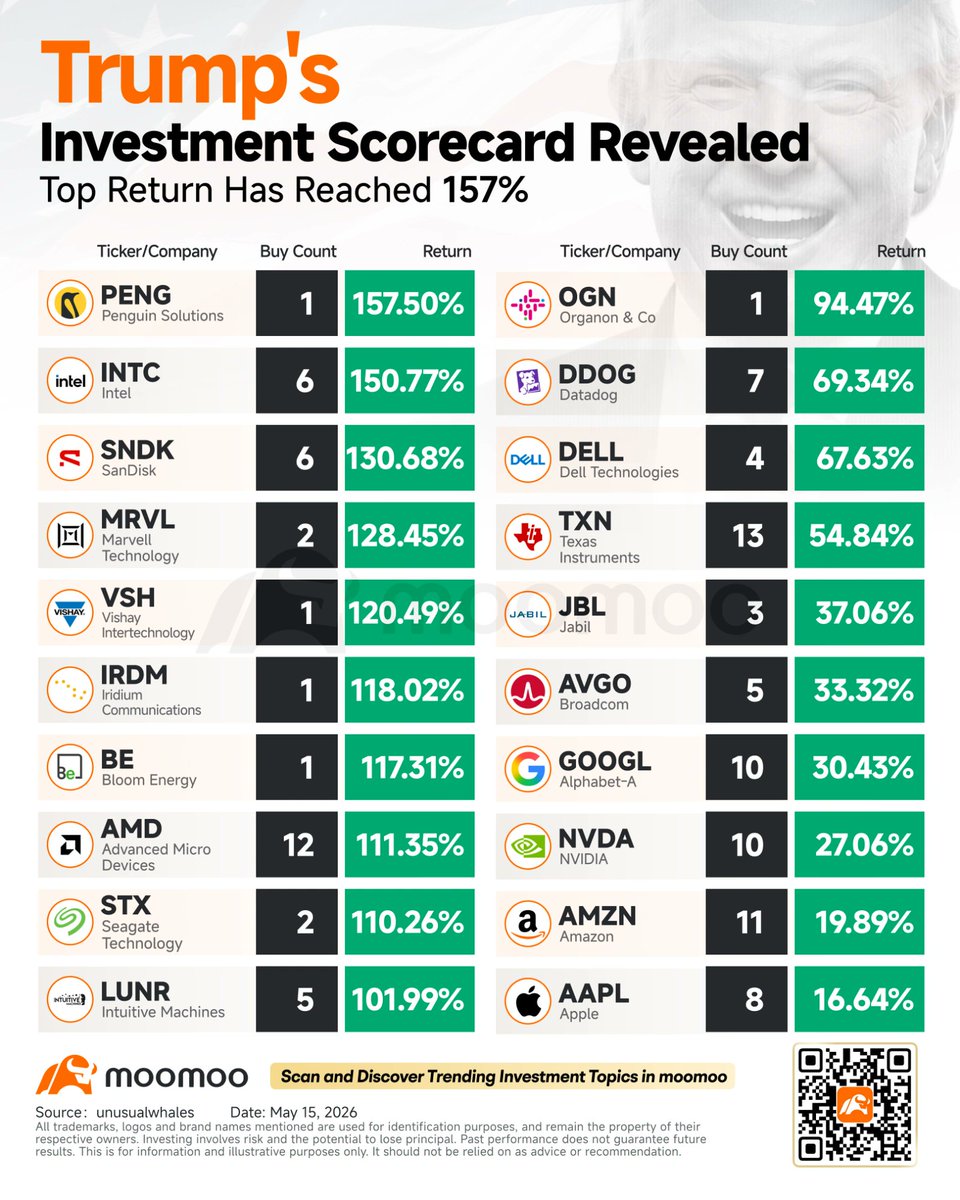
⚡️ President TRUMP just BOUGHT these AI stocks that I am personally BULLISH on: - Photonics: $JBL, $COHR, $LITE - SaaS: $NOW, $PLTR - Memory: $MU, $PENG - Infrastructure: $DELL, $ORCL, $CRWV, $VRT - Chips: $AMD, $INTC, $NVDA - Energy: $BE, $GEV Top 3 would be JABIL INC., DELL TECHNOLOGIES & PENGUIN SOLUTIONS 🔥
Athu Invests tweet mediaAthu Invests tweet media
English
5
14
110
6.6K
JasonEllis retweetledi
Rohan Paul
Rohan Paul@rohanpaul_ai·
Ex Google CEO, Dr. Eric Schmidt: AI may hit a money wall before it hits a power wall. "The real limit to AI is not energy; it is actually cash. When you add up the cost of these things, if you take round numbers, say $50 billion per gigawatt, then 10 gigawatts is half a trillion dollars. How many companies, countries, and so forth can hand an industry a trillion dollars of capital? Very, very few. The Chinese could certainly do it. I do not know if they are doing it, but I am going to try to find out. In America, there are people who hope that is going to happen. It is interesting that you can finance these things because the brilliance of the American capital market allows us to borrow that kind of money. For example, the Europeans cannot do this, which they are sort of sore about." --- Full video from 'Special Competitive Studies Project' YT channel ( link in comment)
English
106
195
1.2K
423.8K
JasonEllis retweetledi
Teng Yan
Teng Yan@tengyanAI·
the obvious bear case on photonics is: capacity is coming. but....does it comes fast enough? no. the demand-supply gap will last longer than most believe 3 reasons: - CPO demand is ramping faster than InP fabs. Goldman sees optical networking going from ~$15B in 2026 to ~$154B by 2028, with CPO contributing ~$91B. Every CPO architecture still needs external InP laser sources. - The bottleneck is moving upstream. LITE, COHR, AAOI can add device capacity, but they still draw InP substrate wafers from a narrow supplier base: AXT/Tongmei, Sumitomo, JX Advanced Metals. Today’s laser constraint can become 2027’s substrate constraint. - Fabs do not scale by spreadsheet. Reactors, cleanrooms, process conversion, yield ramp, and qualification take 18 to 24 months minimum. Supply is coming. But AI networking demand is coming faster. That is why photonics is still trading like a bottleneck. chart source: Goldman's optical networking report
Teng Yan tweet media
English
2
3
39
9.3K
JasonEllis retweetledi
Bilaal- BD investing
Bilaal- BD investing@bdinvestingg·
The White House is telling you exactly where to invest…don’t ignore them $DELL $AVGO $SNPS $NOW $ADBE $CRM $NFLX $MSFT
Bilaal- BD investing tweet media
English
46
400
2.9K
228.1K
JasonEllis retweetledi
PhotonBull
PhotonBull@PhotonBull·
Took a small position in $PENG this week $PENG: $2.5B mcap AI factory platform. SK Telecom $200M anchor + SK hynix trilateral JV locks in HBM roadmap. CXL 2.0 NV-CMM live, Optical Memory Appliance late 2026 attacks HBM scaling chokepoint via optical I/O. FY26 guide raised 6% → 12%. 85k+ GPUs deployed, sticky Scyld/ICE orchestration software. Just feels cheap compared to the rest of the market here? $PENG
CK Capital@CKCapitalxx

The more and more I look into $PENG the more I love this setup. Started looking at it as a simple memory systems integrator. The more you dig the more layers you find. Layer one. Every AI cluster $PENG sells bundles $AMD EPYC CPUs, $NVDA or $AMD GPUs, memory, and networking into a single deployable system. As $AMD takes data center CPU share from Intel and enterprise AI deployments accelerate globally Penguin captures systems revenue on every deployment regardless of which chip wins. The CPU supercycle is a direct tailwind and it does not even require them to make anything new. Layer two. The $MRVL relationship is not just a partnership on paper. $PENG was an early investor in Celestial AI before anyone was paying attention to photonic memory. $MRVL acquired Celestial for billions in early 2026. Penguin collected proceeds and kept the most important thing. The active development partnership. They are building the Photonic Memory Appliance right now. The first commercial photonic memory disaggregation product on the market. The CEO confirmed it on the last earnings call. $MRVL is guiding $500 million on the Photonic Fabric platform by FY28 and $1 billion by FY29. Penguin is building the box that houses the modules. That revenue is zero in every model today. Zero in every analyst estimate. Completely unpriced. Layer three. They just signed a collaboration with $AMD and Shell to enhance AI data center efficiency. Shell's Houston facility already runs 864 Penguin built servers. Enterprise and sovereign AI pipeline growing 50%. Full year guidance just raised from 6% to 12% growth. $48.88 today. $2.51 billion market cap. Up 10% on the day and still at 68x forward earnings on numbers that don't include a single dollar of photonics revenue. CPU supercycle tailwind. Photonic memory optionality at zero. $MRVL partnership confirmed. $AMD collaboration just signed. The more I look the more I like. $PENG

English
8
5
96
12.6K
JasonEllis retweetledi
Sergey
Sergey@SergeyCYW·
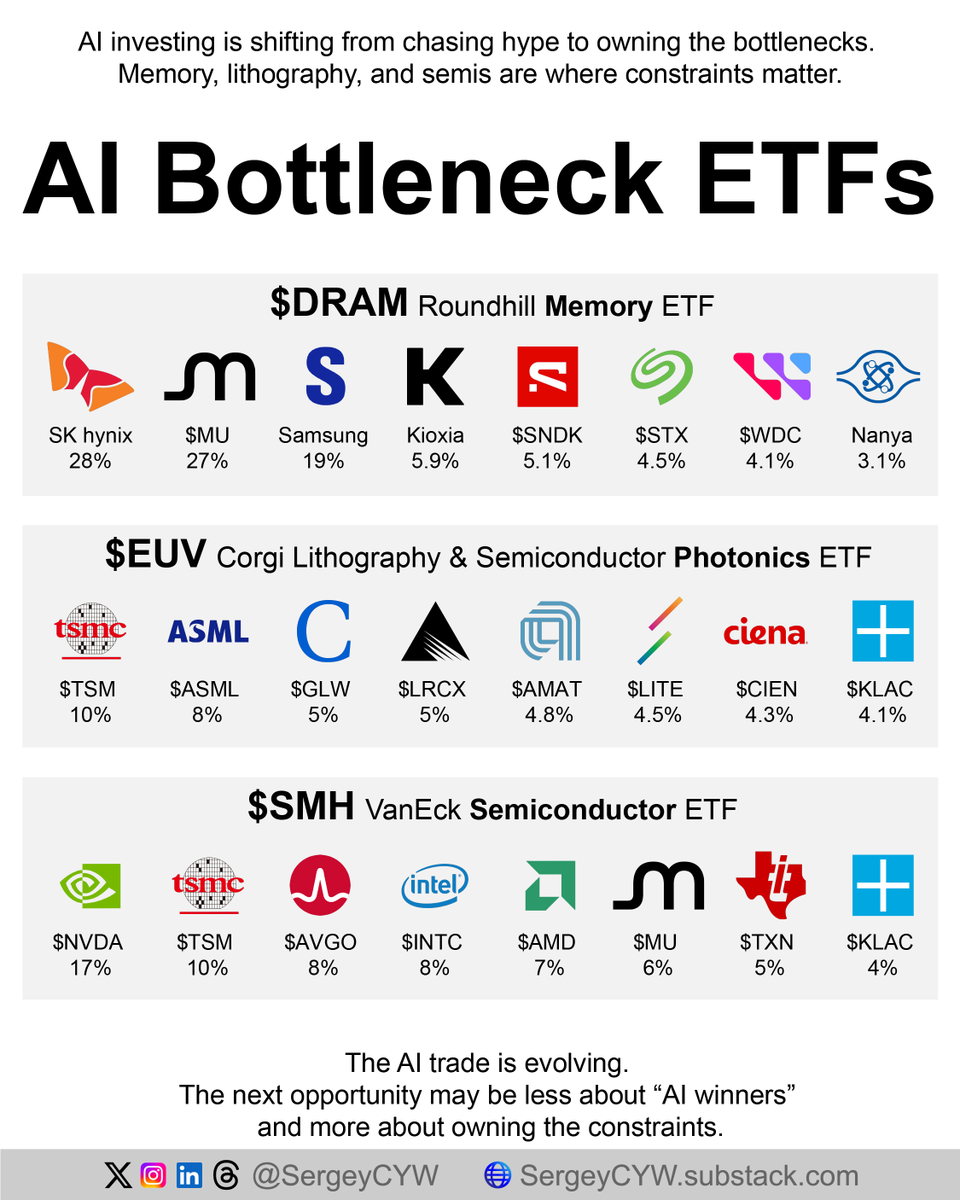
Three ETFs Targeting the Next AI Infrastructure Bottlenecks The first wave: own the obvious AI leaders. But investors may now need to ask where the bottlenecks are forming. Three ETFs offer a useful framework for this shift: SMH, DRAM, and EUV. Each targets a different layer of the AI infrastructure chain. SMH gives broad semiconductor exposure, DRAM isolates the memory bottleneck, and EUV targets lithography, photonics, and optical infrastructure. SMH is the most institutionalized option. It provides exposure to large semiconductor and semiconductor-equipment companies rather than one narrow choke point. Key holdings include $NVDA at 17%, $TSM at 10%, $AVGO at 8%, $INTC at 8%, $AMD at 7%, $MU at 6%, $TXN at 5%, and $KLAC at 4%. This makes SMH the most natural core holding of the group for investors who want exposure to the full AI hardware stack. It covers GPUs, foundries, custom silicon, CPUs, memory, analog chips, and semiconductor manufacturing tools. The trade-off is lower purity. SMH is not a single bottleneck bet. It is a broad semiconductor ecosystem bet. DRAM is more targeted. It is designed around the AI memory squeeze, with exposure to HBM, DRAM, NAND, and storage demand. The fund is highly concentrated. Its largest positions are SK Hynix at 28.15%, $MU at 27.16%, and Samsung at 19.67%. Together, these companies dominate the global memory supply chain. Smaller holdings such as Kioxia, $SNDK, $STX, $WDC, Nanya, and Winbond add exposure across NAND, SSDs, HDDs, and specialty memory. DRAM is arguably the cleanest expression of the AI memory bottleneck. It is also more momentum-driven and concentrated than SMH, with a higher 0.65% expense ratio. EUV is the most specialized and higher-risk ETF in the group. It focuses on the “light layer” of AI infrastructure: photonics, EUV lithography, optical networking, semiconductor inspection, and precision manufacturing tools. Holdings include $TSM at 9.52%, $ASML at 7.97%, $GLW at 5.19%, $LRCX at 4.98%, $AMAT at 4.84%, $LITE at 4.46%, $CIEN at 4.32%, and $KLAC at 4.07%. AI data centers increasingly face limits around power, bandwidth, packaging, and interconnect speed. Photonics and advanced lithography may become critical as compute demand scales. Framework: SMH = core AI semiconductor exposure DRAM = memory bandwidth and capacity bottleneck EUV = lithography, photonics, and optical infrastructure bottleneck
Sergey tweet media
English
20
185
889
57.2K