PhotonBull

790 posts

PhotonBull banner
PhotonBull

PhotonBull

@PhotonBull

Photonics Revolutionist

Katılım Ağustos 2017
1.1K Takip Edilen5.3K Takipçiler
Sabitlenmiş Tweet
PhotonBull
PhotonBull@PhotonBull·
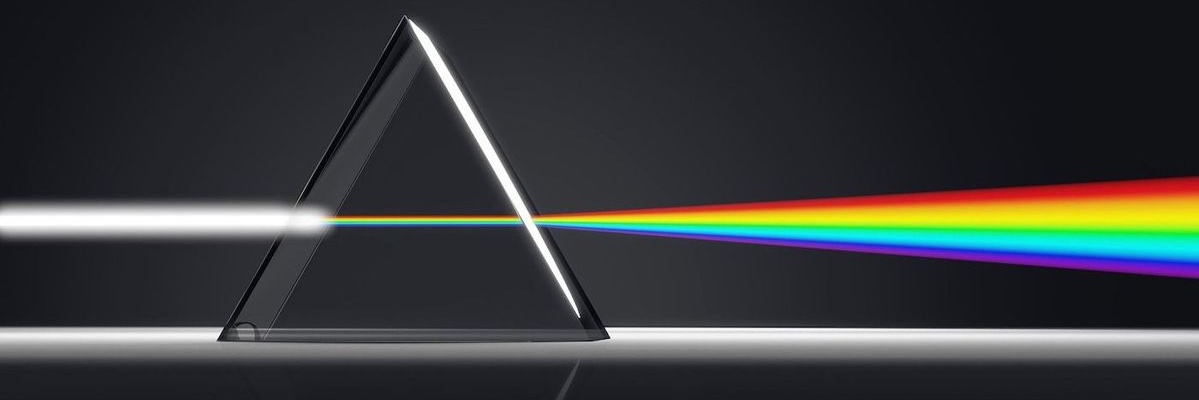
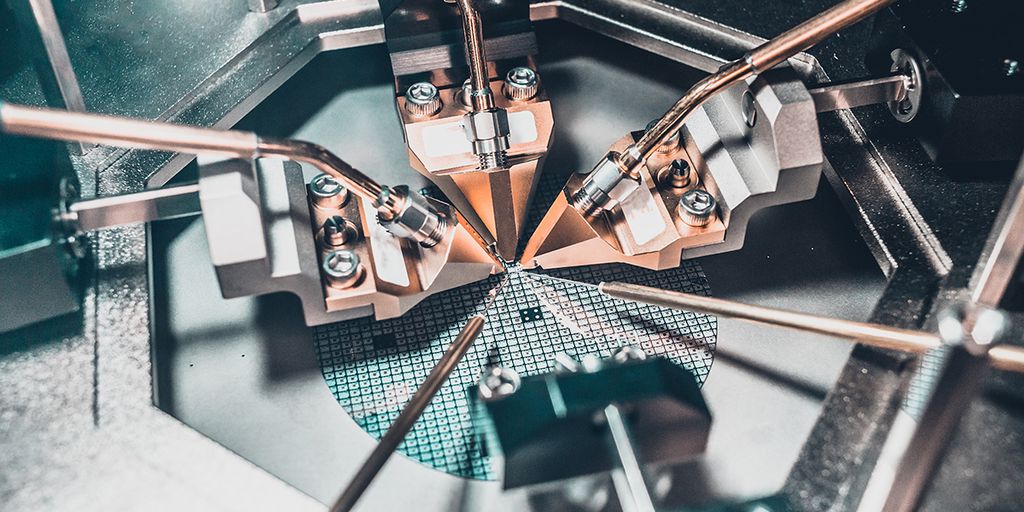
Everyone is watching $LITE, $COHR, $AAOI, $AXTI run. The photonics rotation is real and the AI capex thesis is well understood by now. What isn't talked about enough is what comes after 800G. Silicon photonics (what most of the above ship today) and InP both hit hard physical limits beyond 800 Gbps. The AI buildout doesn't stop there. Nvidia's NVLink 6 is already targeting 3.6 Tb/s per GPU. The whole stack has to move to 1.6T then 3.2T. Current materials can't get you there cleanly. That's where TFLN comes in. Thin-film lithium niobate isn't a new material, LN has been in telecom for 60 years. What changed is the fabrication. A smart-cut process now lets you bond a nanometer-thin film of LN onto a substrate, giving you all the electro-optic properties of the crystal in a form dense enough to build photonic integrated circuits. The result: modulators running 100+ GHz bandwidth, sub-1V drive voltage, and propagation loss under 0.1 dB/cm. Silicon works by pushing carriers around to change the refractive index. TFLN uses the Pockels effect, the field changes the index directly, no carriers, no lag, no extra heat. That's a generational gap in performance at the speeds AI infrastructure needs. TFLN doesn't replace InP either. It needs a laser source from InP or a VCSEL. It sits on top of it. The problem is supply. Nearly all TFLN wafers in the world come from one company: NANOLN, based in Jinan, China. Raytheon literally said this out loud in their Mastermind AFRL contract filing. They described TFLN wafer production as dominated by a Chinese manufacturer and selected Gooch & Housego ($GHH, LON) to build the first domestic US production line in Ohio. CPO (co-packaged optics) is the architecture pulling this forward. CPO integrates optical engines directly onto the switch or GPU package, cutting signal loss and power vs pluggable modules. CPO ports are forecast to be 30%+ of all 800G and 1.6T deployments in 2026-2028. At those speeds the modulator of choice converges on TFLN. The stack is: hyperscaler capex -> CPO adoption -> 1.6T modulator demand -> TFLN wafer supply crunch -> whoever controls domestic production. $AXTI is the InP layer. $GHH is the TFLN layer. Same thesis, different spot. $GHH is a London-listed, small cap, and illiquid. Not a momentum trade. But if the CPO buildout plays out the way the optical interconnect market is projecting, the wafer supply chain gets stress-tested, then this Western producer with a Raytheon-backed production line looks very different at that point. On top of that, $GHH is an undervalued, profitable and growing aerospace/defense/life sciences/telecom/industrial supplier. Small position, long time horizon, high conviction on the structural setup.
PhotonBull tweet media
English
8
16
123
12.5K
KawzInvests 🦑
KawzInvests 🦑@KawzInvests·
AI optical networks have a zero-tolerance policy for failure if a single 800G or 1.6T link underperforms, an entire multi-million-dollar array of GPUs sits idle waiting for data. This is why Viavi Solutions $VIAV is a critical hidden tollbooth for the AI buildout. As a global leader in test, measurement, and optical assurance, their technology secures and validates the infrastructure of these massive data center ecosystems. Because moving to higher speeds and Co-Packaged Optics introduces severe signal integrity issues like jitter and noise, testing isn't just a one-time hurdle. It is a massive, overlapping supercycle that must scale directly with optical complexity to prevent catastrophic bottlenecks. $AAOI $COHR $LITE $SLOIF
KawzInvests 🦑 tweet media
English
7
2
23
1.9K
Teddy Smokevelt
Teddy Smokevelt@BearLeeKungFu·
@PhotonBull AST SpaceMobile (ASTS) delayed the launch of its first five commercial "BlueBird" satellites from a planned March/Q1 2024 timeframe, with SpaceNews reporting they were not expected to arrive at the launch site until July or August 2024. Delays were caused by component suppliers.
English
1
0
0
54
Lucie Bernard
Lucie Bernard@LucieeBernard·
@PhotonBull Fascinating! The rise of AI factories marks an exciting new chapter in technology. ���worx💻🎉
English
1
0
1
13
PhotonBull
PhotonBull@PhotonBull·
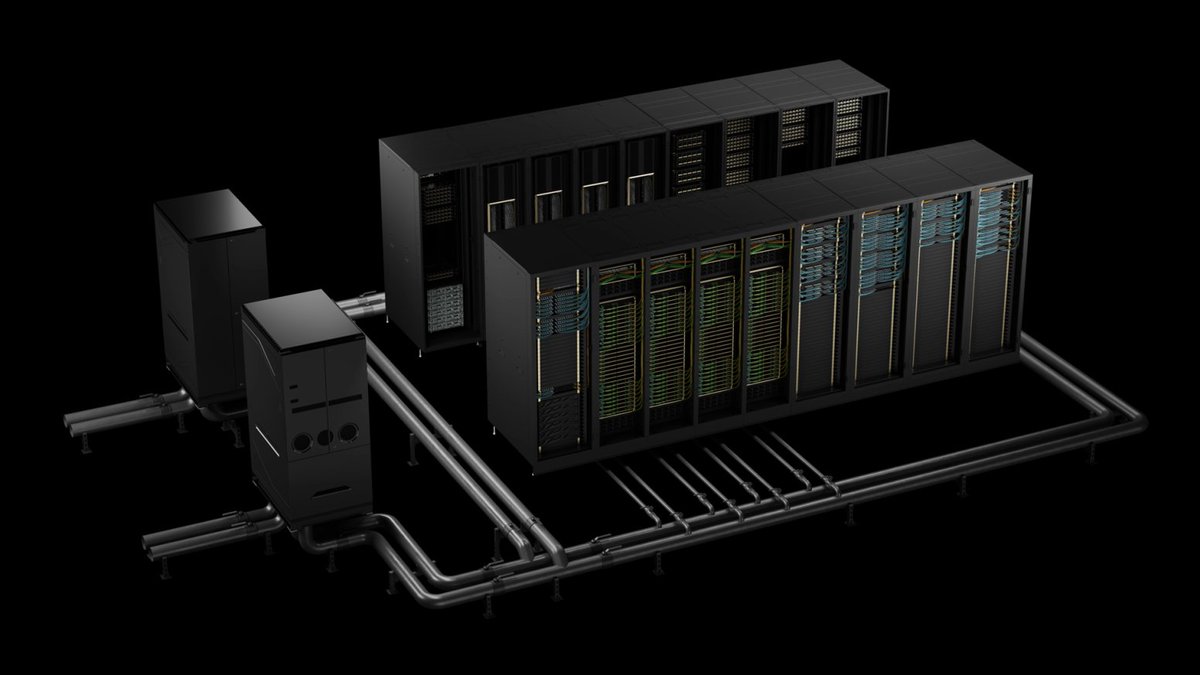
The traditional data center is dead; the era of the AI Factory has arrived. AI factories are a new class of extreme-scale, GPU-driven facilities designed specifically for generative AI and large language model workloads. Instead of isolated servers, these facilities utilize massive optical networks to tie hundreds of thousands to millions of GPUs together so they can function as a single, planet-scale supercomputer. The ultimate chokepoint for these super-factories isn't just compute, but the network itself. Tying millions of GPUs together requires an optical "central nervous system". To prevent these dense clusters from melting down the power grid, hyperscalers are aggressively transitioning to Co-Packaged Optics (CPO) and silicon photonics to slash energy consumption and eliminate latency bottlenecks. Here is the alpha on who stands to benefit from this massive infrastructure buildout: $NVDA: Pioneering the AI factory architecture with their Spectrum-X and Quantum-X silicon photonics switches, which shatter the limitations of legacy networks. $SOI: The hidden monopoly at the base of the supply chain, commanding >95% market share for the Photonics-SOI engineered substrates required to fabricate these optical chips. Crucially, the transition to CPO drives a massive 4x wafer content multiplier per optical port, supercharging their growth. $LITE & $COHR: The indispensable suppliers providing the high-power lasers and Optical Circuit Switches (OCS) required to light up and dynamically route these massive data fabrics. $MRVL: The "Switzerland" of AI connectivity, providing the critical optical DSPs and scale-up "Photonic Fabric" needed to break the memory wall inside the rack. $FN: The premier contract manufacturer handling the complex precision assembly and packaging of 1.6T transceivers and CPO components for hyperscale networks. $VRT & $CEG: The physical backbone of the factory, providing the essential liquid cooling systems and gigawatt-scale carbon-free nuclear power required to keep these thermodynamic heavyweights running. $NVDA $SOI $LITE $COHR $MRVL $FN $VRT $CEG
PhotonBull tweet media
English
3
2
23
6.3K
Tryxixxx
Tryxixxx@Tryxiii·
@PhotonBull The current one, the new one Laurent Remont make a tons of sense and it’s a really good thing for the company. Having someone who know the industry well is a must have and crucial in this sector
English
1
0
1
30
PhotonBull
PhotonBull@PhotonBull·
Why is the timeline obsessed with laser suppliers like $LITE when the most impenetrable AI monopoly is the atomic scalpel that builds their starting wafers? Routing light for AI networks requires exactly 220 nanometers of silicon sitting perfectly on a 2-micron oxide layer. If the silicon thickness varies by even a single nanometer, light leaks into the base material and the optical signal dies. Conventional polishing methods physically cannot achieve this sub-nanometer uniformity at volume. The only industrially viable answer is Soitec's Smart Cut. Smart Cut is a proprietary layer-transfer process that implants hydrogen ions into a wafer to form microscopic bubbles. When heated, these bubbles cleanly cleave flawless, atomic-level layers of silicon. As AI networks migrate to Co-Packaged Optics to survive a severe thermodynamic power crunch, this specific substrate technology undergoes a massive 4x wafer content multiplier, jumping from 50mm² to 200mm² per port. Here is the sole company positioned at this structural chokepoint: Soitec $SOI: This hidden monopoly owns the Smart Cut process with over 4,300 active patents. They control over 95% of the photonics substrate market, protected by a brutal 12 to 24-month foundry qualification lock-in that practically eliminates all competition. $SOI $SLOIF
PhotonBull tweet media
English
2
7
29
2.3K
PhotonBull
PhotonBull@PhotonBull·
This deep-dive report is the perfect introduction to the market's most misunderstood hidden monopoly: Soitec. Soitec manufactures the engineered Photonics-SOI substrates that serve as the molecular foundation for nearly every silicon photonics chip on earth. Using their highly proprietary "Smart Cut" technology, they command an estimated >95% market share in this indispensable niche. While the stock has been beaten down by a cyclical slump in its legacy mobile communications segment, its AI photonics division is quietly compounding at a 25% annual growth rate. The industry-wide push toward Co-Packaged Optics (CPO) is the ultimate catalyst that will explode their top line. A traditional pluggable transceiver requires about 50 square millimeters of Photonics-SOI. A CPO switch package demands roughly 200 square millimeters. That is a massive 4x hardware content multiplier for every single optical port that upgrades to bypass the physical limitations of copper. Institutions are finally waking up to this exact math and the resulting supply crunch. Morgan Stanley just doubled their price target on the stock today, aggressively bumping it from €35 to €70. Link in bio. $SOI
KawzInvests 🦑@KawzInvests

To build a 100k-1 Million GPU AI factory, you have to solve a massive physics problem Traditional optical wiring generates too much heat and drains too much power. The inevitable shift is to Co-Packaged Optics (CPO). By fusing the optics directly onto the switch silicon, CPO slashes power consumption by over 3.5x and drops electrical signal loss to just 4 decibels. CPO isn't just a buzzword it is a physical necessity that is about to unlock a $15 billion market by 2030. I just published a comprehensive report breaking down the exact timeline for this CPO build-out and the hidden supply chain stocks you need to own to profit from it. Read the full deep dive using the link in bio or comments

English
2
2
12
1.5K
PhotonBull
PhotonBull@PhotonBull·
@Tryxiii Do you mean the current ceo or the new one?
English
1
0
0
170
Tryxixxx
Tryxixxx@Tryxiii·
@PhotonBull The technology, etc., is undeniably there, but it’s hard to trust this management team and specifically this CEO given his lack of prior experience in the industry and his background when it comes to making the best decisions for the company. That’s just my point :)
English
1
0
0
37
PhotonBull
PhotonBull@PhotonBull·
@Tryxiii Fair point, but I do not see how this one can be messed up personally
English
1
0
1
179
Tryxixxx
Tryxixxx@Tryxiii·
@PhotonBull Not only unfortunate market look the CEO background at Atos, one of the worst company decline in the french market..
English
1
0
1
43
PhotonBull
PhotonBull@PhotonBull·
@Tryxiii They just had unfortunate market conditions imo🤷‍♂️
English
1
0
0
127
Tryxixxx
Tryxixxx@Tryxiii·
@PhotonBull Soitec management track record in the last few years was horrible... you can have a hidden monopoly but without good execution and decision making.....
English
1
0
0
111
Moody
Moody@MoodyWriter13·
A top German photonics scientist is joining Huawei, citing lack of visibility as the reason…I understand. Germany has many hidden world leaders in photonics, often acquired and overlooked. I’ll write an article to give these companies the recognition they deserve. Coming soon
English
10
5
225
11.5K
PhotonBull
PhotonBull@PhotonBull·
@FinnStockinger Most confident in $SOI right now. Higher r/r would be $GHH or maybe in the future $ALMU
English
1
0
6
264
Finn Stockinger
Finn Stockinger@FinnStockinger·
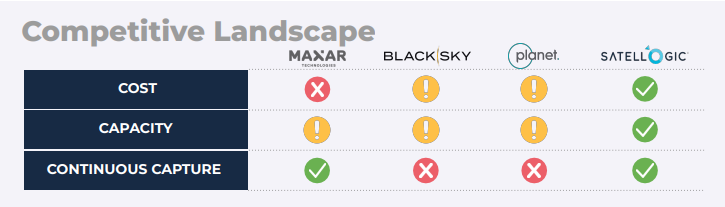
Why $SATL is my top NewSpace pick over $PL and $BKSY: 1⃣Vertical Integration (The Cost Killer): $SATL builds satellites for $1M - a fraction of its peers. By owning the entire stack (optics to software), they control margins that others simply can't match. 2⃣The Merlin + Aleph Synergy: ➡️Merlin (2027): Daily high-res re-map of the entire planet. ➡️Aleph Observer: Converts raw images into a subscription-based "Global Awareness" stream. This is where the massive upside lives. 3⃣Financial Inflection Point: The numbers don't lie: +38% Revenue growth and -25% OpEx YoY. With ~$130M in cash, the path to the Merlin constellation is fully funded. 4⃣The Pentagon Pivot: Moving HQ to the US and hiring ex-NGA leadership (Adm. Whitworth) isn't a coincidence - it's a direct play for massive US defense contracts. ⬇️Verdict: At current valuations, $SATL offers the most asymmetric risk/reward in the sector. The real "money printer" starts when Merlin goes live. 👇 What’s your play for the NewSpace race? Are you betting on $SATL, $PL, or $BKSY? Let’s discuss in the comments! #SATL #Investing #SpaceTech #NewSpace #Growth
Finn Stockinger tweet media
Finn Stockinger@FinnStockinger

x.com/i/article/2024…

English
10
21
124
21.7K
Retail Mourinho
Retail Mourinho@retail_mourinho·
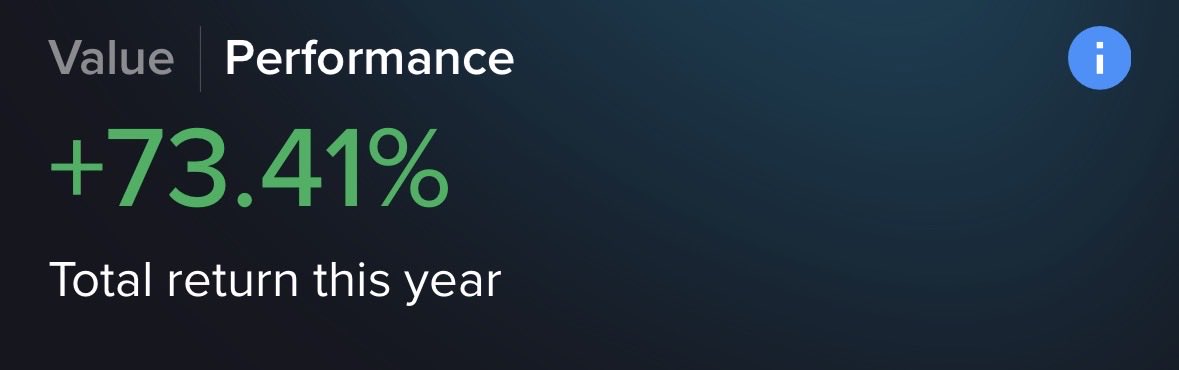
My portfolio went from yesterday intraday +97% YTD to +73% YTD today. Insane market.
Retail Mourinho tweet media
English
11
1
92
7.4K
Pep Invest
Pep Invest@PepInvestStocks·
$SIVE $LWLG $INFQ $IBRX 🔥 Dear amazing community, A huge THANK YOU to every single one of you for joining and helping me reach this fantastic milestone of 2,000 followers ✅
Pep Invest tweet media
English
5
2
39
2.8K
PhotonBull
PhotonBull@PhotonBull·
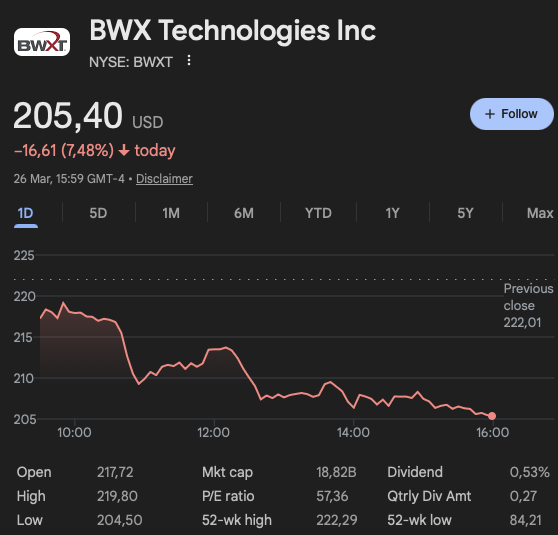
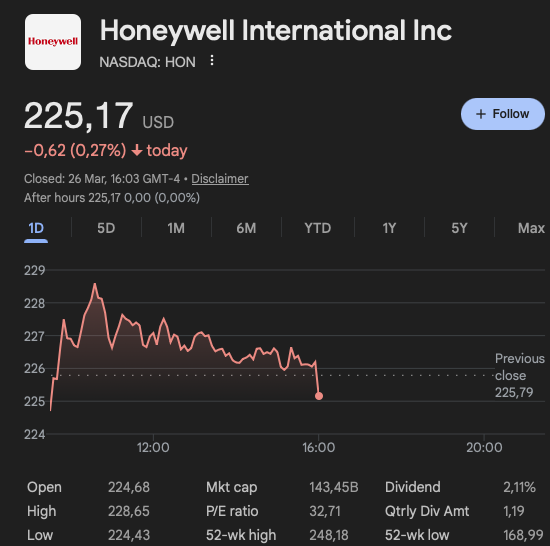
Really hoping this is just bad social media bait from the white house. They posted a pixelated image of Trump, who looks like he is ready to press a red button (nuke?). Two interesting names worth watching: $BWXT: $20B market cap. Sole-source manufacturer of naval nuclear reactors and fuel for the US government. The pure play. $HON: $143B conglomerate. Quietly operates the NNSA's primary nuclear weapons components facility in Kansas City and manages Sandia National Labs. Buried inside a mega-cap, basically unnoticed. One builds the deterrent. The other builds the warhead components. Both are US government sole-source contracts. Hoping it does not escalate further, but these names stand to benefit even if the US decides to ramp up their possibilities. $BWXT $HON
PhotonBull tweet mediaPhotonBull tweet media
The White House@WhiteHouse

English
2
1
8
1.4K