Rittenhouse Research

1.6K posts

Rittenhouse Research

Rittenhouse Research

@RHouseResearch

Software, digital infrastructure, fintech, crypto.

Miami, FL Katılım Mayıs 2025
497 Takip Edilen9.9K Takipçiler
Sabitlenmiş Tweet
Rittenhouse Research
Rittenhouse Research@RHouseResearch·
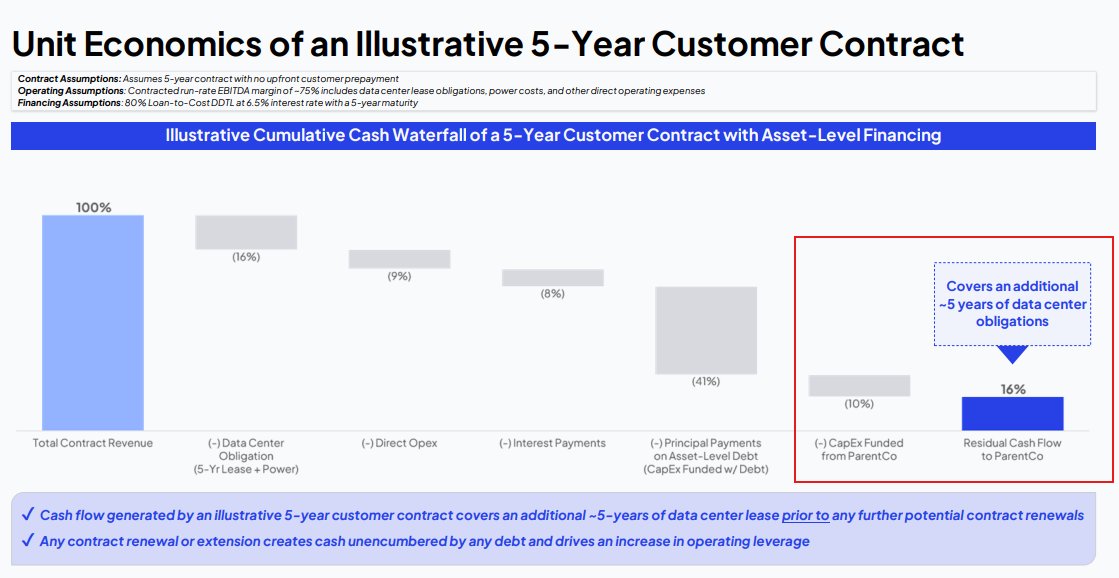
Published some thoughts on substack (no paywall) around CoreWeave's unit economics, margins, use of debt, and what I think the real risks to the business are open.substack.com/pub/rittenhous…
English
4
3
50
9.2K
Rittenhouse Research
Rittenhouse Research@RHouseResearch·
Many such cases. They should probably use one of the AI tools they’ve funded to fact check themselves prior to publishing these podcasts (which I generally enjoy, largely because of Rory). The repeated notion that public software names are trading for 8x EBITDA is patently false. Maybe 8x Pro-Forma, Run-Rate, Community-Adjusted EBITDA..
English
0
0
1
66
matt ross
matt ross@emcross23·
Just a flag for @HarryStebbings @rodriscoll @jasonlk that are referencing Block growing revenue 2-3%. We measure top line performance using gross profit. Gross revenue recognition of bitcoin trading skews revenue a lot. We grew gross profit 24% in Q4 and guided to growing gross profit 18% in 2026...
English
3
2
31
1.3K
Rittenhouse Research
Rittenhouse Research@RHouseResearch·
No position or strong views on $UBER generally but investing $1.25B in Rivian $RIVN reeks of desperation...
English
4
1
9
2.4K
Rittenhouse Research
Rittenhouse Research@RHouseResearch·
Almost all of their data centers were built in the pre-AI era... Capital requirements to repurpose them for greater rack densities, liquid cooling, etc. render it uneconomical.. And each of their facilities is ~10MW.. Whereas the demand for DC capacity is coming from hyperscalers looking to lease at least 200MW per site.
Rittenhouse Research tweet media
English
0
0
4
182
Rittenhouse Research
Rittenhouse Research@RHouseResearch·
$DLR. Hasn't raised its dividend in 5 years (because it's been financed with ATM issuance and revolver draws, lol). Would take enormous CapEx and be generally uneconomical to repurpose their existing portfolio for AI use cases. Should get cut in half at some point and don't see much upside here at 25x EBITDA for a REIT with worse occupancy stats than your typical office owner..
English
1
0
7
626
dalibali
dalibali@dalibali2·
Shitlab has about the same market cap as Soundhound lol
English
4
0
57
7.9K
Rittenhouse Research
Rittenhouse Research@RHouseResearch·
Genuinely enjoyed this interview but thought this bit was slightly misleading. Almost all of the ARR loans are structured with leverage covenants that are tested based on EBITDA 2-3 years post close. So while there’s no EBITDA at close, the borrower is in default unless the company grows EBITDA substantially immediately following the issuance of the loan..
English
0
0
2
409
TBPN
TBPN@tbpn·
.@carrynointerest explains the looming crisis for software private equity: “It all comes down to the fact that they were borrowing against ARR and not EBITDA. There’s very little profit to borrow against with a high-growth enterprise software company. And so what do you do? You need to juice your IRR somehow, so you need to borrow." "So you’ll go to a bunch of private credit funds and say, ‘Look, I’ve never lost money on a deal. You can’t lose with me. Just let me borrow against the ARR, and before it comes due, you know me, I’m going to sell it, and we’re all going to buy another Gulfstream, and we’re going to laugh about this in four years.’" "The problem was that the liquidity just left, both in terms of the most important person who could buy it, which was the strategic acquirer. When stock prices fell and interest rates went up, you’re just not as acquisitive." "But now you lump in the fact that AI is creating all these existential questions for enterprise software companies. And you have the depressed public valuations, and you have no profit, so your recovery rate with your lender might even be low. You can’t even take the keys to this business and milk it for dividends." "You have to do a massive restructuring, and that’s a really scary proposition for a lot of private credit funds."
English
3
0
85
26.1K
Renny
Renny@rennyzucker·
Either way this is a sharks smelling blood kinda setup
English
2
0
3
539
Shanu Mathew
Shanu Mathew@ShanuMathew93·
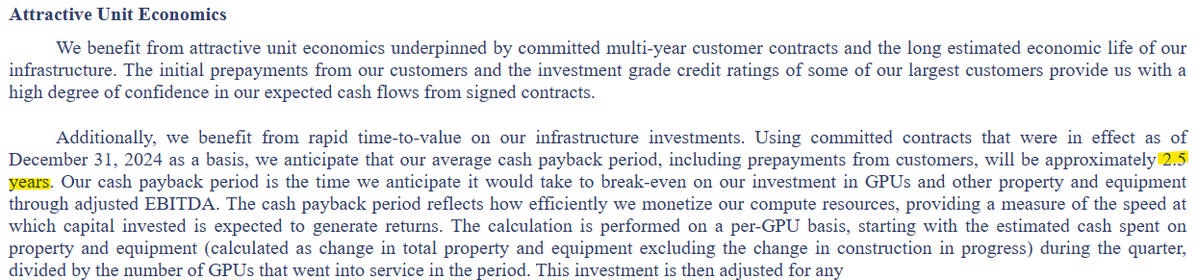
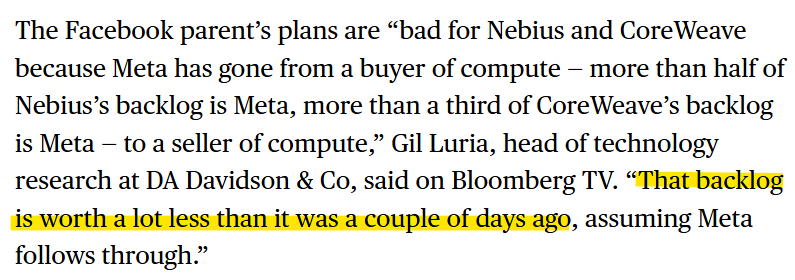
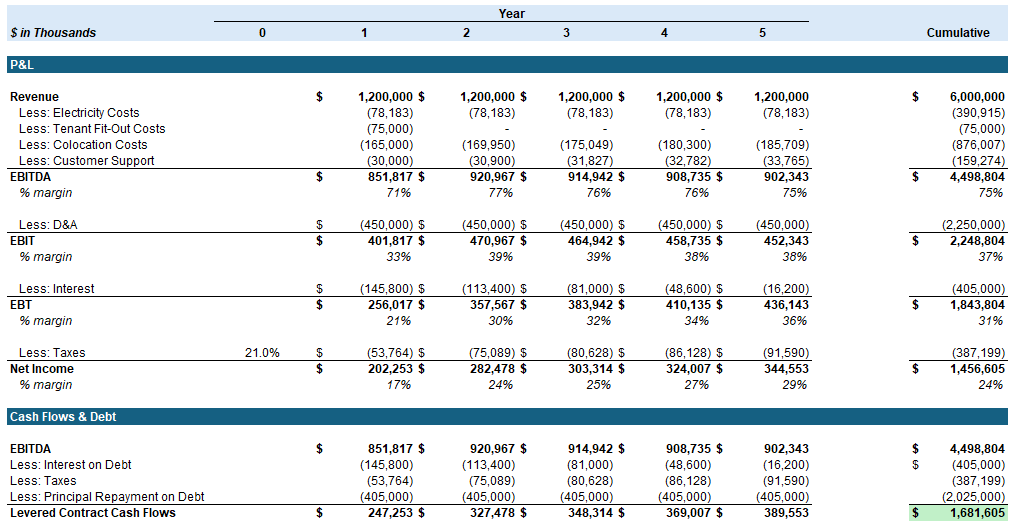
Against my better judgment, wanted to sense check the GPU math at a unit economics level. Am I missing something here? 3 main assumptions to flex are: i) rental $ per GPU hour ii) software attach rate iii) depreciation on IT equipment If the argument is rental prices hold up or that useful life isn't as bearish as some assume, can get into +LDD ROIC pretty easily. Whether LDD ROIC is attractive for companies that earned really high rates of return the past decade is worth it or not is another debate. I assume no GPU fractionalization given that premium buyers will want dedicated workloads.
Shanu Mathew tweet mediaShanu Mathew tweet mediaShanu Mathew tweet media
Shanu Mathew@ShanuMathew93

Podcast is long and info-dense (thanks both!) but worth a listen or transcript skim. Parts that stood out to me - especially on capacity, unit economics, residual value, and bottlenecks. Separate power post (after) to follow. -Lab capacity today and forward: Both OpenAI and Anthropic are at roughly 2 to 2.5 GW today. Dylan estimates both reach 5 to 6 GW by year-end, with OpenAI slightly higher. Both targeting around 10 GW by end of next year. -Anthropic revenue and implied compute need: Anthropic has been adding $4 to 6B in monthly revenue per Dylan's estimates. Straight-line that over 10 months and you get roughly $60B of incremental revenue. At sub-50% gross margins (per The Information), that implies around $40B of compute spend. At roughly $10B per GW in rental cost, that is 4 GW of new inference capacity needed just for revenue growth before any training fleet expansion. -Procurement strategy divergence: Anthropic was deliberately conservative on compute contracting. OpenAI signed aggressively and has better access to capacity into year-end. Anthropic now has to acquire capacity through Bedrock / Vertex / Foundry revenue-share arrangements or spot deals at steep premiums (Dwarkesh suggested 50% margins to the hyperscaler CSPs). Dylan has seen labs sign H100 deals at $2.40/hr for 2 to 3 year terms vs. a $1.40/hr fully loaded 5-year TCO. Standard 5-year contracts at $1.90 to $2.00 yield roughly 35% gross margins. Late-cycle short-duration contracts yield dramatically more for the provider. -Supply chain conviction decay: Labs know they need X compute. Nvidia builds X minus 1. Each layer down the supply chain builds X minus 1 again, sometimes X divided by 2. Conviction about demand attenuates at every step. Anthropic's compute team (ex-Google) spotted a dislocation and negotiated roughly 1M TPU v7s before Google leadership realized the demand. Google then went to TSMC asking for emergency capacity and was told they were sold out. -GPU depreciation thesis: Bears argue H100 spot falls to $1.00 when Blackwell scales and $0.70 when Rubin scales. Dylan argues the opposite. GPT-5.4 is cheaper to run than GPT-4, has fewer active parameters, and is far more capable. An H100 produces more tokens of a better model than it ever could before. TAM for GPT-4 tokens was maybe low billions to tens of billions. GPT-5.4 TAM is "probably north of $100B." His direct quote: "An H100 is worth more today than it was three years ago." In a supply-constrained world, GPU value is set by marginal output value, not replacement cost. -Memory crunch: Roughly 30% of Big Tech 2026 AI CapEx goes to memory. Vendors were unprofitable in 2023 and did not build fabs. Even after the demand surge became foreseeable, it took a year for pricing to move, another 3 to 6 months for vendors to react, and fabs take 2 years to build. Meaningful relief likely does not arrive until late 2027 or 2028. DRAM has roughly tripled in price. He argues this spills into consumer electronics with significant BOM pressure on smartphones, though his volume decline projections (from 1.1B to 500 to 600M units) are on the more aggressive end. -Long-run bottleneck: By 2028 to 2029, Dylan believes the binding constraint shifts to ASML EUV tools. Currently producing around 70 per year, growing to roughly 100 by end of decade. Each gigawatt of AI capacity requires about 3.5 EUV tools. That is $1.2B of tooling supporting $50B of downstream data center CapEx. The supply chain simply cannot scale fast enough.

English
7
7
113
28.1K
MuddyWatersResearch
MuddyWatersResearch@muddywatersre·
$SOFI “intends to explore potential legal action against Muddy Waters”…
GIF
English
97
14
346
103.9K
Rittenhouse Research
Rittenhouse Research@RHouseResearch·
@HedgeyeComm But actually, such a classic “Hedgeye” take. Can’t be wrong because you qualify it with “kind of”.
English
2
1
1
190
Andrew Freedman, CFA 🦅
$MSFT reorg kind of reminds of what $GOOGL did with Deep Mind and Brain… kind of.
English
7
1
36
11.9K
Rittenhouse Research
Rittenhouse Research@RHouseResearch·
@DeepSailCapital + threatening to sue Carson Block @muddywatersre. I’m sure his report left him exposed to a lawsuit.. lol. Guy basically is the only successful activist short seller left in the game, and started off as a lawyer. Good luck suing him.
English
0
0
11
1K
ZenCap
ZenCap@kaizen_cap·
Anthropic should buy $S for the telemetry if it wants to get serious about an AI-SOC. Nobody wants a light-weight solution like $ZS. $CRWD moat is its threat graph, and its recent acquisitions around identity warrant more attention as the Zero Trust framework evolves to JIT
English
4
0
6
1.6K
Rittenhouse Research
Rittenhouse Research@RHouseResearch·
I can understand the skepticism but the risk reward here seems pretty favorable. Could liquidate the whole company (e.g. sell off the powered land sites and Bitcoin, pay down the debt) and you’d probably recoup more than the market cap.. Also can look at HUT in December and WULF after their Fluidstack / Google deal in August to see what’s possible should CLSK get their deal..
English
1
0
5
1.2K
Edvester
Edvester@edvestments·
Potential surprises for $CLSK deal: 1. Above expectation $/MW 2. More than 200MW at Sandersville 3. College park and Norcross a part of the deal 4. Same offtaker takes Sealy at the same time. 5. Surprise investment by NVDA. 6. Deeper relationship with submer/full stack
English
4
1
45
5.2K