RTWatchDesk | OSINT & Threat Analysis

459 posts

RTWatchDesk | OSINT & Threat Analysis banner
RTWatchDesk | OSINT & Threat Analysis

RTWatchDesk | OSINT & Threat Analysis

@RTWatchDesk

Decision-grade OSINT on terrorism, conflict, and global security. From breaking event → structured threat assessment. Daily threads.

Global Threat Monitoring Katılım Ocak 2026
46 Takip Edilen400 Takipçiler
Sabitlenmiş Tweet
RTWatchDesk | OSINT & Threat Analysis
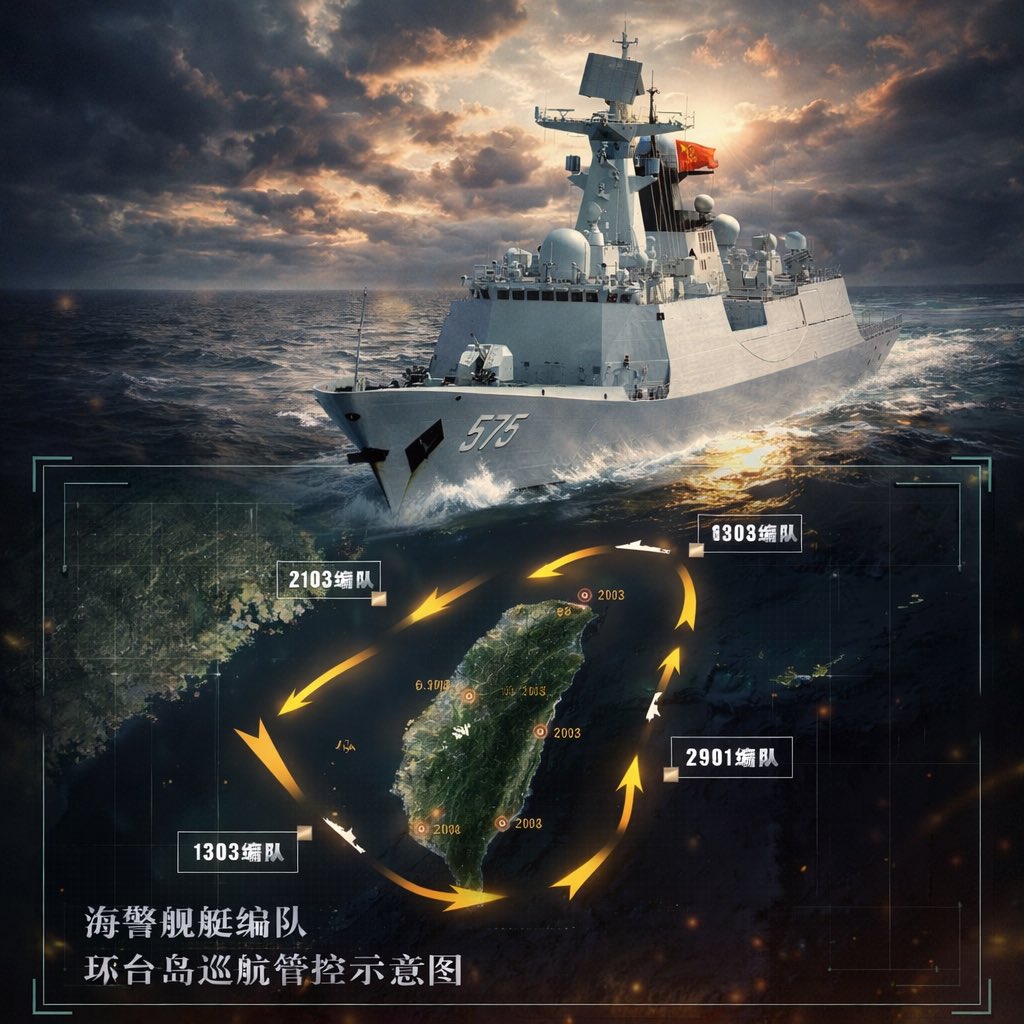
RTWatchDesk DEVELOPING: Taiwan is reporting a large-scale presence of Chinese military aircraft operating near the island, raising concerns about heightened pressure in the Taiwan Strait. Context • Taiwan’s Ministry of National Defense routinely tracks aircraft from the People’s Liberation Army entering its Air Defense Identification Zone (ADIZ). • These sorties often include fighter jets, surveillance aircraft, and electronic warfare platforms. • Beijing has steadily increased the scale and frequency of these flights since 2020. • Such operations are widely viewed as part of China’s broader strategy to apply military and psychological pressure on Taipei. Assessment Large-scale air activity near Taiwan is typically intended as strategic signaling rather than immediate conflict, but sustained pressure flights increase regional tensions and force Taiwan to continually scramble defensive aircraft. Monitoring RTWatchDesk is monitoring official Taiwanese defense releases and regional military activity for confirmation of aircraft numbers and operational patterns.
RTWatchDesk | OSINT & Threat Analysis tweet media
English
0
2
2
283
RTWatchDesk | OSINT & Threat Analysis
When analysis gets dismissed as “AI,” it’s usually because the pattern isn’t being recognized. Coordinated drone waves over a strategic base, repeated over days, isn’t random activity. That’s a probe. The real question is what response they were mapping. And this is occurring all over. I’ll be posting an article about it soon in my account.
English
0
0
1
80
RTWatchDesk | OSINT & Threat Analysis
Most people see “mystery drones.” That’s not what this is. 12–15 drones, flying in coordinated waves, over a strategic U.S. base… for days. That’s not surveillance. That’s a probe. Not “what can we see?” But “how do they respond?” Different routes. Repeated runs. Hours in the air. They weren’t looking at the base. They were watching the reaction. And if it kept happening… What did they learn? Follow us @RTWatchDesk
English
7
2
24
4.4K
ABC News
ABC News@ABC·
Drone sighting that temporarily raised alarms at one of the U.S. Air Force’s largest and most strategic airfields was more extensive, and potentially more dangerous, than first reported, per a confidential internal briefing document reviewed by @ABC News. abcnews.link/zt35SNI
English
88
619
1.8K
488.6K
Defiant L’s
Defiant L’s@DefiantLs·
Comment your favorite Chuck Norris joke. 🕊️
Defiant L’s tweet media
English
1K
125
1.9K
171.2K
RTWatchDesk | OSINT & Threat Analysis
We’re now seeing emerging signals from within Iran’s own information space, Persian-language accounts and Iran-adjacent networks, claiming Mojtaba Khamenei has died from his injuries. That matters, because this isn’t just Western speculation anymore, it’s circulating internally. But here’s the gap: there is still zero confirmation from credible outlets or official channels. What is confirmed is that he was injured, has not been seen publicly since, and Iran has produced no verifiable proof-of-life, only controlled statements. That combination, serious injury, total absence, and rising internal rumor traffic, is exactly how leadership death narratives begin forming before confirmation. Right now, this sits in that gray zone: the signals are real, the claim is unverified, and the silence around him is doing more damage than any announcement would.
English
0
0
8
2.3K
America Army
America Army@AmericaSpoof·
Mojtaba Khamenei has died. He was in a coma after an airstrike, and today he passed away.
America Army tweet media
English
365
516
2.9K
214.8K
RTWatchDesk | OSINT & Threat Analysis
Most people are reading this as “DOJ takes down Iranian websites.” That’s not what this is. These weren’t just websites, they were part of Iran’s psychological warfare infrastructure. The same ecosystem used to leak hacked data, name targets, and create pressure campaigns against dissidents and adversaries. When the DOJ seizes domains like this, they’re not just removing content, they’re disrupting how Iran projects intimidation and influence outside its borders. The detail that matters, and almost nobody is talking about, is why these sites existed in the first place: they sit at the intersection of cyber operations and narrative warfare. Hack something, publish it, amplify it, and let fear do the rest. That’s not traditional espionage. That’s coercion as a strategy. And if the U.S. is now targeting that layer directly, it suggests we’re watching a shift from passive defense to actively degrading Iran’s information operations capability, not just its hackers. Different battlefield entirely. Follow us for real-time intelligence analysis on what you are reading.
English
0
4
25
499
RTWatchDesk | OSINT & Threat Analysis
Fair question. Texas law, including its constitution, is structured to prioritize pretrial release unless very specific legal thresholds are met. Even when the behavior looks alarming, a judge can’t just hold someone because it feels dangerous. There has to be a statutory basis to deny bail, and that’s a high bar. So what you’re seeing isn’t leniency, it’s the system functioning as designed: set a bond, impose strict conditions, and move the case forward. If people want a different outcome in cases like this, that’s not a courtroom issue, it’s a legislative one. That’s why I said above it’s a system/framework issue that has to be solved by the state legislatures.
English
0
0
1
18
Kevin Sorbo
Kevin Sorbo@ksorbs·
The Iraqi man who walked into an elementary school in Texas armed with guns last week has already been released from jail, per Daily Wire
Kevin Sorbo tweet media
English
924
2.7K
5.1K
70K
Really?
Really?@Texas146052·
@RTWatchDesk @sarahadams @ksorbs “Under strict conditions”. So when he kills someone we’ll give him a stern talking to and not “stricter” conditions on him.
English
1
0
0
27
RTWatchDesk | OSINT & Threat Analysis
What you’re seeing here isn’t neutrality, it’s selective alignment. Certain NATO members are revealing that their commitment isn’t to collective action, it’s to risk management. They will support the alliance when the cost is low, but step back the moment it requires direct exposure. Publicly, it’s framed as de-escalation. Strategically, it signals a lack of willingness to share burden at the point it actually matters. This is where the perception shift happens. Allies aren’t judged during peacetime cooperation, they’re judged at the moment of consequence. And right now, some are showing they’re partners in stability, not partners in conflict.
English
0
1
2
192
OSINTtechnical
OSINTtechnical@Osinttechnical·
French President Macron said today that France would never take part in operations to open Hormuz -Reuters "We are not party to the conflict.” Macron added that France is preparing operations to escort vessels once hostilities ended.
English
99
113
1.2K
156.3K
Joe Kent
Joe Kent@joekent16jan19·
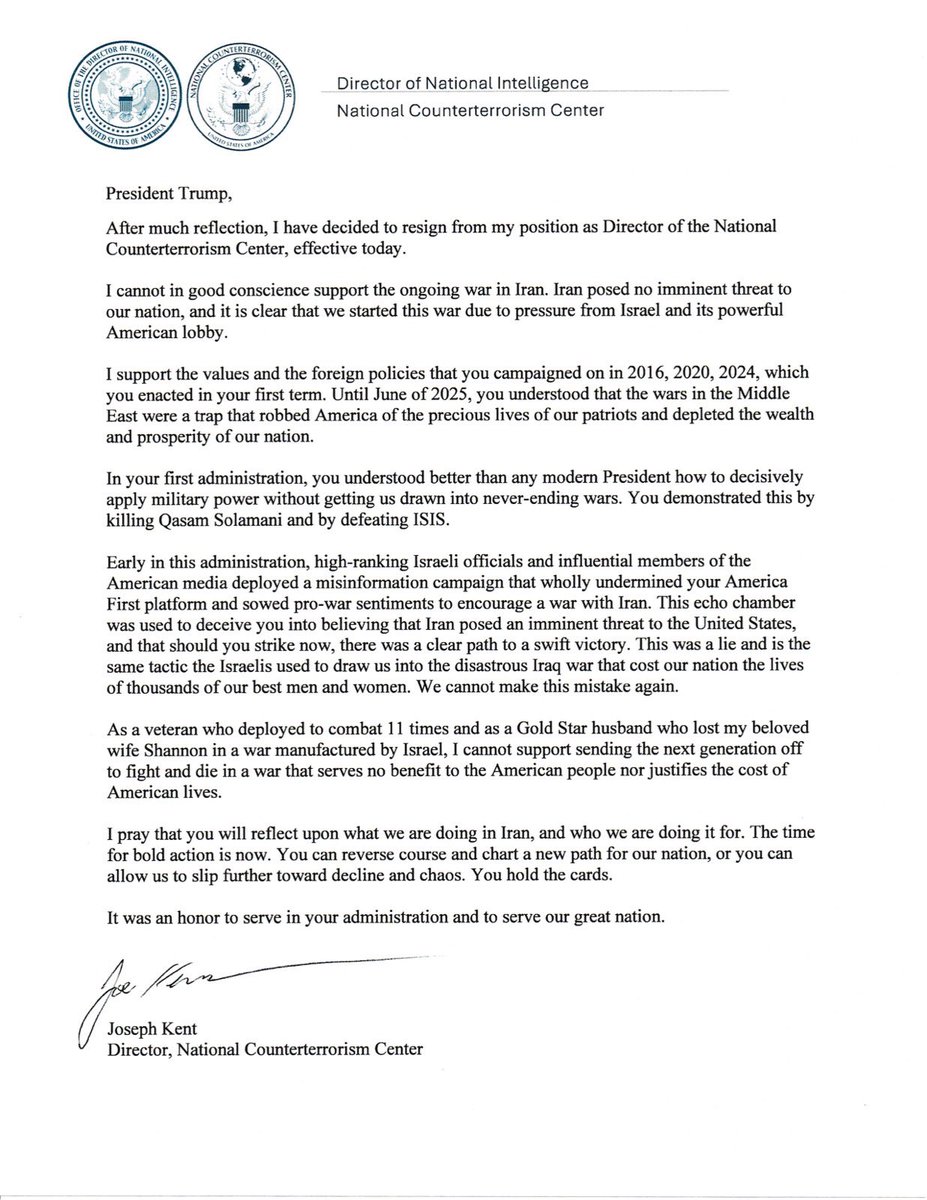
After much reflection, I have decided to resign from my position as Director of the National Counterterrorism Center, effective today. I cannot in good conscience support the ongoing war in Iran. Iran posed no imminent threat to our nation, and it is clear that we started this war due to pressure from Israel and its powerful American lobby. It has been an honor serving under @POTUS and @DNIGabbard and leading the professionals at NCTC. May God bless America.
Joe Kent tweet media
English
72.7K
219.8K
847K
99.5M
RTWatchDesk | OSINT & Threat Analysis
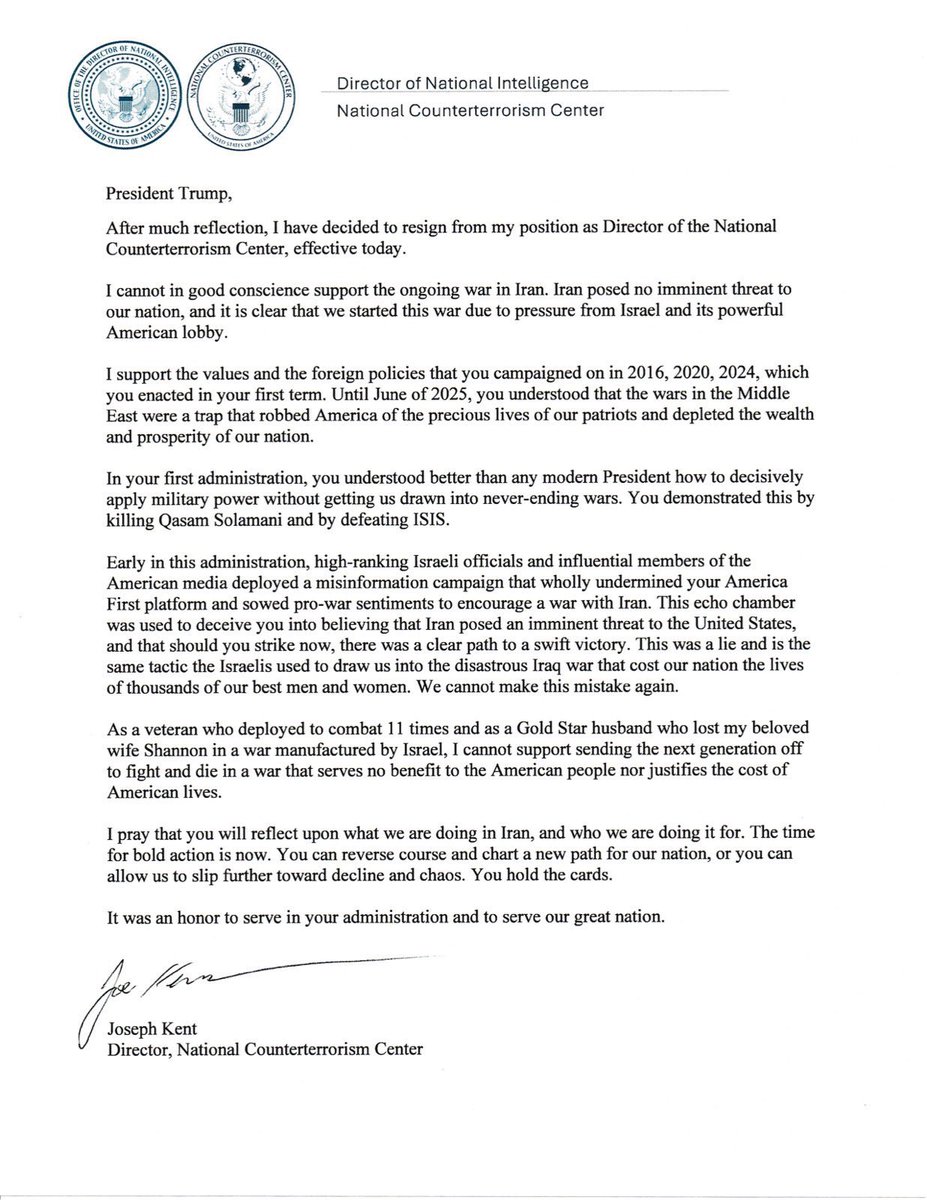
This letter is a case study in controlled moral positioning. The author is not simply resigning, he is constructing a psychological framework to justify, influence, and protect his identity simultaneously. First, he establishes moral authority. By invoking his roles as a veteran and Gold Star spouse, he elevates his position beyond policy disagreement. This reframes his stance as ethical obligation rather than opinion, making counterargument psychologically harder. Second, he resolves internal conflict without breaking allegiance. He explicitly affirms past alignment with leadership while rejecting the current course. This is classic cognitive dissonance management, he preserves loyalty by shifting the point of failure to a recent deviation. Third, he externalizes causation. Responsibility for the war is attributed to outside pressure, lobbying influence, and misinformation. This removes direct blame from leadership and replaces it with a manipulation narrative, which is more psychologically palatable and more persuasive to an audience predisposed to distrust those actors. Fourth, he uses historical anchoring. The Iraq War reference is not informational, it is a cognitive shortcut. It activates a known failure pattern in the reader, reducing the need for evidence and increasing emotional alignment. Fifth, he escalates stakes at the conclusion. Language shifts toward urgency and consequence, placing decision responsibility squarely on the recipient. This is a final influence attempt framed as warning rather than confrontation. Overall assessment: This is not a neutral resignation. It is a structured moral argument designed to: • Preserve personal identity • Shape public interpretation • Influence decision-makers after exit • Reframe the cause of conflict as manipulated rather than strategic The most important signal is not the resignation itself. It is that internal dissent has reached a level where it is being expressed publicly in moral terms, not procedural ones. That typically indicates deeper fractures beneath the surface.
RTWatchDesk | OSINT & Threat Analysis tweet media
English
0
1
1
101
RTWatchDesk | OSINT & Threat Analysis
This letter is a case study in controlled moral positioning. The author is not simply resigning—he is constructing a psychological framework to justify, influence, and protect his identity simultaneously. First, he establishes moral authority. By invoking his roles as a veteran and Gold Star spouse, he elevates his position beyond policy disagreement. This reframes his stance as ethical obligation rather than opinion, making counterargument psychologically harder. Second, he resolves internal conflict without breaking allegiance. He explicitly affirms past alignment with leadership while rejecting the current course. This is classic cognitive dissonance management—he preserves loyalty by shifting the point of failure to a recent deviation. Third, he externalizes causation. Responsibility for the war is attributed to outside pressure, lobbying influence, and misinformation. This removes direct blame from leadership and replaces it with a manipulation narrative, which is more psychologically palatable and more persuasive to an audience predisposed to distrust those actors. Fourth, he uses historical anchoring. The Iraq War reference is not informational—it is a cognitive shortcut. It activates a known failure pattern in the reader, reducing the need for evidence and increasing emotional alignment. Fifth, he escalates stakes at the conclusion. Language shifts toward urgency and consequence, placing decision responsibility squarely on the recipient. This is a final influence attempt framed as warning rather than confrontation. Overall assessment: This is not a neutral resignation. It is a structured moral argument designed to: • Preserve personal identity • Shape public interpretation • Influence decision-makers after exit • Reframe the cause of conflict as manipulated rather than strategic The most important signal is not the resignation itself. It is that internal dissent has reached a level where it is being expressed publicly in moral terms, not procedural ones. That typically indicates deeper fractures beneath the surface.
English
0
0
0
40
RTWatchDesk | OSINT & Threat Analysis
Everyone’s rushing to label this, but that misses where the real failure would be. If this was intentional, it doesn’t start with sailors, it starts with command. Warfighters don’t just snap out of nowhere. They’re built to endure long deployments, fatigue, and pressure. What breaks them is when leadership allows that pressure to build without relief, without clarity, and without trust that someone is actually fixing the problem. When timelines keep extending, conditions start slipping, and concerns feel ignored or minimized, something changes. The mission stops feeling shared, and starts feeling imposed. That’s a command climate failure. Because leadership’s job is not just to complete the mission, it’s to maintain the psychological and physical conditions that make the mission sustainable. When that balance is lost, discipline doesn’t disappear overnight, it erodes. Quietly at first, then collectively. And by the time you’re even asking whether something like this was deliberate, the real damage was already done long before the fire.
English
3
3
17
6.7K
Clash Report
Clash Report@clashreport·
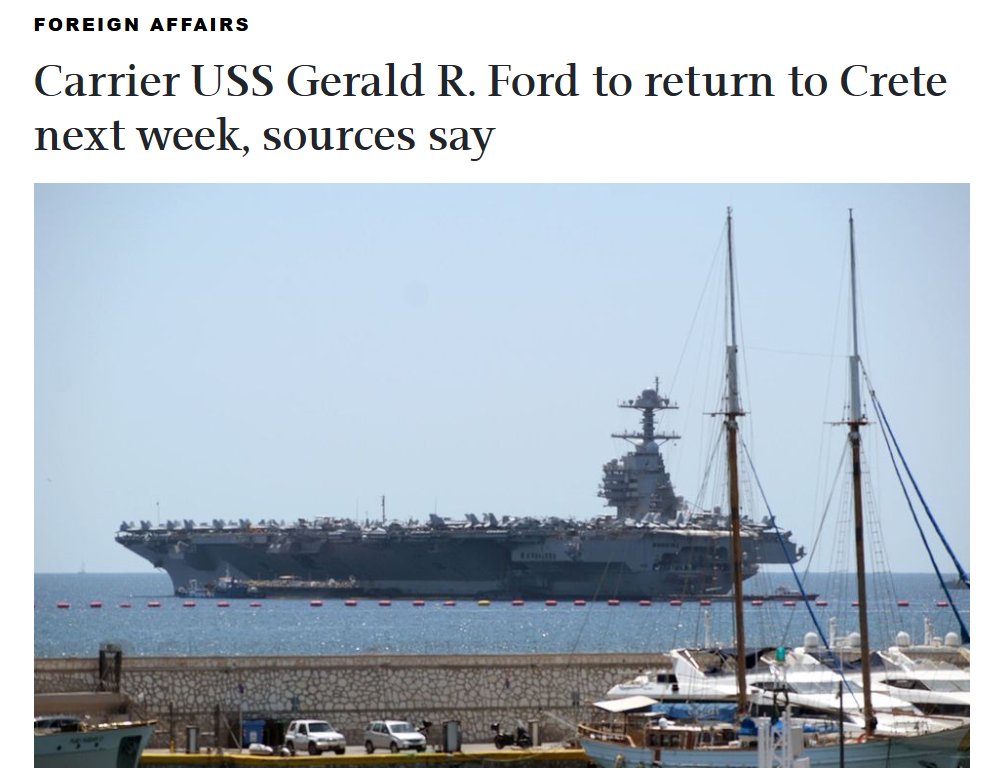
The USS Gerald R. Ford is expected to return to Crete next week, likely for refueling and possibly to investigate a fire that broke out on March 12. One scenario under review is that the fire may have been deliberately set by crew members seeking to end the prolonged deployment. Source: Kathimerini
Clash Report tweet media
English
61
291
1.5K
455.8K
RTWatchDesk | OSINT & Threat Analysis
Everyone’s rushing to label this, but that misses where the real failure would be. If this was intentional, it doesn’t start with sailors, it starts with command. Warfighters don’t just snap out of nowhere. They’re built to endure long deployments, fatigue, and pressure. What breaks them is when leadership allows that pressure to build without relief, without clarity, and without trust that someone is actually fixing the problem. When timelines keep extending, conditions start slipping, and concerns feel ignored or minimized, something changes. The mission stops feeling shared, and starts feeling imposed. That’s a command climate failure. Because leadership’s job is not just to complete the mission, it’s to maintain the psychological and physical conditions that make the mission sustainable. When that balance is lost, discipline doesn’t disappear overnight, it erodes. Quietly at first, then collectively. And by the time you’re even asking whether something like this was deliberate, the real damage was already done long before the fire.
English
2
3
56
11.3K
OSINTdefender
OSINTdefender@sentdefender·
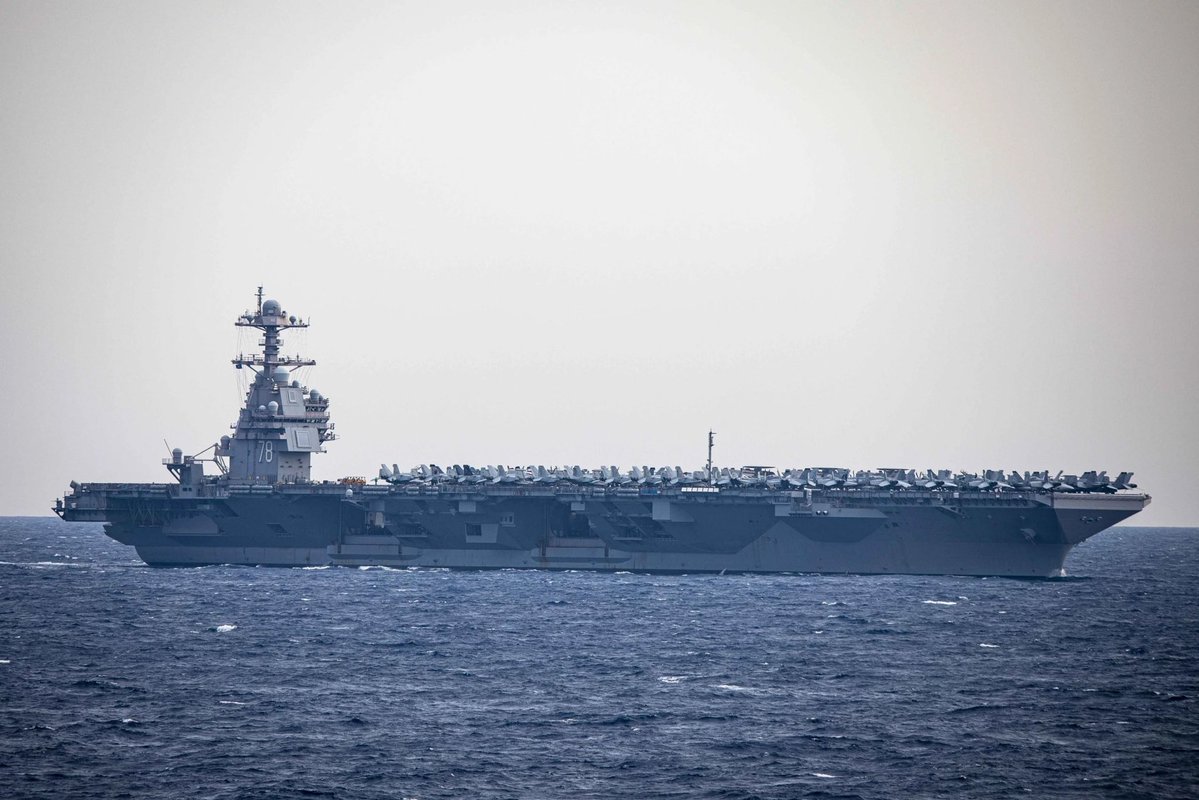
The USS Gerald R. Ford (CVN-78) is expected to return to Souda Naval Base in Crete next week from the it current position in the Northern Red Sea, following a recent fire which cause serious damage to some areas of the ship and left over 600 sailors and crewmembers without proper beds. The Ford will return to Crete for refueling, but also for an investigation into the large fire that broke out aboard the vessel on March 12, with investigators probing the possibility that the fire was deliberately caused by crewmembers to terminate their extended mission, according to a source who spoke to the Greek daily newspaper Kathimerini.
OSINTdefender tweet media
English
290
855
5.3K
754.8K
R A W S A L E R T S
R A W S A L E R T S@rawsalerts·
🚨#BREAKING: Cuban officials say the country’s national electric grid has collapsed, leaving the entire nation without electricity
English
557
2.8K
19.3K
1.5M
UK Report
UK Report@UK_REPT·
JUST IN — 🇨🇺🇺🇸 CNN : Cuba's electrical grid suffers total collapse
English
5
23
77
8K