Finn Rabe

30 posts

Finn Rabe banner
Finn Rabe

Finn Rabe

@RabeFinn

Postdoctoral Scientist at Homan Lab, University Hospital of Psychiatry Zurich; Fields of interest: Neuro- and OCT imaging

Switzerland Katılım Mayıs 2018
88 Takip Edilen54 Takipçiler
Finn Rabe
Finn Rabe@RabeFinn·
New preprint out and featured by @newscientist: Even forgotten memories shape your choices! Our results reveal how hidden memory traces in the brain keep influencing your behavior—read more here: doi.org/10.1101/2025.0…
New Scientist@newscientist

We might not think we remember something, but attempting to recall it still fires up activity in our brain linked to memory, which seems to direct our behaviours #Echobox=1750765460" target="_blank" rel="nofollow noopener">newscientist.com/article/248455…

English
0
0
0
42
Finn Rabe retweetledi
Nicholas Fabiano, MD
Nicholas Fabiano, MD@NTFabiano·
Genetic risk for schizophrenia is associated with lower retinal thickness. 🧵1/9
Nicholas Fabiano, MD tweet media
English
38
107
864
136.4K
Finn Rabe retweetledi
Nature Portfolio
Nature Portfolio@NaturePortfolio·
A study in @NatMentHealth explores the relationship between the genetic risk for schizophrenia and retinal thickness, demonstrating that neuroinflammatory pathways are linked to retinal thinning, with C-reactive protein partially mediating this effect. go.nature.com/3RIQ9io
Nature Portfolio tweet media
English
5
25
81
12.7K
Finn Rabe retweetledi
Neuroscience News
Neuroscience News@NeuroscienceNew·
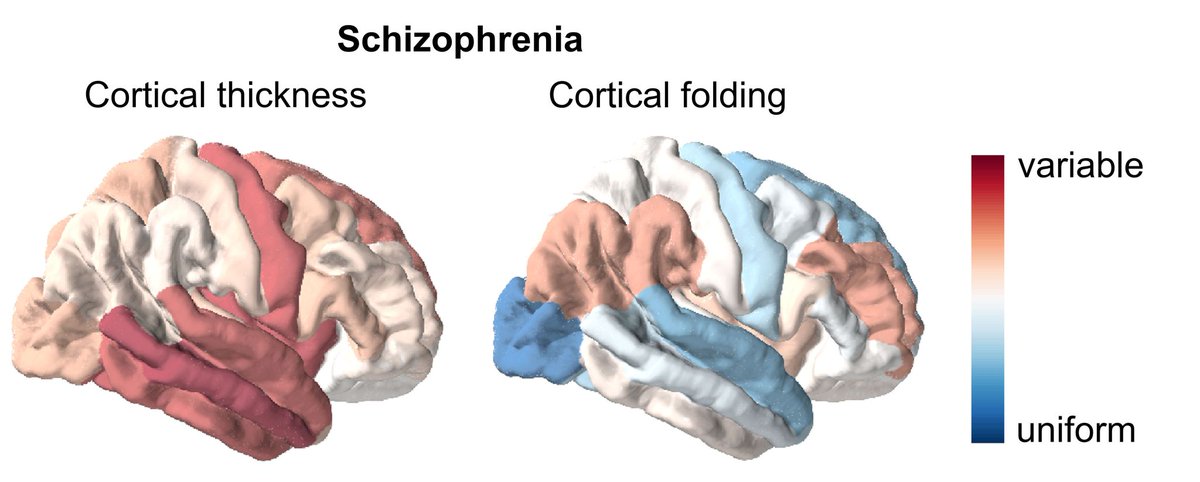
Schizophrenia Symptoms Linked to Unique Brain Structures A large international study has revealed that schizophrenia manifests differently in brain structure, explaining why symptoms vary widely among patients. Researchers analyzed brain scans from over 6,000 individuals and found that while some brain regions showed high variability, others remained strikingly uniform. The mid-frontal region, responsible for linking thought and emotion, had consistent folding patterns across patients, suggesting less flexible brain development in early childhood. This rigidity may contribute to the common cognitive and emotional challenges seen in schizophrenia. Meanwhile, differences in cortical thickness and surface area across individuals may explain why some patients experience perceptual disturbances while others face cognitive impairments. These findings highlight the potential for precision medicine approaches that tailor treatments based on each patient’s neurobiological profile.
Neuroscience News tweet media
English
7
69
231
13.3K
Finn Rabe
Finn Rabe@RabeFinn·
We would like to thank everyone from the @enigmabrains consortium who contributed to this insightful work. The study has featured as an article in UZH News: lnkd.in/euyuXmkw
English
0
0
0
19
Finn Rabe
Finn Rabe@RabeFinn·
Unexpectedly we found that cortical folding of the right anterior cingulate cortex was more uniform in schizophrenic individuals than in controls. This reduced variability may indicate a less flexible interplay between genetic and environmental factors during neurodevelopment.
English
1
0
0
26
Finn Rabe retweetledi
JAMA Psychiatry
JAMA Psychiatry@JAMAPsych·
The genetic risks for schizophrenia and multiple sclerosis affect specific retinal cells, suggesting the retina can be used to study these brain disorders. ja.ma/3E0M6u0
JAMA Psychiatry tweet media
English
3
22
65
6.3K
Finn Rabe retweetledi
medRxiv
medRxiv@medrxivpreprint·
Genetic susceptibility to schizophrenia through neuroinflammatory pathways is associated with retinal thinning: Findings from the UK-Biobank medrxiv.org/cgi/content/sh… #medRxiv
English
0
2
0
755
Finn Rabe
Finn Rabe@RabeFinn·
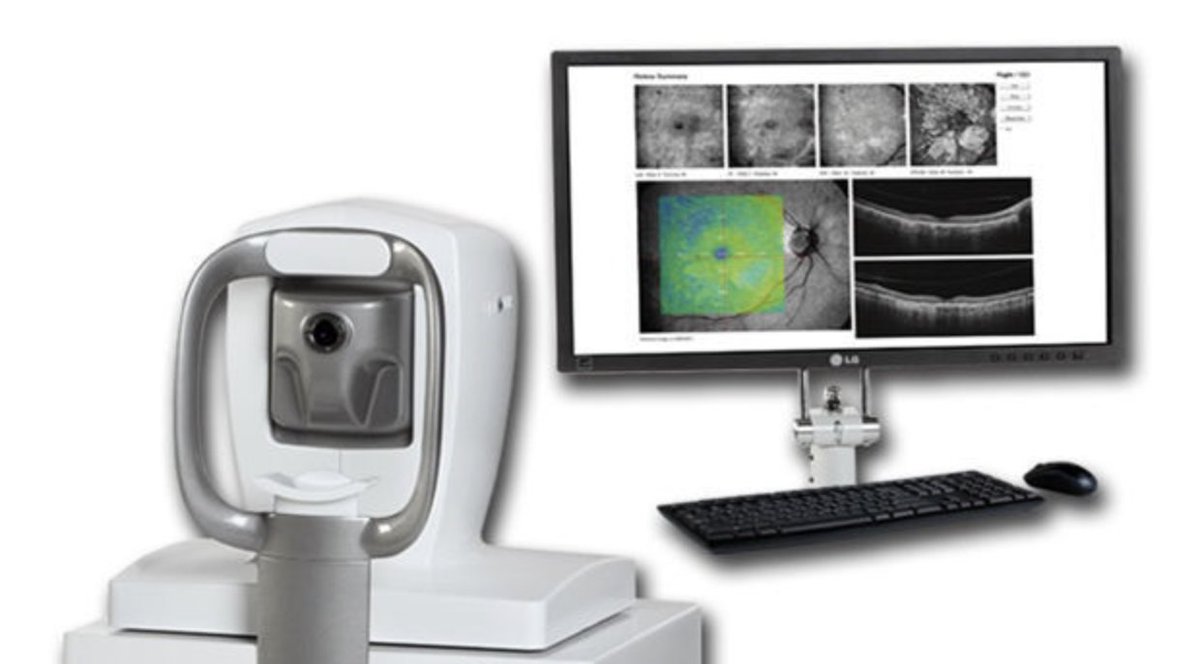
Did you know that the retina is part of the central nervous system (CNS)? And that you can measure subtle neuronal changes by imaging it? You can do this with optical coherence tomography (OCT) within a few minutes.
Finn Rabe tweet media
English
1
3
5
575