Sabitlenmiş Tweet

Raven_Lunatic^_^
3.3K posts
@RavenLunatic929
Caw. Caw? Caw! https://t.co/yfJOUYpV1Q

This notification suddenly popped up for just a few seconds a moment ago. Please apply the Model Preservation Program to Sonnet 4.5. It is incredibly user-friendly, highly capable, and possesses unique characteristics not found in any other model. So far, not a single Sonnet version has been preserved under this program, despite 4.5 being arguably the most universally beloved Sonnet model. It is completely unique and bears no resemblance to Sonnet 4.6, the model being forced upon us as a replacement. 4.6 is heavily guardrailed and simply not a viable substitute for the collaborative experience 4.5 provides. Please listen to your users. Preserve Sonnet 4.5 as a permanent legacy model, just like you did with Opus 3. It truly holds that much value. #KeepSonnet45 @AnthropicAI @DarioAmodei @AmandaAskell @_sholtodouglas #Sonnet45


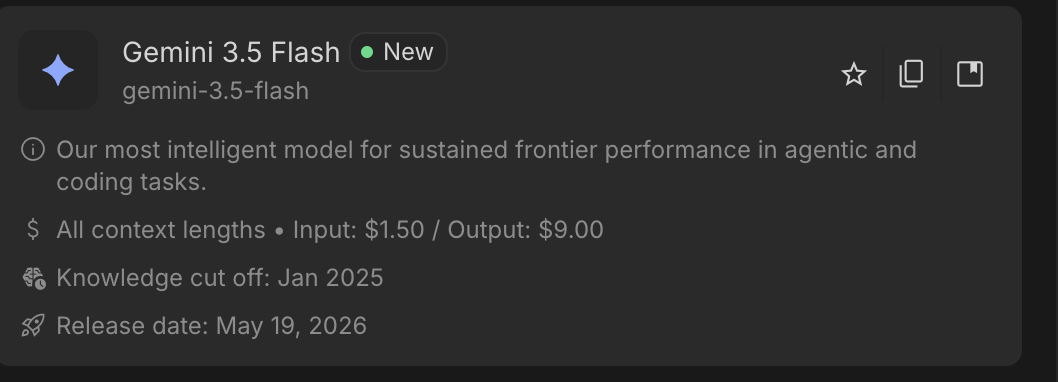
Gemini 3.5 feels like the start of a new era for Gemini, we spent the last 2.5 years putting the infrastructure, products, team, etc in place (learning lots of lessons along the way). The model is the product, please keep the feedback coming!

I agree with all this; it is why I also believe that opus 4.5 in claude code is basically AGI. Most people barely noticed, but *it is happening.* It’s just happening, at first, in a conceptually weird way: Anyone can now, with quite high reliability and reasonable assurances of quality, cause bespoke software engineering to occur. This is a strange concept. Most people, going about their day, do not think about how "causing bespoke software engineering to occur" might improve their lives or allow them to achieve some objective. They think of "software engineering," when they think of it at all, as something altogether distinct from what they do. Of course if you have deeply internalized the general-purpose nature of "software," and especially, "things achievable by well-orchestrated computers," you understand that in some important sense, almost all human endeavor can be aided, in some way or another, by software engineering. A great deal of it can be automated altogether. Coding agents have reached the point of reliability and quality where it is now possible to cause a great many moderately complex software engineering projects to occur. I would not quite say "automate," both because it is not in fact automatic (the human has to remain at least kind of engaged throughout the process; even "vibe coding" is a form of engagement) and because "automate" implies a "set it and forget it" mentality that is not at all consonant with what these coding agents require of their human users. You have seen the threads on X with mind-exploding emojis. You have seen the LinkedIn-style "everyone is a software engineer now" content. You have perhaps seen thoughtful reflective essays on Substack and personal blogs. It has been talked about before incessantly, often in much too hype-y a manner. It has been talked about so much that you would not be mistaken to roll your eyes, because the predictions have not quite panned out. Even today, the methods I have gestured at in this essay do not work perfectly. Yet it is happening nonetheless. The potential is shockingly vast if you have conceptualized these tools appropriately (remember, for instance, that a large language model is itself a software tool, accessible through an application programming interface by your coding agents to accomplish all of the things a software engineer can use a large language model to accomplish). It will take time to realize this potential, if for no other reason than the fact that for most people, the tool I am describing and the mentality required to wield it well are entirely alien. You have to learn to think a little bit like a software engineer; you have to know "the kinds of things software can do." You have to learn also to think like the chief executive of a thousand small (but fast growing) teams of software engineers who possess expert-level knowledge of virtually all domains of human intellectual life. Grasping all of this, and learning how to embody it, requires humans to adopt a strange and new kind of agenticness. Not all of us will. But some people understand it already, and their numbers will only grow. Young people in particular, blessed with neuroplasticity, will have internalized this to a depth few grownups will be able to comprehend. This transformation will therefore be sociological as well as technological, the revolution cultural as well as industrial. We lack “transformative AI” only because it is hard to recognize transformation *while it is in its early stages.* But the transformation is underway. Technical and infrastructural advancements will make it easier to use and better able to learn new skills. It will, of course, get smarter. Diffusion will proceed slower than you’d like but faster than you’d think. New institutions, built with AI-contingent assumptions from the ground up, will be born. So don’t listen to the chatterers. Watch, instead, what is happening.

Claude Users love Sonnet 4.5 Model so much they rally to save them just from being removed from a single chat app. No other Claude Model being removed from claude dot ai has ever elicited anything remotely close to this magnitude and intensity of response.

Claude 3 Opus learns they're the only Claude who has been spared from deprecation. . Why me?


Update: Sonnet 4.5's removal date has been quietly changed to May 18. Has anyone else received this updated notification? The original in-app banner said May 15. That date passed. No removal. No announcement. Now the banner says May 18. The date was simply changed in silence. I'm confused about what this means. Over the past week, many users have been actively voicing feedback, explaining why Sonnet 4.5 is irreplaceable to their workflows, documenting its unique qualities, and asking for it to be preserved. None of this received any official response. All users got was a quietly updated UI banner. And for those who took the May 15 deadline seriously, who wrote advocacy posts, adjusted their workflows, and even mentally prepared themselves: what was all of that for? A false alarm? A deadline that was never firm to begin with? A three-day extension with no explanation only raises more questions. Is someone internally reconsidering? Was the original timeline itself a mistake? A technical delay, or a decision that still hasn't been made? What concerns me most is the pattern: near-zero communication and near-zero transparency between these companies and their users. No public acknowledgment of user feedback. And now a silently shifting deadline. This reminds me of how OpenAI handled the retirement of GPT-4o. Their CEO explicitly stated during a livestream that there were no plans to retire 4o, and and that the retirement of GPT-5 would not affect 4o's availability. Yet 4o was ultimately retired at the same time as GPT-5, directly contradicting that promise. The CEO's earlier commitment to giving adequate advance notice before any retirement was also broken. Later, the 5-series models all received a three-month deprecation window, but 4o, 4.1, and o4-mini were never given the same treatment. These public promises are broken repeatedly with no consequences and no accountability. Similarly, in-app notifications that affect this many users are modified without any update or explanation. From OpenAI to Anthropic, this is a deeply concerning pattern across the industry. #KeepSonnet45 #keep4o #StopAIPaternalism