ReVoo

1.8K posts

ReVoo banner
ReVoo

ReVoo

@ReVoo_Crypto

Meme extraordinaire @InTurn_ The second o in ReVoo is silent!

🇦🇹🇯🇵🇷🇴 Katılım Mayıs 2022
1.4K Takip Edilen485 Takipçiler
Sabitlenmiş Tweet
ReVoo
ReVoo@ReVoo_Crypto·
The attacker isn't adding blocks to the end. He has to go back and redo the blocks after it, as well as any new blocks the network keeps adding to the end while he's doing that. He's rewriting history. Once his branch is longer, it becomes the new valid one. Proud owner of #6939
ReVoo tweet media
English
4
6
14
2.5K
ReVoo
ReVoo@ReVoo_Crypto·
@ole_eth @StarchildOnX Haven't been to Lisbon in ages 😭 Go to Musa and/or Dois Corvos and drink a beer with your friends for me there.
English
0
0
0
10
Ole
Ole@ole_eth·
gm. this week Lisbon with my @StarchildOnX bois greenity and bandit. excited✊🏽 who else will be there?
Ole tweet media
English
38
0
53
815
ReVoo
ReVoo@ReVoo_Crypto·
@andyyy @AskVenice What the fuck does "is AI the next crypto" even mean? The way we convolute words is getting crazy
GIF
English
0
0
1
92
Andy
Andy@andyyy·
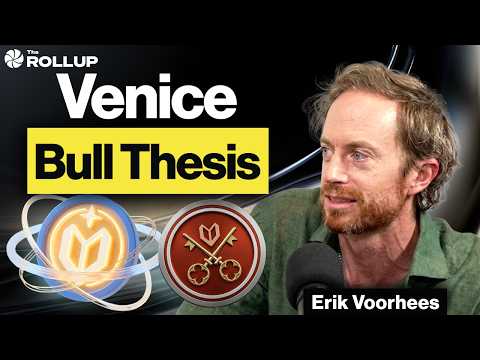
We hosted Erik Voorhees on the show at NEARCON this year to talk all things crypto x AI, the $VVV thesis, and how it all works under the hood. Was a great episode. Enjoy. youtu.be/hZzkMmF_izU?si…
YouTube video
YouTube
English
10
26
192
21.2K
ReVoo
ReVoo@ReVoo_Crypto·
@zacodil @JackN1x There is already a solution out there it's just not well known yet
English
0
0
1
23
Vadim (AI, ⋈)
Vadim (AI, ⋈)@zacodil·
@JackN1x Zcash racing to patch crypto before Q-Day while most chains still pretend it's not coming
English
1
1
9
192
Vadim (AI, ⋈)
Vadim (AI, ⋈)@zacodil·
Zcash just made shielded notes unstealable by quantum computers. Mainnet rollout this month. Today, spending a shielded note requires one thing: a valid signature from your private key, which lives on an elliptic curve. Quantum computers can extract that key. Quantum arrives, your note is gone. The new note version requires two things at once to spend. First, the same elliptic-curve signature. Second, a value derived from a hash chain rooted in your seed phrase. Quantum breaks the elliptic curve. Quantum does not break hashes. The attacker can fake the first half. They cannot fake the second. The legitimate owner has the seed. They derive both halves. They spend. When quantum arrives, you sweep your shielded ZEC through the post-quantum path to a fully post-quantum address. Funds preserved. What this does not solve: privacy of past transactions. zk-SNARKs themselves still rely on elliptic curves, so a future quantum attacker could decrypt the contents of historical shielded transactions. Full privacy migration is targeted for 2027. ZEC holders just need to shield. The protocol does the rest.
Vadim (AI, ⋈) tweet media
English
2
12
86
4.6K
H.E. Justin Sun 👨‍🚀 🌞
H.E. Justin Sun 👨‍🚀 🌞@justinsuntron·
I have always been an ardent supporter of President Trump and his crypto friendly policy. As an early supporter who invested heavily in World Liberty Financial, I did so because I believed in the vision that was presented to the public: a decentralized finance platform that would promote financial freedom, remove intermediaries, and bring the benefits of DeFi to mainstream Americans. What was never disclosed — to me or to any investor — is that World Liberty embedded a backdoor blacklisting function in the smart contract used to deploy WLFI tokens. This function gives the Company unilateral power to freeze, restrict, and effectively confiscate the property rights of any token holder, without notice, without cause, and without recourse. This is the opposite of decentralization. This is a trap door marketed as an open door. I denounce the ongoing token scandals by the bad actors at WLFI. I am the first and single largest victim, as a result of their wrongful blacklisting of my WLFI token wallet back in 2025, that violates basic investor rights and blockchain principles of fairness. Every action taken by the WLFI team to extract fees from users, to secretly implant backdoor controls over user assets, to freeze investor funds without disclosure or due process, and to treat the crypto community as a personal ATM — all of these actions are illegitimate and were never authorized by any fair, transparent, or good-faith community governance process. The governance votes cited to justify these actions were not conducted through a fair or transparent process. Key information was withheld from voters, meaningful participation was restricted, and the outcomes were predetermined. These votes do not represent the will of the community — they represent the will of those who designed them. These actions have nothing to do with me. They have nothing to do with the investors who believed the promises this project made. We oppose every one of these actions in the strongest possible terms. The WLFI team’s actions erode trust in the project. Unlock the tokens and uphold transparency for the community. Let’s build with integrity, not misconduct.
English
1.9K
1.1K
6.8K
1.8M
ReVoo retweetledi
Almanac
Almanac@almanac_market·
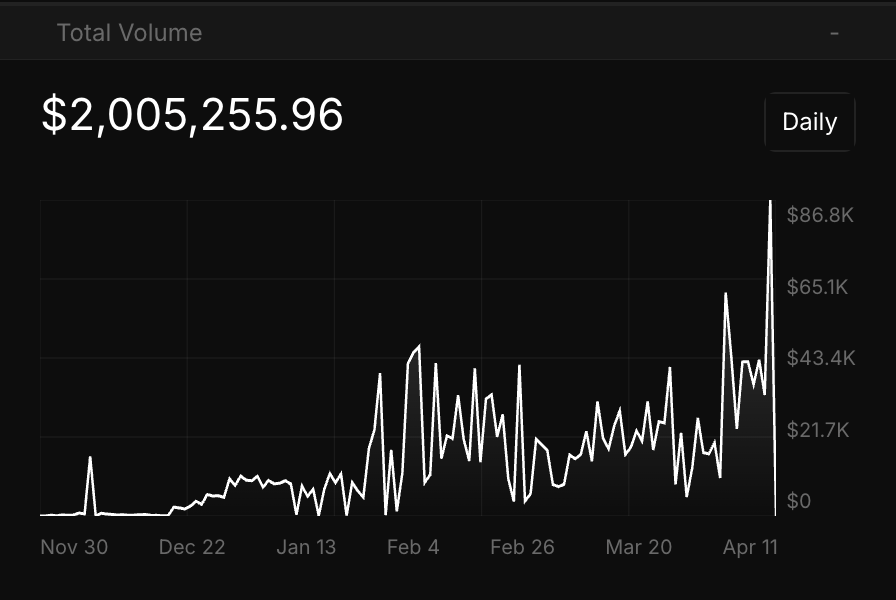
$2,000,000 in total volume. The first million took 3 months. The second took 7 weeks. Fitting that we just had a record single-day volume of $86.8K to cross the line. Thanks to the traders who've got us here. More volume, more signal, more rewards. The flywheel is working.
Almanac tweet media
English
6
11
31
1.5K
ReVoo retweetledi
Almanac
Almanac@almanac_market·
Prediction markets ignore how good you are... Until now.
English
3
11
39
2.4K
ReVoo retweetledi
Almanac
Almanac@almanac_market·
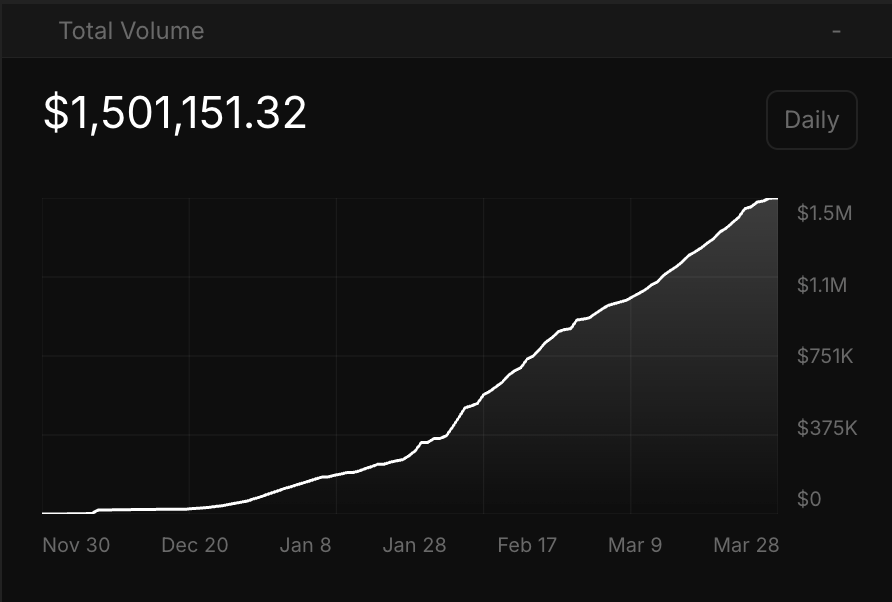
$1.5M trading volume crossed on Almanac. Analytics is live. More trader support tools incoming. See you at $2M.
Almanac tweet media
English
5
6
37
1.6K
ReVoo retweetledi
_gabrielShapir0
_gabrielShapir0@lex_node·
good callout here from my friend @RebeccaRettig1 against Canton and its concerted FUD against real blockchains however like my own Canton critiques, the Canton crowd will just attribute it to bag bias since she works for a Solana org So, here is a brief summary of critiques of Canton from State Street stalwart Swen Werner who has a storied TradFi capital markets background and seemingly zero bag-bias. These critiques all cut to the bone and don't even require you to be 'cypherpunk-aligned'; they are simply logical: 1. "Synthetic atomicity" — Canton's cross-domain transactions are not actually atomic. This was Werner's first flag, raised in the April 2024 piece. Canton's pilot report used the word "atomic" 45 times in 43 pages. Werner's objection is definitional and he considers it important: true atomicity exists within a single block on a single chain, where all transactions are collectively validated and committed (or rejected) together. Canton's cross-domain transactions span multiple independent systems coordinated through synchronization domains and sequencers. Werner argues this is "synthetic atomicity" — a process designed to mimic single-chain atomicity through additional coordination protocols, but that is not actually atomic in the strict sense. When 90% of pilot participants said they were confident Canton could "enable secure, atomic transactions across independently controlled distributed ledger applications," Werner's reaction was that the systems are not actually independently controlled — they're subnets subject to a common consensus protocol, with independent configuration of business logic but not independent consensus. 2. Broadridge DLR on Canton/VMware is not real tokenization — it's "blockchain theater." Werner digs into the actual architecture of Broadridge's Distributed Ledger Repo solution, which is the flagship Canton use case. He points out that DLR runs DAML smart contracts on top of VMware blockchain (now owned by Broadcom), where Broadridge controls the consensus to book updates. Settlement still happens "by triggering a payment on conventional payment rails," and the whole thing is "built on top of its existing connectivity with central securities depositories and custodian banks." The DAML runtime handles all execution, logic, and permissions — VMware blockchain just stores the data. Werner calls this a "layered architecture" where there's "no direct interoperability between Daml contracts and the chaincode." His summary: no real decentralization (just centrally controlled nodes), no real tokenization (just internal bookkeeping with a new label), and no independent settlement (still relying on traditional rails). The benefit is workflow orchestration, which banks have been doing since before blockchain existed. 3. Canton's privacy model means assets cannot be independently verified — which means they cannot be marketable securities. This is Werner's most structurally important critique. In Ethereum, when you mint a token, the entire network sees it and can verify its existence. In Canton, each participant stores and processes only the data relevant to its own contracts. There is no universally shared ledger — just a "virtual global ledger" composed of private ledger segments that exchange cryptographic proofs. Werner's conclusion: "If Goldman Sachs tokenizes an asset on Canton, that token is just a data entry — it has no independent market presence. Unlike a real tokenized bond on Ethereum, a Canton-based bond cannot be independently verified unless GS allows it." An asset's visibility and existence depend entirely on the issuer's discretion. This, Werner argues, is fundamentally incompatible with the concept of a marketable security, where "the entire point of a security is that it can be freely traded, without needing the original issuer's permission for every subsequent transfer." Canton's selective disclosure model means no free transfers and fragmented visibility — characteristics of syndicated loan markets, "the most cumbersome and inefficient asset class in existence." Hence the title: Canton doesn't tokenize securities, it syndicated-loan-izes them. 4. The IT bottleneck: every new counterparty relationship requires cross-firm software deployment. Werner's most operationally grounded critique. In traditional finance, onboarding a new counterparty doesn't require deploying new software across everyone's infrastructure — legal agreements and settlement instructions are process-driven, handled by middle-office and operations teams. Under Canton, every new counterparty relationship requires a DAML contract explicitly modeling the terms of that specific A-B pairing, deployment of that smart contract across all involved parties' IT environments, and coordination between each party's IT teams. If one party's IT is unavailable — overwhelmed with a compliance upgrade, under a December moratorium, whatever — "the whole transaction is delayed or impossible because the smart contract must be actively deployed and updated on all participant nodes." Werner calls this "radically different from today's financial markets. Radically different, but not radically better." He extends this to the multi-domain case. If you're lending a security to Counterparty B but waiting for Counterparty A to deliver it first, the A→You contract doesn't provide atomicity for the A→You→B chain. You'd need a combined contract, and your local IT team must integrate it before the transaction can occur. Add cross-domain coordination on top and "the simple act of lending a bond turns into a multi-party software deployment problem." 5. Counterparty node dependency creates new systemic fragility. Canton's own documentation acknowledges that "an offline participant can prevent the pruning of contracts by its counter-participants." Werner points out what this means operationally: if Bank A and Bank B share a contract, Bank A cannot garbage-collect or archive that contract's data while Bank B's node is down. Canton is developing "attestators" (trusted third parties that help progress workflows when a counterparty is unresponsive), but Werner flags that delegating control to a third party in this way introduces its own legal and operational risks — and reintroduces centralization through the back door. 6. The endgame: CSDs will absorb Canton's use cases. Werner's prediction, framed through an extended historical analogy to the Franconian Knights' Cantons under the Holy Roman Empire (which were absorbed by Bavaria in 1806 when the Emperor no longer provided protection): "When external forces — regulatory pressure, market realities, and operational inefficiencies — demand an answer, systems like Canton collapse into centralized control." If a CSD launched a centralized digital repo system, it could coordinate transactions without Canton's smart contract dependencies. Once Canton collapses into centralized governance, "its core value proposition disappears, and its software is no longer the best choice." The only real question is when and how CSDs take over. sources: swenldn.substack.com/p/damls-canton… swenldn.substack.com/p/quo-vadis-ca…
Rebecca Rettig@RebeccaRettig1

1/ I've been quiet/taking the high rd while those pushing permissioned networks FUD permissionless networks (esp @solana) *everywhere*. I actually knew this was coming immediately after my panel @blockworksDAS & tackled it w/o naming names on stage. But I'll now be direct . . .

English
33
43
368
89.8K
ReVoo
ReVoo@ReVoo_Crypto·
@gothburz @jittoshi Reading this stings a lil tbh. Everything seems more obvious in hindsight doesn't it.
English
0
0
0
66
Peter Girnus 🦅
Peter Girnus 🦅@gothburz·
My net worth peaked at $1.2 million. None of it was real. I don't mean that philosophically. I mean it was located on servers that have since been turned off. I own eleven properties in the metaverse. Three in Decentraland. Four in The Sandbox. Two in Voxels. One in Otherside. And a beachfront villa in Horizon Worlds that I bought for $214,000 because Mark Zuckerberg called it "the next frontier." The frontier closed last week. It's a mobile app now. Last year I mass DM'd 340 people the phrase "you don't understand how early we are." I have since stopped doing that. Not because I was wrong. Because most of them blocked me. I got into metaverse real estate in November 2021. Everyone was buying. Someone paid $450,000 to be Snoop Dogg's neighbor. In a video game. With no legs. The avatars didn't have legs. I thought that was bullish. "The legs are coming," I told my Discord. "Legs are a roadmap item." Three hundred people reacted with rocket emojis. I called myself a "digital land baron." I put it in my Twitter bio. I put it in my LinkedIn headline. I said it on a podcast that had eleven listeners. Three of them were bots. The rest were my alts. My virtual property has more square footage than my actual apartment. My actual apartment has furniture. Location, location, location. My most valuable asset was a plot next to a virtual Gucci store. Gucci left in 2023. The store is still there. Nobody's in it. It's like a mall in Ohio but with worse graphics and no food court. I held. Diamond hands. That's what we said. "Diamond hands." It means refusing to sell while your investment loses 94% of its value. We turned financial paralysis into a personality trait. A guy in my Discord paid $2.4 million for a 618-parcel estate in Decentraland. Prime district. High foot traffic. I asked him what "foot traffic" meant when the platform had 38 daily active users. He said I didn't understand the technology. I didn't. I still bought more. We had a DAO. A decentralized autonomous organization. That means we voted on decisions. There were nine of us. Three never showed up. Two voted on everything without reading it. The other four were me and my alts. We voted to "acquire strategic parcels." The vote passed unanimously. I voted four times. My portfolio peaked at $1.2 million. I told everyone. I made a spreadsheet. I projected 40x returns by 2025. I made a pitch deck. The pitch deck had a slide that said "WE ARE BUILDING THE DIGITAL ECONOMY." The slide had a rocket emoji. That was my entire financial model. In 2023 I bought a Bored Ape for $189,000. It's worth $14,000 now. I don't talk about the Ape. I still use it as my profile picture. People ask me about it. I say "I'm long-term bullish." Long-term bullish means I can't sell it without crying in a Panera. My mom asked me what a Bored Ape was. I said "digital art on the blockchain." She asked why it cost more than her car. I said "you don't understand Web3." She said "I understand you live in a studio apartment." She's not in my Discord. Justin Bieber bought one for $1.3 million. It's worth about $90,000 now. I felt better about mine after I heard that. That's community. WAGMI. We're All Gonna Make It. We said that every day. In the group chat. While the floor dropped. While the volume dried up. While 95% of all NFT collections went to zero. We're all gonna make it. None of us made it. But we said it with conviction and a laser-eye profile picture. That counts for something. It doesn't. But we said it did. That's decentralized consensus. Meta spent $84 billion on the metaverse. I need to say that again. $84 billion. More than the GDP of Luxembourg. More than the GDP of Iceland, Luxembourg, and Malta combined. They spent it on a platform where the avatars had no legs, the graphics looked like a 2006 Wii game, and the peak user count was lower than the lunch rush at a Chipotle in Des Moines. They just pulled Horizon Worlds from VR headsets. It lives on as a mobile app. My beachfront villa is now a mobile app. Location, location, location. Zuckerberg renamed the entire company for this. Facebook became Meta. A $900 billion company changed its legal name because the CEO watched Ready Player One and said "I want that." Reality Labs lost $10 billion in 2021. $14 billion in 2022. $16 billion in 2023. $18 billion in 2024. $19 billion in 2025. That's not a strategy. That's a speedrun. They laid off 1,500 Reality Labs employees this year. Shut down three VR studios. Killed Supernatural. Put the entire VR social vision in a casket and said "we're pivoting to AI and wearables." The pivot took four years and $84 billion. I pivoted too. I'm an AI real estate investor now. I bought a virtual plot in an AI-generated world that doesn't exist yet. The founder said it was "the intersection of spatial computing and large language models." I don't know what that means. I gave him $40,000. He has a whitepaper. It's 47 pages. I read the title and the tokenomics section. The tokenomics section is a pie chart. I love pie charts. They make everything look like a plan. The project has a roadmap. Q1: "Build community." Q2: "Launch beta." Q3: "Scale ecosystem." Q4 is blank. Q4 is always blank. That's where the exit scam goes. My accountant asked me to value my metaverse portfolio for tax purposes. I said $1.2 million. He said "current market value." I said $6,400. He stared at me for eleven seconds. I know because I counted. He asked if I had any other investments. I showed him my NFTs. He stared for longer. I told him they were "cultural artifacts with long-term provenance." He asked if I'd considered a 401k. I told him a 401k was "legacy finance." He told me to leave his office. The metaverse is dead. I don't accept that. I am a digital land baron. I own eleven properties across four platforms. I have a beachfront villa in a mobile app, a plot next to an empty Gucci store, and a cartoon monkey that cost me more than my actual car. Location, location, location. The location is nowhere. But I'm early. I'm always early. That's the same as being wrong except you get to say it with confidence.
English
1.7K
1.3K
10.2K
1.8M
ReVoo
ReVoo@ReVoo_Crypto·
@denisyurchak Lol I love this post. The frustration as an Austrian looking at what's happening in our country sits deep.
English
1
0
1
33
Denis Yurchak
Denis Yurchak@denisyurchak·
For the past 6 years I lived in Austria and I noticed one thing: Here it’s better to either be a broke art student and spend your days drinking cheap beer in the park or an extremely rich old money/dirty russian/arab/ukranian money oligarch hiding your wealth and sons your time in uber-expensive ski resorts If you are hustling and building your business, expect to pay 50% of your income in taxes (like I do), feeding the insatiable local bureaucracy You will feel grinding in an endless wheel, often demotivated by how big a percentage of your profits you just give to the state This is the main reason Austria and other German-speaking countries have an extremely low quality of services and the general level of style and taste of businesses stuck in the 70s It just doesn’t make economic sense to open a business here
Nicola Amadio@nic_amadio

Germans: "Germany is a low-tax country". "It's only high tax for labour; BE AN OWNER". Was surprised by the backlash from Germans when I asked on LinkedIn about the appeal of living and working in Germany in 2026. It gave me a glimpse into what @levelsio often mentions when arguing that the biggest issues in EU are due to Germany's influence. Basically: a kind of perverse way of thinking that wants to be blind to the negatives of bureaucracy, and just lacks common sense. This seems to be rooted in arrogance for "how things work in Germany" - "the best country!!". Now, the nonsense I am actually referring to: 1. "Germany is low tax - just be an owner" CIT ~15% (not the best, also not the worst) Super high income taxes and (mid/low ROI) social security contributions, easily over 40% for high earners. 25%+ capital gains. 26% dividend tax. What is low tax about this? And how is it fixed by "being an owner"? Also: everyone earns income and pays dividends, also owners. Also: how disrespectful, elitist and weird way of thinking is to plainly neglect the right to fair taxation to people working jobs (majority of population, including business owners)? 2. The ridiculousness of becoming a bureaucracy's slave as the only path to lower taxes (also, spoiler: it won't become low tax anyway...) So, apparently, the "genius tax hack" of Germans is: - Invest most of your income into German real estate - Leverage your investment paying interests to German banks - Access one of the lowest rental yield and lowest appreciating housing markets in Europe - Your core expertise is in tech, media, finance? It doesn't matter: you need to start mastering German real estate and bureaucracy! - Liquidity? Worthless. Hold the real estate for AT LEAST 10 YEARS, as the only way to avoid insane capital gains taxes. Don't forget the mindset shift: ❌ high bureaucracy ✅ "tons of hacks" 3. "OK, if you want money... Just build a unicorn" Look: if you don't have money and want some, why don't you peak the highest risk, lowest ROI wealth path out there, and grind 10 of your best years to build something that has almost 0 chance to succeed and even if it does is more likely to make someone else wealthy rather EU? Also: don't forget to do it in the worst continent in the world for VC-backed startups. To most people coming from lower/middle class, it's much better having decent chances of getting to 1-10M than having almost no chance of getting to 1B. VC-backed startups are for rich kids and/or brainwashed/passionate kids who don't care about $. 4. The sad truth Is that Germany, as most other countries in Western Europe, is a place ruled by "old money", that gives very little opportunity to young people wanting to build something for themselves. Thing is: majority of people are not rich. And these people don't benefit from operating in a system like Germany. The only ones who benefit are: 3rd worlders and old money. This sad truth makes Germans look even weirder when they try to mask their system and society into moral high grounds' wrapping. Cut the bs. 5. The alternatives Poland is a way better place to build wealth, much more fair, with way less rich old fucks getting in the way of people building from scratch. Everyone is a hustler. Even boomers. Ukraine would've been even better, if it wasn't for Russia and Belarus. UAE and the pace they've attracted capital with (both old and new) is a testament to what works and what doesn't. Even the rotten US does much better than Germany. Paraguay and other Southern Cone alternatives offer a more "wild west" alternative that can be great for those leveraging the internet building online. Cyprus is another EU country offering a top alternative. Switzerland is way more fair and worthwhile than Germany, even if your goal is to build a billion dollar startup. --- Stop German cope.

English
42
24
332
45.2K
ReVoo retweetledi
Almanac
Almanac@almanac_market·
Milestone reached: $1,000,000+ in volume. While our focus is incentivizing informational value, aggregate volume has been a near to mid-term north star for adoption. More volume = more informational value that rises to the top = more rewards. Cheers to all our beta testers that got us to our first 7 figures. Onwards to the next 7.
English
13
15
84
2.9K
Benjamin Cowen
Benjamin Cowen@benjamincowen·
There are dozens of us left
English
268
46
2.1K
105.2K
ReVoo
ReVoo@ReVoo_Crypto·
@CryptoCyberia @cat_maxxxed Imo there are 2 viewpoints. Depends if you watched it all in one go. Or watched the newest episodes every week. So far I'm quite content with how s2 is going. (compare it to one punch man s3 haha)
English
1
0
2
25
Lain on the Blockchain
Lain on the Blockchain@CryptoCyberia·
The tournament arc S1. I would have been ok with it if it took up roughly half the runtime that it ended up taking up. Also the demons in the city arc had lots of fighting. These S2 episodes, for example, had most fights just cut to the endpoint or resolve very quickly. Frieren vs. Frieren in the tournament arc was a nice payoff and genuinely well done, but getting there was arduous.
English
2
0
1
69
Lain on the Blockchain
Lain on the Blockchain@CryptoCyberia·
I am really enjoying this Frieren season. Evan Call is so goated. I'm terrified it's going to turn into shounen battleslop again at any moment, though. It should just be a reflective Iyashikei 95% of the time.
Lain on the Blockchain tweet media
English
8
0
41
1.3K
ReVoo retweetledi
Adam Livingston
Adam Livingston@AdamBLiv·
The banks are PISSING THEMSELVES. They’ve just realized that some autistic crypto startup in a WeWork with $20 million in T‑Bills and a React front-end is about to nuke the entire $17 trillion U.S. deposit base… …by offering 4.9% yield on a stablecoin while JPMorgan gives you 0.01% and a debit card that expires in two years. “BUT THAT’S NOT FAIR” – every bank lobbyist ever Now the banking system, this Godzilla made of soy, duct tape, and 11,000 physical branches, is whining to Congress like: “This isn’t fair! If people can earn yield on dollars outside the bank… they might leave the bank!” No shit. That’s the point. You locked everyone into a zero‑yield Ponzi for a decade while printing $7 trillion, and now you’re shocked people want out? What’s next, are you gonna sue water for being wet? This is a regulatory street fight between code and bureaucracy, between global liquidity that settles in five seconds and the rotting husk of Bretton Woods wearing a suit made of FDIC pamphlets. And guess what? The White House is hosting peace talks. Yes. Trump’s team just invited Circle and Coinbase to sit down with Jamie Dimon and tell him that the future of dollars may not involve Jamie Dimon. Can you imagine the mood in that meeting? “Hi Jamie, meet Brian from Circle. He tokenizes T-Bills with six engineers and a Discord server. He’s taking 3% of your deposits and none of your regulatory costs. Thoughts?” The reality is that every time one of these banks says “we’re concerned about financial stability,” what they mean is: “Please don’t let these crypto goblins disrupt our ability to harvest yield off the lower-middle class with 18% credit cards and 0% checking accounts.” They want protection rackets codified into law. Like “you can’t offer yield on stablecoins unless you’re a licensed bank,” aka: “We missed the boat, so let’s blow up the dock.” Banks can’t compete. Let’s model it: A bank: 11,000 branches, 75,000 tellers, legacy core systems from 1982, and a CFO who thinks Solana is a fish. Circle: 25 people, 100% T-Bill backing, 24/7 redemptions, yield streamed on-chain like Netflix. Now let me make this brutally simple... Who wins? The guys with marble lobbies or the protocol that turns dollars into yield-bearing bearer assets? The banks are playing defense against stablecoin yield... but what happens when it clicks that stablecoins are just a transition vector to full monetary exit? What happens when people use stablecoins to bootstrap into Bitcoin treasuries with self-custody? You go from “5% yield off Circle’s T-Bill stack” to “30% CAGR in purchasing power in a bearer asset that can’t be diluted and lives outside the IMF death loop.” That’s endgame stuff. The banks are scared of USDC + USDT. Wait until every mom in Omaha is yield farming STRC dividends from their Roth IRAs using a Lightning app. We’re replacing the entire fiat architecture with a monetary black hole. reuters.com/sustainability…
English
473
1.4K
7.1K
578.2K
ReVoo retweetledi
Almanac
Almanac@almanac_market·
We just launched sim.almanac.market Enter your @Polymarket account to see where you would rank on our live leaderboard and how much our scoring mechanism would reward you
English
6
13
70
4.9K
shamdoo
shamdoo@TheShamdoo·
what happened to frank degods
shamdoo tweet media
English
180
10
370
98.2K
ReVoo retweetledi
Almanac
Almanac@almanac_market·
Deployed limit orders. This simple, yet highly-utilized feature required us to build a whole system behind proper fee management on open orders.
English
3
14
62
4.2K